
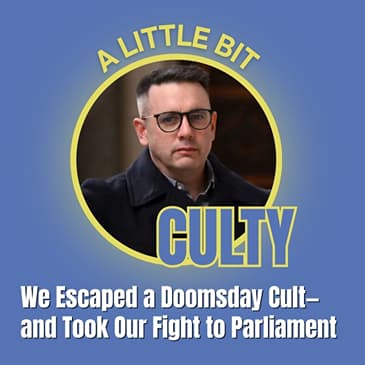
Ryan Carey grew up in the Geelong Revival Center, a Pentecostal Fundamentalist group where nuclear Armageddon was apparently on the calendar, but choosing your own career or dating without permission was a bridge too far. He joined us to talk about doomsday beliefs, religious trauma, shunning, and the coercive control that dictated everything from relationships to access to mental-health care—and what finally made him stop doing the mental gymnastics and leave.
But Ryan and his wife Catherine weren’t interested in playing cult whack-a-mole. Alongside fellow survivors and journalist Richard Baker, they helped push for a Victorian parliamentary inquiry into cults and fringe groups, taking their fight from the lounge room to the halls of government. We get into survivor advocacy, group-based coercive control, child protection, and the work of turning recommendations into legislation—because “religious freedom” shouldn’t come with a complimentary license to abuse people.
Follow Stop Religious Coercion Australia on TikTok @stop_religious_coercion and check out Ryan at the DECULT conference this weekend.
Trigger warning: This episode contains frank discussion of religious, spiritual, and child sexual abuse, childhood trauma, suicide, grief and death, doomsday and nuclear-war fears, denial of mental-health treatment, misogyny, shunning, and family estrangement.
Also…let it be known that:
The views and opinions expressed on A Little Bit Culty do not necessarily reflect the official policy or position of the podcast. Any content provided by our guests, bloggers, sponsors or authors are of their opinion and are not intended to malign any religion, group, club, organization, business, individual, anyone or anything. Nobody’s mad at you, just don’t be a culty fuckwad.
Buy the A Little Bit Culty paperback, ebook, or audiobook on Amazon or order a signed copy.
Check out our amazing sponsors
Join A Little Bit Culty on Patreon
Get poppin’ fresh ALBC Swag
Support the pod and smash this link
Check out our cult awareness and recovery resources
Watch Sarah's TED Talk and buy her memoir, Scarred
CREDITS:
Executive Producers: Sarah Edmondson & Anthony Ames
Production Partner: Citizens of Sound
Co-Creator: Jess Tardy
Audio production: Will Retherford
Production Coordinator: Lesli Dinsmore
Writer and administrator: Sandra Nomoto
Social media team: Eric Skwarzynski and Brooke Keane
Theme Song: “Cultivated” by Jon Bryant co-written with Nygel Asselin
See Privacy Policy at https://art19.com/privacy and California Privacy Notice at https://art19.com/privacy#do-not-sell-my-info.
[00:00:00] You will die if you recall this. You have no memory. Take a deep breath. You will forget. Some voices you listen to. Some voices listen back. For years, people all around the world trusted one online healer with their money, their marriages and their kids. Then the court records came out.
[00:00:30] The Insta Scammer is a multi-part investigation series by the CultVault Podcast. Coming August 31st.
[00:01:00] The Insta Scammer is a multi-partition of the most popular days of the year. Where are you still waiting? Start your business before it's too late. Start at Shopify.com. This podcast is for informational purposes only and should not be considered legal, medical or mental health advice. The views and opinions expressed do not necessarily reflect the official policy or position of the podcast and are not intended to malign any religion, group, club, organization, business, individual, anyone or anything.
[00:01:38] I'm Sarah Edmondson. And I'm Nippy Ames. And this is A Little Bit Culty, the podcast where we unpack cults, control and coercion. We woke up from a cult. The whole wild ride ended up in The Vow on HBO and in my memoir, Scarred. Now, after eight seasons of hearing every kind of culty story imaginable, we've bottled up everything we've learned into a book, also called A Little Bit Culty. It's available now in all formats on Amazon, Audible and where fine books are sold or get a signed personalized copy on our website.
[00:02:06] Better yet, ask your local bookstore or library to order it and encourage them to get on that cult awareness bandwagon. On the show, we break down the shame and secrets that make these experiences so destructive with honest conversations about how everyday groups can slide into the cultiverse. Each week, we bring in experts, survivors and whistleblowers to talk red flags, resilience and recovery. And yes, we still make time to laugh. Sometimes you have to or you'll cry.
[00:02:31] Want early ad-free episodes, live Q&As and exclusive extras? Join us on Patreon at patreon.com slash a little bit culty. Welcome to season nine of A Little Bit Culty. We can tell you that we can tell you that we can tell you that we can tell you that we can tell you that we can tell you that we can tell you that we can tell you. Welcome back, everybody, to A Little Bit Culty.
[00:02:59] Today's guest is Ryan Carey, a cult survivor, advocate and TikTok creator from Australia who turned devastating personal history into a campaign for systemic change. After escaping the fundamentalist Pentecostal cult he was raised in, Ryan and his wife Catherine decided their goal wasn't simply to shut down one group. It was to help create laws capable of addressing coercive control across all high-demand organizations. That mission led them from a meeting with their local member of parliament to the Victorian Attorney General,
[00:03:29] helping set in motion a groundbreaking parliamentary inquiry into cults and fringe groups. Alongside fellow advocates, Ryan and Catherine spent months promoting the inquiry, gathering support, and helping survivors navigate the process. The resulting report, tabled on July 29th, recommends legislation against group-based coercive control, strengthening protections for children, and improving support for survivors.
[00:03:54] In this conversation, Ryan shares how advocacy turned lived experience into political momentum, what the Victorian inquiry uncovered, and why the next and hardest chapter is getting those recommendations written into law. Thank you so much for staying up so late for us.
[00:04:22] We are going to focus this episode on your advocacy work and everything you've done with the government, which is mind-blowing, and we hope that it has ripple effects over here in this continent. But tell us a little bit for some context about the group that you grew up in. What do you think is important for people to know about how you were raised? So I was raised in a Pentecostal fundamentalist group. We were a doomsday group. We believed that the world was going to end. I believed the world was going to end in my lifetime. I actually didn't even believe I'd make it to the age of 20.
[00:04:51] They believed that there was going to be a World War III, and most of the population was going to die in a nuclear Armageddon, and that we were going to be the remnant to survive. So that was what I was born into. I think a lot of people think cults, they think communes and white robes and stuff like that. But no, it was a cult of the mind. It was your run-of-the-mill coercive control cult where the cult owned you.
[00:05:20] The minute I left, I lost contact with my sisters and my mother and virtually everyone I grew up with as well. It was very much us and them society, and it was a state within a state. It had its own laws and rules and its own governance. Okay. And your dad wasn't born in. He joined because... Tell us what brought him in. Like, we always want to look, figure out, like, what's the hook that gets people? So obviously you didn't have that experience, but what was his hook? Yeah, like cults look for vulnerability.
[00:05:50] That's how they work. That's how they recruit. That's why I never judge anyone. Everyone thinks it's silly people that join cults. No, it's just vulnerable people. Everyone's been vulnerable at certain aspects of their life, but no, dad had lost his sister in a tragic car accident and he wasn't coping. When I left the cults, I didn't realize I had so many cousins and I've reconnected with my aunties and I explained the grief that he had and he wasn't coping and that's he got sucked up. He had a terrible upbringing.
[00:06:18] His father was abusive and the cult stepped in. My mother had a quite terrible upbringing, a lot of trauma, a lot of suicide in her family, a lot of post-war stuff. Father had fought in Dakota, which was a really savage battle in Papua New Guinea. So she had her generational trauma. Dad had his and the cult offered all the answers and a new life. And so your dad was separated from the rest of his family? Yeah, dad separated from the rest of his family and isolated.
[00:06:48] Yeah. It sounds like the cult offered solace and community to your parents in different ways. Yeah. It was just a process. Yeah. And we're just going to, you know, Cliff notes this part of it, but in terms of the control, what did that look like? Career, relationships, marriage, like everything? Yeah, everything. Certain jobs he couldn't have. I couldn't move out of Geelong unless I was going to go into ministry. I'd asked permission to get married. I'd asked permission to date my wife.
[00:07:17] Everything was controlled. If we missed too many meetings, we would, there was always the threat of coercive control with loss of your community at any moment as a punishment, where you'd be put out of fellowship for breaking any of the rules. Yeah, just a very controlling environment where you felt owned by the cult leader. So you're using fear to keep people in line. And I realized as you're talking, we didn't actually say the name. Geelong Revival Center. Yeah, Geelong Revival Center. Really average name.
[00:07:46] What happened, how they set it up is they had 38 branches worldwide. Each branch had a separate name, really ambiguous name. It was under that revival fellowship sort of, revival cult sort of system. But yeah, they had plausible deniability. We were in America, South America, right through Asia, all over the place. But each cult had a different name, but very much the one cult. So survivors of that cult just call it the Geelong Revival Center
[00:08:15] because it's easy for everyone to identify because that was the headquarters in Geelong where I live. Okay, Geelong is a city. Geelong is a city, yeah. About an hour out of Melbourne, close to Torquay. So you've compared the gaslighting and control in your former church to dynamics and domestic violence. What do you think are the most important similarities? Why is that comparison useful, do you think, in understanding group-based coercive control? There's similarities, but they're not the same. So in Australia,
[00:08:42] we had quite a few parliamentary inquiries into domestic violence to understand what's going on in the community as far as that goes. And that sort of highlighted and brought the language involved as abusive language between a domestic or a family group. But the overlap for that culting, that culting rivalry is great because cults are like a big family. You live with each other. You only associate with each other.
[00:09:11] And the gaslighting and the control methods are very similar to a DV situation. So the language in Australia started to turn the coercive control and the domestic environment was starting to be recognised. When I escaped the cult, I was looking at legislation because I believed that no one should control an individual the way I was controlled or any individual. And I started doing research about other cults and I started quickly realising
[00:09:40] that the levers of control were the same across the board. It was always friends, family, fear, finances. Forex is how they control you. And I wanted to break those levers of control. And it's actually in this room, in this lounge room. I was looking at legislation and looking just how do we fix this problem? And my wife, she said, she explained it. She goes, well, Queensland have these coercive control laws that they're looking at. I think this fits the bill. And we're like, when we looked at it,
[00:10:09] cults are nothing but a coercive environment. The language was starting to occur in society. We're starting to understand it and it just, it fit. Right. And it was a matter of conveying that to the public and conveying that to our politicians that there is a solution to this problem that we've got. What was that like when you started to recognise? And what were they? You know, coercion is the definition is making somebody do
[00:10:38] what they don't want to do under threat. And that's a cult. There was always a threat that I would lose my family and everyone I loved at the drop of a hat for even questioning the cult here in a way they didn't like. If I wanted to have a career that wasn't acceptable to him or to marry someone I loved outside the group, there was always that threat that it stopped me from doing those things. So that was the simple coercion there that was easy to be identified. Our group, you weren't allowed to go see a psychiatrist. You weren't allowed
[00:11:06] to take psychiatric medication as well. So I saw the damage that was doing. And I saw people removed out of the group that had breakdowns that needed medication, that needed help. And yet the level of coercing in that group, they would go off the medication to get back because that was the power of the coercive control they were under. Right. I realise that we skipped a crucial thing and I'm sure it's not one thing that caused you to leave. But if you could kind of give us some of the red flags
[00:11:35] that were weighing heavy on your metaphorical shelf and what was the, like how did you actually end up leaving? What was the point? It was a long, it was a long process. Like it took years. It did take years. But I think, I was asked this last week, what was that one moment? And I've been thinking about it a lot. I think it was the weight of lots of moments. I think everything added up and I stopped doing the mental gymnastics to make the place work to justify the really shitty decisions that they were doing,
[00:12:04] the horrible stuff they were doing, like seeing it for what it was. And I think once that weight hits heavy on the shoulder, like it just that, it builds and builds until you go, until you break. I remember there was one incident where I watched a person, but one of the final straws was there was a person that was, had a psychiatric issue and this person was a beautiful person, lovely girl. And yeah, the cult put her out of fellowship because she was on psychiatric medication and I just, I couldn't be in a place
[00:12:34] that did that. I just couldn't. I felt that me sitting in the chair, being in that environment, condoned their actions and morally, I couldn't do it. My wife wasn't ready to go yet. I didn't want to force her to go. I had a really heartfelt discussion with my wife and she said, oh look, I'm not ready yet. I didn't want to force her because it was a very, it was a very shavistic environment. Women to obey the husband and I didn't want that. Never wanted that. And yeah, I just,
[00:13:03] she left about six, seven months after me. She, yeah, sorry for what it is and COVID was on. I left before COVID and she, the cult limb said something terrible in a meeting and about educated women. She's got a uni degree and she realised that's not what she wanted for our daughters and she, yeah, she left as well. So, it was a big risk because I, yeah, it was a big risk because I was worried about losing my wife when I left because they do part of course you control, you know, they separate you from your wife. They do that. What was that period of time like
[00:13:33] when you were out and she was not quite ready yet? We were still in the same house so I just had to trust, like, I love my wife that she's a strong independent woman. She got recruited at the age of 19 into the cult, unfortunately, because of me. Brought her in. She was pretty, yeah, something I regret. I should have gone with her. She was going through a difficult time in her life and I thought I had the answers which was... Of course, yeah. Yeah. It was just, it was a really lonely, COVID was on, it was a really lonely, difficult time. I'd started,
[00:14:03] a mate of mine had started a Facebook group and we talked about starting up a support group so we got the wheels of motion with that. That group went about 300 members of ex-members and we all sort of re-got together. I put a lot of information on that group because I felt it was important. My dad, I believe, was struggling before his death. He died in a cult suddenly and he used to confine to me, he used to try to fix the problems within the place and it dawned on me that he was trying
[00:14:32] to fix the problems of a cult that was unfixable. And this is locally? Is this international? Yeah. This group? He was going all over the world fixing problems. But there was 300 people locally in Geelong that had enough... There was 300 people but there's always, you know, there's probably thousands of ex-members. Definitely. It was, you know, but there was 300, you know, mainly from Australia but all over the world jumped on this. How many are in Geelong or in the cult? Like, I guess, what's the opposition like? When I left,
[00:15:02] it was about 600 just in the one. It's now, I think, around about 250. So it's working. Yeah, it's working. Loving the podcast? Now you can listen to the book too. A Little Bit Cult-y, Navigating Cult's Control and Coercion is now out on Audible. Yes, it is narrated by us. So you get the stories, the hard-won wisdom and even a few tangents that didn't make it into the paperback. The book takes what we've learned from our own experience inside NXIVM and from hundreds
[00:15:32] of conversations with survivors and experts and turns it into a practical, compassionate guide to spotting coercive control, getting out and healing from it. Because culty shit is everywhere and it doesn't always look like people wearing matching robes in the desert. These dynamics show up in relationships, workplaces, wellness communities, churches, social media, anywhere someone claims to have all the answers. And we're pretty proud that the book has been endorsed by powerhouses like Leah Remini, Bethany Joy Lenz, Dr. Romney Dervasala, Tia Lovings, Evan Rachel Wood,
[00:16:02] Jessica Willis Fisher and so many more. So whether you've been meaning to read the book or you just want to hear us tell it to you ourselves, grab the audiobook on Audible and hit play. And if you love it, leave us a review. It helps more people find the book and maybe recognize the red flags before they're in too deep. Enjoy. When we were kids, summer meant total freedom. No homework, no teachers, no alarm clocks, just endless days
[00:16:32] that felt like yours. As adults, we don't get that back but Mint Mobile's summer sale is the next best thing. Every single plan is $15 a month right now, even unlimited. Next chance I get to switch my wireless, I'm taking advantage of Mint Mobile's ease, quality of service and cost savings. Because let's be honest, big wireless has been running the same tired playbook for years. Confusing fees, special deals that mysteriously expire, customer service that test your patience. Mint just skipped all that. $15, you get high-speed data,
[00:17:02] unlimited talk and text, running on the nation's largest 5G network. Bring your current phone, keep your number, pick a 3-, 6-, or 12-month plan and you're set. Signing up online takes minutes and you'll get three months off premium wireless for $15 a month. Because growing up summer freedom is less like endless bike rides and more like escaping a wireless bill that made no sense. We'll take it. To get your new wireless plan for just $15 a month, go to mintmobile.com slash culty. That's mintmobile.com slash culty. Cut your wireless bill to $15 a month
[00:17:31] at mintmobile.com slash culty. That's it. There's no catch. Upfront payment of $45 for 3 months, $90 for 6 months, or $180 for 12 months. Plan required. $15 per month equivalent. Tax and fees extras. Initial plan term only. Greater than 50 gigabytes may slow when a network is busy. Includes up to 20 gigabyte hotspot. Capable device required. Availability speed and coverage varies. Cementmobile.com You know those pieces in your closet you reach for constantly while everything else just sits there judging you silently?
[00:18:01] The sweater that works with everything? The jeans that always fit right? The bag that becomes a permanent limb? Those pieces earn tenure in your wardrobe. That's the whole Quint's philosophy. They specialize in elevated essentials like organic cotton and premium stretch denim. Timeless stuff. Thoughtfully made, designed to be worn constantly instead of once for a photo and then abandoned forever. They're 100% Mongolian cashmere sweaters. My favorite. Start at 50 bucks. Giving you that I clearly have my life together softness without requiring you to have your finances together. And as it gets colder
[00:18:31] they've got you covered. Responsibly sourced down jackets. Cozy cashmere scarves and gloves. Plus gorgeous 14k jewelry that's the oh I just threw this thing on finishing touch that Sarah always does. And recently Sarah took it upon herself to get me some new shorts that are a little bit snug on my bucktocks but she loves it. Everything's 50-80% less than comparable brands because they cut out the middleman entirely. And it's not just clothes. They've brought the same good stuff reasonable price energy to bedding, kitchen essentials
[00:19:00] and furniture. Well made things for grown up living. You don't need more stuff. You just need stuff that doesn't fall apart after two washes. Find the fall pieces you'll reach for at Quince. Download the Quince app for app exclusive offers or go to Quince.com. Get free shipping on your order 365 day returns. Now available in Canada and the UK too. And when Quince asks where you heard about them, let them know it was a little bit culty. It's the best way to support the show. Nippy and I are so thrilled that Wayfair is our sponsor. We've used Wayfair to literally fix up
[00:19:30] every home in our house. We just finished finessing Ace's bedroom which was really sad. We hadn't done anything anything for him since we moved here when he was three and he's now seven. So he needed a new big boy bed. We got him some nice sheets and now I'm focused on the foyer. I got the most beautiful two-door wood console table in Walnut. It's called the Guinna and it's got little drawers because I needed a place for like keys and sunglasses and the basket underneath for like last minute grab and goes. Game changer. Thank you so much, Wayfair.
[00:19:58] You really have changed our lives. If you have not become a Wayfair devotee as we are, let me tell you a few things. Wayfair verified products are hand vetted by specialists using a 10-point inspection so you know its quality every style and budget whether you're replacing one appliance or going full holiday transformation, Wayfair has got you. Plus 20 million verified five-star reviews and real customer photos so you can shop with confidence. I always look at the reviews and the photos. That tells you what you need to know.
[00:20:29] Find pieces made for real life and even get more value with Wayfair Rewards. Join Wayfair Rewards today to get 5% back on every purchase. Head to Wayfair.com to shop all things home. That's W-A-Y-F-A-I-R dot com. Happy shopping. Wayfair, every style, every home. Thank you for listening. Now, let's dive back into the cultiverse. When you guys left instead of focusing on cutting, you know, shutting down the church, you and Catherine decided to pursue
[00:20:59] legislative change. Why that and talk about how that decision came to be. I'd seen people try to shut down their former cults and they just, another cult pops up. Yeah. Like mushrooms. It's a whack-a-mole. Good point. Whack-a-mole, you know, and I was like, no, like, it's just a meat grinder. Another one walks up and more victims and another documentary and another podcast. Right. You know, Netflix make a couple of million bucks out of it. Like, it's just this entertainment industry of these cults
[00:21:28] just popping up and I just looked at it from like, I don't want to fight them. I want to just break that whole system and take the levers of control out of their hands and stop it because everyone, now that I'm in the advocacy space and I support other survivors from a lot of different cults, everyone's got the same experience. Yeah. environment have psychological damage and the most common damage done
[00:21:57] is complex PTSD. Like, why are we allowing these groups to do what they do and they all behave the same and the method of control is the same? Let's just legislate them out of existence or legislate them into just being a normal run-of-the-mill church. Right. And that was what I had from the start and that's what we went with and it was an approach that hadn't really been met before because a lot of people just had arguments with their former cult and like, I get it. I understand that. Like, I understand why
[00:22:27] you want to do that but for me, it was, I could argue with them for the rest of my life. Let's just legislate them out of existence or legislate them into being a healthy environment where they can operate safely. Brilliant. Was that an easy sell to the Attorney General or was it, were there challenges in that process? Yeah. So, we'd done a major podcast. We wanted to do a long-form podcast. We teamed up with a brilliant journalist over here
[00:22:56] called Richard Baker who's a Geelong boy and he's actually, his dad nearly got sucked up into the cult and he knew members of the cult as well. So, a friend of mine, like, we went for good media so I always say to people in this space, don't sell your story cheap. Use your story for change if you can. So, we did this major podcast when we went to go to do the podcast. One of the Sunday school teachers in there got arrested for molesting over 10 kids in the Geelong community. Because of the podcast?
[00:23:26] No, we were doing the podcast at the time and he put a gag order on us and that gag order lasted two and a half years. So, we're sitting there with what we wanted to do as far as legislation and what we wanted to push for and we had this gag order. Listener came in and really well funded the podcast and when that was released that was a really powerful tool. As soon as that was released we started writing to politicians and Richard Baker, the journalist, helped with that as well
[00:23:56] and we got a meeting with our local poly, a really brilliant and amazing woman called Christine Cousins and we sort of had half an hour to meet with her and to convince her to take this further and we always started off with this is not about like freedom of religion doesn't mean freedom to abuse its members. So, what we're doing and what we want to achieve is, you know, you've got a right for your religion but no religion has a right
[00:24:24] to destroy people's lives. So, this isn't about your beliefs this is only about abusive practices and we sat down with Christine Cousins there was a bunch of survivors that went into the room from my former cult and just the look of horror on her face when we told our story she was shocked. Unbeknownst to us the night before she went to a drug and rehabilitation dinner, a fundraising dinner and she sat next to a young man
[00:24:54] and she said I'm going to meet these people from this cult in Geelong called the Geelong Revival Centre and he just looked at her and cried and said I'm in this room because of that cult. My mum got sucked up into it. So, she had that beforehand yeah, we got in there and we went for it. She was in tears, the age was in tears, you know, we had a broad range of people in the room. Ryan Danlar, he was a gay individual that was in that cult he suffered through that. Nat Murphy
[00:25:23] is a young woman that's got an amazing story. Yeah, Gaz who'd lost his kids to the cult and others and we just explained what was going on in the Geelong community and she was horrified and she'd met this guy the night before. She said, well, I'll do what I can do. Then she organised a meeting with the Governor General which is a powerful person that, you know, is in charge of laws and the legal process in our state. Once we found out we had that meeting
[00:25:53] it was game on because we know we've only got half an hour to change the world. Yeah, it was on. Did you practice? So we prepped. We prepped, I tell you, we prepped. So this is part of our prep so that was, that's the amount of work that we went into before we walked into that room. So in that book because we got as much data as we can, we got victim impact statements from different cults and we went in that room so we had something to give
[00:26:22] which like, this is happening in the community, printed out, went to our local office works, our local office supplier, got it bound and printed a heap of copies out so they could hand out to different politicians and Ryan Van Lundle did an amazing job with that. So we prepped with that but we also went in with our survivor stories and it was a very powerful meeting. I remember like, where you meet in that Victorian parliament it's a very old building and it's like this dungeon underneath and these big blue stone steps and like,
[00:26:52] I've got friends that aren't with me anymore because of what that cult did and it was very heavyweight walking sat room but I think it was the most powerful meeting that I've been in. We had half an hour which went to nearly an hour and she was in tears, the aide was in tears and she just looked at me with horror. Like, we dumped the horror what was going on in the Victorian community on her and she just looked at me in horror and her aide's just like,
[00:27:21] she's just walked into this room where the victims have just said what's going on and didn't sugarcoat it and didn't, weren't polite and we did a presentation and everyone was on point. Everyone was on point. Richard Baking, the journalist, came in and he just goes, wow. She just looked at us and she goes, I need to do something, I can't have this in the community and these are in minutes at meetings, these are in documented parliamentary meetings so we've just highlighted the abuse which is going on so that, you know, you have to do something, you can't walk away from that
[00:27:50] and we put it in a way where we said, listen, this is, we were very clear, this is about abuse, this isn't about freedom of religion or attack on religion and this is like, this abuse is happening in society. You can't just say that's religion, it's not, like no religion should cause this much damage or rip families apart or, you know, take it, like Gary's in there and, you know, he's lost his two kids to that cult and he was in tears talking about it and it was just this powerful meeting
[00:28:19] that led to change. How long? We left there, yeah. So we left there, it was before Christmas, I'm pretty sure, it was around about that time and we left that meeting and she was visibly shaken and we went for a drink with Ryan Van Laar afterwards and Catherine Gats had to go back to Geelong and we were sort of looking at it, we did something, yeah, I think we got through and we're driving back to Geelong and Catherine just looks at me and I looked at her and I said, we're doing this, I think, we're doing this and I was like,
[00:28:49] bitten off a bit much, haven't I? And she just looks at me, she said, how do you eat an elephant? So one bite at a time. Ran into Christine Cousins at a community event and she just grabbed me, she goes, Ryan, we're going to do something or you know we're going to do something and then a couple of weeks after that, just got this email, Catherine rang me while I was at work, I'm a tradie, I was on a building site, there was another cult survivor from my same cult on that side and that they were going to do this parliamentary inquiry which is a world first and a lot of people said you'll never get that, you'll never get that up and running,
[00:29:19] this will never happen. What does that mean? What was that? Tell us what that means, parliamentary inquiry. So a parliamentary inquiry is a really powerful process and it's how you get change. So a parliamentary inquiry, the purpose is to gather evidence to create a law so they know that there's a problem in the community and it's a way that under parliamentary privilege victims can speak. So even if you've signed an NDA, you can submit
[00:29:48] a written testimonial or you can do a verbal testimonial to parliament, to the inquiry under parliamentary privilege so you can't be sued. You've got huge amounts of protections in that space. So for once, victims could speak without fear of retribution. They could be anonymous and it was this process where victims came forward and told their story and I remember the secretariat
[00:30:19] in charge of the committee and it was a special parliamentary inquiry, it was called, it was about cults and fringe groups, about recruiting and tactics, the whole lot and they spent millions on it to get it right. So they've launched this inquiry. The inquiry has a mixed, mixed bipartisan, there's, you know, X amount from one side of the political spectrum, X amount from the other party and they're all in this inquiry together and so people came forward
[00:30:48] and could give evidence of their abuse or could tell what abuse they'd suffered. There was experts that came forward and it was we were urging people to speak and I'd have people that would contact me. I started TikTok on that stage. I'd have people contact me and say, hey, look, is my story worth telling to the government? And I'm like, ring me up, we'll have a chat and they'd just tell me some of the most
[00:31:18] horrific stuff and I'd be at the end of it going, all right, my wife would help her. You're not a therapist. How did you handle this? Or are you a therapist now? It's heavy. This is heavy stuff you're dealing with. It was just heavy. It was heavy but it needed to happen. Yeah. During this time, how were they perceived by the public and how did that change? Was it just kind of a harmless church? Did it become a harmless church? No, public, well, we're not at this stage. We're talking not just
[00:31:46] about the Geelong Revival Center. We're talking about every cult. Every cult. So that Pandora's boxed over. because the podcast was really, yeah, so this was- More people came out as a result of it. Yeah, so every- Pattern or cult. Yeah. Okay, I see. Okay. Yeah, so we had everything, even Jehovah's Witnesses were giving evidence. Got it. We had every cult. That's what the design was. It was designed to catch everyone. Even when we went into the meeting with the Attorney General with that, we had testimonials
[00:32:16] from other cult members. Laura McConnell, who's a X2x2, she wrote a really powerful impact statement in there. There was Maria Escocieta, she's ex-children of God, she wrote an impact statement and some data in there as well. So at that stage, we were teaming up and explaining like, hey, this isn't just this group. This is endemic in the community. So once that inquiry came up and running, yeah, it was on. It was on. It's so smart
[00:32:45] that you were really clear to strip away the behavior from the belief because I don't know enough about- By the way, I'm Canadian, but I'm living in America because of this guy. Yeah. But I always- I hit up against this all the time as to how all these groups are functioning and especially things like Scientology, it's like, oh, religious freedom, like there's still abuse happening. They hide behind religion. Yeah, they hide behind religion. But no one explains religious freedom. Every time somebody has that argument with me, I said, do you know religious freedom covers freedom not to have a religion?
[00:33:14] Religious freedom covers freedom from persecution from a religion. Like it's just, they love to grab one section of religious freedom when religious freedom is freedom to have religion, not to have religion, freedom from persecution from a religion or being persecuted for being a religion. It covers a lot, but they only grab that little bit to justify themselves. And that's what people need to be educated on. It's no religion has the freedom to persecute or abuse people or enslave. That's a part of freedom of religion.
[00:33:44] I'm curious, Ryan, some of the stuff we've run into with previous abuses of power and religion oftentimes find that the apparatus that's designed to protect the victim often protects the religion. Did you run into any of that? Yeah, that's why the inquiry was different because the apparatus couldn't step in. NDAs didn't matter. Yeah, that's why we went for legislation. NDAs didn't matter. They could have got paid out for a non-disclosure abuse agreement for abuse
[00:34:13] and they could have been silent and there's plenty of people in that inquiry got to speak under parliamentary privilege and be public about what happened to them and that NDA, they could keep the money and that NDA was, they couldn't be touched. So, the apparatus wasn't there. There was also the ability for people to be de-identified and there was assurances that their identity would be kept secret and there was also legislation that covered that so people could speak. And you have to build
[00:34:43] a pretty solid case to establish that inquiry. Is that correct? That's what was in the book. Yeah, we built it. That's what we built the book. We went there. Now, does that case set a precedent for other things? So, could you take that? I'm just curious how the legal system works. Could you take that legislation and say go to, I don't know, a different state in Australia? Yeah, so that ended up being this. And by the way, for those just listening, Ryan keeps holding up some books. Yeah, so I'm sorry
[00:35:12] if this is online. So, this is actually the final report and it's massive. This is where all the recommendation, all the data is, all the research is in there. So, that little book there, there was also a joint submission we did beyond belief with Pat McIver and some other really good experts that were cult survivors and it ended up being into the final report which is all the data, all the evidence we went into to that and then the government, then the recommendations over there. Victoria is a really unique place in the world. Its legislative system is world class.
[00:35:41] If we can do it here, it can be done anywhere. That was my next question. Yeah. Yeah. Yeah. What are your ambitions to take it, you know, past the Victorian? So, it's state by state. I'll look after my own country first. Fair enough. Fair enough. You gotta start with what you influence. Yeah. But I think language is key. I think once the language is out there and people understand it's doable, I think that changes its dynamic and that report is groundbreaking. They've got X amount of time to act on it so they have to
[00:36:11] legislatively act on that report but I already know it's got really good feedback from each state in Australia. That's great. There's other stuff we're working on federally as far as finances and that go because we want to, you know, you shouldn't get tax breaks to be an abusive cult so we want to nail it down but that's a federal issue but it is a global thing. It can be rolled out globally. Time to pump the brakes on the culty talk for a minute. Let's hear about our sponsors.
[00:36:46] You probably think that because we are such awesome podcast hosts that we have our act together in all areas, in all arenas but no, nope. We spend an embarrassing amount of time every single week trying to figure out what to feed our family. That's a whole production. That's where Hungry Root has been a genuine game changer for us. The thing I love so much about Hungry Root is that it comes in this big box and you get all these snacks healthy and no weird additives or preservatives but the best part is that it comes with all the ingredients to throw together a healthy basic meal.
[00:37:15] Like how many times have you gone to make pasta and realized you don't have sauce or vice versa? So Hungry Root puts together all the ingredients you need for a bunch of meals in the week and it's all done for you and it has your preferences so it knows what you like. It actually gets smarter the more you use it. It learns your tastes and dietary needs and it just keeps refining what shows up. It's like it's slowly becoming psychic about what our household actually wants to eat because I don't like to waste food. With over 50,000 chef-crafted recipes and 1,000 grocery items we never hit a
[00:37:45] oh we've had this too many times kind of grocery fatigue. Most recipes are ready in 15 minutes which feels like absolute sorcery on a chaotic weeknight especially sports nights and they don't cut corners like I mentioned they screen out over 200 sketchy additives they have quality meat and seafood with no hormones or antibiotics the standard never slips so you always know exactly what you're getting. We've outsourced the one part of parenting we're genuinely terrible at. 10 out of 10 highly recommend. You are going to love Hungry Root as much as we do.
[00:38:15] For a limited time get 40% off your first order plus get a free item in every box for life. Go to HungryRoot.com slash culty and use code culty that's HungryRoot.com slash culty code culty to get 40% off your first box and a free item of choice for life. Enjoy! This message is sponsored by Raycon. It's October and it's officially Raycon month. This brand has wormed its way so deep into my daily routine that it felt only right to give it a whole spotlight month. A very small ear-sized holiday
[00:38:45] if you will. My go-to is Raycon's Everyday Earbud Classic. Music while I'm pretending to be productive a podcast on the go whatever the moment demands. I use the earbuds all the time as you probably know I'm always listening to a podcast or listening to someone's memoir to prep for the next podcast. I'm just using them every day. They are so comfortable and the sound quality is amazing and the active noise cancellation is a superpower for blocking out distractions whether I'm tackling my massive to-do list or just need the world to be quiet
[00:39:14] for 20 minutes that happens regularly. They sound amazing they fit great and at this point we're in a pretty committed relationship. So what sealed the deal? Well, a couple things up to 32 hours of battery life with the case and the quick charge which is turning 10 minutes of charging into 90 minutes of playtime that's better math than I do in my taxes. Multipoint connectivity lets you pair two devices at once and the ergonomic design actually stays put unlike any other pair of earbuds that I've owned that pop out at a moment's notice and how many pairs of those have I lost?
[00:39:44] The new colors are great too. I went with cool mint because apparently I make purchasing decisions based on ice cream flavors now. Who wouldn't? Same premium audio as the big brands half the price over 3 million happy customers 30 day guarantee and right now they're 20% off. Celebrate Raycon month with the everyday earbuds. Go to buyraycon.com slash culty to get 20% off. Thanks to Raycon for sponsoring. Happy listening. Hello friends. If you don't know me by now you'll never ever know me. Whether it's racking up
[00:40:13] credit card points or collecting and using affiliate codes you should know by now I'm always looking for a good deal. It's a personality trait at this point and that's also why we have sponsors on this podcast so we're basically professionals at finding good deals. Which brings me to what not? The number one live shopping app in the US. Think of it as a shopping channel except it's real people real conversations and deals that make your wallet do a little happy dance. You almost never pay full price makeup, perfume, clothes, handbags, jewelry, all name brands
[00:40:43] without the retail sticker shock. It's the best place I know to find great stuff you actually love. And here's the fun part that blazer you swore you'd wear again the handbag that's been judging you from the closet shelf all of your children's Pokemon that they're totally not playing with anymore. What not makes it easy to turn it into cash? Connect with shoppers who share your style or your interests and go live while you're at it. I might need to start a new little side hustle. I'm looking forward to doing more shopping and selling on what not and supporting everyday people like me.
[00:41:12] Download what not today and get $20 off your first purchase. Search what not W-H-A-T-N-O-T in the app store sign up and start finding the best deals on the products you love with $20 off your first purchase. Terms apply. And that was a word from our sponsors. Let's get back to the show. My overall question is it seems to me that whether you lucked into this or not we kind of lucked into having I don't even know if we lucked in we just had We got lucky
[00:41:42] with our judge anyway. Our legal process. Do you feel that you got lucky? Did you feel like there's any pushback? Do you feel like there's any sort of political or do you feel like you have pretty good compliance with your government apparatus and it's working you're working in tandem with them and they understand what they're looking at and they have their appropriate language? Do you feel like that's been achieved? Being lucky both sides of government and Victoria have been pretty good like even through the inquiry both sides of left and right really fought hard. They were really united and pretty horrified by the amount of abuse
[00:42:11] like these would just normal people and all of a sudden they had some of the most shocking abuse you could imagine. I think if you hear my verbal testimony to it I was I look it's sad but you have to tell them like you have to tell them I was feasibly shocked and we had two really powerful Christian lobby groups coming to give verbal submissions if you could have let them have a say and it's very hard to argue to keep abuse and I watch these lobby groups just stumble and fall
[00:42:41] and I realised hey if you're arguing on the side of abuse it doesn't work and my fear of them sort of went away look we do have an issue like globally there is right wing parties starting to form up we're starting to see Turning Point Australia which is an offshoot of Turning Point America and that heavy right wing Christian influence which you know we have to tackle but the groundswell of the community and society is changing
[00:43:10] like they don't they acknowledge that there's a problem they acknowledge that we need a solution and once the language opened everyone's sort of talking that they know somebody that's been involved in one of these groups we did training we're starting to do training for domestic service providers in our local areas looking at rolling that out so part of the recommendations is to educate and train social workers and so on and we did initial training with them started this year
[00:43:40] and I just went back and had a meeting with the head of the organisation which was Orange Door and she said after we did the training like they've identified quite a few cult survivors coming through the network and people escaping and even in their own network they've had people come forward and said hey look I survived a cult so the language and the experience and the information is out there which has changed the dynamics where people are talking and there's a willingness for change and that's so great
[00:44:09] this is so inspiring like what's the next step from report and recommendations and training like what do you hope to see and like what's happening like having it all in a book is great you know that's the first step how does it roll out and what's your role in it? So there's a lived experience advisory body so they want lived experience experts to survivor-led so people like myself to be on the committee while the law is being drafted so we're consulted right through
[00:44:39] the whole process instead of quite often with legislation they'll write it and I'll like give it to you and like what do you think and it could be crap and so having the lived experience like we know how the cake is baked we know how it's made and having an advisory body of lived experience experts so that's the next stage once we get we've got an election in Victoria coming up once we get through that hopefully that's the next stage and then it's going through the process and some of it started now
[00:45:08] as far as you know we've started to train social service providers there's an area where it's even training high school kids on what a coercive control group looks like and behaviours look like public health campaigns there's so much that's the demographic full recommendation 38 high school and college kids to me are the ones that I find we gotta get you this for them yeah have you seen our new book no no it's written for 11
[00:45:38] 16 17 18 year olds that's the goal I mean anyone can read it but we want it to be palatable and not dry and academic so we'll we do it we do a really good schools program here called respectful relationships and that's to teach kids about respect like how a respectful relationship works and there's you know even one of the recommendations is to bring coercive control education into that respectful relationships so it's just not a domestic environment
[00:46:07] it's a group based environment as well which I find quite harmful you know education is key there's a bit around unis we've had quite a few of the Korean cults recruit in quite a few of the unis in Australia so there's a lot to be done in that area but there's a lot of work now but we have the evidence people are starting to talk it's been listened to by government and it's at that level now where it's starting to happen amazing is this your full-time job that's awesome
[00:46:37] no I'm a tradie what is it that you do I'm a tradesman a tradesman a tradie okay yeah we call them tradie yeah yeah this is your this is your side passion not really my side passion something you gotta do yeah look it's look you know that that pays the bills but it's yeah been a volunteer fireman for 30 years I don't have much time for doing that anymore
[00:47:07] but I don't fish much anymore but yeah look it probably end up we've been I don't know we've been more motivated by helping survive we help survivors escape as well it's something we found ourselves doing but it's become yeah we just have to make it work funding is something that we haven't looked at because we've been too busy working so yeah it's amazing you can change the world just in your lounge room if you try hard enough you bring up it's such a good point for first of all not many people get to experience the justice
[00:47:36] that you've experienced and I'm a huge advocate of change what's right in front of you and as you start to do that you start to have a little bit more influence so you seem to be a really solid example of that so congratulations on achieving that it's a team there's been a team around me my wife and others that have you know it's just not myself it always is it's a team yeah it always is yeah they're great people yeah they're out there speaking of which we met through Anka
[00:48:05] Richter who's doing the decult conference is that something you're going to do in person yeah I'm heading over there in two weeks to be on a panel so yeah looking forward to that so I'll be there virtually oh it's going to be great you're going to be there virtually I'll be virtually because I'm different I had to record my piece to upload it but that's great so I'm just flying in on Friday and then flying out on the Monday so it'd be short and sweet but yeah it'd be great yeah there's lots
[00:48:35] to talk about the government in New Zealand are looking at what we're doing and the advocates over there are pushing pretty hard as well quite a few friends of advocates from Australia are going over I think you've had Elise Hurd and Sam on the program as well we work pretty close with the Trauma Collective as well over here and yeah there's some good positive stuff happening in Australia and New Zealand hopefully amazing well we are so happy to meet you and I'll figure
[00:49:05] out how to get you a hard copy I think I have to send it like through here is it will take five months and to sell stock yeah but I can also send you the PDF do you have a Kindle my wife has a Kindle okay I'll send it to you yeah since you're working with survivors I feel like there's a lot in here about how to heal and you know getting your life back on track yeah yeah I hope that you find it helpful it's amazing like it's big here like I can't
[00:49:34] imagine what it's like in America because the population but there's a lot of work to be done in this space yeah I think we're starting to get the language right we're starting to get there hopefully there's big things happening really I think so I just feel like I guess there's just a lot of cults everywhere but is it just I feel like New Zealand and Australia have more communes as well like just we're hearing about them that's true maybe we're hearing because it's our job but
[00:50:05] they're there but they're not New Zealand have Glorio Vale which is it's not common in Australia oh no more churches no it's more your Pentecostal groups here Hillsong started in Australia that gives you an idea Hillsong started in Australia I didn't know that yeah Hillsong started here so yeah started in the western suburbs sorry sorry about that yeah no sorry for you guys yeah but also Scientology is big there as well right yeah
[00:50:35] we've got a problem with Scientology I think but also I was in a meeting of survivors there's another group that we work in called KIFS and they invited me to speak to their survivor groups the lady that runs at Renee an amazing individual that we've been working on with legislation and just in that meeting there was you know this big African guy just warm beautiful African guy who would have been close to seven foot tall and there was another Indonesian man and both of them lost their kids
[00:51:04] to one of the Korean cults and there was a and Renee had lost her daughters to another another cult and cults are a universal problem I was watching this you know big great big beautiful man just in tears and worried about his kid and he had the same pain as this Indonesian man you know this little Indian he had the same pain they were sharing the same exact pain and Renee has got the same pain like it just it's a universal
[00:51:33] problem I can talk to American about a cult that's been in that and the pain is the same the methods are the same yeah it's a universal experience no matter what the language no matter who it is but it's something that we need to stop that we need to get rid of well you are a badass and we so appreciate you staying up so late to tell us about it and work through all our technical difficulties yeah and I write it a third time yeah if there's anything we could do to support other than I mean we're want to make sure people know about
[00:52:03] decult and all the hours of incredible educational footage people can get if they want to sign up for that and they can hear you speak and me speak and dozens of other speakers on the topic it's going to be a really great weekend and you have allies here like we're allies here I don't know how you go with the advocacy over there at the moment that sort of America scares me at the moment the way it is so yeah it's I don't know how you'd approach it over there to be honest with you so yeah let them yeah so I think it's
[00:52:33] needed though isn't it yeah yeah it's definitely needed I just think education is where you start and you don't you don't have ramifications of that probably for five to ten years but you have to understand that when you educate your planting seeds that will be nurtured you're not going to change it with a silver bullet but once you educate people are less susceptible and that's the power not getting in fights with people just educating that's why we went for the legislation because you can fight these zealots the cows come home
[00:53:03] circular conversation it's people who are circular I walk away from them now yeah it's just like hey look you've got to just I'll let you justify your abuse in front of parliament or yeah let them talk once legislation comes you know once the legislation comes and you can argue it to the police I can't wait to a time where somebody in these groups can marry who they love I can't wait for a time where that cult leader stands up on that platform but has to worry about what he says or how he treats someone because
[00:53:33] part of this is enabling the members in these organizations to have rights like when you're in these organizations you don't have rights you've got no protections so this legislation is about protecting individuals in these places from you know these horrible narcissistic cult leaders I remember like there's a guy that I do work for and he's in this big Pentecostal church around the corner and his son's the pastor and as soon as I said what I was doing he's like you never stopped me from preaching the gospel no I'm not going to do
[00:54:01] that but we're just about this and I explained it to him and he's like that's a really good idea I'm like yeah it is but he said you having that knee-jerk reaction all the time as soon as somebody comes and talks about fixing the problem you get up on your high horse and you say hey look this is about you're going to stop and you don't even think but when you strip it back this is you know abuse shouldn't be allowed yes checks and balance is for the church yeah in a lot of ways 100% yeah that's important there's no clean church out there
[00:54:32] honestly it's abuse in every single one of them there's a great documentary if you ever get a chance it's about 20 years old it's called flock of dodos I've mentioned it on our podcast many times the gist of it is they're trying to get creationism in the classroom and put warning labels on biology books and there's a major court case in Dover Pennsylvania and one of the guys you know kind of a local blue collar guy said hey look the thing with religion is I'm sure at the grassroots level it's a pure thing but the higher of the food and shade you get it becomes more corrupt undoubtedly
[00:55:01] and I think that kind of sums up these groups is they hook you with something benevolent right like your father was struggling to cope and said we have a solution to that and the next thing you know you're an abusive cult and you don't know how and why and legislation can put language to that so people can understand hey it might be this at the grassroots level but if you get too involved in making your life this is your fate it's also protection for any group like we want to make these groups into a mainstream religion
[00:55:31] just a run of the mill church like they've got to pull back from the edge and there's going to be education and even for these groups but I think a lot of them have got so far and they don't know how to pull back also any group especially a Pentecostal group is only one narcissistic bloke from the cult any country any country and it yeah so this is a way to tap the brakes this is a way to say hey
[00:56:01] no this is a way to look and understand and deal with and I know that these guys they huff and they puff and they act powerful but they are scared of legislation they are scared of the law they are scared of an outside influence coming in and pulling into line I watched it with my old cult leader he would always go up to the edge and then tap the brakes a little bit or legislation would change and he pulled back so I know that legislation is going to be effective and I am starting to see even the language of different cults in
[00:56:31] Australia starting to try to get ahead of this so they don't have to change at the last minute so they are cunning and we deliberately didn't want like we went from you know the language here is coercive controls and harm in high control groups so that covers your business cults you know we've seen a rise of self help cults as well in Australia cults take many forms so this covers all the coercive control groups and instead of having to label it cult we're just
[00:57:01] looking at the behaviours so we don't have to be bogged down into the identification of what is smart brilliant yeah that's definitely been our focus on the podcast recently like let's not even use I mean of course it's the name of the podcast but forget to use the word cult like what's the behaviour what's healthy what's toxic you know and then you don't have to be like well my group doesn't have a charismatic leader therefore it's not a cult well it's doing all the other things I love calling them a cult because I hate it oh yeah guilty pleasures
[00:57:30] guilty pleasures yeah I still think that word sacred to me and I'll use it as necessary absolutely yeah well Ryan we hope you have a great time at Decault we think that what you're doing is so important and I hope that people in America and Canada are listening and can learn from what you've done Australia yeah yeah I'm saying people here can learn about what they've done there and apply it in our government yeah hopefully yeah yeah that'd be great awesome Ryan go to bed get some
[00:58:00] rest I'm awake now no you're awake I know you have to have a hot bath please keep in touch if you're finding this podcast helpful
[00:58:29] please do us a solid drop a rating leave a review and hit subscribe on Apple Spotify or wherever you get your podcasts and if you're feeling extra culty join our Patreon at patreon.com slash a little bit culty for early ad-free episodes and all the bonus content even better pass this episode along to someone who might need it maybe they're in a cult maybe they're just a little bit suggestible or maybe they just can't resist a good cult story oh if you want the full download of everything we've learned over eight seasons grab our new book
[00:58:59] A Little Bit Culty it's out now on Amazon, Audible and anywhere you can get books by the way we narrated the Audible it's super fun your local bookstore or library can order it too share the love and spread the culty wisdom thanks for listening and catch you next time on season 9 A Little Bit Culty is a Trace 120 production executive produced by Sarah Edmondson and Nippy Ames in collaboration with producer Will Rutherford at Citizens of Sound our co-creator is Jess Temple-Tardy and our production coordinator is Leslie Dinsmore writing and admin by Sandra Nomoto
[00:59:29] and social media marketing by Eric Skrasinski and Brooke Keane our theme song Cultivated is by the artists John Bryant and Nigel Aslan