
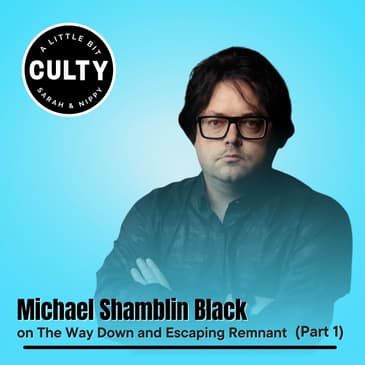
Michael Shamblin Black joins ALBC to talk about growing up inside his mother Gwen Shamblin’s world, featured in the HBO Max docuseries The Way Down: God, Greed, and the Cult of Gwen Shamblin. He reflects on life in Remnant, his current efforts to expose the church, and how therapy with Dr. Laura Anderson (past S6 ALBC guest) has helped him gain clarity while he works through long-held trust issues.
He shares a deeper look at Gwen’s early worldview, including how her anti-authority instincts, fixation on submission, and resentment toward male leadership shaped the messaging that later became Remnant Fellowship. That message shifted from weight loss and “personal revelation” into a church culture that emphasized control, appearance, loyalty, and separation from outside influence.
Michael talks about how the church’s collapse accelerated once its public legitimacy cracked, how the plane crash and the docuseries further damaged the brand, and why he now sees Remnant as an appearance-driven system built on shame and power. He also describes his own path into music, the opportunities that vanished when the backlash began, and the painful realization that his family story, his career, and the church were all entangled. Stay tuned for Part 2 of the conversation on Thursday.
Follow Michael Shamblin Black on Facebook, Instagram, YouTube, X, or TikTok.
Trigger warning: This episode contains frank discussion of cults, coercive control, physical, religious, and emotional abuse, family conflict, shame, manipulation, and trauma recovery.
Also…let it be known that:
The views and opinions expressed on A Little Bit Culty do not necessarily reflect the official policy or position of the podcast. Any content provided by our guests, bloggers, sponsors or authors are of their opinion and are not intended to malign any religion, group, club, organization, business, individual, anyone or anything. Nobody’s mad at you, just don’t be a culty fuckwad.
Buy the A Little Bit Culty book on Amazon or order a signed copy.
Check out our amazing sponsors
Join A Little Bit Culty on Patreon
Get poppin’ fresh ALBC Swag
Support the pod and smash this link
Check out our cult awareness and recovery resources
Watch Sarah's TED Talk and buy her memoir, Scarred
CREDITS:
Executive Producers: Sarah Edmondson & Anthony Ames
Production Partner: Citizens of Sound
Co-Creator: Jess Tardy
Audio production: Will Retherford
Production Coordinator: Lesli Dinsmore
Writer: Sandra Nomoto
Social media team: Eric Skwarzynski and Brooke Keane
Theme Song: “Cultivated” by Jon Bryant co-written with Nygel Asselin
SUPPORT OUR SPONSORS:
Make your summer wardrobe feel easier. Go to Quince.com/culty for free shipping on your order and 365-day returns. Now available in Canada, too.
Ready to upgrade your home for way less? Head to Wayfair.com right now to shop all things home and get your space ready for less.
Get up to 50% off MeUndies’ Subscribe & Save deal and if you don't love it get your money back, at MeUndies.com/culty, promo code culty.
Download EarnIn on the App Store or Google Play. Type in ALittleBitCulty under PODCAST when you sign up, it’ll really help the show.
Join the millions of customers who trust HomeServe. For 50% less your first year, go to HomeServe.com/culty.
To get your new wireless plan for just $15 a month, go to MINTMOBILE.com/culty.
See Privacy Policy at https://art19.com/privacy and California Privacy Notice at https://art19.com/privacy#do-not-sell-my-info.
[00:00:00] Verwandle deine Leidenschaft mit Shopify in ein Business und knack Umsatzrekorde mit dem Checkout mit der weltweit besten Conversion. Du hast richtig gehört! Der Checkout mit der weltweit besten Conversion. Der legendäre Checkout von Shopify vereinfacht das Shoppen auf deiner Website bis hin zu Social Media und überall dazwischen. Ja, das ist Musik für deine Ohren. Wie du es auch drehst und wendest, mit Shopify kannst du zu einem echten Hip werden. Starte deinen Test noch heute für nur einen Euro pro Monat auf shopify.de slash rekord.
[00:00:30] Das Podcast ist für Informational-Purposes-only und soll nicht be considered legal, medical, oder mental-Health-Advice. Die Views und Opinions Expressen sind nicht nur die politischen Position der Verwenden von Sarah Edmondson und Nippy Ames. Narrated by Sarah Edmondson, Nippy Ames. Ich bin Sarah Edmondson.
[00:00:58] Und ich bin Anthony Nippy Ames. Und das ist A Little Bit Culty. Wir woken up from a cult. Und das journey wurde in The Vow auf HBO und in mein memoir, Scarred. Now in this podcast, we break down shame and secrets that make these experiences so destructive with honest conversations on how seemingly benign groups can cross into the cultiverse. And how to spot and recover from trouble if it happens to you. Each week, we bring in experts, survivors, and whistleblowers to explore red flags, resilience, and even share a few laughs because sometimes you gotta laugh.
[00:01:26] Subscribe to our Patreon for early and ad-free listening. Some live Q&A and exclusive content at patreon.com slash alittlebitculty. Welcome to Season 8 of A Little Bit Culty. Seeking time to be dead to the earth. Welcome back to A Little Bit Culty, everyone. We have quite the episode for you. Long time coming.
[00:01:55] Today's amazing guest grew up inside a movement that from the outside looked like faith and maybe some discipline, but behind the scenes told a very different story. Michael Shamblin Black is a former leader of the Remnant Fellowship Church, the controversial religious group founded by his mother. Yes, the one with the big hair, Gwen Shamblin Lara. Have you seen The Way Down on HBO? This is a fabulous documentary which will give you lots of context for this interview. Highly recommend.
[00:02:22] For years, Michael watched and quietly documented what he now describes as deeply troubling teachings, control, and abuse within the church's inner circle. After Gwen's death in a 2021 plane crash that also killed several top leaders, Michael made the decision to leave the organization he'd been part of since its founding and to start speaking out.
[00:02:41] In this conversation, we're digging into what really was happening inside Remnant, where the church stands today under new leadership, including his own sister, and what it takes to walk away from not just a belief system, but a family legacy. This is a story about power, loyalty, and what happens when you decide to tell the truth anyway. It's also a story about persevering, surviving, leaning into the growth. And I wrote this in the book that we gave to Michael. It's that we're very proud of him.
[00:03:09] So, Mike, we're proud of you and the work that you've done. Here's our episode with Michael Shamblin Black. Part one, and please do stay for part two. We cover a lot of ground, and you're not going to want to miss it.
[00:03:35] Michael Shamblin Black, this has been, I think, five or six years in the making since we at least knew about you. Well, we saw him at CrimeCon, so that would have been what? Three years ago. Three years ago. We met at CrimeCon. And we've been in touch. I brought it out to Ken Bernstein for introducing me to you both.
[00:03:57] I remember showing up there and so many people at CrimeCon at Opry Mills, and y'all just had these massive mobs of crowds watching y'all's live podcast. That was a big experience for me. It was really cool. Oh, with Mike King. Yeah, I got to sit in the live. Yeah, that's right. That's right. And that was kind of your first, was that your first time sort of being out and about in public in Nashville? For a long time.
[00:04:23] And I credit Ken for kind of just pulling me out, getting me to go over there and then getting to meet y'all. And that was just so amazing. So cool. Ken's good like that. Ken is good. Just like, Ken's like, just come with me. Let's just do this. Which, you know, given everything you've gone through, that took some trust to go with almost a stranger. Ken has a way. Ken has a way. Big shout out to Ken Bernstein.
[00:04:53] He's a big advocate, supporter of ours. We can't thank him enough. I'm really glad he brought you out there. So between then and now, let's just start with right now. He's our Nashville Connect. Yeah, he's our Nashville Connect. How are you doing right now? We haven't talked. We've texted since then, but we haven't really talked. How are you? How's your well-being? Well, how am I doing? It's complicated, but maybe it's not too complicated.
[00:05:18] I feel like I'm still, you know, emotionally, I'm making it. I'm not going to say I'm doing great. But, you know, we can get to that. But, I mean, how I'm doing is I'm still doing my social media, you know, campaign against remnant. And I am, you know, still in that process of exposing the church.
[00:05:46] So I, you know, it's hard to say as far as like, have I moved on or, you know. I still have a lot of trust issues. I'm sure y'all hear that a lot. Yeah. You know, because I've been in churches my whole life and, you know, way down in remnant where my entire life. And I've seen a lot of questionable things from religious organizations. I'm still, I'm trying to get over all that.
[00:06:13] And I, I've, remnant didn't believe in therapy. And I've been taking, you know, therapy sessions with, I believe y'all know Dr. Laura. I believe, Sarah, you were probably the one recommending her. Has that been helpful? It's been, yeah, it's been amazing. It's been amazing. I mean, I, Dr. Laura Anderson Anderson is, you know, y'all know her.
[00:06:39] I mean, she's been in the high control, high demand religious environments. So, I mean, I feel like she's been truthfully able to kind of see how I've been affected, if that makes sense. And it's been awesome. And I feel like something like, I've told this to people, something like clarity maybe comes with every session.
[00:07:03] And when I feel a little bit off track, I feel like it's something that just hones me in on kind of where I need to be. Kind of a clarity of purpose, so to speak. With the sessions, and it's a little bit of a self-discovery. And remnant, you know, you weren't allowed to have therapy in remnant. It was a, your therapy was listening to Gwen's tapes. So, that was the only therapy I'd had to that point.
[00:07:31] And I believe one of her goals, like we've talked about, is kind of something like for me to live my best life possible. I'm sure y'all hear that a lot. And I know that may sound confusing to some people that listen and know me because, you know, I've said I'm still on this track of going right against remnant. But, you know, I just, I will say the therapy, it's helping. You know, it's hard to talk about everything with her.
[00:07:59] There's some things that are difficult to bring up. But anyway, it's good. She's amazing. I'm so happy to hear that. And we'll talk more about your healing and religious trauma and all that maybe in part two. And let's rewind a little bit. But obviously we'll encourage people to watch the documentary and, I mean, assuming you think that it's accurate. Well, it helps put this into context. Yeah, just for some context. Unless we want to give people a little refresher as to, you know.
[00:08:28] Well, Michael, we'll also record an introduction with some of the basics about remnant and about Gwen and Joe and just sort of like an update in the introduction. And this is, people want to know more about that story. They can watch the documentary. This is your story, okay? This is your journey in this podcast. So obviously you didn't choose to sign up for the Remnant Church. You didn't, you know, make the investment and buy some cassettes. You were born into it.
[00:08:54] And we'd love to just hear a little bit about your life and any memories that you want to share about your upbringing that, you know, weren't in the documentary. Because obviously a documentary can't capture what's not filmed. And even when it is filmed, they can edit it accordingly. What was life like with your mother? With Gwen. You know, technically I wasn't born into a remnant. Right.
[00:09:17] But I did, you know, I grew up, I had already always seen Gwen being this woman who she knew what the lead of God was from a very young age. You know, however you want to frame that. I feel like my whole life, you know, spent in some form of a church. And we were raised Church of Christ, which is a denomination in Christianity, very conservative denomination.
[00:09:44] And our house was very ultra conservative type settings. You know, we weren't allowed to watch the rated R movies. I had to go sneak to a friend's house to watch Terminator 2, stuff like that. Couldn't watch MTV. That's my first red flag right there. It's such a great movie, too. It really is. I remember when it came out. I like that red flag. Yeah. But, you know, our house was a lot of spiritual talk.
[00:10:13] My father was, he had gotten his Masters of Divinity, actually, from Harding Graduate School of Religion. So, it's a very religious household. The environment was very, you know, it was a daily type thing. I'm talking about God. I do feel, though, even from a very early age, it was a bubble. Even the Church of Christ itself is a bubble.
[00:10:41] I mean, I'm not, y'all know all this stuff, but I, you know, the Church of Christ itself is a bubble to the outside world. It would be a bubble within a bubble. But, you know, I'd say we were a little bit not having a clue how the world works in many ways. They were kind of shielding a lot. It was kind of a closed environment. And I've said this about Gwen before. I would put her in a category of helicopter parent.
[00:11:09] My father, David, he was always the one who, he was trying to get us out into the real world, I felt like. He was trying to be that grounding, you know, realistic guy. And in which, unfortunately, in turn, later on, it gets twisted around by Gwen that he represented Satan. So she was constantly saying stuff like that to me and my sister when he would leave.
[00:11:35] She was badmouthing him all the time when he went off. But that was a stage Gwen. Gwen, I think most people will probably, you know, wanting to know about Gwen. She was, if she had a humble state, that was it. In Memphis, we did not have a lot of money. Our family was in debt. By the time I was in third or fourth grade, we were in a lot of debt. We lived in Midtown in Memphis, Tennessee. It was a lot of crime.
[00:12:03] Like my bike was stolen three times. And our motor was stolen twice. And, you know, every school I went to had bullet holes in every window. And so she would, you know, that was the Way Down workshop weight loss program. That was kind of the beginnings of that in Memphis in the 1980s. And she was, you know, shopping at thrift stores for our clothes. But that's where it would all begin in Memphis. And you were how old when Way Down started?
[00:12:33] I was about six or seven. Okay. So you can remember that. Oh, yeah. Yeah. Did you feel like the documentary captured that part of her life accurately? Like, did that seem reflective of what it was like? I mean, it was always the different mom at home, of course, but like from what you saw. Right. I feel like the documentary did an incredible job. Great.
[00:13:02] Marina and all of them, the director, Zinovich. I mean, they did an amazing job. And they put a lot of work into that. And it was accurate. There are things in the documentary, however, that there's no way they would have known based off a lot of the people. Because some of this is my opinion. Some people may disagree with me on this.
[00:13:24] But I saw Gwen, even in the early stages, as there was some anti-male authority type thing going on. And this plays into kind of later on. I'll explain. But in churches of Christ, like every church we went to from a very young age, she's always causing issues in these churches that we go to. And I don't think that's probably known by a lot of public. She would be speaking out in classes.
[00:13:54] I would hear these things from my dad. And they would always be kind of. It was difficult for him. Because, you know, she's talking over the elders or people. You know, they'll say, does somebody have a common in a big, large adult class at a church? And she's going to want to get up and speak. And she's going to want to teach.
[00:14:19] And in those days in the Church of Christ, that was not exactly normal. It's probably not a big deal now. And she would be supporting women teachers a lot. And she just had this way of living that it rubbed a lot of people the wrong way. So there would always be like some sort of wake of people behind her that everywhere we went. That had not great memories of her. Or she could rub people the wrong way. Right.
[00:14:48] She's type A, for sure. Type A plus. Yeah. Type A hole. But she. That's the sound bite right there. Finish the sentence. But, I mean, it really. It's kind of my understanding from everything I ever saw. She had never been, you know, you talk about authority or patriarchy, all of these things.
[00:15:16] She had never been under authority of any man, if that makes sense. And it's hard to describe that. But there was no preacher. My father. A workplace. There was no. She had that within her from a very young age. And it was kind of her own, you know, jealous or whatever you want to call it. Wanting power. Self. Her method of wanting to.
[00:15:44] She wanted to kind of be on the giving end of abuse in a lot of ways. And she always felt like that she was enslaved wherever she was. And I think you see, people see that theme. I don't think a lot of people know where that theme came from. The exodus out of Egypt and way down workshop. The whole theme was the Israelites leaving the slavery of Egypt. And the Pharaoh. And Pharaoh. Yeah.
[00:16:13] And God leading them out. But if you really look at it, her whole life was getting out of the slavery of dieting. I think that was on her Wait on Diet book, like slogan. She was enslaved by male authority in churches. You know, the whole thing was always breaking those chains, getting out. Before we hear from our sponsors, just a quick reminder.
[00:16:41] Our book, A Little Bit Culty, Navigating Cults, Control and Coercion is officially out and available on Amazon. Signed pre-orders have closed, but you can still get your copy today. This book is the culmination of five years of conversations, interviews and research. Everything we've learned about how people get pulled into high control groups and how to avoid, escape or heal from them. If you've been listening to the podcast and want a deeper go-to resource, this is it.
[00:17:08] Available now on Amazon in print and as an e-book for Kindle. And yes, the audio book is coming soon, narrated by us. Just search A Little Bit Culty and grab your copy. Do it. Thanks, everybody. Thank you for listening.
[00:17:36] Now, let's dive back into the cultiverse. Were those chains real, imagined? Or do you think she created the dynamics that gave her kind of a victim-perpetrator narrative that she could maybe leverage as a means of power? I do believe some of it's real. Because a woman... Because that is the structure, right? Because being a woman not under male authority isn't a negative concept, necessarily.
[00:18:05] No, that's exactly right. Disrespecting men for just being men is where it becomes problematic. But I don't think that... Right, right. I guess where did she twist it and where was her... Where did she twist... So, like her... It was in... So, in Remnant Fellowship, I've listened to the other podcast y'all did with one of the ex-members, Gina. Mm-hmm. But they're talking about, you know, the submission part of Remnant. Women being in submission to men.
[00:18:35] And keep in mind, I don't have a problem with women, you know, the equality type part of that. No. That's not my... It sounds like that's what she's leveraging. The narrative, right? It was a very deep part of her. Yeah. Okay. So, like, you know, in Way Down, in the early stages of Remnant, you know, she loves to share how under authority she is. She loved to talk about how submissive with all things. It was submission to God.
[00:19:04] She's submissive to her husband. The entire program was based on, basically, her giving up her will. One of the foundational verses of Remnant, which was in Way Down 2, you know, Jesus talking about, The world must learn, I love the Father and do exactly what, you know, He commands. Jesus submitting His will to God. And that was the foundation, like, in how we are all supposed to be submissive.
[00:19:32] You know, the submissive wife was an example to honor God. We're supposed to be submissive to God. And, but there's lying throughout all of her videos. It's sprinkled everywhere. Because the submission, she sprinkles through all of these Way Down talks, all of her live talks, how women should no longer be enslaved with men preachers.
[00:19:57] It was mainly men church leaders, okay? But with her, it carried over to everything. But she was a lot of... With her, it ended up being husbands, men, anything. But the start is mainly men, male church authorities.
[00:20:15] So, throughout all the teachings, it's how women are supposed to be, you know, finding their own lead, not to be enslaved from these preachers or these church authorities, which just happened to be a lot of the churches in the 80s and 90s. It was still a lot of male leaders. Well, it's still today, isn't it? Mostly? I'm sure it is. But then it was even more. It was very unusual for a woman to be a leader of a church.
[00:20:45] You just didn't see that. I mean, it's there. I'm sure it's out there, but in the 80s. But, so she was saying that through the teachings because she was saying the men are leading y'all astray. And she called it mixing the message. Like the men, you know, she was teaching the women how to do it right. Right. The men were giving the women permission to do it wrong.
[00:21:09] And she was, basically, her message was anti-authority in itself in Wado. She would say things like the wife's supposed to be submissive to the husband. You know, she would claim the husbands and men are supposed to be the heads of the church. Keep in mind, we're still talking about Christian patriarchy here. You know, however people view that.
[00:21:30] Well, yeah, I was going to say that there's no other structure out there that reinforces that dynamic of subservient women to men, right, in our culture than the Christian patriarchy. Is that accurate? Well, what do you mean, sir? Like, describe that again. Well, the traditional male-female roles are generally reinforced by church dynamics. Like a more submissive woman to a more, I guess, father figure. Sure. Right. Certainly. Certainly. Right.
[00:22:00] Based off that patriarchal, you know, Judeo-Christian system. Right, right, right. And she's pushing back on that? It was a women's experience, okay? It was body image, food, self-control, you know, a lot of shame. It was a lot of areas where, and keep in mind, I'm not trying to be, I'm not trying to, you know, go into like misogynistic type things here. I know it can sound like that, but...
[00:22:27] No, anytime you talk about the differences of genders, you can risk that. But I think in this case, it's clear abuses of power. And putting language to the abuses of power is extremely valuable. So, in the Christian patriarchy, where the men are in charge and women are supposed to follow, it seemed like she was like, no, I'm not going to do that. And was pushing back on it and getting women to kind of question that, but then making them obedient to her. So, it wasn't really that.
[00:22:56] She was kind of... She was attacking the power structure to take the power. Yeah, like using the abuse of power to abuse her own power. Is that right? Is that... That's exactly, that's exactly right. So, you're not shitting on, just to be clear if anyone's accusing you of this, because it sounds like you're sensitive to it. You're not shitting on women being equal, right? You're not shitting on women... Or attempting to gain power. I'm not, that's not... Right. Yeah, no. So, that's a trick...
[00:23:26] I see what you're saying. That's a tricky area to discuss. It's not the simplest thing either, but, you know, she's setting... You're exactly right. She's setting up things in all of these programs so that, you know, these women who... Way down is 98%, 99% women in the 80s, 90s. It's millions of women in churches, just about all, you know, most of them are in churches. She's setting things up so they can leave a situation that's mildly uncomfortable.
[00:23:56] She's paving the way for them. It's a form of anti-authority Christianity. And she's trying to guide them into a remnant like a ship. Right. She's encouraging them to look for their own leads. So, in churches, you know, if there is this patriarchal system in a church, she's encouraging women to look for their own lead from God. Personally, bypassing the men. Bypassing the preacher.
[00:24:23] You know, and then it goes from just bypassing the preacher's lead from God to bypassing the church, their organization. That's the next step. And she starts calling all these churches counterfeits. Because that's the primary way she's going to get her followers for a new church. They have to be bad for you to be good. I mean, I know... She's attacking her competition. Did she have the long game? Like, do you think she had the long game? Like, I'm going to do this way down.
[00:24:49] Or did she start to gain success with the way down and realize that she could convert those people to followers? And then, like, how planned out was this? Do you think? It's hard to know, but what was your guess? I'm not sure that she knew what it was going to turn into at the very beginning. I felt like, though, like I said earlier, I felt it was something ingrained inside of her. I think that's probably it. I think when you grift, it's the grift that's around you.
[00:25:18] And then if your grift gains momentum, it can probably shift the grift to something else. But it's always the same. Put me in a position of the center. And in doing so, she's attacking her competition. Yeah. It's a tactic. Meanwhile, what's life like for you? You're going to Church of Christ school, and then eventually she's like, now we're going to start our own? Right. But when Remnant started, I was graduating high school. Right.
[00:25:44] I never experienced, you know, I did go to a private Christian high school, David Lipscomb in Nashville. Oh, yeah. I never fully experienced the amount of hate that came. Once word got out that she started her own church, it was like massive, you know, we called it in remnant persecution. Right. Mm-hmm. But it was, that was a big roller coaster, but that was not until I got out of high school, started college. Okay.
[00:26:15] So what do people not know? Like, you live this, you, assuming you lived with her. What happened to your dad, by the way? He, your parents got divorced? Yeah, that's right. They divorced 2018, and then after that, 2021, after the plane crash, I leave Remnant in 2021. And then I get to finally spend a couple of years with him, which was great.
[00:26:41] I had always had a lot of respect for him, but then we went to lunch every single day. Unfortunately, he kind of became my, like, only, you know, my only friend at that point. But then he gets pancreatic cancer and passed away. Oh, man. So, 20, just a year later, basically. Oh, my God. Jesus. So I was, like, caring for him the whole time, too, and watching him waste away. He lost, like, 160 pounds. It was, fuck. It's never fun. Cancer's not fun. You've been through it.
[00:27:09] You've just, like, God, one thing after another. What year did he die? A year after the plane. 2023. Jesus. In fact, this month. He died tomorrow. Tomorrow is the three-year. May 19th. Wow. Yeah. I'm so sorry. But at least I got to have, you know, I got to have some good. Some closure. Yeah. That's right. Closure.
[00:27:38] Did he fill in some gaps for you of, like, what happened from his perspective? Mm-hmm. Oh, yeah. We talked about it every day. He, unfortunately, had not seen a lot of the inside terrible stuff about Remnant that I had seen. Like, you know, when I started exposing all that stuff with Phil Williams, the guidance system and all that stuff. He didn't know about all that stuff. But he was, you know, he had known Gwen, though, for longer than anybody.
[00:28:05] So he would talk about how Gwen was in college and things of that nature. What was his diagnosis? What did he say? Was he as blindsided by it as everyone else? Was he, did he see it happen gradually? What was his take? I remember him talking to me about when Remnant first started. He actually was a part of Remnant, keep in mind, for the first eight months of Remnant.
[00:28:31] And then he backs out because Gwen being the leader, the preacher, the, she's the judge, jury, and executioner. It was just too much for him. He was trying to make it work, and it just didn't work. It was super awkward. And she, because she's sitting there on stage saying women should be submissive to men. And yet, he has to do what she says. It was just, it was weird.
[00:28:59] And he also saw the praise part get to her. He saw the Gwen before she got big. A lot of this is like the same, it's like the Hollywood story of somebody being a nobody, and then they get lifted up, and they're famous, and then they get arrogant, and their friends, somebody says, hey, you're not the same person anymore. And, you know, we've all seen those movies, right? That's true. It's kind of a cliche, isn't it? It is.
[00:29:27] With a little extra hair. But that was her. You know, she got, she, her high heels got too high. You know, she was, I would always like make this in my journal. Like, it was like Icarus, you know, Greek mythology. And, you know, his father Daedalus is warning him, you know, make some of these wings, but don't fly too close to the sun, because his wings are made with wax. And he gets too high, and the sun melts the wax, and he falls to the earth.
[00:29:57] She had her wings, and she went a little too high. Yeah. Definitely. Burned her hair, probably, too. Yes. Wings and hair. Burned her fire. Singed. Burned her fire. What was it like for you? Like, when did you, like, what was your own journey? You know, you're, in the documentary, we see you as, you know, playing your music, and that you're super talented, and, you know, you're leading these things. That's debatable. Okay.
[00:30:24] Well, I'm saying you're super talented, and I spoke to God. Why do you think, Sarah? But what was, like, when did you start to have doubts? Do you have any particular moments where you started to question things, and can you remember some of them? Mm-hmm. Oh, yeah. All kinds of, there's all kinds of things. As far as, like, you're talking about, like, when I started seeing issues, things like that. Yeah. It could be before remnant, during remnant.
[00:30:53] And, like, tell us some stories of your own inner struggles. So something that I don't think has come out a lot is when remnant started in the late 1990s, I was doing music, and I had, you know, some albums, and I started getting to record. And Gwen's at the height of her popularity there, like 1997, 1998, 1999. And I, her books are selling everywhere. They're in all the stores, the Lifeway Christian stores.
[00:31:23] I was, at that point, pursuing Christian music professionally at that point. I actually had a development deal with, it's a label called Rocket Town Records. It was Don Donahue who was the head of it at the time. And they brought in this big producer from LA. His name was Monroe Jones, and he was going to produce me. He came to Ashland, which was the house we all lived in, to hear him listen to me play music. And I was going to get a three-song deal for radio, Christian radio.
[00:31:54] And so, you know, right as that's happening, so I'm getting out of high school and getting this opportunity. You know, remnant starts, and then there's the immediate backlash. Gwen had a book deal with Thomas Nelson for her second book. They cancel her book. She was going to be on a 52-city book tour on a private jet. Thomas Nelson cancels it. The churches start dropping way down programs. You know, the Christian conferences start distancing themselves from us.
[00:32:23] And then I immediately, they call up, and I get the call from David Martin. Gwen sends David Martin in to tell me. And they're like, sorry, you know, your deal's done. It's, so it ended before it even started. Sorry, remind us who David Martin is. So David Martin was like her right-hand guy. Yeah. He was one of the people that, leaders that died on the plane crash as well. He was the worship leader, David Martin. Me and him were worship leaders.
[00:32:51] And they told you it died because, not that, so like the deal died. So they backed out because the Christian, all of the Christian businesses backed out of way down. So they said my music deal was canceled immediately. Damn. The producers, they all pulled out. So I, as soon as I got the opportunity to have the music deal, that was going to be my life, Christian music. I was going to be on the radio, you know, be in the studios and do all that. Because Way Down also had a humongous audience. Keep in mind.
[00:33:21] It's not because I was so talented. It's because Way Down had a built-in audience. Let's take a little break from the cultiverse. Here's a word from our sponsors.
[00:33:53] Thank you, sponsors. We couldn't do it without you. Now let's get back to the show. And the Christians were separating from the Way Down because this is when she introduced that she wasn't supportive of the Trinity? Or like what was that? Is that why they were all changing? It was the Trinity and her starting her own church. Ah, I see. Okay. When she announces that she's starting the Remnant Fellowship. Okay. Ah, so she went a little too far with her. Yeah. And I... Right.
[00:34:22] One thing I... We re-watched The Doc just because it's been a while. And I had forgotten that even the word remnant implies like one true church. It's the only one. And as you know now from doing your cult recovery work and reading our book that every culty church, not all churches, but the culty ones, say that they're the one true church. That's the only way. Right. Right. And that's a big red flag. No, they consistently... They've always... What Remnant is so funny about is that they say something and they'll take it back and say,
[00:34:52] we didn't say that. They do that more than anybody on the planet. Does it drive you nuts? They rescind their claims. Yes, it drives me nuts. I imagine. Do I not look crazy? Right. But they've always stated that they're the first people to know the real truth of the Bible. And I'm like, has anybody been to a library or something? You know, they don't... There's been countless Christian groups that have gone before Remnant.
[00:35:22] And that was something I used to warn Gwen. And I would say... I wouldn't warn her. I would say things just to make people think. I'd be like, y'all do realize there's been tens of thousands of Christian movements since the time of after Christ that have come and gone before us. And they really felt like they were on the track. And then they lost their supposedly righteous direction.
[00:35:50] And even that context, they didn't want to hear that. They didn't want to think that this could have happened before, that there's other people. They wanted to feel like they're the only ones. And Remnant, you know, they lose their... You know, they build their legalistic groundwork. And it's the Church of Thin, right? And it's for people who want to worship Gwen Shamblin Lara at this point. And it's people that love to be on camera.
[00:36:19] It was all about appearances. It was a quick... It was a skin-deep religion. Right. It was an appearance-driven religion. A surface-only, you know, the services were... I used to call it the sanctuary... I called it the studio. It wasn't the sanctuary. Because there's so many cameras and staging and how it's put together. It's not a sanctuary. It's a studio. It's an appearance-driven church.
[00:36:45] And it turned everybody sitting in that building into the same thing. It turned everybody into shallow. It turned everybody into surface. I'm not saying everybody, but you know what I mean. And weight, remnant weight was the number one sin, overeating. And so that's the foremost barometer of sin. And so, you know, don't let yourself get too large if you want to stay in this church of all these women spies watching and controlling you. It's your size, your weight.
[00:37:14] It's how you dress your clothing. It's getting approval from your peers and leaders. It's a lot of cliques. It's a lot of parties. It's closer to a women's sorority or something than it is a church. But that was remnant. It was a lot of that. Where is it now? What is the state of the church now? I would say they are, they're not doing great.
[00:37:41] It's basically kind of become, like, they've been seriously hurt, I believe, from all of the things that have been exposing it. If I had to guess. The documentary. The documentary, right. Right. That did not help them at all. The plane crash didn't help them at all. No. I mean, when the plane crash first happens, you think about that seven leaders. I used to think corporations don't last if they lose seven of their top leaders in one day.
[00:38:09] That's why you don't put, you know, all your generals on the same plane in the army. You know, the president and the vice president never fly on the same plane for that very reason. Or at the same time. Yeah. At the same, right. At the same time. Yeah. So that damaged remnant and then the documentary is damaging all of these, these things that have come out exposing. I've been fortunate enough to be able to put a lot of stuff on social media.
[00:38:37] I've had a lot of sources sending me things that I could put out further exposing them and then had the Phil Williams interview. And there's, there's other people doing interviews as well. You know, you've got the Gina Wilson that was on y'all's podcast, which that was, that was excellent. By the way, I've listened to that probably like 30 times. Really? 30 times. Well, I am obsessed with this, Sarah. I'm obsessed with remnant. That was an excellent interview. Thank you so much for saying that. By the way. Shout out to Gina.
[00:39:05] And that reminds me, we have to send her a copy of the book because she's in it. Have you got to that part in the book where we talk about? Yes. I want to say I've read like, yes, I'm doing my best. It's a lot in that book. It's a lot. Yeah. It's a lot. It's almost, I almost want to say the word is like, it's overwhelming in a way. Like, it's awesome. I love that y'all have like a cheat sheet on every chapter. And it's a lot of people's stories from the people that you've had on your podcast.
[00:39:35] And it's almost overwhelming because it's like, I identify with a lot of y'all's experience so much. And it's not a very common experience for me to see that. And there's so many good points in it. It's just, it's going to be one of those things I'm going to have to read over and over. It's like a manual. Yeah, it's a manual. We want it to be a manual. That's what we want it to be. A handbook for survivors. That's the best endorsement. That's good. Yeah. Good stuff.
[00:40:01] There is a little something in there about you without mentioning your name. You'll recognize it when you get to it. Because you're not done yet, right? It's in the healing section. Oh. Healing. Yeah. You're not there yet. My favorite word. How did you know? When you read it, you'll be like, oh, that's me. We changed it so it wasn't so that it, and by the way, if you read it and you decide you
[00:40:30] don't want us to include it, I think you'll be fine with it because it's, it was really. I'm not going to make y'all republish your book. Well, it was basically us saying to you when we met you at CrimeCon because you were debating whether, you know, what to do. And I said, just focus on your healing as if it's your job. Something like that. I still remember what Nippy said, too. I mean, yeah, that was such a big moment for me. What did Nippy say?
[00:40:55] Nippy, I remember he, you said, Nippy, you said something like, you know, getting myself right, you know, physically getting your mind in the right place, like before you start. I don't want to put words in your mouth, but it was kind of just getting my, you know, work on yourself, basically. And it takes time, you know, get yourself, and it was a health, you know, version of healing.
[00:41:23] And then, you know, it takes years to start speaking. I mean, you should, you should reset. You can say it better than me. I probably said something to the effect of putting language to what happened to you is the best way to heal, I think. And I wouldn't start speaking about it. I mean, you can still speak about it, but like, don't do anything that's going to make you leave your comfort zone. Like, take care of yourself first. Yes. Yes. Okay. That's yes. You have no obligation to do that.
[00:41:53] And you can stop a conversation whenever you feel like it and make sure you've put language to what happened. And if you get to a point like where you don't, you can just say, listen, I'm, this is where I tap out. And it's a constant thing of like putting language to it. And also you have to understand, I guess speak for Sarah a little bit here, but like, I was pretty peripheral to a lot of the abuse. You know, you were, you were ground zero in your situation and abuse. You were in the crossfire every day.
[00:42:22] You were in it physically every day. I was peripheral and I lived in another city part of the time. So while it's the same, it's to the extent to which I got it and was a fraction of yours, but the language is the same because the pattern recognition is identical. So for me, I wasn't dealing with the trauma, years of trauma that you had.
[00:42:50] In fact, I didn't get into take this training until I was 26, 27. So I had a kind of sense of the world myself before I got in it and I had a lot to compare it to, but the pattern recognition and the coercive aspects of it are identical. And so putting language to like what happened to me sent me down a rabbit hole of like every time I have a conversation with someone, it's like the pattern is exactly the same. The degree of trauma in each person is different. If that makes sense. Right?
[00:43:20] So it's case by case. So I'm not saying what was good for me is going to be good for you. I can say putting language to it is the start and then turning it into wisdom and content for others to help them is what you could, is an option for you, which as I understand is a lot of what you're doing. At least in terms of putting language to what remnant does and what remnant did, it was probably a more drastic degree. It's also physical violence involved. Yeah. Which we haven't even talked about.
[00:43:51] Right. I mean, well, I mean, being branded as physical violence. That's true. That came, I mean, that just came at the end. It just came in the last few months. Well, that's good. That's really good stuff. The pattern, you know, the pattern. Once you figure it out, it can be applied to other things. Yeah. Yeah. It's identical. And then also you don't feel as alone, which I think is what may have been also powerful for you when we met three years ago is that, you know.
[00:44:19] Well, it just seems like what you're saying, I mean, you'll have the techniques, if you will. Yeah. So it can be applied to anybody. It doesn't matter how severe, it doesn't matter how big severe something is. It makes total sense. Okay, everybody, let's take a pause there. We're going to come back for part two on Thursday where we hear how Michael eventually decided to leave, what that was like for him, what he's been doing since, his healing journey, how he's been trying to shine a light on the church, get information, wake people
[00:44:49] up, and we'll hear more about his insights on his journey in level two. So it's like NXIVM curriculum in part two. Level two. Level two. Don't buy now. Level two. Okay. Be right back.
[00:45:26] We hope you're enjoying A Little Bit Culty. If so, please do show us some love. Drop a rating or leave a review. Hit subscribe on Apple, Spotify, or wherever you listen. And subscribe to our Patreon at patreon.com slash a little bit culty. Even better, send this episode to someone who needs it. Maybe they're in a cult. Maybe they're just a little bit susceptible. Or maybe they just love a good story. Spread the word. Spread the love. Thanks for listening. And see you next time. A Little Bit Culty is a Trace 120 production.
[00:45:53] Executive produced by Sarah Edmondson and Anthony Nippy Ames in collaboration with producer Will Rutherford at Citizens of Sound. Our co-creator is Jess Temple Tardy. Our production coordinator is Leslie Dinsenbor. Writing by Sandra Nomoto and social media marketing by Eric Swarczynski and Brooke Keene. Our theme song Cultivated is by the artists John Bryant and Nigel Aslan.