
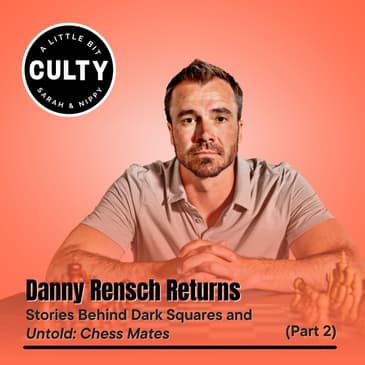
In Part 2, we continue our wide-ranging convo with Danny Rensch, which starts with a very pointed critique of Netflix editing and the way it framed both Sarma Melngailis and the Hans Niemann scandal in Untold: Chess Mates. He gets into the ethics of Chess.com’s cheating investigations, why nuance gets flattened in public narratives, and how hard it is to explain a private, evidence-based process to people who only see the headline version.
We also moved into bigger questions about power, accountability, and self-doubt, including Danny’s reflections on running a huge platform, being called the “chess mafia,” and trying to build a system with real checks and balances. Finally, he covers why emotional timing matters, how transitions make people more vulnerable, and why taking a breath before reacting can matter just as much in life as it does in cult recovery.
Be sure to watch Untold: Chess Mates on Netflix, read Danny’s memoir, Dark Squares: How Chess Saved My Life, and follow him on Facebook, Instagram, YouTube, TikTok, X, or LinkedIn.
Trigger warning: This episode contains frank discussion of manipulation, coercion, public accusations, cheating allegations, power dynamics, and emotional abuse.
Also…let it be known that:
The views and opinions expressed on A Little Bit Culty do not necessarily reflect the official policy or position of the podcast. Any content provided by our guests, bloggers, sponsors or authors are of their opinion and are not intended to malign any religion, group, club, organization, business, individual, anyone or anything. Nobody’s mad at you, just don’t be a culty fuckwad.
Buy the A Little Bit Culty book on Amazon or order a signed copy.
Check out our amazing sponsors
Join A Little Bit Culty on Patreon
Get poppin’ fresh ALBC Swag
Support the pod and smash this link
Check out our cult awareness and recovery resources
Watch Sarah's TED Talk and buy her memoir, Scarred
CREDITS:
Executive Producers: Sarah Edmondson & Anthony Ames
Production Partner: Citizens of Sound
Co-Creator: Jess Tardy
Audio production: Will Retherford
Production Coordinator: Lesli Dinsmore
Writer: Sandra Nomoto
Social media team: Eric Skwarzynski and Brooke Keane
Theme Song: “Cultivated” by Jon Bryant co-written with Nygel Asselin
See Privacy Policy at https://art19.com/privacy and California Privacy Notice at https://art19.com/privacy#do-not-sell-my-info.
[00:00:00] Verwandle deine Leidenschaft mit Shopify in ein Business und knack Umsatzrekorde mit dem Checkout mit der weltweit besten Conversion. Du hast richtig gehört! Der Checkout mit der weltweit besten Conversion. Der legendäre Checkout von Shopify vereinfacht das Shoppen auf deiner Website bis hin zu Social Media und überall dazwischen. Ja, das ist Musik für deine Ohren. Wie du es auch drehst und wendest, mit Shopify kannst du zu einem echten Hip werden. Starte deinen Test noch heute für nur einen Euro pro Monat auf shopify.de slash rekord.
[00:00:30] This podcast is for informational purposes only and should not be considered legal, medical, or mental health advice. The views and opinions expressed do not necessarily reflect the official policy or position of the podcast and are not intended to malign any religion, group, club, organization, business, individual, anyone, or anything. I'm Sarah Edmondson.
[00:00:58] And I'm Anthony Nippy Ames. And this is A Little Bit Culty. We woke up from a cult. And that journey was captured in The Vow on HBO and in my memoir, Scarred. Now in this podcast, we break down the shame and secrets that make these experiences so destructive with honest conversations on how seemingly benign groups can cross into the cultiverse and how to spot and recover from trouble if it happens to you. Each week, we bring in experts, survivors, and whistleblowers to explore red flags, resilience, and even share a few laughs because sometimes you gotta laugh.
[00:01:26] Subscribe to our Patreon for early and ad-free listening, some live Q&A, and exclusive content at patreon.com slash alittlebitculty. Welcome to Season 8 of A Little Bit Culty. Seeking down to the depths of the ocean.
[00:01:49] Welcome back, everybody, to Part 2 with Danny Rensch, International Chess Master, Broadcaster, Chief Chess Officer at chess.com, and all-around amazing person. So if you haven't listened to the first part, you know the drill.
[00:02:16] I really need to say this. I need to say it. It's really important. I'm sorry. Ladies first. I'm also importing data. This is a next game term. I'm importing data from a previous experience, which I think is important for you to know. Have you seen Bad Vegan on Netflix, or are you aware of it? No. Okay. You should watch Bad Vegan, and then we can have another follow-up. But I also want to connect you with Sarma, who is the subject of Bad Vegan. And we connected after our story became public because she was the survivor of a cult of one. We mention it in the book.
[00:02:46] And she was the owner of Pure Food and Wine in New York, and she got conned by a guy who basically like- Oh, yeah, yeah, yeah. Yeah, I remember that one fast. But yes, she invested money. It was like an investment. Yes. Okay, yeah. It took so much money. She went to jail for, I believe, tax fraud. He just did a number on her emotionally. Gaslit, NLP, hypnosis. All the stuff. All the things. And just with her, it really fucked her up. And she's great now, and she's a brand, and she's been on the podcast.
[00:03:14] And she went on and did a similar thing for Netflix about her experience. And at the end, Netflix is why I have a bit of a beef. It's not even necessarily with Netflix, the producer, the director. I don't know who made this choice, but cut up a conversation with her and Mr. Fox, who's the guy who did the con man who manipulated her, cut up a conversation out of order and ended it so that at the end, you're left with, wait, was she in on it? Is she a victim or was she part of the scheme? Yeah.
[00:03:45] And she didn't even realize that until she played the original footage that she gave them. She gave them everything. And they did it. They cut it up in a very unethical way. Yeah. And now, and she's actually just written a book. I'm just going to show it to you really quick. Well, it's here since we're on video. Oh, God, the pile's too big. I'm going to topple you. Don't do it. This one here, the girl with the duck tattoo. Okay. It's really good. And she, it really sets it straight as to what happened. And I've said publicly, I shouldn't say this because I still want to act maybe one day, but like shame on Netflix. Yeah. Like shame on them for doing that. Like I'm mad about it. That chaps my ass.
[00:04:15] Let them have it, Sarah. That chaps my ass that they would take somebody who's brave enough to come out with their story. And like, really for her, I mean, she went to the bank, you know, she did these things and she like, it's easy for people to pile on her and be like, you should have known better. And like, you know, but I know because of what I've been through and you would know when you read her book how he did it. And she is a victim to those crimes for that to be out in the world as like, maybe, you know, now that I know those buckets for you, I feel kind of the same way. Like that's really shitty.
[00:04:44] The lawsuit bucket is the worst. And it's the one we are most upset about privately. I probably shouldn't say this, but I'm going to say it anyway. And legal can be like, we are not happy about the implication because a big part of our goal was that people would remember chess.com doesn't settle and you're not going to bully us if you cheated and you're not going to, you're not going to do something where you get money. And so if there's an implication that the opposite is true, like it has long-term material effects. And so we are not happy about that framing.
[00:05:13] The doc doesn't mention that the, that my book does, it was dismissed in a federal court with prejudice, like end of mother story. And the threats of keeping a lawsuit going when you're dealing with someone who's been like knocked out in the ring and you are a big company. And at that point I would agree with Magnus, the legal system kind of does suck where you realize people can keep coming and you're like, Hey, like how do we take our marbles and go home? And that's me not going into the agreement. And I'm not going to go into what may or may not be true about what Hans is saying when
[00:05:43] other people aren't there. Cause I think it is in his interest to imply that somehow he got more than he did. Right. And so that sucks. The other ones, like I said, I can say all that and be frustrated with Hans continuing to kind of perpetuate lies and still have a ton of compassion for this kid and say that we don't think he, he deserved what he got and we wish it had gone down differently. And I have regrets and how about how fast that moved. And I'll even go further as to say, I'm sure they cut up the Magnus thing to make shit end with his gaslight comment, because I know that Magnus felt that way at different times, but
[00:06:13] he and I talked and said, look, man, two things can be true. We can have thought there was so much smoke. We can in our conversations have thought like maybe we would find something and that could have come out positively. And you could have remembered that not all the other things we said, which is, but Hey, we don't know for sure yet, because that's not bullshit or Americans who talk a lot. The nuance of the conversation is complicated and the way they edited it, it ends.
[00:06:38] There's been even people on Reddit who are like, wait, are Magnus and chess.com still beefing? Like, is this because they implied it in such a strong way that it wasn't fair? Yeah. It was similar to like... I guess my question would go, did they do the same thing with Hans? I wonder. Yeah. Cause they certainly created a narrative where people who are experts of the game don't understand how an expert is beating another expert. Yes. Square that circle for me. Like what's, what's the closest version of reality?
[00:07:08] That is, that part of it is true in that there were aspects to Hans's rise that, to be clear, Hans's data and we rely on our data for our algorithm. It has to do the heavy lifting, both for what will stand up in a legal court of law. It's also our own integrity that we just, we have certain benchmarks and guardrails that we have to maintain. There was never a step function in Hans's growth that would imply something inorganic. When you look at things holistically, whether using like a cluster statistics model or what
[00:07:38] you're doing to decide a Bayesian model, like bring all of someone's DNA together. You look for certain things that suggest there was an inorganic signal in the noise. That didn't happen. And that said, the peak of someone's value versus a normal distribution can also not be inorganic, but be startling and be like, oh wow, this is a very unique rise. And when you compare him to other, like there were areas of that along with the fact that
[00:08:06] he did cheat online and admitted to it. He still doesn't admit to the full level, which I don't know why he's still denying that he should just do it at this point. So all of that smoke, the circumstantial really weirdness of how he behaved. No one beats Magnus Carlsen without putting effort into it. It was very weird. Combined with this, there were a lot of experts and without naming names, there are people who still have doubts about that, right? But Hans has continued to impress and show that he's a very talented person.
[00:08:35] And so that was not a fair misrepresentation of it. But I also think that Hans continues to silence like the, he continues to get better and better. And so like history will continue to prove just depending on how good Hans gets, right? When you look at the full breadth of someone's work with hindsight, you see things differently than you do when you're in the middle. Sure. And so I think that there's a lot to that story. We are kind of still in the middle of just how good is Hans Niemann going to get?
[00:09:05] And what will his overall profile as a player and his rise be remembered as? Has Magnus reconciled that? He seems pretty like... No, I think Magnus has his own... Magnus would also say, I don't want to put words in any way. I think Magnus would acknowledge that, as he said, he maybe wasn't in the best space then and is rattled by it now. He also would say that Hans has proven to be a very strong player. But I think if you unpack what happened and what Magnus's experience was and is combined
[00:09:34] with whatever the suspicions of someone's past are, I don't know what Magnus's current view of it today would be. Okay. You'd have to ask Magnus. Unless he's been in a cult, we probably won't. But has Hans of a new mentor? Like, does he, is he working with anyone? Do you know? He's had a couple of different coaches and I don't know if he's working with anyone to date. Okay. But I think the framing of like my relationship with Hans and, and, you know, Hans definitely
[00:10:01] holds back no punches in terms of how he, how he feels about me. And I get it. I also, again, it's hard for me to get it fully without also saying yes, but you continue to lie about these things. I'm sorry, buddy. So whatever you want to say. You gave him a lot of chances. Yeah. But my mentorship was a little bit more, my involvement with him was much more focused on his career as like a creator and a streamer. And he has not been investing in that as much. He's been more just like focused on, I want to become a world champion.
[00:10:28] And so there's no like apples to apples comparison of like someone like me in his life versus someone who he has now. Although he does have coaches and trainers. Yeah. If they're listening, my advice to them would be they need, like, I don't know what he's doing now, but two years ago, like when he was on that series, I'm like, he's real, dude's got to reel it in. You know what I mean? Like that's like my first instinct was to listen. I'm new to this world, right? Like you're our entry point. I don't know either of them. I'm not importing anything. No more anal beads. That would be mine.
[00:10:55] Well, I mean, poor guy, but also like he doesn't do himself any favors. Like he just presents as like. I've been told that by others too. Like again, Hans isn't taking PR advice from me, but if I was still in his corner, I would say two things, which is like one, you actually are missing an opportunity. Stop brainstorming this and just tell the whole truth because people are ready to be compassionate and by your side, including even me. And like, I know he would be like, oh, well, that's easy for you to say, but no, you're still lying about it.
[00:11:25] I didn't cheat. Like, it's so hard for me to like look at someone and know their tells of when they're lying and just be like, Hans, why are you still doing this? You actually could win a lot of sentiment over if you, because you can even do it now with the way of saying it was very hard for me to get to this point because I was young and I felt like I had to protect what I told before or whatever. Like just come clean. And you will have a huge PR win. It's similar to what we were saying earlier about why you don't admit you're in a cold. Exactly. So you're so in it and close to it. So there's that.
[00:11:51] And then I would say, I've been told by a lot of people that he presents like a reality TV character. Yeah. Like someone who's so obviously trying to, he's almost trying to like present as a sociopath even if he's not like, which makes him even more crazy. Like he's ticking. Like the way that he looks to the side and like all those little movements. I'm like, I don't trust you. Like, I don't trust you at all. Like, I still believe that he cheated across the board. He's mugging for the camera.
[00:12:18] Like that's what I believe just based on my behavioral analysis. I have a friend who did hostage negotiation for years. I won't out him name on this, but he reached out and he's like, I know he's being dishonest. I just can't tell you about everything he's being dishonest about. Like it's impossible to pin down because like there's just something about his overall character that is disingenuous, which makes you go like, why? Yeah. And is, you know, so it's just, he presents as someone who's being dishonest.
[00:12:46] It's like he's mugging for the camera, but an ugly face. What would Gabor Mate say it's all about? It is about your trauma. He definitely has a lot of trauma. He has a lot of trauma. He does seem to have a lot of trauma. I hope he heals it. Okay. So I don't know how to ask this question without it sounding whatever, but like, how does it feel or how did it feel to be, you know, in a cult and be the victim of an abusive
[00:13:13] power structure and then to be like named that, like had like to be called out as, you know, the mafia or whatever he's like. It's hard. What's that feel like? It sucks. Yeah. Honestly. And I, unfortunately, if we go back to the beginning of the podcast and to now, like as someone who struggles to give even his inner child grace, I struggle to give my current self grace. I mean, the amount of times I have questioned myself and questioned whether our own influence
[00:13:41] over the game and whether we are making the right calls with our current perceived power. Like, and so I don't know how else to answer it besides being like just a hundred percent honest that like chess.com has become a very, very powerful entity. We believe we are stewards shepherding in the right direction, something we don't own that belongs to humanity. And there are those who see us as evil mafia capitalist, you know, leveraging and monetizing something we don't own.
[00:14:10] I think there's just a lot of evidence to suggest, you know, the former, not the latter. And I think where the game has come and there are so many great things happening, but I also, I have doubted many times whether chess.com deserves to, to make closures for cheating in a black box. At the same time, we're not a government. We are a private entity. You agreed to our terms of service.
[00:14:38] And if those are breached and abused, we have the right to act based on the agreement. And we have a lot of evidence. I mean, everyone remembers the Hans story. There are the very rare times where someone, you know, opposed and through our own kind of internal arbitration process, we've actually overturned. We do have record of that. We also, that speaks even more strongly to all the times we don't overturn because we really do have, we have a full staff. We have like our own internal jury system where we make people take the defense of someone.
[00:15:06] No one would, people would be shocked by how like democratically we run this process internally because Eric and I are so frightened of abusing power. We are so scared of the fact that we have accidentally become like the stakeholders to the gates of heaven when it comes to who's playing clean chess. But also like the governing body, FIDE, which is the International Chess Federation, as my book talks about, was sort of asleep at the wheel, not investing in this space.
[00:15:30] And so as supposedly the nonprofit infrastructure, the officialdom supposed to be the government, the police, like they really fell behind. They actually are just not qualified to have a voice in this space in the way that we are. So what do you do in this, in this case? Right. And so we're like, I'm just answering about cheating. And there are people who just like, I say when it comes to broader aspects of how the game has grown and people accusing us of being chess mafia, when it comes to like having
[00:15:57] great relationships with all the top players and ambassadors, I go like, I'm not going to apologize for being Nike. Right. We have invested. Nike doesn't own shoes. They don't own the right to wear or make shoes. But if they're like market share is there, they would be applauded in normal businesses. The chess world has its own kind of cult following in terms of the expectation that it should always be free for everyone. But as I mean, I've had other people win this argument for me, which is we're not saying chess isn't free. But just like any other sport, if you want an education to get better at football, you
[00:16:26] pay for training, you pay for access, you pay for services. So I'm not going to entertain any idea that what we have done as a business is not fantastic. It's amazing. We have 650 people. And everyone's both. I will take to my grave one of the proudest things in my life is that we have created a company that has 650 people. We provide health care and dental. I say, go bleep yourself. 650 people? We have an amazing thing, right? Wow. So one of my proudest things ever is that. Call us a business and I will say yes. Okay.
[00:16:53] But when it comes to this particular area, it is really hard to be judge, jury, and executioner because we don't have checks and balances outside of anything that you are right ultimately rolls up to me and Eric. And we're doing the best we can. And we're like super full of like self-doubt about it. Like we have a very forgiving policy, which has gotten us in trouble. Yeah.
[00:17:20] And at times like we've really tried to operate with not just believing in second chances, but always creating a path toward redemption. Yeah. And we've had a lot of successful stories in that lane, but catching cheating in chess is hard. We are better at it than everyone in the world. And it's not even close. And people are incentivized also now because of this amazing economy we've built with streamers and creators to do it even more than ever.
[00:17:45] And there's no one really to fully keep us in check if we were closing people with bad motives. And like, other than what I would say in the end is the community, because the truth is, I also shared this story in my book. But I feel like the few times we have really flexed our power inappropriately, not because we meant to, but in hindsight, we did. Like we rushed to some conclusion or we, you know, as I shared one of the earliest lessons
[00:18:12] I had in terms of, you know, going public with a story, despite the fact that the person had actually confessed to me privately got us in a lot of trouble. Hans' thing is kind of in a similar boat now. We're like, despite what we know, there are always going to be a certain amount of people that see the combination of big business, innocent under, or not even innocent, underdog kid, they'll make excuses for his cheating because they'll say it's not a big deal. Big business, underdog kid combined with they don't have access to the black box. They will never be happy with that. And I respect that. I actually get it. I get it.
[00:18:42] Before we hear from our sponsors, just a quick reminder. Our book, A Little Bit Culty, Navigating Cults, Control and Coercion is officially out and available on Amazon. Signed pre-orders have closed, but you can still get your copy today. This book is the culmination of five years of conversations, interviews, and research. Everything we've learned about how people get pulled into high control groups and how to avoid, escape, or heal from them. If you've been listening to the podcast and want a deeper go-to resource, this is it.
[00:19:12] Available now on Amazon in print and as an ebook for Kindle. And yes, the audiobook is coming soon, narrated by us. Just search A Little Bit Culty and grab your copy. Do it. Thanks, everybody. Okay, parents, let's talk life insurance. The boring grown-up stuff we pretend that we've handled.
[00:19:40] You probably have a policy, but do you even know what you're paying or what it even covers? Spoiler, you're likely overpaying for a measly payout. And here's the kicker. If it's through work and you get laid off because, well, life, your payout vanishes faster than, let's see, maybe your kid's chore list. Yikes. That's why we are super excited about our newest sponsor, SelectQuote, so you too can sort out this mess. These folks have been at it for over 50 years, hooking up more than 2 million of us with $700 billion in coverage.
[00:20:09] Their agents work for you, shopping 10 carriers in 15 minutes totally free, nailing the perfect fit for your health and wallet. No doctor poke and prod? Boom. Same-day coverage, up to 2 million. Got high blood pressure, diabetes, or that heart thing? They've got options that don't ghost you. Finally, insurance that doesn't suck. Get the right life insurance for you, for less, and save more than 50% at selectquote.com slash culty. Save more than 50% on term life insurance at selectquote.com slash culty today to get started.
[00:20:37] That's selectquote.com slash culty. Lately, I've tried to be more intentional with what I wear, because as a parent, I have approximately 90 seconds to get dressed before someone needs a snack or a ride or emotional support over something. So I just need clothes that work. No fuss, no outfit spirals, no does this go with this and whatnot. That's why I keep going back to Quince, and I'm so excited that they are still our sponsor. Everything is effortless, comfortable, and makes it look like I tried.
[00:21:05] They've got some incredible spring pieces made from 100% European linen, organic cotton, and super soft denim. Think lightweight linen pants, easy dresses, and tops starting around 30 bucks. Breathable, wearable, and on repeat. Here's the best part. It all looks way more expensive than it is. Quince cuts out the middleman and works directly with ethical factories, so you're getting high-quality pieces for 50% to 80% less. I am lucky enough to go away on a little Mother's Day trip,
[00:21:34] and I needed to upgrade a few things, and I'm so excited to say that I got some incredible bathing suits. I also got a bunch of basics like an organic cotton micro-rib scoop neck tank in heather oatmeal. But my biggest obsession is 100% organic cotton, gauze-smocked, sleeveless maxi dress in ocean breeze, so that's like a light blue. So thanks to Quince, I can look like a semi-functioning adult, even if my morning has already been chaos. Refresh your everyday with luxury you'll actually use.
[00:22:02] Head over to Quince.com slash culty for free shipping on your order and 365-day returns. Now available in Canada, too. That's Q-U-I-N-C-E dot com slash culty for free shipping and 365-day returns. Quince dot com slash culty. Thank you for listening.
[00:22:31] Now, let's dive back into the cultiverse. I get it. I don't know what that black box means. Black box means what goes into the algorithm, what decides to be. Your secret sauce. Our secret sauce. What has put us in a position where we can look at someone's chest DNA and say that's not human? And this is what Magnus is capable of. This is not, right? That investment represents many years, multiple millions, a current staff of more than 30 people just in the Fair Play department
[00:23:00] when you segregate data and research versus the, call it the detectives themselves, those interpreting the data and combining that with chess analysis. A lot of title players who do it. And then I say the third arm is kind of the business of Fair Play, which is my, which is, it's basically just PR and politics. And so it is its own machine and we are in charge. And I don't know how to apologize for that because. I don't think you need to. How does the IOC apologize for when they determine,
[00:23:30] or even the NFL apologize when they determine that someone has used the influence of performance enhancing drugs, right? They operate in a similar fashion, which is kind of like a dictator. They say this person's ban is six games and the person can oppose it. Maybe they lower the ban, but there's no real denying that if someone has determined this, that you are going to serve a sentence. And in the end, you trust that it's within our business. It is within our business goals that people just keep playing on chess.com. Correct.
[00:23:57] So you hope that the integrity of the machine self-regulates. You've come up with your own justice system and you're not going to get it right by everyone. It's impossible. Well said. How do you say things so simply, so profoundly? You see the big picture. That's what I really like dedication. I feel like you have this ability to just kind of go, Oh, forest through the trees is this. Thank you. Yeah. We have our own justice system. We didn't intend to make one, but we did. And we had to, and we have very strong internal checks and bills. We feel very good about that.
[00:24:26] We are ready for the day that we really get sued. It doesn't get dismissed in a federal court with prejudice. We are in court and people are looking at our slack, you know, disclosures and we are in a, you know, at a time where, you know, we're at disclosure phase. Yeah. You might see some things where, you know, a human being called another human being an asshole. And I've said things like, you know, I hate this guy for cheating, whatever I would. But if you look at the integrity of the process, what you will find is a bunch of human beings. Oh, I just said integrity. Oh my God. Okay.
[00:24:57] Now people have to remember. But if you look at the integrity of the process, what you will find is one that was followed. One that is rigorous. One that has a weekly panel. People don't know about where our own detectives are required to take the other side of a random case. They didn't work on because the team is big enough. Like we feel very proud of it and we have evolved this. You know what? I mean, here's, here's what I think when people shit talk you, I look at it as an opportunity to, if you're guilty to hide and run or an opportunity to demonstrate otherwise.
[00:25:27] Yeah. So if you open, if you're transparent and you have to trust the governing apparatus, that's going to decide your transparency. Yeah. So it's a weird process. If you know that you're doing things by the book and you're willing to pivot to someone pointing out something that you could do better. Yeah. And you're that kind of person, you can demonstrate that at the same time, expose that they're not that and they're not good faith players. You just have to bank on the fact that they're not going to abuse their power and do whatever they can. Well, we've, which only delays the fact that people are going to see.
[00:25:56] We've also agreed that at some point we would love what, here's our goal, I'll stay for the future. You could change a lot of other ecosystems by. Exactly. And at some point we would, my dream is at some point, the fair play department either spins out and, or exists in a way where what we do can be open source and known in a different way. And not to say, even refined. We wouldn't have already been prepared to do, disclose everything in a case. There are,
[00:26:24] what I would say is the only thing that stops us from fully doing it now, or like, you know, you fake leak everything. So people see how good we are is because there are areas where catching cheating is a lot harder than people think. And I will say there are still, I'm going to be careful to say that we don't believe that catching cheating at a high level is as easy as you would think. We have active investigations and we only act once we're ready. So there are enough top players that we would be suspicious of that.
[00:26:53] If it is disclosed, you are just, you are also making known the gray areas where it's difficult for us, even if we're the best. Yeah. You're tipping your hand. So it's kind of like, how do you keep things both random and not random? How do you keep, how do you tip your hand in a way? So I would love to be in a world where like this whole thing is like owned by the community, this specific aspect of what we do. Right. And then, and we are already, and we have been down the road many times to try to create third party arbitration processes, but it's weird when,
[00:27:23] if you create an arbitrary, an arbitrary third party entity, you invent a nonprofit, but we like pay their bills. People are still going to say that we're influencing it. And if we don't pay their bills, then like, if people are just randomly in charge of governance and we don't think they're as qualified to interpret our data, well, that worries us. Yeah. And now you have people who aren't as qualified telling us that the thing that has taken millions and millions of dollars to do, you know, we're not in charge of anymore. Like this baby we like made and invented.
[00:27:53] I don't think you can do any of those things. They may be incentivized to misinterpret it. Right. Use the green flags at the end of our book. Yeah. Bring that to your next meeting. And just say like, are we doing any of these things and give people a place where they can report otherwise. Yeah. Like if there, if you're, if any of your employees, 650, that's fucking amazing, by the way. I had no idea it was that big that they can report. If they feel like they can't ask questions without being shunned. If they feel like, you know, look at the checklist and say like, does this apply? And are we in integrity with the process?
[00:28:23] Which are real words in English. One of the things too, when we were writing this book, I had a thought of like, wait, someone who's a malevolent person is going to read this and now know how to navigate us better. Like you look at, take the polarities of the right and left. When they argue, they sharpen each other's narratives. You know what I mean? Oh, I know you're going to say this now. I know you're going to say this now. Yeah. So they learn like, you know that, what was the one with Kevin Spacey and Robin Wright Penn house of cards. Yeah.
[00:28:53] When I saw that show, I was like, Oh, they just fucking sharpen each other. Yeah. It's a grad school for corruption. Yeah. No other, if this, if 5% of this is true, no other country has a chance to out cheat us. Cause we have a graduate program of congressmen, senators, and these people who just hone each other's corruption rather than ethics. So I was just a thought I had. And then I was like, if I put this book out,
[00:29:24] the antithesis of this is going to come back a little bit sharper. Maybe. I mean, I don't know. I mean, it was one of my concerns. Like, you know, if someone goes, Oh, I'm going to educate myself. I go, Oh, cause the malevolent person, I, from what we've reconciled and kind of understood kind of knows that they're a bad person by the time they're 10 or 15. Yeah. So they're going to get this book to know what it looks like to be held accountable and know how to navigate it. So we just gave them the answer key. We gave them the template. Does that make sense?
[00:29:52] There's like a couple of like platforms that are like on solvable. I'm not trying to be like pie in the sky, like love. No, no. I think they're like one of the, one of the things you, you write about in here that I'll just say, I think is the most important takeaway. One of the most important takeaways wasn't just that people should pause before they cast judgment. That only damaged human beings enter cults, right? You make a very good point that like very smart, very educated, sometimes highly influential and wealthy.
[00:30:20] And sometimes those are the best targets because of the Venn diagram of their motives to continue to search for meaning of life and to be more successful, right? Cause they really, they feed off of growth and things that make them feel like they overcame challenges. So there are these like things that drive healthy individuals toward environments that can become sort of, self-regulating or that would allow even really great strong people to give away their agency. So, but you establish with that.
[00:30:49] So it's like dispelling the narrative that only damaged, super traumatized, really emotionally immature people join cults. And, but then the way you bring it home in the book, I'm sorry to tell you how good you do. The most important point is that regardless of that narrative, every act of recruitment, every act of when the thing happens is most effective. You would, maybe it almost always happens at a transition point in someone's life when they are in grief, when they are feeling alone because they just went to college,
[00:31:19] when they are, again, they just got divorced. They just had a baby, name it. And I think that was a really important takeaway because if that message can get out there, my wife would say it this way. We, we tell our nine-year-old daughter, we don't cut our hair when we're mad. Don't cut your hair when you're mad. Like take a breath. We don't, we say, we would tell her by the way, because when she was six, she cut her hair when she was mad. Oh yeah. And she cut her own bangs really short. And this is, by the way, I love you Talia. So Talia cut her hair when she was mad.
[00:31:47] She regretted it when she got over it. We have now used that as not like a trauma, like, you know, threat, but to help remind her like, Hey honey, like she's a very big feeling person. She processes things very deeply. Love that about my baby girl, but she has to be reminded that we don't cut our hair when we're mad. Yeah. I'm currently in a lot of grief right now. And one of the things I've been struggling with is the, when you're in grief, one thing, there's a lot of things that happen, but one thing that happens to almost everybody is you tend to just hit the guardrails on your
[00:32:17] ability to regulate your own emotions very quickly. You're quicker to frustration. You're quicker to sadness. You're quicker to anger. You're also quicker to like, look at the sun and just smile and start crying. Cause you love your kids and your wife, right? Like these, whenever you're in grief, you are, you lose the regulations and the filters that you have. It's very true. And so if we can educate more people to be aware of that, that you are more susceptible to cutting your hair when you're mad and that you could take a breath. I think that is actually a very powerful, like platform and pillar. If I was helping you run for a cult mayor,
[00:32:47] anti cult mayor, I think that, so that would be, those are the things that I think more people should understand. And that when you are at a big transition in life, you are more susceptible to losing your own ability to regulate your own intuitive warning signs. All the things go away. Cause you're just processing a lot and grief hits people more than just when you lose a family member, right? Grief hits you when you're grieving being alone in college. It hits you when, I mean like postpartum is like,
[00:33:14] there are so many versions of when you have lost a little bit of your own sense of self. Yeah. And you will find it again. If you can take a breath, you will not be mad anymore. You will be okay to cut your hair again, but don't cut your hair when you're mad. That is one of the things that I think you guys delivered well. And I hope people appreciate. I'm going to bug you later to put that in a blurb and put it somewhere. Or you can just rewind the episode. Or replay that. My version of that has always been emotional. Like when we're flooded, like flooded with emotion is one of the therapy terms is like, don't say anything. Right. So it's your,
[00:33:44] you know, just if you're feeling that. And the analogy I used to give is like, when you drink tequila, or at least when I drink tequila. We fail at that. Well, yeah, I know we suck at that, but I try to remember when I drink tequila, I feel tequila is the worst. I don't drink any anymore, but like every 10 years, I like forget that I don't drink tequila and I drink too much tequila and I make bad decisions. Yeah. Because with tequila, it really doesn't feel like you're drunk. You feel really clean. You're like, I'm making good choices. Yeah. I should go to this after hours bar with these people. I don't know. Like things like that, you know, bad decisions.
[00:34:13] So I feel like with emotions, it's like you're drinking tequila and you think when you're angry, it feels like a really good idea to cut your hair. Yeah. Or tell the person to fuck right the off or whatever it is, you know? No, we've all cut our hair when we're mad. We've all done it. We've all done it. So I'm saying it as like the thing that I think is not just powerful from your book that I think that segment should, you know, I think that's a really great segment to like double down on as far as a lesson to take away that is transcends the fear of the, you know, as you said, the future Machiavelli.
[00:34:41] But I think it's also important to acknowledge the repair of it because we will all cut our hair when we're mad. We're all going to like drink too much tequila and or our version of that. Right. And I think like, I think that's an important part too, because the more you like have the experience that you can repair and not self-shame yourself and, and double down on self-deprecating thoughts after making a mistake. Also, you know, those muscles build on each other, right? So you can get through it. But I just think that's a really good lesson.
[00:35:06] And also the more re patterned neuron synapses, you can establish that you can also forgive yourself when you make a mistake makes it easier to not rely on someone else to forgive you for your mistake, not rely on someone else to revalidate yourself for it because you've done the work and you're not looking for them to kind of say it was okay that you got drunk on tequila. You know, you didn't like it. You're going to do the work to forgive yourself. So that's another thing that I think, you know, the more people build, the safer they are. Yes. Agreed.
[00:35:37] I like your rambles. What did Magnus say? I wish he could say it. I was like, I love that about that. I was upset about how Netflix cut that because I look, I know Magnus's personality and I know that he does feel that way at times. And he's a minimalist. I could argue right back and say, well, the nuance of what I was telling you might've prevented you from causing this whole thing. Like I was able to validate that you have good reasons to be suspicious. The rumors about Hans online are true.
[00:36:03] And there's a lot of people who are suspicious about his over the board of rise, including us. So I just said three things that people watching this in the chess community would say, oh, well, that's why he's saying you gaslight him. But the next two are just as important, which is, but this is not our jurisdiction. We have not properly investigated this. Yeah. Right. And I don't think you should do this. I don't think making this accusation and walking out of the sinful cup is the right way to handle it. There are other ways to do this. And again, I wish that the chess community, you know,
[00:36:33] we should be recording. We should clip that right there because it's like all those things can be true. Magnus can, can have a feeling of he focused on what he wanted to hear, which then would mean now he feels like he was gaslit. And I'm like, well, if you listen to everything I said, though, that's not totally fair. And I can acknowledge also, I'm sorry that I was not more, maybe I should have been more negative on how I framed the reasons people have a good reason to be suspicious. Like I understand. You have the data. Yeah. Like many people, I thought there would be cheating. There wasn't.
[00:37:02] And ultimately we did the right thing. We had integrity by our process and we didn't do it. But you don't get to say that someone talks a lot and only remember the things you want to hear. Yeah. Because I also said other things. No. And you are held hostage to someone's emotional reaction. And so the work and everything you've put into making something integrous, someone's emotional reaction is, is just, you're not at the whim at that. You can't indulge that.
[00:37:27] And that's somewhat abuse of his power in his position as the best chess champion to indulge that emotional reaction and be willing to throw the tantrum at the expense of everything else that's been built. He's not trusted. He's not trusted. He's trusted into that point. And then he has a reaction. You can make a case. And I don't know his character and all that.
[00:37:51] But one of the things that I see going on in our culture is we catered to temper tantrums a little too much. And you can make a case that he threw a temper tantrum and indulged it. And that's what happened. No, I mean, like, I can say, like, I understand why him and many top players were scared.
[00:38:13] I also have acknowledged that the another way to view what I was doing as wrong from their side would be, OK, Danny, you get to say that you're suspicious, but you don't advise me to do anything. But aren't you part of the problem? Because the fact that you kept this kid's secrets and everyone knows that he cheated a few years ago and you didn't go public because you have a policy of second chances and rehabilitation. If you had been public with that, Hollins had even been invited.
[00:38:44] Right. And so I'm I'm not even. I see what you're saying. And it's not me. It's not me. People will say, oh, you're being a Magnus apologist. Well, you have to. I do. I do like Magnus. I love Magnus. And we've become good friends. We did not start off on the best foot. Yeah. So I'm going to say this. Like, but I can acknowledge all the choose. I like him. I love Magnus. I just demonstrated why you have a just process and why, unfortunately, sometimes you have to use a lot of words to provide the full perspective. Like that's the deal. So I can say that I understand why he feels what he feels.
[00:39:12] I understand why he felt in a tough position. And even he, I think, would agree now that like, man, maybe I should have paid more attention to the warning not to do it still. Right. And so it was all those things. Yeah. I just want to say as a woman, I personally don't like the term temper tantrum because I feel like it gets lumped into like crazy. You know, like having an emotional reaction is just say it's a temper tantrum. That to me is gaslighting. No, I'm saying. And I feel like Hans gaslit Magnus by saying he was having a tantrum.
[00:39:41] Well, you can, I would say you can have a reaction. Then you can just, you can amp it up as a means to get something. Yeah. An outcome that you want. I don't know Magnus either. I don't think he's having a tantrum. I think he was upset and rightfully so to be upset. I also think that saying that you gaslit him wasn't the proper use of the term gaslight. Like if it's just not. I agree. And it's been hard to see the community, you know, back to your question. Like it's been hard to see negative reactions. But again, I have to remember that most people who are voicing that already had their mind made up. Yes, exactly.
[00:40:11] They view me as whatever. And they're not in the arena. Yeah, they're not in the arena. Or contributing. No, nothing. So I would rather have a conversation with Hans than I would with the random people on Reddit. Yeah. You know what I mean? That is a person who went to hell and back, even if I do still think he's being dishonest and whatever it is. And he has his own reasons for that. But again, we're totally aligned on that. It's just hard when. Well, they never built the statue for the critic, right? Yeah. And it's the critics who are tearing the statues down, too.
[00:40:39] Feel free to read the definition of gaslight. Like if anything, you were too optimistic. If anything, I was too optimistic. I validated suspicions more than warning him of the process that was ahead. Yeah. But that's not gaslight. But I would argue even that was like not totally true. And to Netflix's point, back to the thing, the way they cut it was just not fair. But we had three days of conversation. They filmed 71 hours of content with us. I know they did because they told me over it was like three and a half days.
[00:41:08] And like they in the end have to cut it what they did. But there are choices made in that. And I think it was more effective for them to leave people wondering, is Danny a douchebag? Then clarifying, OK, you may not agree with what he did, but he's clearly not a douchebag. Like they didn't want it, which sucks because I'm like that you could have handled it differently. You could have been like, all right. Yeah. You may not agree with me. You may not. You may think that if you were in my position, you would have handled it better. Well, Godspeed more power to you either.
[00:41:36] I'm not pretending that I was meant to do this. But there was no conspiracy. There was nothing malicious here. There was a lot of evidence to suggest that something really crazy was going down. We investigated. When we didn't find it, we held true to the integrity of our process, even at the risk of permanently damaging. If we were mafia, no one talks about this. By the way, I'm turning to my guy here at Chesminey. You know that we didn't have to publish the report. Oh, yeah. People forget that. Like we could have said in the end.
[00:42:06] You were transparent. When we found out that we didn't have the evidence, no one knew we were doing this report. There were like seven people internally. He didn't, Tish didn't know we were doing the report. No one knew we were doing the report. We made the call to do this to like contribute based on the call to action we were being given by the community, which was, okay, you do have the best cheat detection. Well, what does it say? Either way, having Magnus's or Hans back or not, right? And we published that report.
[00:42:32] I'm like, if we were mafia, we wouldn't have published the report because all it did was put our relationship with Magnus Carlsen at risk because we didn't have his back. And it permanently cemented that we would have a Netflix doc, right? We didn't say, no, no, no. He was right. We were like, no, this was bigger than a bread rocks. Basically, if you read our report with any thoughtfulness, you go, man, they all f***ed up. Yeah. They all f***ed up. But there wasn't anything malicious. And I'm like, where is the obvious truth on that? You know what I mean? Like, anyway, sorry.
[00:43:01] Use that clip because that's important to get that out there. We'll use that clip. We'll use that clip. And I feel like anyone who reads your book knows that like you're not a douchebag. The good thing about podcasts is you can counter the Netflix narrative. Even cult podcasts need sponsors. Check out these must-haves. Thank you, sponsors.
[00:43:30] We couldn't do it without you. Now let's get back to the show. It's true. And there are a lot of people already asking on that. And I should, our PR team is trying to get the Danny Eric exclusive, like where they sit down and do the thing. We'll see if that happens. Get editorial sign-off. Yeah, yeah, exactly. Get some editorial sign-off to say like you can't cut us to, or whatever that is. But it's hard because editorial sign-off is tricky to get. It's tricky to get. Yeah, I mean, we didn't have it.
[00:43:56] I think we were allowed to see it in advance, but we only saw our snippets. We didn't see it in context. When I sat down with... Yeah, but like if you look at some of the other documentaries made about NXIVM, it's horrific, some of the editing that was done. They make shit up. I mean, you don't need to make Keith Raniere worse than he is. You know what I mean? And they did that. By the way, that's why I'm not doing a documentary for mine, because I don't trust that there would be too much salacious.
[00:44:24] And I'm saying this because you guys have been there, so it's not a flex, but there's been a lot of attention to the story. I've been given very good documentary offers, but I am more likely to want to do a scripted film, whether it's a series or anything else, even though that sounds more fictional. But what I've learned about the production process, I can have a lot more say over the one sheet, as they call it. It's like a proposal for the book. I can have a lot more say over the scripted... I was described by a producer.
[00:44:52] The one sheet is like the foundations of the house. So no one's going to buy your house and remodel it. Now, they might change the wallpaper you don't like or this and that, but you have a little more control here. A documentary is like they want to have access to basically people who don't want to talk combined with archival mixed in with reenactments where I just know where that's going. And I actually feel very protective even over my abusers, the cult leaders, if you want to call that. I actually don't think that does the process. I totally agree.
[00:45:22] I don't think it does a service to this process either. And so I'm actually... So we went down a line and I had some great representation, CAA, but in the end I had the call with the agents and gave them like the... I'm not going to take any of these offers. So sorry, I'm actually killing this whole unscripted lane. And let me know if anyone comes and wants to do a movie or a series because I'm not going to do this. And I think that they would do exactly the thing that I don't want them to do. Yeah, and also re-traumatize a bunch of people because like, you know, you're obviously, you know, on the other side and you're articulate and stuff like that.
[00:45:50] But people who've never talked about it, getting them on camera is very difficult. Like even with the Vow and the people that you saw and... People bailed out after the interviews too. There was a couple of people that did like hundreds of... I don't know what I said. A hundred hours. I don't know. Lots of time and energy went into their stories. Filming them. As much as we were featured, they were featured. And then they changed their mind. And HBO could have, you know, kept it because they signed off, but they changed their mind. So they protected them and that's great. So anyway, I would say...
[00:46:19] That makes me happy to hear, by the way. They don't always make that call. No, they did. They did. Especially if someone has already signed the, you know, the NLA, whatever the... Yeah. No, they did right by them. They did right by us. It was a great experience. Yes. I wouldn't say it's a great experience. I just sort of like... Well, the great experience and that would... Generally, the stuff that aired was we were happy with is what I mean. I felt like if at a certain point, this thing wasn't going to go away unless I addressed it. It's kind of like the celebrity who doesn't want attention. Everyone wants to do it.
[00:46:48] So I felt like... You didn't release the pressure. Yeah. What you resist persists. Yes, exactly. That was a great question. Yeah. And if I wasn't going to tell my story, someone else would. Yeah. I think the series... I leaned into it as minimally as I could. Yeah. Yeah. I know we've talked about a couple of things that you've clarified and that you want people to know. Is there anything else that you feel like any other records to clean up or things that we... No. I mean, as far as Netflix go, I addressed the big three, which was... Because the thing with Magnus has led to tension online.
[00:47:18] Not for me and Magnus. It's just been unfortunate. I clarified that, again, the way they implied the lawsuit, even the term settlement, they just told bullshit. And that's been frustrating for us. And what else did I say? Yeah. And I also felt like on the human side, there was more compassion there and just more just general heartfelt, like, how the F did this happen for Hans then came through. They took us in like our most flippant moment and made it look like we were celebrating the anal beads. And look, like everyone else, we were caught up in the shock and crassness.
[00:47:46] And in some ways, the dark humor of it all. Like, what in the f***? Like, we were kind of like... But that didn't mean that we didn't also go like, what the f***? Right? This isn't okay. Right? So that didn't come across. That sucked. But as far as my book goes, again, I talked a little bit about, you know, where people are at. And I really was very excited to talk about your book and my learning. So thank you for letting me do that. I'm not just... I mean, people obviously watch these podcasts. Not that any of your audience needs to know that. But they didn't tell me to say any of that. Yeah, it just was great. So glad that you enjoyed it.
[00:48:14] I think there are some really helpful frameworks. I shared the ones that stuck home with me personally. One good lesson. And I am going to look again at the green flags. Because in an accidental position of influence and power, I consider self-doubt a superpower. I talked about that in my book. But I've had to learn the other side of... I always shouldn't... I shouldn't always doubt myself. I'm learning to, like, trust myself, give myself grace. But when it comes to the position I sit in as a business person, I will never let go of that superpower. Like, I want to be...
[00:48:43] I want to always answer that question with, how do you do this? With the going... You've heard of the... I don't know. What do you think? Because literally, to me, that's the only answer. Have you heard of the Dunning-Kruger effect? No. Well, it's basically where people who don't know much about what they're talking about speak with confidence. Ah, yeah, yeah, yeah, yeah. I just felt that to be true in life. Well, there's a flip story. The more ignorant of what is... The more confident they are. About the topic.
[00:49:07] And the flip side is, is smart people who self-doubt themselves don't talk as confidently because of that. But they may know more about the subject matter than the confidently stupid person. It's just true. And I hate that, you know, full circle back to politics. We see that weaponized often. And I think that there's just a lot of evidence that often the less people know, the more confident and then angry they are. And the more educated someone is on a topic.
[00:49:33] And I was joking with you last night that unfortunately even the term education I think is often weaponized. Education just fundamentally means like lack of information or ignorance on a topic. And it's okay to be ignorant on a topic. I'm ignorant about a ton of shit. You know what I mean? And you... But having that knowledge of ignorance by itself is better than like pretending like you're the expert, right? Totally. So this hopefully makes a lot of people less ignorant about how some of these things come to pass. Your book.
[00:50:00] It's weird because sitting in the chair I am of all the dark stories and the amount of top players who have already confessed to cheating. Young players. Really? The amount of things that I know. What is the phrase? Like the shit that I know. Like so it makes me operate with... I have a lot of discretion. And a lot of more wisdom. A lot. Yeah. And that comes across as like this is a lot easier than you think it is if you're just angry on the internet. Like I'm sorry. It's a lot harder than you think it is. Then yeah. That's my answer to how we handle cheating.
[00:50:32] Yeah. Sorry. No. Don't. Don't. It's so great. It's really tough. I fantasize about like disappearing to Montana in the woods and just going like... But not in an irresponsible way like a parent who drops their kid off at Walmart. Yeah. Like I'm not gonna... I do not fantasize about retiring in a way that like leaves what I built. No. Like chess is like... I don't own chess but chess.com and the way we have sort of I think held up and helped the community is like one of my kids. It's like my fifth kid.
[00:51:01] And that makes you exhausted by your kid. And then eventually your kid grows to a level where you recognize you're no longer maybe fully in charge of the kid. You hope that they continue to consult you because now you're a grandparent. I would like to continue to get to that. But in no way do I like intend to like run for the hills and drop my kid at Walmart. At the same time like it's exhausting. You need a break. I do feel that way. I need a break. Do you ever take breaks? I don't. And that's what I need right now more than any... I'm like very much preparing to... Take one.
[00:51:30] I'm gonna send you to a place that you need to go to that's a little bit culty but also great. It's a health place that I love. But we talked last night. We realized that we have a lot of similar personality traits as people who do not chill out while our partners are good at it. Yeah. Thank you, Nicky. You're welcome. As he relaxes over here. But I think it's important in the healing process especially when you've been an achiever and a producer for a cult which I think we both were. And it's hard to turn that switch off. So, you know.
[00:51:58] They have Wi-Fi there so you could still get some work done. But I also think it'd be good for you now. I've looked into some of the silent retreats. I'm like, God, that's... No, you can't do that. That sounds crazy. No. Vipassana. I mean, my audience would be like, I love Vipassana. It was so helpful. Super culty also. So just be careful. All right. Goodness. Yeah. Just check with me before you do the retreat. Okay, I will. I'm on my list. Yeah. We so love this time with you, Danny. It's like such a treat to meet in person. Running down. Dinner was so fun last night. Y'all, Danny gave like private...
[00:52:26] Like did a chess with my kids and they don't even know how. If you look at Instagram, Ace returns the favor. Ace gave Danny some dill. Ace is so cute. Is he? He's a funny kid. He's a funny kid. One day they're going to be like, holy shit, we played chess with Danny Rudge. No, but they were great. Hopefully he remembers the tips I gave him. Well, we filmed it. Did they practice a little bit after you? On the rim you go grim or something? Yeah. The night on the rim is grim. Yeah. The night on the rim is grim. Don't forget that. Troy was helping to remember the plans. That's great. Danny, we adore you.
[00:52:56] We think you're awesome and pleasure to know you. And really, we feel lucky to call you a friend. So thank you. Thank you. Right back at you. Seriously. Talk about interesting paths where you didn't know who was going to be in your life and someone. I feel like you two have led the way in many ways. And it's interesting just how quickly you feel comfortable to just get down into business, whatever it is. And so thank you both for creating that space even before I met you. Well, there's something about that, right? Like you can skip the superficial stuff. Yeah. That's what I'm always saying. You just like...
[00:53:25] I skip the formalities of people. I want to talk to you about that. Like how you deal with relationships from the previous group. Not like the lead, but how you maintain, how you self-reflect, like what space you create for healing versus not. Yeah. I just want... That's just an example of like just really quickly feeling like you can talk about the hard stuff. I think that's why I wrote my book. Stormalize.
[00:53:55] You hope it's like a conversation starter where now, even if sometimes it's awkward where someone thinks they know you and they haven't met you yet, I made my own bed because I wanted that. I want to get quickly to the real shit. Yes. As I joke, my wife and I talk about it, show me the shit that hurts. Yeah. That's what I want to talk about, right? Let's get into that stuff a little bit where we can, right? Not to trauma dump, overshare, but also like to just quickly get into the stuff. I feel like it's what more people, you know, are looking for. Well, that's what life is all about. It's not an AI. Thank you. Till later.
[00:54:40] Well, everybody, we hope that you enjoyed this combo with Danny. So glad that you liked the book, Danny. Thanks for helping us with our podcast studio. Anything else you want to say? We live in a world. We do. We live in a world.
[00:55:15] We hope you're enjoying A Little Bit Culty. If so, please do show us some love. Drop a rating or leave a review. Hit subscribe on Apple, Spotify, or wherever you listen. And subscribe to our Patreon at patreon.com slash a little bit culty. Even better, send this episode to someone who needs it. Maybe they're in a cult. Maybe they're just a little bit susceptible. Or maybe they just love a good story. Spread the word. Spread the love. Thanks for listening. And see you next time. A Little Bit Culty is a Trace 120 production. Executive produced by Sarah Edmondson and Anthony Nippy Ames.
[00:55:45] In collaboration with producer Will Rutherford at Citizens of Sound. Our co-creator is Jess Temple-Tardy. Our production coordinator is Leslie Dinsenbor. Writing by Sandra Nomoto. And social media marketing by Eric Swarczynski and Brooke Keene. Our theme song Cultivated is by the artists John Bryant and Nigel Aslan.