
This episode is sponsored by BetterHelp.
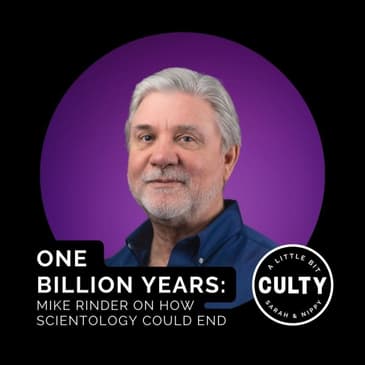
Scientology: You know it, you hate it. To be fair, unless you’re a Scientologist, they hate you too! So it’s all even-stevens. But one person they really hate is Mike Rinder. How could anyone hate someone who’s last name sounds like reindeer, especially just a few weeks after Santa made his international rounds on that reindeer-driven slay? Well, having spent his youth doing things like, for example, swabbing the decks of L. Ron Hubbard’s yacht, Rinder eventually made it into the elite sect of Scientology known as the Sea Organization, eventually becoming Scientology’s International Spokesperson and the head of its Office of Special Affairs. Then, he escaped and became a fearless and outspoken ex-member. If you didn’t listen to the first interview we did with Mike, we’re officially mad at you! But we can forgive and forget—just check it out here.
So why did we have him back on the show? Because he’s so fucking lovely. Also, because he just released his new memoir: A Billion Years: My Escape From a Life in the Highest Ranks of Scientology. It’s a batshit crazy and exclusive, first-hand look into the inner workings of Scientology and the harm this organization does to its brainwashed members. And in today's episode, we specifically get into how Scientology could potentially come to an end (hint: it involves the IRS no longer putting up with the “church’s” bullshit).
So say a little prayer to Xenu and strap on in, cuz this one’s a wild ride!
Buy A Billion Years: My Escape From a Life in the Highest Ranks of Scientology
Also…
Hear Ye, Hear Ye:
The views and opinions expressed on A Little Bit Culty do not necessarily reflect the official policy or position of the podcast. Any content provided by our guests, bloggers, sponsors or authors are of their opinion and are not intended to malign any religion, group, club, organization, business individual, anyone or anything. Nobody’s mad at you, just don’t be a culty fuckwad.
Other Links:
Check out our lovely sponsors
Join ‘A Little Bit Culty’ on Patreon
Get poppin’ fresh ALBC Swag
Support the pod and smash this link
Cult awareness and recovery resources
CREDITS:
Executive Producers: Sarah Edmondson & Anthony Ames
Production Partner: Citizens of Sound
Producer: Will Retherford
Senior Producer: Jess Tardy
Writer: Mathias Rosenzweig
Theme Song: “Cultivated” by Jon Bryant co-written with Nygel Asselin
Learn more about your ad choices. Visit megaphone.fm/adchoices
See Privacy Policy at https://art19.com/privacy and California Privacy Notice at https://art19.com/privacy#do-not-sell-my-info.
[00:00:00] The views and opinions expressed by A Little Bit Culty are those of the hosts, and do not necessarily reflect the official policy or position of the podcast. Any of the fucking mazeball content provided by our guest bloggers, sponsors, or authors
[00:00:13] are of their opinion and are not attended to malign any religion, group, club, organization, business, individual, anyone or anything. We're not doctors, not psychologists, we're certainly not the AP that's associated press for those of you listening at home. We're two non-experts.
[00:00:26] We found ourselves making a little podcast that people happen to like. Okay? Yeah. Okay. Hey, everybody. Sarah Edmondson here. And I'm Anthony Ames, AKA Nippy, Sarah's husband. And you're listening to A Little Bit Culty, AKA ALBC, a podcast about what happens when devotion goes to the dark side.
[00:00:54] We've been there and back again. A little about us, true story. We met and fell in love in a cult. And then we woke up and got the hell out of dodge. And the whole thing was captured in HBO docu-series The Vow now in its second season.
[00:01:08] I also wrote about our experience in my memoir, SCART, the true story of how I escaped next to him, the cult that bound my life. Look at us. A couple of married podcasters who just happened to have a weekly date night
[00:01:20] where we interview experts and advocates and things like cult awareness and mind control. Wait, wait. This does not count toward date night, babe. We got to schedule that. That's separate. So it's two days we got to hang out?
[00:01:30] We do this podcast thing because we learned a lot on our exit ramp out of Nexium still on that journey. And we want to pay the lessons forward with the help of other cult survivors and whistleblowers. We know all too well that culty things happen.
[00:01:42] It happens to people every day across every walk of life. So join us each week to tackle these cult dynamics everywhere from online dating to mega churches and multi-level market. The stuff really is everywhere. The cultiverse just keeps on expanding. And so are we.
[00:01:57] Welcome to season five of A Little Bit Culty, serving cult content and word salads weekly on your favorite podcast platforms. Learn more at a littlebitculty.com. Welcome back everybody. My grinder. You're telling them already? Well, this is the my grinder episode.
[00:02:28] I mean, I was going to tease it out a little bit. Dude, I think they know when they turn it on. It's the my grinder episode. I guess his name will be in the title. It's not going to be a big surprise. You familiar with how this works?
[00:02:41] We tell them. How's it going everybody? How are you Nibbie? That's good. This episode somewhat timely. Oh, yes. All right. With the Masters in Trial. It's just so much going on in the cultiverse always, but specifically the Scientology verse.
[00:02:55] You know, I would love to meet Tom Cruise and pretend like I didn't know who he was and just be like, oh hi. He looks so familiar. What do you do for work? You know, he'd be all, you know, I'm a film star and producer.
[00:03:07] Would I've seen you anything? Or my cousin's an actor too. Yeah. How's that working out for you? The acting thing. I don't know. We, you know, you've seen Top Gun. I'm like, oh yes, I've seen Top Gun. Say, well, I'm in that.
[00:03:20] I'm like, maybe like, no, that's Val Kilmer. It just played dub. A guy can dream, huh? Yeah. Yeah, that would be great. But he'd definitely look familiar. Well, if you ask members of his previous church, they might tell you
[00:03:37] that Mike Rinder and I quote is a serial liar and harasser and his motivation is vengeance and he's devised criminal schemes and frivolous litigation to harass the church's leader and try to extort the church from millions. That's aggressive. It's very aggressive. Sounds like your bitter acts, maybe.
[00:03:55] If your acts has an estimated worth of two billion, maybe three point five million followers in the United States, maybe, and believes that a God called Zeno, the head of a galactic Confederacy, shipped billions of his people to earth, put them in volcanoes and killed them
[00:04:08] with hydrogen bombs. And yes, Rinder's ex is exactly like yours. How do you even come up with that? That's right. My friends on today's episode, we're diving into the church of Scientology. Now, if you've been with us since the early days of a little bit
[00:04:21] culty, you might remember our fourth episode ever, one of my personal favorites, by the way, called Fuck This, I'm Out. Mike Rinder and About Face. We're in, we spoke with Mike about his time in the church of Scientology
[00:04:35] where he joined via his parents when he was just five years old and living in Adelaide, Australia. But if you're new to a little bit culty, then welcome. We're so happy to have you. And it definitely can't hurt to go back and listen to that
[00:04:46] conversation we had with Mike in March of last year. It's kind of foundational to this one because we skip all that. We have foundational curriculum now? Yeah, we have foundational. Yeah. You have to take the five day, the five day a little bit culty, intensive workshop.
[00:05:00] It's only 2160, but if you sign up now, you can get a 20-hour discount. Oh man. Either way, here's what you need to know. Mike Rinder was once a very high up official in the church of Scientology's intricate hierarchy, serving as the international
[00:05:14] spokesperson and head of special affairs for over 20 years. In 2007, after having spent time, it's what's referred to as the hole, which is essentially a Scientology prison in California. Rinder escaped with 200 British pounds, a credit card and his passport.
[00:05:29] In September of this year, Rinder Reinder released his memoir titled A Billion Years, My Escape from a Life in the Highest Ranks of Scientology. And after reading it, I'm ready to write a response called A Billion Questions.
[00:05:42] Instead of writing that, I'm happy to say we're joined today by Mike himself to discuss his new book as well as life outside the church. Do you something you want to read, Nipi? This is an excerpt from the letter he wrote to his children.
[00:05:54] I think this book is kind of a love letter to his kids who are still in and encapsulates Mike's character and his journey. It really touched me in starting reading his book. It's towards the end of the letter.
[00:06:05] When I did finally leave, I was astonished to discover that life beyond that wall, the non-Scientology world, is not full of boogeymen, death and destruction. It is a large, exciting and vibrant place, far less dangerous than we had
[00:06:18] been born. It is in fact much healthier and more enjoyable life than inside the Scientology mind prison. Since I escaped, I have been shouting back over the wall, throwing notes tied around stones and sky-riding to anyone who may look up,
[00:06:30] attempting to get the message through that there is a big, wide beautiful world out there in the last paragraph. Maybe some of what I write will help you see through the propaganda. And this final excerpt is the last paragraph to his children. Try not to cry.
[00:06:44] Maybe some of what I write will help you see through the propaganda that I am an evil person bent only on the structure of mankind. Eventually, you may want to know about me and I might not be around to tell you that in person.
[00:06:54] Perhaps reading this book will help you understand the long path I took. I love you, dad. Enjoy the episode. Here we go. Mike Rinder, welcome back to a little bit culty. Hi guys. For the eighth time. I've been looking forward to this for weeks. Seriously. Oh, same here.
[00:07:22] I love talking to you guys. I like talking to Mark and Bonnie and I love talking to you. And it's like these are the enjoyable podcasts that I do, not the people who haven't got a clue what they're talking about and just, you know, assigned.
[00:07:38] Oh yeah, go interview this guy's got a book out. Right. Who was Ron Hubbard? And what were these dionetics? What's the whole? Tell me about the whole. Exactly. I promise we won't do that to you. I don't know some of those questions.
[00:07:52] Like not every listener knows what it is that we're talking about. So there has to be some explanation, but it gets a little tiresome after a while of just, you know, the same old, same old.
[00:08:03] And, you know, that was kind of why I wrote the book so that I could explain these things and not have to keep explaining them over and over and over. So anyway, it's, it's lovely to see you. It's lovely to see you too.
[00:08:18] And I'm so appreciate you taking the time. It's the lane we're in too though, Mike. You know what I mean? It's like we are, for better or worse, informing people. And I look at it as like the job in an interview to get the sound bites out
[00:08:30] and get the language out there. And I kind of feel lucky to do it. Yes, I do too. Of course you do. You wrote a book. But then there are the ones that I look forward to because I'm talking
[00:08:41] to my friends and I'm talking to people that I know understand and have a similar perspective on things. And so it's really easy to talk, you know, you're going to have a problem shutting me up. That's what usually happens.
[00:08:56] No, no, no, Nippy and I said before we got on, I have a list of questions, but like, I'll probably just ask one or two and let you go. Well, this is what I was telling Sarah.
[00:09:05] It's like he's by far the more interesting person of the three of us. Let's just let him go. Oh, I'm not sure about that. I'm not sure about that. Listen, Mike, after reading your book, I was in the car and I was thinking,
[00:09:17] I was like, this dude lived a life is living a life. Like you've been everywhere. I didn't realize like you got to see the world, whatever circumstances they were, you're valuable to a lot of people I recognize. And it was one of the things I kept thinking about.
[00:09:33] It was like, which probably makes you dangerous to a lot of people too. Right. But it was just so interesting to go, you know, to see like the experience you have was just. I drove around, I've been, Sarah and I've been talking about it.
[00:09:45] We're like, can you believe this? Like it was equal parts amazing as it was horrifying. I found myself reading it. Right. Someone said to me, I thought I knew you pretty well, but and this is a compliment, believe me, this is a compliment.
[00:10:00] I think you are the first gump of Scientology. Oh, that really is a compliment. I mean, I guess he said, no, no, no, no. I just mean you seem to be everywhere, like every major thing that ever happened, you were involved in it somehow.
[00:10:19] I don't know how that occurred. And I'm like, yeah, well, you know, I don't know why the I am, I guess, just like forest gump. I just fell into all this stuff. So focusing on now and the book and more of the aftermath is our
[00:10:35] goal for today and just pulling the ripcord on Mike Rinder and letting it rip. You might be sorry you say that. I want to show the book to I mean, you're kind of pretty there, Mike. Yeah. Yeah.
[00:10:51] You're really kind of dare I say the Tom Cruise of Scientology or this is you're the real star. No, no, that's not a compliment. Yeah, that photo was actually taken when I was 18 in Madeira, Funchal Madeira, an island in the middle of the Atlantic.
[00:11:11] It's a beautiful picture, but I also recognize that when you left, they kept all your photos, right? So you don't have a lot of proof of what happened on the inside. Oh, virtually none. I mean, I didn't have any photographs of my children, of my wedding,
[00:11:25] of my parents, of nothing. That particular photograph was sent to me by a guy called Jim Dinkelsey, who was sadly since passed away, who was in Madeira with me. And, you know, I write about that in the book and he ended up living
[00:11:42] in Florida and I saw him a few times. Really, really nice guy. And he said, Hey, you know, I took some pictures when we were in Madeira and I found them the other day. Would you like to have them?
[00:11:53] And I'm like, you know, Jim, that's the there's three photos. He said that's the only photos I have of my time in the sea or other than the ones that are in Scientology publications of, you know,
[00:12:04] me standing on stage or doing a press conference or something like that. So that was a very touching thing that he it sort of brought back this memory of some of the friendships and the people that I have associated with
[00:12:21] because you sort of get this idea that everything was bad and there wasn't any there was no redeeming factors to anything of your experience. And that just really isn't true. Like you were saying, Nippy, you know, I traveled all over the world. I met all sorts of people.
[00:12:39] I had a lot of people that I considered to be dear friends who now unfortunately don't consider me to be a dear friend. But they they were nice people and smart people and a lot of intelligent people.
[00:12:54] And I know, Sarah, when I was watching the Val season two and I saw your reaction to, you know, what happened when Lauren was not sent to prison and your reaction to that. I totally empathized with that. And I know to some outsiders, they probably go, what?
[00:13:16] What is that? Why do you feel happy for her? Like she is a part of this organization that has been victimizing and abusing people so terribly. But they're not all bad people. That like some of them and the majority of them are just like you and I.
[00:13:36] They have victims of that abuse just as much as they victimized others. And Lauren, especially. Yeah. And, you know, I have people like that too, that I have a great deal of affection for still and I wouldn't want anything bad to happen to them.
[00:13:53] Even though from the perspective of a lot of people, they're really, really pretty fucked up evil cult members. But that's not who they really are. Yeah. It was very clear in your book that you would welcome back anyone
[00:14:08] who came to you and said, hey, I figured it out. You were right. And you'd embrace them. Absolutely. I mean, that's what the Aftermath Foundation is all about. That's why we created it to help anybody who wants to escape from Scientology
[00:14:25] because part of the reason why so many stay is that they've been convinced that, A, the outside world is a horrible place and B, they don't have any resources, particularly people who are in the C organization. They don't have any money. Some of them don't have driver's licenses.
[00:14:43] They don't have bank accounts or credit cards. It's like walking out into the world of the unknown, having been told that that unknown world is a terrible place where you'll die of cancer after you flip burgers at McDonald's for a little while is a scary proposition.
[00:15:00] It also had an organization making all the major life decisions for them. And so now they're left to do that on their own. To me, that seems like that would be the most daunting thing.
[00:15:10] Now you have to go think and feel about how you view the world and the context. And think by yourself, think on your own. And how it'd been framed for you is gone. You're totally right, Nippy. And that is a big factor.
[00:15:22] You know, I have said a few times in various, when I've been talking about the book, I've said, I think that there are people who find the environment of a cult where you are told what to think
[00:15:36] and how to think and what you know is right and what you know is wrong, what you should and shouldn't do for every aspect of your life. They find that comfortable. They find that something that is sort of almost reassuring.
[00:15:51] And they certainly don't want to abandon that comfort of having someone tell you constantly everything that you're supposed to do and think. And I think that that is a sadly big part of the trap of cults.
[00:16:10] Is that something the Foundation helps with in terms of reprogramming or deprogramming? Or is it just mostly getting people on their feet and financial stuff or all of it? Well, it's all of it, Sarah. I mean, primarily we set it up to be able to build a network,
[00:16:25] which we now have of thousands of people who have things that they can help with. They can give someone a place to stay. They can find them a job. They can help them write a resume. They can help them pick them up at the airport.
[00:16:38] They can get them on a plane. They can find clothing for them and computers and whatever. We have this huge network of people now who are volunteers, literally all over the country and all over the world.
[00:16:52] If we have someone that shows up and says, you know, I'm in Columbus, Ohio, and I want to get out of here and I didn't have the means to do it, we can find someone like within an hour to go pick them up
[00:17:06] and take them to the airport and have a ticket for them. But on top of that comes the connection to people who have had similar experiences. And that I've talked also a lot about this. The most valuable thing to me in sort of
[00:17:26] undoing the mind fuckery of Scientology is talking to others who have undergone similar experiences and having this realization, oh, I'm actually not crazy. Oh yeah, that wasn't wrong. Oh yeah, you saw that too. Oh my God, you thought that too. Oh my God, because what gets hit,
[00:17:50] what gets pounded into you in organizations like Scientology or Nexium or the Jehovah's Witnesses or whatever is. If you are out of step with the rest of the gang, it's on you. There's something wrong with you. It's not something wrong with the organization
[00:18:11] or the teachings or the principles. It's you. And that is a very, very powerful control mechanism over people, extraordinarily powerful. And the big realization that people have when they leave and they start talking to others who have been through similar experiences is, yeah, actually it wasn't just me.
[00:18:35] Yeah, there is actually something wrong. Yes, it's not what did I do to pull it in. It's what the fuck are they doing to cause people this harm? And I think that's the other thing that the Aftermath Foundation provides is linking up to people
[00:18:53] who have similar experiences to be able to start peeling away the onion of nutty think that you get ingrained with. And, you know, we even help people if need be to go to a therapist who has experience in dealing with cults because that's another
[00:19:14] thing that we have found is general just general therapy doesn't hack it. No, they don't know what they're looking at. Exactly. And they also tend to ask questions that can be triggering if they don't have the cult training. Exactly. So anyway, I hope that answers your question.
[00:19:31] It does. And it's this something that we really want to do too. I don't know if it's a thing we can join you with or just learn from or something, but we can save that for for another day to talk about.
[00:19:41] But I really like I feel the need for it. Not I mean, not just for next year, but just so many people reaching out to us from so many different places that I'm like, I don't know where to send you.
[00:19:50] And we have some resources, but like I want to help, you know, like you, I want to help and I don't feel like I can other than sending them a list of resources, I feel kind of tied. Well, also we're raising two kids. Nippy, I totally understand it.
[00:20:04] I wanted to say to Sarah, Sarah, look, I understand that dilemma. I understand a lot of people reaching out to you. Please, please, you are doing an enormous amount already. Don't feel don't be burdened by the fact that you don't have the ability
[00:20:24] to devote your attention to every single person who reaches out. Look, I went through this for a long time and I finally reached the conclusion. There is only so much that I can do. I can't answer everybody who sends me an email or a DM on Instagram
[00:20:43] or Facebook or Twitter and and fully satisfy everything that they need. You, this podcast, this podcast is an enormous resource for people and your book is an enormous resource for people. And my book is a resource and the aftermath show is a resource.
[00:21:04] And we've got to devote our time and effort, in my view, to doing things that are able to have an impact on more than one person. Because if we focus on every individual, we never get anywhere and you feel bad. You don't just don't feel bad about it.
[00:21:23] Please don't. The philosophy I've tried to adopt is just dominate what's in front of you. If you can take care of what's in front of you, it expands your sphere a little bit.
[00:21:32] But I also can't help but think of that scene in Schindler's List with Liam Neeson at the end. It's one of my favorite scenes in any movie where he starts to recognize he had a gold pin on his uniform that could have saved 20 lives.
[00:21:45] And like, so there's that impulse, Sarah, tell me if you can't relate when someone reaches out, like while you have your kid, you're torn with like, OK, I got my kid and I got one person.
[00:21:54] That's a good way to look at it is you have to double down on what's reaching more people, I think you were talking during the resources and helping people about people that leave Scientology. And they got me thinking like after reading your book
[00:22:06] and everything that's going on in the media right now, like when does Scientology get more sensitive to its attrition? They must know that people are leaving. They must know that the public perception of them isn't favorable. There's always a point where something crashes, right?
[00:22:22] Where they can't sustain kicking people out because they need members or something like that. Like, where is it in that process and what do you see them doing to combat it? And it's just it's just bizarre to me how it's like keeps losing people, but not thriving.
[00:22:34] Right. Well, let me answer as best I can, Nippy. They are already extremely sensitive to the loss of public relations stature and the loss of membership and new people coming in. Unfortunately, a part of the problem is that even though they are undergoing pretty serious attrition,
[00:22:58] the information age and the internet in particular is information is poison to cults. It is what ultimately kills them. And, you know, these days you go Google Scientology or Google Nextium, the same thing. It's just a world of shit. There's nothing, nothing good there. It's not doing well.
[00:23:17] Everybody knows it. And but Scientology, sort of like those people that are left in Nextium, when the world starts caving in to a hardcore cultist, that means we have to redouble our efforts. We become more hardcore because this is proof in our eyes
[00:23:41] that the world needs saving even more because look at all the bad stuff that's out there trying to stop us from saving everybody. All the ignorant unwashed fools out there that don't know about Scientology or who are against Scientology, they all need to be saved.
[00:24:01] And they are currently winning. So we need to fight harder. We need to give more money. We need to be more dedicated. I mean, it's like the Jehovah's Witnesses and, you know, the end of the world is going to be on October 4th, 1973.
[00:24:15] In October 5th, they're all running around going, see, we were just tested by God. And so we got to redouble our efforts to save everybody because, you know, 1997 is coming and that's the next date. And then when that goes by the inner core,
[00:24:30] the hardcore fundamentalists get more convinced that they no matter what happens, no matter how bad it is, there is attrition like every incident. There is some attrition, but it also kind of hardens the inner core. And in my view, the way that Scientology will finally be undone
[00:24:53] is the undoing of the tax exempt status. And not because of the money, but because of the transparency that it brings, it will force or it would force Scientology to have to provide reports about how much money they get and what do they spend it on?
[00:25:10] And if the world knew how much money Scientology gets and what they spend it on, you know, including, you know, rafts of lawyers and private investigators and harassing, you know, websites, etc., etc. They would be outraged. But Scientologists would also be outraged because they are told,
[00:25:33] give us $100,000 or a million dollars or $50 or whatever it is. And we are going to provide, you know, housing for the underprivileged in dark Africa, some nation in Africa. And we're going to open schools and provide educational materials and they would find out that that's bullshit,
[00:25:55] that the things that are done are just PR opportunities with a video crew there staging shit to show them and pretending that they're spending their money on it and they're not. And that, to me, would be what will undo Scientology entirely.
[00:26:11] So what needs to happen for that to happen? Like, what's the next step? Well, the IRS needs to review their tax exempt status and hopefully find that they are in violation of public policy. It shouldn't be hard because, I mean, there's
[00:26:26] I've talked about this a lot and there's stuff on my blog about it. You know, public policy is an issue that needs some clarification in the world of tax exemption. But nevertheless, the way that that will happen is
[00:26:42] if there is pressure put on the IRS and that pressure is either going to come from Congress or from big media. And by that, I mean like Wall Street Journal, New York Times, demanding that something be done about this or people on the House Ways and Means Committee
[00:26:59] or some other senior sort of political people start demanding that the IRS take a look at this and review the exempt status of Scientology. When that happens, it'll be easy for the IRS. But the momentum of getting that sort of, you know,
[00:27:18] iceberg shifted in different direction is is hard to accomplish. It just seems like they're so on everyone's ass. Like wouldn't that be such an obvious win for them to like release all this money? I don't know. Well, here's the issue, Sarah.
[00:27:32] There is a lot of law that has been created in the last 100 or 200 years surrounding the constitutional rights of religious organizations under the First Amendment. And unfortunately, in the United States, the legal system is weighted with a bag of gold on one of the scales.
[00:27:54] And he who has the most money has the scales tipped most in his favor and almost all law that has been created with respect to the rights of religious organizations protect the rights of the organization and not the rights of the individual.
[00:28:10] Because typically it's individuals that sue the organization for the harm that has been caused to them. Typically, the organizations bring in hundreds of lawyers and the little guy is left sort of holding the bag. And that has created a body of law, which is
[00:28:28] presidential and which is very hard to overcome. And you know, I've said many times that Keith Reneary's biggest mistake was not turning himself into a religious organization. And he very well could have. I mean, he's stalled enough from Scientology.
[00:28:46] He could have just walked in and said, hey, you gave Scientology exam status. We're no different. We got all our shit just like they have. So that is a big part of the problem. Government does not want to entangle itself in the issues of religious policies
[00:29:03] and polity, and that is a huge fact until the body show up. Yeah, exactly. Then they have leverage. This is the golden age of cult recovery. The more we speak up and share our stories, the more we realize we are not alone.
[00:29:20] Your voice and your story can empower others. This is Sarah, and I'm proud to be a founding collaborator of the hashtag I Got Out movement. Learn more at IGotOut.org. This episode is sponsored by BetterHelp. What are your self-care non-negotiables?
[00:29:43] Maybe you never skip leg day or never miss yoga. Maybe it's getting eight hours of sleep. I mean, that's my personal and everyone's dream, isn't it? Well, I definitely have some non-negotiables. Like I'm in Vancouver right now and I'm spending literally
[00:29:56] as much time as I can outside of nature. Hashtag cold pools, hashtag crushing it. Nature is a non-negotiable. Not enough time in the fresh air and the trees around me and I start to feel not great, not myself, not grounded.
[00:30:08] Therapy Day is a bit like my nature walks. I try to not miss it, and I know I'm just going to feel so much better all around if I make it a priority. I get so much out of it. It helps me put my worries and anxieties
[00:30:18] in their rightful place and helps me clear my mind so I can focus on what I really need and sometimes what I don't need. Like, I don't need to be overbooking myself just because I hate to say no to people. You know what I mean? Thanks, Therapy.
[00:30:28] Thanks for helping me see that. And if you're thinking of starting therapy, give Better Help a try. It's entirely online, designed to be convenient, flexible and suited to your schedule. Just fill out a brief questionnaire and get matched with a licensed therapist
[00:30:40] and switch therapists anytime for no additional charge. Look, even when we know what makes us happy, it's hard to make time for it. But when you feel like you have no time for yourself, non-negotiables like therapy are more important than ever. Never skip Therapy Day with Better Help.
[00:30:54] Visit betterhelp.com slash culti today to get 10% off your first month. That's betterhelp, H-E-L-P dot com slash culti. Meals bring people together, but for many families providing their next meal can be a challenge. You can help by participating in Macy's annual Feeding the Hungry Food Drive.
[00:31:13] All proceeds go toward local food banks and families. Now through January 31st, you can purchase an icon in store or online or watch out for the blue feeding the hungry shelf tags where a portion of your purchase will be donated to local pantries. Together, we can combat hunger
[00:31:30] in our local communities at Macy's. We're prepping for an interview about Islamic extremist groups where there's wife beating and all sorts of terrible genital mutilation and really horrific things. How government can't say but there's people's human rights that are being violated
[00:31:50] and I just don't know enough about the law to understand the complexities of it. Well, I think I just got explained if you have enough money to destroy the truth and I mean, that's the hole in our legal system, right? The vulnerability is rich people.
[00:32:04] Look at these cases, you know, like Valeska and the Baxter's case that is currently ongoing where Scientology is arguing these people must be forced to go to arbitration, quote unquote. And that arbitration, quote unquote, which is not arbitration is a Scientology procedure called a committee of evidence.
[00:32:26] Now I keep bringing up with this case and with the earlier cases where they have managed to prevail on this issue. Yeah, okay. Well, Scientology says that we have a right to conduct our own religious rituals and procedures and that the court can't second guess them
[00:32:46] which is how the law is. But what about the rights of the individuals to not have to submit themselves to this religious ritual that they no longer wish to be a part of? That seems to be lost entirely in the argument about whether this is gonna be enforced
[00:33:06] by secular courts or not. Put aside the issue of whether Scientology who claims that secular courts are not allowed to interfere in the policy and practice of their, quote, religion is going into a secular court saying you must force people to come and participate in our religious service
[00:33:28] because of a contract that they signed which was a requirement to take services in Scientology. I mean, this is all a big fucking mess and it needs to be addressed and sorted out on a much bigger scale. And this is something else that I also think needs
[00:33:51] resolution in some way that Congress needs to make it clear what violation of public policy really is when it comes to a tax exempt organization. And I could get on a complete roll about that, but that's just another thing that needs to be addressed.
[00:34:07] And there is plenty of work to keep us occupied for quite a while in resolving the issues of the abuse that goes unpunished. Right, right. Is there motivation to do it? I mean, it takes someone who's like, okay, this is my opponent Scientology.
[00:34:26] We're gonna devote this, this and this. That's traditionally in the United States how I've seen it happen. Someone just taking it on themselves to go get the resources and do it. That's true nippy, but there is also this sort of arc
[00:34:39] that happens in society of you go from being a completely segregated society and no politician is gonna stand up and say, we need desegregation because it will cost them their next election to then having people who start to talk about that and say,
[00:34:59] you know, this is not right and they get shouted down, but there's a few voices. And then those voices grow and eventually you get to the other side of the arc and this happened with the civil rights movements happened with gay rights.
[00:35:14] It's happened, it happens all the time where it ultimately becomes politically inappropriate to oppose segregation or to oppose gay rights. Like this arc sort of goes across to you start with nobody being willing to be pro to nobody being willing to be against.
[00:35:37] And I took great comfort in seeing, and I'm not sure if you guys sort of caught onto this but the LA mayor's race turned into a mud slinging fest between the two candidates for the LA mayoral position both of whom were attacking one another
[00:35:55] for being too soft on Scientology. And that is a really, really interesting sign in a stronghold of Scientology. Los Angeles and Clearwater are the two remaining strongholds of Scientology in the world. And in Los Angeles, this was a big political football
[00:36:16] and I think that that portends what is to come. Sooner or later some politicians are gonna go, you know, this is a cause that I could get behind because it's gonna get me votes. And I can present it as these people are abusing people,
[00:36:32] we need to stop abuse and the IRS should be collecting the $3 billion that they've got. Like it's all a win-win proposition ultimately. They just has to be some politicians that decide that it's a win-win proposition and then you will see the walls start really crumbling
[00:36:52] and the IRS starting to go, we need to do something about this and prosecutors and the FBI and everybody else starts jumping on the bandwagon because now it's a politically good thing to be on that bandwagon. Right, and abuse.
[00:37:10] Well, first of all, so well put, I hope that happens and I know what will happen in our lifetime. I'm just gonna put that out there. Secondly, I think that was so eye-opening in your book to show how they were so successful,
[00:37:22] I said that in quotes, but in terms of being able to reach people in political office and putting people in place and then threatening people. Like there were so much, like the web of deceit was so well woven, I guess is what I would say from an outsider.
[00:37:37] And I see how they did that for decades. As it pertains to holding Scientology counted the arc that you just described, it's unfortunate that's how justice has to be served. Once it becomes transactional for the politicians they're now motivated to do the right thing.
[00:37:52] I mean, Nippy, that's just the realities of the world. Yeah, it just sucks. Unless you happen to come across someone like Moira Penza who did something that nobody thought could be done. I am absolutely certain that everybody else in the Justice Department went, this woman's lost her marbles,
[00:38:13] she isn't gonna be able to pull this off. This is not a case that we could bring and she was determined to bring it and she, like I was so impressed by her determination, her conviction, her compassion and her legal acumen. There are people like that out there
[00:38:34] and if one of them ever latches onto this Scientology issue then there will be a similar outcome probably although it can't be done exactly the same way but she certainly created something that I have been long trying to convince people that mental manipulation is every bit as powerful
[00:38:59] and as damaging as physical manipulation or abuse. Mental abuse is in many ways far more damaging and far more lasting in its impact than physical abuse. So I was super impressed and it's funny that Mark picked that out, that little quote that I made about Moira Penza out
[00:39:23] to promote the podcast that we did last week and she actually responded on Twitter and said, oh thanks, that's very complimentary. And I was like, oh well I am really happy that you actually heard that because I have nothing but respect for her
[00:39:38] and I hope there's some other prosecutors out there that will do the same. And I don't know if this is clear in the vowel or if you've seen this but it's just so ironic that she was his type. The fact that Keith got taken down
[00:39:51] by this petite brunette with long dark hair was just, I mean the irony was not lost on me. That was not lost on me either. That's awesome. I thought he must be sitting in that courtroom. Yeah totally. It's going through that evil little mind of his
[00:40:07] when he sees her. You know Scientology promotes itself as quote, pan denominational and you see Scientologists all the time coming out and saying, well you can be a Scientologist and a Jew and you can be a Scientologist and a Muslim and a Scientologist and a Christian
[00:40:24] and that's all bullshit. But it is what Scientology says to the world and as part of its mission of just that similar sort of we are uniting everybody of all faiths and all in the greater accomplishment of saving the planet from its self-destruction, blah, blah, blah, blah, blah.
[00:40:48] So Scientology, it's actually a really interesting point because one of the requirements of tax exempt status is that you can't be a member of that religion and another one. That's actually one of the in the list and Scientology got asked about that and responded saying, well, you know,
[00:41:08] we don't make a point of this but eventually when you're in Scientology you're expected to only follow the teachings of Scientology and that is completely contradicting. I've got a bunch of articles on my blog where I talk about, you know, can you be a Scientologist
[00:41:28] and can you be a Jew or a Christian and a Scientologist and because Scientology loves to get out there and promote this weird non-discriminatory, you can be anything you want and also be a Scientologist but then when it comes to the IRS, it's like,
[00:41:45] oh no, that isn't really how this works. So there's another thing, there is fraud in those responses that resulted in the tax exempt status of Scientology being granted. They've said things to the IRS that to satisfy the requirements but then in their public utterances
[00:42:06] and all over their Scientology.org website is completely contradictory to what the IRS regulation is but they've got their exempt status now so they don't really give a shit much because they know the likelihood of anybody coming back and revisiting it is very slim.
[00:42:23] Are they still harassing you? Well, I mean, they don't send private investigators outside my house with cameras but I mean the online stuff has gotten so over the top since my book came out. Oh my God, it's just ridiculous and- Does that bother you at all?
[00:42:43] And the Twitter and social media stuff is like crazy and they're resorting to really, really childish and homophobic stuff these days. Like they post pictures on Twitter of two men standing at a urinal holding hands and one of them says Tony Ortega and one of them says,
[00:43:09] and the other ones labeled Mike Rinder or two men kissing Tony Ortega and Mike Rinder and little speech bubbles. This stuff is like so juvenile. These are Scientologists coming after you? Yeah, yeah. This is the thing that I've talked about with Sarah and a few other people.
[00:43:27] The people that have this quote unquote in their minds moral authority or I call it moral supremacy over you and are complaining about you have turned into vitriolic, mean, spiteful, lying like doing some pretty like bad behaviors towards other people.
[00:43:45] And they've turned into people that are doing that. People that I used to know. Well, it's all for the greater good of the greatest good of the good, right? But like what's the reconciliation between I'm saving the world through Scientology
[00:43:56] yet I'm going out and I'm destroying other people's lives intentionally with my conscience. Well, the mindset is that those people that they are out seeking to destroy are the people that are trying to stop the only good thing that will save everybody. Whether it's next year or Scientology.
[00:44:13] Scientology is gonna save every man, woman and child on this earth from a terrible fate. So if you have to sacrifice a few naysayers or people that are getting in the way of this incredible accomplishment, that's a worthwhile sacrifice.
[00:44:32] It's the greatest good to eradicate a few bad people in order to save hundreds of millions or billions of good people. And that's the thing that gets inculcated into those sort of people. And it's funny because I was on this little podcast
[00:44:51] with Aaron and Mark Headley the other night and I said, I started responding to some of these like pretty much I ignore them but I started responding to them saying, hey, the Aftermath Foundation will even help you. If when you're ready, the Aftermath Foundation is here.
[00:45:08] I love to exhibit like that. So because we're always like how do we get the message inside the walls? How do you get through the bubble? Well, these guys are right there on social media. So I just started responding to them all saying,
[00:45:23] hey, the Aftermath Foundation is here for you when you need us, just give us a ring. Free promo. Sometimes I send my resource page to people and they'd be like, Sarah, they hate you, stop it. I'm like, at least I could say I tried.
[00:45:37] Well, Sarah, you know, and people say that to me too. And I say, okay, 20 years ago, did you think Mike Rinda was ever gonna leave Scientology? No, of course not. Everybody has a moment or a thing that, and it's completely unpredictable. Who knows when or what it is
[00:46:00] that is gonna be the thing that causes that? It's different for every single person. And it may happen tomorrow and they may get your resource page and look at it and go, oh, I'm never gonna do that and put it down on a, but know that it exists.
[00:46:16] And when that moment happens, come back to look for the resource page to find out where they can go for help. Well, the thing is, is that I know that they listen. And basically I have to say, I can't say read the book, you have to say,
[00:46:30] I don't think they're humanitarian enough to read Mike Rinder's book. Only a true humanitarian who's willing to see the full picture of something in a non-vested holistic way. This is all terminology, right? But they're not strong enough. So they won't read your book.
[00:46:46] But if they read your book, they go like, holy fuck, it's the same thing. I mean, obviously slightly different content, but the patterns of abuse, and we've talked about this, I think in the last episode in person is just the similarities.
[00:46:57] By the way, I have to say really quickly, I made a few notes about more similarities that I didn't know about till I read the book. More so than going clear. Miss Gavage's abuse is more overt. Yes, yeah. He's definitely much more overtly abusive than Keith was.
[00:47:12] Miss Gavage doesn't hide it. Miss Gavage just will jump you and create a culture of fear. That's exactly right. Although I gotta say that I think that Ranieri's treatment of women in particular is so, so, so disgustingly reprehensible. It's hurt us. That was overt behind the scenes.
[00:47:34] We saw this guy, but then we saw it on camera, it was like, that's more overt for sure. What was that like for you when you watch it in the vow? Horrifying. Like horrifying. What I always would look at is I'd go,
[00:47:51] okay, though the manifestations of the sociopathy may be slightly different, it is the same personality type that is doing this. And whoever it was in there and I forget who it was, and maybe it was Nancy that finally said, I was in love with Keith
[00:48:14] and I thought he was in love with me. And then I finally realized the only person Keith loves is him or is this himself or Lauren. I can't remember who said it. I went, that encapsulates the entire picture of a cult.
[00:48:30] The followers believe that the great man or woman, whoever that is leading them loves them. They love him or her. They worship and idolize this person and believe that that person reciprocates with the same sort of love for them. And when it comes right down to it,
[00:48:52] those people only love themselves. And it is entirely and utterly transactional whether the person on the other side of the relationship is going to be treated well or treated badly. Are they providing something that that person wants or not? If they're providing something that he wants,
[00:49:14] they may be treated okay. If they're not, they are literally fucked over. Hey there listener. Hope you're enjoying this episode and that you're taking deep breaths when we cover the enraging stuff that cult jerks are up to. Let it out as in the yoga practice,
[00:49:32] inhale positivity, exhale negativity. That's for you Sarah. We got this, no hulking it out, all you will hulksters. And if you need some helpful resources on the topic of cult recovery, check out our website at a littlebitculti.com. And now here's a brief message from our sponsors.
[00:49:48] Meals bring people together, but for many families providing their next meal can be a challenge. You can help by participating in Macy's annual Feeding the Hungry Food Drive. All proceeds go toward local food banks and families. Now through January 31st,
[00:50:04] you can purchase an icon in store or online or watch out for the blue feeding the hungry shelf tags where a portion of your purchase will be donated to local pantries. Together we can combat hunger in our local communities at Macy's. This episode is sponsored by BetterHelp.
[00:50:21] What are your self-care non-negotiables? Maybe you never skip leg day or never miss yoga. Maybe it's getting eight hours of sleep. I mean, that's my personal and everyone's dream isn't it? Well, I definitely have some non-negotiables. Like I'm in Vancouver right now
[00:50:35] and I'm spending literally as much time as I can outside of nature. Hashtag cold pools, hashtag crushing it. Nature is a non-negotiable. Not enough time in the fresh air and the trees around me and I start to feel not great, not myself, not grounded.
[00:50:48] Therapy day is a bit like my nature walks. I try to not miss it and I know I'm just gonna feel so much better all around if I make it a priority. I get so much out of it. It helps me put my worries and anxieties
[00:50:58] in their rightful place and helps me clear my mind so I can focus on what I really need and sometimes what I don't need. Like I don't need to be overbooking myself just because I hate to say no to people. You know what I mean? Thanks Therapy.
[00:51:08] Thanks for helping me see that. And if you're thinking of starting therapy, give BetterHelp a try. It's entirely online, designed to be convenient, flexible and suited to your schedule. Just fill out a brief questionnaire and get matched with a licensed therapist
[00:51:20] and switch therapists anytime for no additional charge. Look, even when we know what makes us happy, it's hard to make time for it. But when you feel like you have no time for yourself, non-negotiables like Therapy are more important than ever. Never skip Therapy Day with BetterHelp.
[00:51:34] Visit betterhelp.com slash culty today at 10% off your first month. That's betterhelp, H-E-L-P dot com slash culty. I just remembered something which happens, I'm sure for you too that I hadn't put together before. Nippy, do you remember that training family values?
[00:51:50] It was early years for me like a year or two in. I remember one of the first things that I got like in trouble for, ironically with Lauren. She pulled me aside, it was when I was with my ex boyfriend
[00:51:59] and I was upset about something that like was going on and she said I was being objectifying. I was objectifying him. And she's like, do you know what that means? That you're seeing him as an object to get something from
[00:52:10] and how it was like the opposite of being a humanitarian. And then like just the irony of what we know now, this would have been probably around the time that Danny was in the room. It's like same time period. That story of Danny in the room was like,
[00:52:22] that was really hard to watch. Having been in the hole, that was really hard to watch. That was like, oh my God, this Porg, and she was alone. I mean, that's tougher. That is even tougher than being in a hole with a hundred other people,
[00:52:38] beating the shit out of you or one another. That is like, the mental torture involved in that experience, I'm not sure she will ever recover from that. Yeah, I don't know. I didn't get a chance to connect with her. I haven't talked to her.
[00:52:54] I asked our mutual lawyer if he'd connect us at some point because I didn't really know her that well. I think I met her a handful of times before she I thought was back in Mexico. So I would love to connect and see how she is,
[00:53:05] I mean, her testimony was obviously key. Well also, she is a sister who is abused by her and another sister who has keys child. So it's a constant reminder her family's divided as well. Right, her other sister is the only one, Mariana is the only one
[00:53:20] who's allowed to have contact with Keith in prison because she's the mother of his child. He's not allowed to talk to anybody anymore. I don't know if you knew that. Thank God. He's suing the prison. I know, cause otherwise he's just like pulling the strings from prison.
[00:53:31] Yeah, exactly. He's doing a warrant, Jeff's. 100%. Okay, these are my list of five similar things that I didn't know. One was everything was urgent. You said that like, right? It was like there was always a crisis in XM that you were like having to deal with.
[00:53:47] Always putting out fires. Except you had to go get on a plane. Yeah, I was like, every time someone was like hoping he was racking up points. Put Mike on a plane to London. Were you collecting air miles at this point?
[00:53:59] This is what I really want to know. Mike, did you rack up air miles for life? That's what I was thinking. I did, but unfortunately a lot of them were on TWA. Believe it or not, I had like 500,000 miles on TWA at one point. Oh, that is tragic.
[00:54:16] Okay, the other thing was hiring a PR firm to clean up the act. I don't know if you know this that I can't even remember what year it is. DP, you'd probably remember cause your mind works like that. But remember they pulled us into Nancy's living room
[00:54:26] and sat us down and said they were gonna hire this like incredibly expensive PR firm. And we all had to pay. Was it like 20 grand each they wanted from us? No, it was five grand each. Minimum of five grand. But some people were paying 20 grand each
[00:54:38] and I was like, mm. No thanks. Oh, good to that. Wow, no, I didn't know that. Yeah. It was like 20, 2013. And it go well just like it didn't go well with Scientology. I just thought it was crazy that they were asking us to pay for it.
[00:54:52] But I can totally Keith gone, you know, there are some people who have affected my image. And I think it would be appropriate for them to pay for cleaning it up on my suggest. That was by the way, Claire's breach. I don't know if you know that.
[00:55:04] Claire was in breach with Keith because it was her dad that did the first Forbes article. Right. Yeah. And so he determined that was her fault and she felt that it was her fault and it was always just trying to clean it up
[00:55:16] which leads me to my other similarity. The amends form is that what it's called? Amends project. The amends project. Doing amends, yeah. Lot of acronyms in that place. A lot of, oh my goodness. Lot of acronyms. I did the audible so I didn't have access to the glossary.
[00:55:32] But it was like all these titles and names and that's one thing that was different. This was the only difference that I could really see that was extreme is that I got in trouble for turning Goals and Values Lab into GVL. Oh, well no, you would have been
[00:55:46] right at home in Scientology. Right? Everything is an accident. I was like why is that a problem? And also there was this thing called the Magnificent Series at the end of the 16 day. I called it the Mag Series and I got major shit for that.
[00:56:01] I would have done better in Scientology. That is so funny. It's so funny the insane things that like come up that you go, that was really such a big horrible thing that the Mag Series. Oh, I got in trouble for the stupid shit.
[00:56:17] Yeah, but you know that there was a thing that Elrond Hubbard wrote called Jokers and Degraders and it says that anybody who constantly is making jokes and particularly makes jokes about Scientology is the most rotten form of evil. You know, there's a term for it in Scientology. Really?
[00:56:38] So if someone made like that would be considered in Scientology, Mag Series, because you've taken away the true meaning of it and turn it into some sort of a joke. It's a the Mag Series. That one wouldn't have gone over well. The acronym would be okay.
[00:56:57] But that one wouldn't have gone over well. That would have been considered joking and degrading. Send me to the hole. Oh my God, Nippy would have been. Nippy was like the class clown. But think about why that is, right? And it's akin to the court gesture, right?
[00:57:13] Good comedy is predicated on being meta about the truth. So someone comes in and cracks a joke about Scientology. It heightens awareness for everyone else about how this is a little bit silly and stupid. So you have to nip that in the bud
[00:57:26] because that's actually good comedians are clever as well. And they have self-awareness and they have awareness about the inconsistencies of an absurdity of certain things. And it allows the dogma to remain intact because you can't make fun of it. Right, exactly right. That was my Ted talk.
[00:57:43] There you go. My Ted talk on comedy. Carry on. Two more points. So you talked about the ethics presence. Right. We had the same thing, the snitching and telling on people. It wasn't as formalized where you write it down but it was definitely a thing.
[00:57:57] In fact, Nikki as you know is one of the main loyalists was known for being the ethics police we called her because she would just go straight to Keith with did you know that so-and-so is blah blah blah and it was pretty rampant.
[00:58:11] It just wasn't a formal policy. Right. Yeah, he was just too lazy. He was too busy boning to make policies out of these things. And the last but not least direct steal is the Galileo quote was used for the Winexium as well as in Scientology.
[00:58:27] The quote about how new- All new things are for? Yes. They go through three stages. Yeah, that's Schopenhauer. Oh sorry, Schopenhauer was referring to Galileo as an example of how- Right, that's exactly right. Truth comes in three stages. Yeah. And then it's eventually accepted.
[00:58:43] I skipped the second stage but the point is is that- Violently opposed. Violently opposed and then eventually accepted as truth all along just like Galileo and eventually Scientology and Nexium will be accepted as truth. Right, everybody will finally wake up and get it. That's exactly how it goes.
[00:59:00] We ready for the Marty Rathburn? Cause I wanna know what happened there. Do you know yet? Have you found out? Have you spoken to him? Have you spoken to him? Cause you guys were like Tango and Cash and then all of a sudden- Yeah, yeah.
[00:59:11] No, no, he just stopped speaking to me and now he does videos and like the only thing that he has put in his blog in the last year is a thing of apparently I haven't read it about my book about what a piece of shit it is.
[00:59:25] And I mean the conjecture that I have is what I wrote in the book about what I think happened and he doesn't come out and talk about it so there's not really any way of finding out. He certainly won't speak to me about it.
[00:59:39] He's not gonna make any public statement that gets him in trouble with Scientology about it so it's just left to sort of speculation. It's funny because he constantly is saying, well, I made totally clear my intentions and everything and I've been completely transparent.
[00:59:58] Well, there isn't a person in the world that actually understands what that means. Like when he says he's being transparent and like it's all out in the open, no it isn't and nobody knows. How many years was he out before he went back in?
[01:00:14] I mean people say he's back in Scientology. I don't think he's back in Scientology. I didn't think that he could- I don't think that he could stand being back in Scientology but he certainly is doing their bidding. He has made some sort of agreement
[01:00:30] or has some sort of deal where he is going to do what he can to negate the influence of people like me with his grand authority and on behalf of Scientology. Clearly the videos that he did about the aftermath,
[01:00:50] I mean he was putting out a video every week that we put out an episode of the show talking about how the people that were on the show were all liars and it was just Scientology talking points and that came about immediately after the lawsuit
[01:01:07] that they had been winning, winning, winning on just suddenly got dropped. Like they dismissed their lawsuit. That's it, gone. No explanation. The lawyers don't even know why. The lawyers couldn't get any money. It was crazy. So who knows what really happened?
[01:01:25] I laid out my best sort of speculation about it in the book. Again someone asked me the other day, you know, what do I feel about Marty and honestly it's sadness. I'm sad that he feels the need to be harmful to people who were his friends.
[01:01:46] I'm sad that he seems to have found himself in a position now where he literally has no friends at all. There isn't a Scientologist in the world that would be Marty Rathman's friend. There may be like a handful, maybe four or five sort of sicker fans
[01:02:04] who might still think that he has some useful thing to say but he has destroyed his credibility with everybody. With the people that were his friends before and after in Scientology and he lives a lonely life, I'm sure. And I feel sad about that
[01:02:23] because he was someone that I have been through a lot with in Scientology and then after Scientology and those bonds as you know, very strong. They bind you to someone kind of unlike any other thing does you know, it's the foxhole.
[01:02:44] You know, we were together in the foxhole and that will never go away. And no matter what happened subsequently those experiences are still shared and they still exist. So I'm sad about it. And I really, really loved his wife who was never a Scientologist.
[01:03:03] And you know, I married them anyway, not to dwell on it. No, I feel that I think Nipi and I both feel that way about the loyalists in general. Yeah, you have similar people in your world and that was why I said,
[01:03:16] I felt great empathy for you, Sarah, in your reaction on Lauren because I understand that and I understand it like really well. And you know, I think it's a hard thing for people who haven't been through experiences like we have to perhaps comprehend. I agree.
[01:03:35] A lot of our listenership are in our same boat, survivors and ex whatever's, but the people who are just more cult observers were like, shouldn't she have gotten time and why did you forgive her? Not these other people.
[01:03:46] And I'm like, and I have to kind of lay it out as best as I can. But I think that your book really does that. I think it also really is a service to so many people as a pathway, like of hope and you know, the redemption
[01:03:59] that you can live this life and have a complete turnaround and be on the other side and fully get your life back. Like when you met Christie in your book, I was like so happy because I didn't know that story. Like I know her now,
[01:04:12] I met her when I met you in Vancouver but to know your origin story and how you felt about her and that you found each other. It truly is such a great, great isn't even the worst, great. So like, I'm such an under,
[01:04:23] so that's not the word, what's the word? And it'd be such a perfect. Well, the whole thing's an adventure. It has every element of an adventure story to it. You know what I mean? And in addition, it's a love letter to your kids
[01:04:37] you know, in a lot of ways. So it has a lot of heart, has a lot of I mean for me at times excitement like it really read when you made the decision to get out and then to see how resourceful you were
[01:04:48] with your life to get yourself back up, your willingness to start at the bottom and then you built a new life at 52 and here I was kind of crying over spilt milk at 40 whatever, you know when it happened to me and seeing your story
[01:04:59] and seeing you doing about face that you know, dwarfed mine inspired me to kind of go, okay you know, this isn't gonna last this can get better. And you know, from where you were to where you are now you can't deny that you're a strong person, survivor
[01:05:17] and you know, you got love in your life and turned it around and I was like, okay, I'm gonna follow his lead. Well, that's really, really kind of you and it means a lot coming from you guys. Like I always tell people who I know personally
[01:05:34] who have been through things that I know that they've been through and I've experienced similar and when they reach out to me about the book it has greatest significance to me than just, you know oh well, I got a great review from Kirkus or whatever. Yeah, that's nice
[01:05:51] but what is meaningful to me is hearing from people who I know and respect and love and those people like you guys that's important to me. I do wanna say that my hope with the book apart from being addressed to my children
[01:06:10] is my hope is in that quote that I put in the beginning that it's never too late to change the circumstances of your life that whether you've been in a cult or whether you've been in an abusive relationship or have a bad job or whatever it is
[01:06:25] whatever sucks in your world you can change it and it's possible to change it no matter how daunting it seems and how overwhelming the odds are of in your mind at least accomplishing what you think needs to be accomplished to change it. If you set out and start
[01:06:46] and get yourself on that pathway you will find that you can make it happen and the first step is deciding that it's possible and it took me a long time to figure it out a long time and perhaps stupidly long but I try to explain why
[01:07:07] and how that the influences and the things that prevent you from seeing and thinking and acting and I hope that that speaks to people and I hope that it helps some other people accomplish a happier life for themselves. I know that it has, I know that it does
[01:07:27] and that message is loud and clear and the irony, there's so much irony but one of the things I'm really seeing as you're speaking is that with Scientology, Nexium and all the groups especially MLMs one of the biggest cons like the disservice
[01:07:42] is that the whole thing is a lie the whole thing is an illusion of hope and your book is the opposite, it's a template. Sorry, it's a template for hope and it really gives people the way out in a real way
[01:07:56] so it's a flip and it's a beautiful redemption to me. Sorry. That's okay Sarah. I feel incredibly complimented by your emotion, seriously. Thanks both of us I don't have healing to do after many years of having to suppress it so it's still hard sometimes.
[01:08:13] Yes, boy, I understand that. I understand that. I've been out of the rat race for longer than you guys have so I have the benefit of more hindsight already and writing the book was a cathartic experience. It really was. That was my next question, was it?
[01:08:32] Absolutely and I say in there, I literally, I used to have nightmares constantly that I was back, stuck back and like classic PTSD phenomena and when I finished the book I put it in the epilogue. I haven't had those nightmares anymore
[01:08:52] and still to this day, I still have not and I take that as a sign that there was some healing benefit for myself in writing it and having to sit down and confront it. I have often said that the editor that worked with me on the book
[01:09:13] was my editor slash therapist because she would say to me, okay, what were you thinking? What was going through your mind? Why did you do this? Why did you think that was the right thing to do? And that was pretty inherently not,
[01:09:30] I guess both not me personality wise but also not me Scientology training wise. Emotions and feelings about things are considered to be in Scientology detrimental to production that emotion gets in the way of doing your job and it gets very suppressed and very buried
[01:09:54] and her sitting and spending the time that she did to ask me questions and prod and probe and insist that I come up with an answer to why was I doing what I was doing then and what was I thinking about it was perhaps the most important aspect
[01:10:14] of getting this book to where it is now because I had the facts, I had the history, the chronology, the things that occurred and when I first drafted the book it was like a legal brief. Okay, this happened then and that
[01:10:30] and then I went here and then I went and then this person did this and then I did that and blah, blah, blah and she was very, very astute in her digging and we would spend hours and hours and hours on the phone
[01:10:46] and she would just be asking me like tell me about this and tell me about that and okay so now you need to add this and now you need to add that and she didn't write anything she edited like grammar and that sort of stuff
[01:10:59] but she didn't write anything she would transcribe our phone calls or have them transcribe and then send me notes and say you said this, you said this, you said this, you said this, you need to add this in you need to add like add this stuff in
[01:11:14] add this in and I think that from my perspective and at least from talking to a lot of people who have read the book now or listened to it that is probably what makes it most valuable to people that insight of this is how this happens
[01:11:31] this is how it happened to me maybe it has happened to you or maybe a similar thing has happened to you or maybe this is the thought process that you may have gone through and if so realize it's created a false world in your mind
[01:11:46] a prison in your mind and you can overcome that eventually if you decide you can't Right and we're not connected by facts we're connected by emotion and kind of get in there And it was such a peak inside your mind
[01:12:00] in a way that I think anyone from any cult abusive course of control background will get and for those who weren't will understand because it shows how you have the thought and then how you dismiss the thought and how you go to the underlying assumption
[01:12:14] which is that this is all for the greater good or it's all for the higher ranks must know what you don't know and so you'd follow along and this is the only way and I guess we were wrong that we didn't have the tools to save humankind
[01:12:29] Hubbard has the tools to save humankind but that's because all the groups think that they have the only tools Right, oh my God Red flag, red flag, red flag number one Yep, exactly Sounds so silly now So you wrote this great book we want everyone to read it
[01:12:44] what's happening now? How are you now? And you're doing the foundation and you're raising kids and where's Tom Cruise You know what's Yeah and I'm you know honestly I'm working on some other projects that I can't talk about yet Don't you love saying that?
[01:13:00] Yeah, I love saying that Yeah, it sounds so silly I love it It's like you're back and like I got some other things I'm working on a project I got some other shit going on but you know you'll find out about it when the press release comes out
[01:13:12] It's great Are you allowed to say if you're involved in the Master's in case at all? I'm not involved in the Master's in case No Any thoughts that you feel comfortable sharing? A handful of our listeners were wondering about that Well thoughts I feel comfortable sharing
[01:13:26] I think it's pretty tragic that they couldn't get that case to stick You know I know the victims personally and have spoken to them many many times and for that reason I was not a witness in the case because I had a lot of personal interaction with them
[01:13:47] I understand why in a criminal procedure when the standard is you know beyond reasonable doubt that incidents that occurred 20 years ago and the inconsistencies in the recounting of what happened 20 years ago and even the inconsistencies of recounting what happened at the time in some cases
[01:14:12] because of the influence of Scientology would lead a jury to go well we can't be absolutely 100% sure that this guy deserves to spend the rest of his life in prison and that's the standard that we have to meet you know beyond a reasonable doubt
[01:14:30] I think that when the civil case goes it's going to be a very different thing you know I sit on court TV at one point yeah while the criminal case is one thing no matter what outcome there is in that
[01:14:41] the civil case is going to be something completely different remember O.J. Simpson O.J. Simpson managed to walk on the criminal case and get absolutely slaughtered in the civil case and that civil case is a very different proposition because there is discovery and there's depositions
[01:15:00] and there is you know all of the involvement of Scientology in intimidating witnesses and covering up the facts and withholding information et cetera et cetera is all going to come tumbling out and you know obviously it was disturbing to the victims to have a hung jury
[01:15:22] he was not acquitted I mean there were enough jurors who believed that he had done what they said that he had done that it's not really a huge victory for him it is certainly better than being found guilty and sent to prison but you know my personal view
[01:15:41] is I suspect that the prosecutors will not try and retry this case I hope I'm wrong about that because they think that they could do a better job of retrying it and understanding what the problems were and how to overcome those
[01:15:57] but I just know the political and financial considerations that go into things like that you know they have to look at what resources they're gonna have available and are they gonna prosecute this case or three other ones that will be easier
[01:16:15] you know who knows what's gonna happen on that What a mess It is a mess It is a mess but that's kind of the problem when you start dealing with trying to impose the criminal or civil justice system onto cult activities it gets messy invariably
[01:16:38] and it gets problematic and made even more problematic when you have a religion quote unquote involved and you know so all of that stuff gets excluded because it would be prejudicial and you know in violation of the First Amendment
[01:16:53] to be talking about this and blah blah blah blah that's why I have such high regard for Moira Penza and what she managed to pull off because this is not easy and it is not easy to get into or persuade here is one other statement I will say
[01:17:12] if the justice system is predicated on being tried by a jury of your peers then everybody on that jury should have been a current or ex-cult member because only those people could actually understand what was going through the minds of the people involved
[01:17:33] and you can't teach a jury that by presenting evidence in a courtroom and that is why I have such respect for Moira Penza and what she managed to pull off she managed to persuade a jury of people
[01:17:48] who had no clue about what it is like to be in a cult that you can absolutely control someone through mental manipulation as well as physical manipulation and abuse and that is an accomplishment. Amen, we will tell her you said so.
[01:18:10] And it makes me feel really lucky too like our case totally could have done that way. I was like we got really really lucky with the people that showed up with our case. Well luck is made also by people who are competent doing and being careful and professional
[01:18:28] in everything that they do. That's true. Yes, whatever you're lucked out by having her but she didn't win that case by luck. No, no of course not. I just feel very grateful that we didn't have to go through that. Yes. I'm just sort of me
[01:18:43] but I really do believe that my statement about who should compose a jury is absolutely 100% correct. That's a really good point. Because I just don't think that and this is the problem with law enforcement in general is they don't understand the mind fuckery of cults.
[01:19:05] They just don't get it. It should be part of the training. I know. I feel like there's so many people we've talked to had moments with like a law enforcement as an authority and people saying like are you being held custody by this man?
[01:19:17] No, I'm choosing to be here by my own volition because they're afraid. Like there's so many things like that that we've encountered. It should be part of their education. What's the TV show David Fincher did, Minehunter, what was it called? Yeah, yeah. Minehunter. It's about serial killer. Yeah.
[01:19:32] Really what was going on in that is that you saw a law enforcement agency having to educate themselves on a totally different pattern of killing which bequeath the term serial killer. Now you have a governing or a body that understands what they're looking at now
[01:19:45] in random acts of violence. So similarly when things come up like this they'll probably go, oh, what might be a course of control situation? It might be this, this and this and they recognize that those are all symptoms of sex trafficking, sex abuse, all those things
[01:19:59] so they can go in and because to your point about what Moira's work is is she has a template that people can reference and go this is typical here. It's precedent-setting. The language was in the R. Kelly case.
[01:20:09] A lot of the same language was in Weinstein's case as well. So now we have a populist that's educated in a similar way where as before they weren't and I imagine they can go back and look at other governing bodies or other abusive cults and recognize
[01:20:23] in hindsight that that was what was going on. Yep. So much for taking the time. I also was looking forward to this after having your lovely voice in my ear for about 14, that was a long book, 14 hours. Yeah, it was. I cruise through it.
[01:20:36] Nippy read the hard copy. I listen, I like to listen and full laundry. Such a treat to be able to debrief with you and spend time with you in person, hopefully. Yeah, we're gonna get down there for sure. Road trip. Yes, road trip, road trip, national lampoon.
[01:20:53] Oh, it'll, oh for sure. It'll be that for sure. Thanks guys, I love you. I love you both. Thanks Mike. We love you. You're my people. Back by popular demand and we certainly apologize for the Hayatas, aka Hayatis on the word salad
[01:21:26] but here we go because this one is just like, it'll hurt your head. Scientology 8-8008 is named Scientology 8-8008 because it is the roadmap of a process. Of course, yeah. And it says the attainment of infinity by the reduction of the MEST universe.
[01:21:47] Appearance of the MEST universe is infinity zero. Ah, that does it, okay. And the increase of one's own apparent zero to an infinity of his own universe. Got it, okay. It's a roadmap and when you reduce the MEST universe is infinity towards zero,
[01:22:07] you do it by reversing a cycle of action. How do you think you're going to get out of the MEST universe as you keep saying I don't want it? Its vectors are all backwards. If you say the MEST universe, I don't want you, it's going to hold on.
[01:22:20] I don't want you, it's going to have you. How do you get out of that bear trap? You have to want it. You have to be able to limit yourself in nothing in comparison to what your desire level was. You have to want to live.
[01:22:31] You have to be willing to use your beingness and so forth than all the living there is to do. That doesn't mean an evil things are all sorts of things. You just have to want this universe, that's all. And then no, at the same time,
[01:22:43] that you don't want it too much. You have to be able to want an experience and sensations of this universe. You have to take as high a level of tolerance at speed. In other words, you have to be able to live
[01:22:54] in order to back out of the universe. Totally, totally get it. Thanks for that, that was awesome. Cool. How do I pay for the next level? Get me out of here. I don't know how you don't love Mike Reinder after just hearing his journey
[01:23:21] and hearing how he's able to talk about really two lives and how he's been able to build two lives and start over at 52. If there's anyone out there who's struggling in life, this is a guy I didn't about face at 52. When you read his book,
[01:23:35] in spite of the cage that he was in, he lived quite a life, right? And it was highly functional and an asset to that company in such a way that I think once he got out, he's able to spread his wing
[01:23:46] and be an asset to so many other people in the positive way that since Scientology was pretending to be, what do you say? Yes, I double dog dare any Scientologist listening to this to read that book. They don't take double dog dares. Yeah, they're not strong enough.
[01:24:00] They just doubled down. By the way, the host of the Golden Globes you the night. Oh, so good. We posted it on our Instagram stories, but if you haven't seen it, just Google Golden Globes, Shelly Miskovich. Actually, one of our special treats from Patreon that dropped last Thursday.
[01:24:16] It's not too late to join everybody in case you missed that memo, but we had a very impromptu, spontaneous Scientology update. He dropped by the studio. Yeah, he dropped by the studio to give us an update, the latest breaking news on David and Shelly.
[01:24:30] I kind of want to say Miskovich, whatever is wrong, I want to say it because you know me, I like to say it wrong is a sort of You little rebel. F you to the. You little rebel. But we know we throw a lot of books your way
[01:24:40] in this podcast, but we highly recommend again, billion years, my escape from a life in the highest ranks in Scientology. And again, it's on Audible as well. And check it out. Oh, should we tell them? We've booked an incredible guest, the main whistleblower from La Luz del Mundo.
[01:24:58] Everyone's been writing us to make sure we're covering it. Yes, we're covering it. Coming soon. Stay tuned. Breaking news. Have a great week. See you soon. Bye for now. Bye. To the depths of the ocean. I'm hanging on to the weight of my love.
[01:25:16] If I let go of it all, I could leave. But I know I won't. Hope you liked this episode. Let's keep the conversation going and come hang out with us on Patreon where we keep the tape rolling each week with special episodes just for Patreon subscribers
[01:25:35] and where we get deep into the weeds of unpacking every episode of The Val. And if you're looking for our show notes or some sweet, sweet swag or official ALBC podcast merch or a list of our most recommended cult recovery resources, visit our website at alilbitculti.com.
[01:25:50] And for more background on what brought us here, check out Sarah's page-turning memoir. It's called Scarred, the True Story of High Escape Nexium, The Cult That Bound My Life. It's available on Amazon, Audible, Narrated by My Life, and at most bookstores. Alilbit Culti is a talkhouse podcast
[01:26:05] and a Trace 120 production. We're executive produced by Sarah Edmondson and Anthony Nippy Ames with writing, research, and additional production support by senior producer Jess Tardy. We're edited, mixed, and mastered by our rocking producer Will Rutherford of Citizens of Sound and our amazing theme song, Cultivated,
[01:26:22] is by John Bryant and co-written by Nigel Asselin. Thank you for listening.