
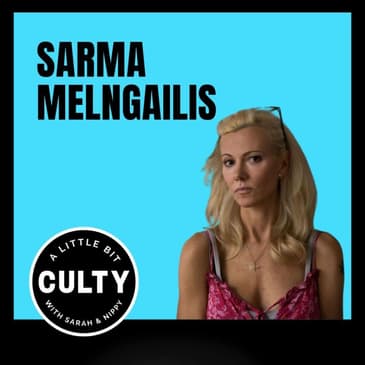
Raw vegan queen. Netflix’s “Bad Vegan.” Culty comeback queen. Whatever label you stick on Sarma Melngailis, it’s clear she’s not done telling her side of the story – and we’re here for it.
In Part 2 of our chat, Sarma gets even realer about life after Mr. Fox. From the mind games that taught her to dissociate, to her self-diagnosed matrix moments, she opens up about rebuilding her identity in a world that still sees her as a headline villain. She talks dating post-trauma, the healing power of alone time (cue: tears, journals, and EFT tapping), and why her business decisions now come with a hefty dose of pause and reflect.
Plus, Sarma shares why she walked away from partnerships that didn’t vibe, her hot takes on the “non-reactivity” cult trend, and what Bad Vegan got oh-so-wrong about her. Spoiler: it’s a lot.
For more on Sarma, you can find her on Instagram @sarmamelngailis, on her website sarmaraw.com, or on Patreon at patreon.com/sarmasarma. Also, check out her book The Girl with the Duck Tattoo, available for pre-order now. Also… let it be known that:
The views and opinions expressed on A Little Bit Culty do not necessarily reflect the official policy or position of the podcast. Any content provided by our guests, bloggers, sponsors or authors are of their opinion and are not intended to malign any religion, group, club, organization, business individual, anyone or anything. Nobody’s mad at you, just don’t be a culty fuckwad.
**PRE-ORDER Sarah and Nippy's newest book here
Check out our lovely sponsors
Join ‘A Little Bit Culty’ on Patreon
Get poppin’ fresh ALBC Swag
Support the pod and smash this link
Cult awareness and recovery resources
Watch Sarah’s TEDTalk
CREDITS:
Executive Producers: Sarah Edmondson & Anthony Ames
Production Partner: Amphibian.Media
Co-Creator: Jess Tardy
Associate producers: Amanda Zaremba and Matt Stroud of Amphibian.Media
Audio production: Red Caiman Studios
Theme Song: “Cultivated” by Jon Bryant co-written with Nygel Asselin
See Privacy Policy at https://art19.com/privacy and California Privacy Notice at https://art19.com/privacy#do-not-sell-my-info.
[00:00:00] Ich bin Charissa und meine Empfehlung an alle Entrepreneure startet mit Shopify erfolgreich durch. Ich verwende Shopify schon seit dem ersten Tag und die Plattform macht mir nie Probleme. Ich habe viele Probleme, aber die Plattform ist nie eins davon. Ich habe das Gefühl, dass Shopify ihre Plattform kontinuierlich optimiert. Alles ist super einfach integrier- und verlinkbar. Und die Zeit und das Geld, das ich dadurch spare, kann ich anderweitig investieren. Vor allem in Wachstum. Jetzt kostenlos testen auf shopify.de
[00:00:28] This podcast is for informational purposes only and should not be considered legal, medical, or mental health advice. The views and opinions expressed do not necessarily reflect the official policy or position of the podcast and are not intended to malign any religion, group, club, organization, business, individual, anyone, or anything. I'm Sarah Edmondson. And I'm Anthony Nippy Ames. And this is...
[00:00:57] A Little Bit Culty. Cults are commonplace now. From fandoms to fads, we're examining them all. We look at what happens when things that seem like a great thing at first go bad. Every week we chat with survivors, experts, and whistleblowers for real culty stories told directly by the people who lived through them. Because we want you to learn a few things that we've had to learn the hard way. For example, if you think you're too smart to get sucked into something culty, you might be prime recruitment material. And who knows? You could already be in a cult.
[00:01:26] If you're not aware of your programming, you're probably being programmed. So keep listening to find out. We'll talk about all sorts of topics on the show, but be aware, this podcast might contain stories that could be alarming to some of our listeners. So please check our show notes for more detailed descriptions and take care of yourself. Subscribe to our Patreon for Thursday bonus episodes, Q&A, and all sorts of exclusive content. That's patreon.com slash a little bit culty. Welcome to season seven of A Little Bit Culty.
[00:02:07] Hello, everybody. Welcome back to part two with Sarma Mangalis. If you missed part one, I highly recommend going back and listening to that so that you understand what we are talking about in part two. Buckle up. It's a good one.
[00:02:36] Welcome back to part two, everybody, with Sarma. Okay. So obviously writing this book has been very cathartic and very healing. Yes. That's amazing. What else have you been doing to get your feet on the ground, your head on straight, yourself into your body? I mean, in many ways, it's hard to explain this because I feel like isolating has been very necessary. And isolating meaning I'm spending time with just myself.
[00:03:01] So it's been really healthy to spend a lot of time on my own, meaning I've just been like door closed to relationships, dating. The only time I went on a date in the last couple of years was by accident. It was like I thought it was a business thing and the person mentioned being on a date and I was like, oh, oh shit. Now I have to explain this. But yeah, I have a sort of quasi ex and we stay in touch, but he's very, very far away.
[00:03:27] And I still, I love him, but I don't have a, you know, I'm not in a relationship and I'm so not open to that. It's like not even, it's not that I'm trying not to. I just genuinely have zero interest in being with somebody else. This woman, Elise Lunen, who has a, she said on a podcast recently, and let me see if I get this quote right. She's talking about sort of herself in a period of not being in relationships or dating for a while. I hope I get this right.
[00:03:53] She said, why would I take my peace of mind and sacrifice it at the altar of a potential psycho? Or something like that, but that resonated so much because I just feel like I don't have the capacity to deal with anybody else's stuff. I need my mornings. I need to wake up. I need to get grounded. I need to journal. I have cried so much in the last year in particular, the last few years, but it's just something's been going on.
[00:04:22] It's sort of like everything in my entire life is just coming up to be processed. And so I cry a lot more days than not. And sometimes like I'm sobbing. And I think it's just a lot of this, potentially to the extent that it's related to what happened, you know, in this scenario. I think that you spend years sort of in a state frozen, in a sort of dissociated state, unable to feel all the things.
[00:04:49] And maybe just at some point now, it's like it's all just coming out. And then in the process, maybe like every childhood wound or every time I was that kid that never had a tantrum. Like I legit just did not have tantrums. I didn't have outbursts or whatever. So maybe it's a lifetime of emotion coming up. And it sounds sort of depressing, but it feels like cleansing. It feels like I'm getting it up and out of me.
[00:05:17] And I also just have this sense of the past couple of years in terms of sort of business projects that were supposed to happen, didn't got screwed up. You know, all this stuff I've been through in the last couple of years has been really, really brutal and painful and challenging and just massive amounts of financial stress that persists that nobody people don't know about. So I've just been under so much pressure the last couple of years. And I just at the same time, I sort of feel like things are going to turn around.
[00:05:46] And so I need to be ready when they do. And part of being ready is having like cleaned out my emotional basement, which was piled with trash bags full of emotion. I don't know. I just feel like every time I have this really cathartic sobbing cry, it feels like it's productive. And so, yeah, I've spent a lot of time crying. And I sort of that's part of why I need my alone time. Like if other people are around, I can't get that out. So I need my alone time. You know, I journal.
[00:06:15] I read certain things. I do meditations. I do a lot of tapping. Like the EFT tapping is so useful. And it's like a morning ritual almost. And very often it involves a lot of crying. And sometimes it happens where I'm bumping up really close to when I have a Zoom call. So I have to like get all the tears out and then go splash cold water on my face and like really quickly get ready and jump on a Zoom call and be like, hey, hi. How are you? Great. Everything's good.
[00:06:43] But it's just felt like a really – it's felt really necessary. And I feel grateful that I live alone. I don't have roommates. I don't have a relationship. I don't have kids or I'm not married. Basically, I have this time to be by myself. Good. Use it. I think it's smart. Yeah. It makes sense too when you said this association. That was one of my notes from reading your book. I do feel like Mr. Fox did some sort of emotional technique – I don't know what it is – to just train you to be a soldier and not feel.
[00:07:13] Because if you were to feel what he was putting you through, it may have helped you escape earlier. Yeah. No, I – yeah. I mean I would have come unglued. I think he had to get me into a dissociated state and also continually tell me that nothing is real.
[00:07:27] And one of the things that I wove through the book that I didn't specifically point it out, but I feel like one of the things that happened over the last number of years is – I'm sure you see on Instagram, there's all this sort of spiritual stuff and people talk about reality and – The Matrix. The Matrix, all of these things. And you hear very mainstream people like Maria Menounos, who her podcast is great, talking about parallel realities exist.
[00:07:54] And when I hear that kind of stuff, it throws me back to Mr. Fox telling me that as a justification for what he was doing or that none of it is going to matter. And when he took me away, he said, there's parallel realities. So just think of it like we're just slipping into another one, but then you can come back. And so he sort of weaponized all this stuff that now is becoming very mainstream in conversation about – I don't know what you would call it, a certain type of spirituality.
[00:08:22] I also noticed – like there's this guy who, since I've followed him, has become really huge, named David Guillaume, and he teaches Kabbalah. And his reels would pop up once in a while, and he would say these things, and I would listen. And then I started to pay more attention because he would say things that sounded to me like stuff Mr. Fox had said or had sort of trained me in. And I got really fascinated. So I ended up doing courses and learned some really valuable stuff.
[00:08:48] But, you know, just one example is this idea of being non-reactive, which is sort of one of those teachings. It's like when something happens, you sort of pause and reflect, and everything that happens is sort of a gift. But this idea that if you respond in a reactive, negative, emotional way, that bad things will happen.
[00:09:09] And, you know, there's a practical usefulness in non-reactivity just in terms of like having control over your emotions and responding in the way you want to respond and being thoughtful. And, but it sort of Kabbalah and then Mr. Fox take it one step further where if you have an emotional outburst or you're reactive to something, a bad thing will happen. Like totally unconnected, you know, like because of that, that means that you're going to trip and fall when you walk outside and twist your ankle.
[00:09:38] And so Mr. Fox kind of drilled that into me too, but he used it as a means of control. So there's a lot of stuff in Kabbalah in this whole, that there were things in there that sort of themes from that, that pop up in my story a lot. Even this thing about, you know, he told me about that I had this light and some of the really grotesque sex stuff he had me do. He sort of rationalized it that, you know, he needed my light almost like it was like an energy. It's so gross. That's Keith.
[00:10:08] Keith, I can comment on that because we had a person that we've worked with and one of the first things she said to us in one of our sessions, she's like, I see a lot of people, malevolent people kind of sneaking into the spiritual realm and manipulating it. And to suggest that a negative reaction will lead to more negative reactions in a lot of ways neuters the person who's going to be defensive in a negative way.
[00:10:34] So if you're malevolent and I see your malevolence and I'm responding to your malevolence by being firm and maybe reactive. Right. But appropriately reactive. Right. There's no room for that in a call. Like when my wife gets branded and I flip out and they're saying, oh, that's my anger issue. You're fucking right. It's my anger issue. And I'm glad I have it. Oh, yeah. It's not a negative. Do you know what I'm saying? Yeah, completely.
[00:10:58] It can be co-opted to take someone like me and put me in emotional handcuffs where I don't go in and hit the sound, you know, throw my punch in the way that I feel like I can throw my punch and should with an appropriate outrage. Right. It's a very fine line where it's sort of a useful teaching. Like I actually did find that very useful, that idea in Kabbalah of being non-reactive. Absolutely. But then somebody, some party out there could take that and use that teaching and then weaponize it. Don't yell at your 11-year-old like I did sometimes.
[00:11:27] And precisely the way that you said. It's like, yeah. So I think Mr. Fox did that a lot. Yeah. It's compassion gone wild in a lot of ways, you know. But sometimes people who are malevolent and covertly malevolent need to be exposed through air quotes negative reactions. Yes. With a blunt object. Yes. It puts them on call and then they're kind of like, okay, are you malevolent or not?
[00:11:52] And then their true character will be exposed because you're treating them who they really are, not who they're pretending to be. Right. And speaking of reactions, that reminded me of another thing that I think happened a lot with Mr. Fox and probably happens a lot in general in these situations is one of the things I've learned about myself.
[00:12:09] So I did end up getting this diagnosis of I was professionally evaluated because after Bad Vegan came out, I was sort of bombarded by people telling me extremely kindly that they thought I might have Asperger's or autism one or are you on the spectrum? And enough people were telling me that I went to get a formal evaluation and then ended up getting that diagnosis. So I've done a lot of research and looked into it a lot.
[00:12:36] And one of the things about me that I think is typical for other women who are this way is that it takes me time to process things. So very often I look back in my past and like if somebody says something offensive or crosses a boundary, it's like I don't really register it. I can't tell you how many times it's like I'll wake up one morning and be angry about a thing that happened the day before, but I wasn't angry in the moment or I didn't really know how to respond.
[00:13:03] So you sort of I think that's how you think about like Harvey Weinstein and what he did. I would have frozen in that moment. I wouldn't have known how to react. I would have probably frozen and then the things would happen and then I would have blamed myself. And so I think that one of the ways that that can get used by people like Mr. Fox or in a negative way is like they never give you a chance to react because you don't have that quiet time the following day to have processed it and then respond and go, wait a minute, that was fucked up.
[00:13:32] You're on to the next fucked up thing. So you don't ever get to kind of have a thoughtful reaction to anything because you're constantly bombarded with the new thing. Yeah, everything you're saying tracks. I really relate to that. Sorry, I'm going to go get a professional test because I just said to Nippy the other day I really want to work on the remnants of my people-pleasing stuff. It's just a couple things have happened where somebody said something and I'm in the moment going, okay, okay.
[00:14:01] And then the next day I'm like, what in the actual fuck was he thinking? A, and B, why didn't I say, what the fuck are you thinking in the moment? Happens to me all the time. Yeah, and Nippy is better at it. And I don't understand why he can do that. It's like in the moment there is the freeze and also- I wouldn't use better. Well, you're more in the moment of the reaction. And I'm more like, oh, I wonder.
[00:14:28] It's like I'm still assuming that they know something that I don't or something like, oh, what am I missing here? That they think that's a good idea and I don't. And I'm like, oh, that's interesting. Let me think about that idea. Which might look like I'm just buying some time. But really it's like I can't actually process how fucked up it is. Well, also it might be you guys' superpower of being able to think more holistically and give the person the benefit of the doubt. And maybe you're right sometimes. So it could be a superpower and it also could be very detrimental. Yeah, yeah, yeah. For sure.
[00:14:57] And me being in the moment and seeing it right away has upsides and downsides as well. I wouldn't compare and contrast it to it. I'd say there's different ways to process. Yeah. Both are valuable. It's definitely a good thing to know because it's like in certain situations I can, if I have the opportunity, I can say like, let me think on that or let me sleep on that. Or at least being aware of it is really useful because, yeah, it's happened a lot where it's like somebody does something really offensive or boundary crossing.
[00:15:27] And I just, it doesn't sink in until later on that I should have stopped that or I should have had a reaction. Yeah, I guess the lesson for us is, you know, then there are some times where it's not safe. Like if you're like alone in the room with a dude, for example, in a business meeting, to be outwardly confrontational might not be the safest thing.
[00:15:48] But yeah, to not make any commitments, to not sign any documents, to not send any wires in that state and to delay that decision-making process as best as we can. And maybe having like outside counsel to run things by, which you didn't have at all. Yeah, I think that's one of the things I crave in a very big way is, and I think is important too for people if you're wired in a certain way, is to have like an advocate.
[00:16:17] And in my case, you know, there's a lot of people out there that are constantly looking for the right relationship and they want to be in a relationship and they're looking for that special someone. And I've been going through that, but wanting sort of the right, like a business partner, the person who's like in it with me that I can trust, who maybe would have more of that kind of a dude energy.
[00:16:37] I don't know if somebody's going to find that weird to say, but an energy that's different from mine, where they're much more, you know, there's a lot of women I know who are very aggressive, very skeptical. Their brains work different than mine. If I just had somebody who operated that way, that was sort of always looking out for me. Like a power of attorney. You know, an agent, like all those people that are supposed to sort of be working on your behalf, you know, like agents and attorneys.
[00:17:04] But like it would be so nice to have a business partner just to go through this stuff with. Yeah, it's similar to kind of how we do it. She comes back, I go evaluate this. I would say if it's a boat, I'm the rudder, so to speak. I just make sure that we're making principle-based decisions and it's consistent with what we're doing. And it's not all reliant on me. We kick it around.
[00:17:25] Yeah, but I think especially in terms of having an awareness that I've been taking advantage of, I've been misled in the past, having enough people or that person around you that is going to be like that second set of eyes going, yeah, this doesn't feel right. Or, you know, maybe let's don't trust that situation so quick, let's wait and verify. Or just somebody being a bit more skeptical and also just carrying part of the load. I mean, I've been working on all these different things.
[00:17:55] And yeah, it's just been a lot for me when I'm also sort of going through this sort of healing period. Anyway, yeah. You know, but it's a funny situation to be in because I obviously you don't want to get into a situation with the wrong sort of person. You know what I mean? Like that's why for me it's like a business partnerships. It's very much like a relationship. It's like you got to go slow. And if it's somebody that you don't have a history with, you got to go slow and make sure you know who you're dealing with. Yes.
[00:18:24] Make sure you know who you're dealing with. Do some reference checks. Like you literally have to call people and be like, what's it like to work with so-and-so? There's a lot of things that I tell people even in relationships or any kind of relationship. You know, it's useful if somebody has like been a long-term friend of a friend where there's history there. Those kinds of things are useful where you kind of can get some validation for somebody's history and their own reliability. And that helps. Can I share something that someone just shared?
[00:18:54] My really good friend here, Caroline, shared something with me that I think that she got from – oh, gosh. It was some filmmaker. Damn it. I'm going to butcher it. I learned it from my friend Caroline. Basically saying when you're going to work with somebody – I think it was when he auditioned people, his deciding factor was not just could they act, but like could you spend eight hours in the car with them on a road trip? Yeah.
[00:19:17] You know, and I think that for you and I, and looking at our blind spots, which are very similar, when we are determined, we might ignore those little red flags of doubt. Like it could work this way. It could work. It doesn't – maybe they're doing these other things that are a bit of a concern, but it could work. It could work. And I want it to work so badly, and so I ignore those other things.
[00:19:36] And I think we – like taking into account the full picture and then that in combination with not deciding right away and giving it the space and time, which it sounds like that you're doing, like consulting with some other people and not saying yes right away. And our audience is probably sick of me saying this. My new thing now is if it's not an immediate fuck yes, it's a no. Yeah. Yeah. Or if somebody's trying to sort of rush you into something and not answering your questions.
[00:20:02] If somebody's like not answering certain questions, not taking time to explain, well, that in itself. I mean, I've walked away from a couple of big things because – Yeah. Sorry about it. We'll work it out. We'll figure that out later. No. Exactly. None of that. No vagueness. Yeah. No. We'll work it out. We'll get to that. We'll cross that bridge when we come to it. No. Right. I mean, yeah. These are very practical tips, Sarma. This is very practical.
[00:20:29] And I know not everybody struggles with these things, but for the people that do, I hope that really helps them because, like I said earlier, no judgment. Just because you've been through it once doesn't mean you're not going to do it again, but you really have to figure out what the specific red flags are. And it's slightly different in a relationship, intimate relationship, a business relationship. Yeah, but different but similar dynamics. Yes. I sort of felt like maybe part of it is just solved by my being completely closed off from dating.
[00:20:58] So that problem is solved because I'm not even doing it. But I feel like I'm hyper aware of red flags in that sort of context. But now it's taken me more lessons to get more aware of it in a business context. And I have – I mean, I sort of – I feel proud of myself because, I mean, this was well over a year ago. But, I mean, I walked away from a couple of situations where somebody came along with a lot of resources and could have been a great partner in many ways.
[00:21:23] But then, like, oh, actually, it's contingent upon me participating in a reality show. Like, no, I don't want to do a reality show. That's not my jam. But I realized that very quickly and then walked away very quickly. So I sort of felt like – I felt proud of myself. You know, when you see it and you walk away, even though it might have on the surface seemed like a good opportunity.
[00:21:46] This podcast wouldn't even exist without our amazing, supportive, generous patrons. Come find us on Patreon. We are at patreon.com slash a littlebitculti. Go there for bonus episodes, live Q&As with past guests, exclusive content, and lots of other goodies. Subscribe now and help us keep this podcast going. That's patreon.com slash a littlebitculti. And now, a brief message from our Little Bit Culti sponsors.
[00:22:14] And remember, when you support our sponsors, you're supporting this podcast. You've heard from our sponsors. Now, let's get back to a little bit culty. Shall we? I think it's healthy to have, like, a consultant. When I had that situation two years ago, we went to MIT and we spoke with a group of people at this MIT thing about cults. And I made friends with one of the guys. And I called him after I did a situation. He goes, oh, yeah, I've been there.
[00:22:43] Here's what blah, blah, blah, blah, blah. And it was like – he kind of came to me a pep talk. Like, this happens. He made the mistake. Like, it was a business thing. Yeah. And I kind of got a little excited about something. And I got tripped up, basically. And he gave me a really great solution. And he humanized the problem. He's like, this is what I've done. And it made me feel way better about my mistake. Yeah. I've definitely had to hold on to a lot of – just that idea that – I don't know. Just these are, like – these are lessons.
[00:23:09] And the more I look at it and understand the lesson, the less likely – you know, now I won't need to repeat it. And if a certain thing is meant to happen, I think it'll happen. It'll work out. But, yeah. I mean, it's a little bit tricky because in some of these – over the last couple of years, the stress at times has gotten so great that I've – I notice myself sort of intentionally dissociating, which is a little bit – Self-protective.
[00:23:35] Yeah, it's self-protective because it's sort of like if I don't, I'll just – I'll fall apart, you know. And I think that people do it all the time in a way that's kind of useful where it's like, well, to get through these things, to accomplish these things, to move forward, to get up every day, I kind of do need to dissociate and not allow myself to feel super upset about something or spiral in fear or, I don't know, you know, if somebody has betrayed you, it's like, well, okay, that happened.
[00:24:01] And rather than sort of get wrapped up in feeling upset about it or woe is me, just kind of soldiering on, which, again, that was a quality that was useful to Mr. Fox. You know, it's just coming back around to that idea that cults kind of take our good qualities and weaponize them, you know. And I know they did that to you, Sarah, with, you know, you being like a go-getter and recruiting people and showing up and doing all the work. And I'm similar in a lot of ways that, like, I'll get shit done. I'll show up. I'll get up.
[00:24:30] I'll keep getting up. If I get knocked down, I'll keep getting up. I'll do what it takes. And that can be a good thing, but then the wrong person can weaponize it. Very much so. Also, like, sadly, like, you enter a certain level of business and the people that are most clinical and cold and can make those hard decisions that don't require empathy and are all about the bottom line results end up thriving.
[00:24:53] And when people have a hard time feeling or, no, feel a lot, it's hard to make a decision that kind of feels mean. Yeah. But also necessary. Sure. Sure. I can't wait for your book to come out, too. Us as well. I wish we had. It'd be fun if it was the same time, but. I know. It was supposed to have been. Yeah. But we got behind. I blame baseball season. Yes. And football and basketball. And also just, like, we kept having interviews where I thought that we have to put this in.
[00:25:22] We have to put this in. We have to put this in. It's, um, now that I have the printed copy, it's, like, occasionally I find some little thing where I'm like, ooh, I would have changed that. But I think that every writer says that that's just inevitable. Like, at some point you just have to, like, pull the plug and put it out there. But, you know, with the way that we're both publishing, the good news is at any point I can go, you know what, there's enough little things here I want to change that it's just there's like a little fee.
[00:25:51] And then you can fix the typos if there are any or make any adjustments. And then. You do a second edition. You do a second edition. It doesn't even have to be labeled as a second edition, but it can be. I mean, but you can tweak some things. And I really, I mean, I knew all along that it would make the process difficult from the perspective of having to pay for all these upfront costs and kind of going further into debt in order to produce the book. But I would not trade it. I mean, I really appreciate kind of having full control.
[00:26:20] And I can't remember who you guys are working with, but I'm working with this company, Scribe. And, like, having somebody walk you through the whole process has been really, really helpful. I mean, it's great. So it's kind of like you get the good things about having a publisher, but not somebody owning your story and owning the rights. And, I mean, I've heard stories of people who've written books where they didn't quite realize that they signed away the scripted rights. And that's kind of been a big thing for me is the scripted rights for my story.
[00:26:49] And I don't – it's another way in which somebody could manipulate the story or turn it into something that it's not. And so I want to make sure that I, you know, am very careful with those rights. My fantasy for you is that somebody reads the book and offers you a huge amount of money for your life rights that would be enough to pay everybody back and open the restaurant. And you'd be an executive producer so you'd get to have creative control. That's what I'm manifesting for you. How about – how do you think of that? It's a big manifestation. Yeah.
[00:27:18] I mean, I was in a situation where I was offered a deal. But it's important to me that my story is useful. And I think for it to be useful, it needs to be – I kind of have a vision for how it can be very, very useful. Because there's a lot – there's chapters that I – complete chapters that I just cut out of my memoir. Because they didn't need to be in this memoir. I really like them.
[00:27:42] But they also were the types of scenes that would work so well in a filmed, scripted version. Because there's so much that you can convey in a scene that is really hard to write about or just is more awkward to write about. But would make a really good scene in a show. So I have a bunch of stuff like that that I cut out of my memoir or just didn't put in that are things that happened or dynamics that are all true and happened in a part of the story. But they're not in my memoir.
[00:28:11] But they would be really great in a film scene. And it's funny because I've had that awareness all along while writing it. And stuff occurs to me all the time where I picture how a scene should be done in an impactful way. I'm already casting it in my head right now. Who's going to play you? Who's going to play him? I had fun with ChatGPT asking his opinion. My ChatGPT is a dude asking his opinion on who would play Mr. Fox. And?
[00:28:39] We didn't come up with any definitive person. It's a really hard. That would be really tricky to cast because you need somebody that has that, like, yeah, let's face it, like that sociopathic sort of intensity with that stare. You know, these sort of big, intense eyes and that stare that's really powerful. And then you also need to find somebody that's, like, not a total schlub. You need to find somebody that physically could do that part.
[00:29:04] Who, if he was thin or, like, has a nice looking face if he was thin. Like, Mr. Fox wasn't like, he wasn't like an ugly dude. I don't even like saying that. But he was, but he gets enormous. And he's still enormous. There's a show that came out today I haven't watched yet. Oh my goodness. Update. Oh yeah. He is still enormous. Like, how enormous? I don't know. Like, the way he was when he got out of jail.
[00:29:34] Which, it's funny because a lot of people say to me, they're like, so, they'll say something to me assuming that he's still in jail. And I'm like, he got out before I had to go serve my time. People always forget that. Let's do a little recap on that because people are going to want to know. That's crazy shit. What's, why the fuck is Mr. Fox roaming free? Because he was never charged for what he did to me. He was never charged for it. Can he be? Like, can you charge him now? I mean, my case happened before.
[00:29:59] Not that Me Too would have changed it, but it would have probably given a bit of a different lens. But my case happened in 2016. The whole Harvey Weinstein, Me Too thing was in 2017. And then your case, like if my situation happened after yours, I think it would have been much easier for people in the criminal justice system to potentially see the parallels. Whereas before your very high profile, not your case, Keith's case, sorry. But, you know, that situation.
[00:30:27] Watching that was, it's hard to explain how it feels. But, you know, seeing these people like Keith get held accountable, even that guy Larry Ray finally being locked up. It's like there's something sort of painful about it for me. Like, I'm obviously super glad and it feels good on the one hand that somebody's being held accountable. But I didn't get that. And that he's still out there doing what he's doing to other people. I think that's what this show is about because I didn't originally want to participate, but they kind of roped me into participating anyway.
[00:30:55] So it's more about him and what he's done after my story with him and he's manipulated other people. And they've come forward? I think one person came forward in a dude in like a not very big deal situation. But I mean, I just I know he's been in situations with other women, I think at least three. I don't know if any of them came forward, but I know of one sort of peripherally because somebody reached out to me to talk to me about it. And so I can't take their story and push it forward.
[00:31:24] They could if they wanted to. But yeah, I know somewhat of what he was up to in the years after what happened. Similar type of stuff they did with you? Yeah. Yeah. And sort of like living in somebody's house during COVID and kind of manipulating, I think, you know, everybody in that household, which just is very icky, of course. He's out there doing what he does. Yeah, it's his only skill set. Well, similarly to how Moira Penza read the New York Times and decided to go after Keith and NXIVM.
[00:31:53] I hope that someone reads your book or listens to this or watches that show and says, you know what? This guy's got to be held accountable. I really hope. I hope something gets him. Yeah. And if somebody wants me to testify about his past, I will. I hope something gets him and holds him. It's not only just holding him accountable. It's like, you know, it's like getting somebody off the street who's going to destroy other people's lives. Yes. It's a time bomb. You know? Back to the casting for a second. I think that when you're talking about casting already.
[00:32:23] The big eyes. I'm picturing like Jared Leto in like one of those fat suits because... He has the eyes. Yeah. When you said big eyes, it was the first person I thought of. Oh, yeah. He has the eyes. Yeah. He would just need to... And maybe... I feel like when actors either gain a lot of weight or lose a lot of weight, they very often win Oscars for those performances. Yeah. You know what I mean? Like when they like get super fat for a role or get like emaciated. He got super fat for a role. He did? John Hinckley, the guy who killed Lennon, he played that role. Really?
[00:32:53] Yeah. Cool. Maybe he did it again. 15 years ago. Jared Leto's agent is listening to this. I think we could package a nice little deal here for you. Sorry, ma'am. Suddenly I'm an agent. Well, you know what the thing is also the thing that you're just talking is like how... And I'm thinking... I'm just putting my thoughts together right now, so bear with me for a second. But like this... I don't know if you're following how there's like... You know, Candace Owens is interviewing Harvey Weinstein and like... Fuck.
[00:33:20] It's just this whole shit show of victim blaming and Cassie with P. Diddy in this world. Like I'm protective of you and I want people to see the full picture with you. And I... You know what I mean? I mean, you had an awesome line on whatever news program it was that has been reposted on the socials where... Like, and again, I think it is in the context of the P. Diddy case where you said... I think you said when fear is in the room, there can't be consent. And that hits so hard.
[00:33:49] I mean, that's what like Bill Maher doesn't understand. You know, and I'm... He's a fan of Bill Maher. He can be super annoying sometimes. I feel like, you know, over time he can be kind of more and more of an asshole sometimes because he just sort of probably just doesn't give a fuck anymore if he ever did. But I agree with him on a lot of stuff. And I think what he does is very valuable. But then there are certain times where like that monologue he did about P. Diddy and Cassie, it just was so painful. It was so painful. Just listening to it.
[00:34:18] I felt enormous amounts of shame. I felt like he was yelling at me, like telling me I should have known better. I should have walked away. Maybe I wanted something out of it. Like the whole thing was so disgusting. But the part that he completely misses is not that Cassie or... And in this case, we're talking about women or the ones with Harvey Weinstein. It's not like they're sitting there going, okay, well, I guess I'll do this thing because I want this role. It's like none of that is happening. None of that is happening in our minds.
[00:34:47] It's all about fear and intimidation. And fear, I think, does a lot of things to our bodies and our minds physiologically. Like fear puts you in a freeze state. Fear has you do a lot of things. And those texts that were posted that Bill Maher reposted doing the P. Diddy's defense for him, were posting Cassie's texts. It's like somebody could have...
[00:35:12] If I'd gone to trial, I'm sure the prosecutor would have pulled up my texts to Mr. Fox saying the times where I told him I loved him or whatever I said. And it's like you're saying things to appease them. You're in a totally compromised mind state. You're in a survival mode. You're in that weird dynamic of like they create this weird dynamic where they have a certain power over you and you kind of can't... It's really hard to understand and articulate.
[00:35:37] But yeah, what you said is kind of the main thing that Bill Maher and so many people don't understand. And also they don't understand as a man. Yeah, as I say, powerful men advertise their ignorance when they make comments like that. Because when was the last time a powerful man was put into an inferior power position? The last time I physically felt scared was probably when I was a teenager and I knew it was temporary because I was going to be promised strength and power when I grew into my body and whatever. Right? Yeah.
[00:36:05] So when they get up there, I'm not going to be in a situation where a woman is going to create fear in me that I can't get out of. Yeah. Ever. It'll never happen. Yeah. So I'm never going to be able to... You can't even imagine it probably. ...empathize with that situation and be in that air quotes weaker position of power, not even just like with social equity. Physical. Not alone, but like physical and stuff. And so I'm automatically in a power dynamic that...
[00:36:32] And oftentimes Bill Maher has been the beneficiary of, right? Yeah. And these people commenting on have been in situations where like, I mean, I know his sexual conquests are well documented, right? So I'm sure that he's benefited from being in a room where maybe he's not sensitive to the person that he has a power dynamic over is going to be obedient to him. And so why would he go do the work that it takes to understand that perspective when he's probably been the beneficiary?
[00:36:58] Especially when you think about like just the very basic dynamic that goes all the way back of women in a sense being like men are trying to mate with women. Women are essentially in that dynamic sort of like prey, you know, and the men are predators in a way, right? And so it's like this dynamic that goes way back where so often as a female, you're put in situations where the way to get out of it... Exactly. ...is to appease the person.
[00:37:25] Like you have to sort of really carefully and strategically like make nice and not make the man angry because then man can hurt you. So you kind of like are trying to appease them and back out of it and sort of tiptoe your way out. And men are probably super aware of that and they know how to work that. Also, your survival is predicated on finding a mate that is going to make you feel safe and they're probably going to use that knowingly. Knowing that's your psychodynamic.
[00:37:53] I'm like, oh, okay, well, this is prime for the power dynamic right for me to abuse. Consciously or unconsciously. I mean, yeah, there's a social dynamic that we've all kind of grown up in and the work to build awareness around it is understanding like Sarah's point. There's fear in the room. I think fear is like the ultimate weapon that's used in all of these scenarios across the board. Absolutely. Whether it's like the P. Diddy, the Keith Raniere, Mr. Fox.
[00:38:16] It's like they put people in a state of fear and that if you had to boil it down to kind of one thing, that's what they're weaponizing. And that's why people have a hard time understanding it because they sort of... If they haven't been in that situation. If they haven't been in it, they don't know what that feels like. Right. And what powerful man is ever going to be in that situation? And just for the record, it was Laura Richards from Crime Analyst. Yeah, she's great. Yeah. When I was prepping for that P. Diddy interview, I heard her say that and I credit her elsewhere. But of course, I didn't put that in the news clip.
[00:38:45] But our interview with Joyce and Nina, which is back to season one, so four years ago, really digs into consent. We'll make sure to put that episode in the show notes because it says it in different ways about fear. Like you can't consent if you're being pressured, which is another way of saying fear, right? Right. Like if you're being pressured or if you don't have all the information. And the thing that's really shitty about what people are...
[00:39:09] Like Candace Owens talking to Weinstein, like, you know, maybe there was a woman in LA who like said, okay, fuck it. I'm going to fuck my way to the top. You know? That exists. Like I can't say that doesn't exist. But for the most part... You can't use that to discredit. Yeah. Yeah. For the most part. And like if you read Rose McGowan's book, who I'd love to have on the show, it's called Brave and it's really good. And she like, speaking of painful or harrowing, writes out exactly what happened. And I'm sure this is more the case for most of the women in Hollywood.
[00:39:38] It wasn't like, okay, he says, okay, listen, here's the deal. You're going to have to suck my dick and then I'm going to give you an Oscar. Right. That's not how it fucking works at all. And I don't think there's a woman who's like, oh, how do I get an Oscar? Oh, I got to go suck that dick. It's just out there. No. That's the scenario. And for those who haven't read the book and I really recommend it and you should check it out, Sarma. I think you'd get a lot out of it is she was invited to meet him through with her agent at a hotel in a restaurant. And she goes to the, and I'm going to butcher it. This is what I remember.
[00:40:08] She goes to the restaurant. She's waiting in the restaurant. He's running late. His handler or his assistant comes down and says, he's just finishing a meeting. Come on up to the suite. She's with somebody else. There's like a man there, like a gay man. I think like somebody she feels safe with. This is what I'm remembering. I could be wrong. Maybe it's even a woman. I don't know. She's with somebody else. She's going up to a meeting. They're in a suite. They're having a meeting. They have the meeting. They do the meeting. And then on the way out the door, she's suddenly alone. And he like pulls her into his sauna room and rapes her.
[00:40:36] And she talks about dissociating and floating above herself. And she's just, she's like, you know what? You know how I know exactly how tall she is? It's because I was her body double in a movie in the 90s. So she's exactly my height. Okay. She's 5'4", around the same weight, probably 115 pounds. Harvey Weinstein's a beast. Yeah. He's a fucking beast. Bigger than Nippy, you know? Easy. Nippy's a beast. And like, there's no fighting. It's like, what am I going to do to stay alive? Yeah.
[00:41:05] What do I need to let happen just to stay alive? And that's what happens. And that's like, I really hope someone listens to this and sends it to Joe Rogan or Candace Owens or fucking whoever else is on Weinstein's side, because that's not how it happens. And I'm fired up about it. Yeah. One of the most telling things for me was, remember the audio of him when he's with this Italian, he's with this Italian actress who wore a wire.
[00:41:31] And when you hear his voice, when he thinks nobody else is listening but her, and he's trying to, I think he's sort of, they're in a hotel. So he's kind of quietly yelling at her to like get in the room or something. And she's saying, no, I don't want to. And the way he talks to her in that audio clip. I haven't heard it. Oh my God. It's out there somewhere. It came out around the time that all of this was happening. But hearing that audio clip and hearing his voice was, I mean, it like gave me the chills.
[00:42:01] I found it scary even just to hear that. So that kind of, I mean, not that I was doubting that he's a bad dude and did all these things, but hearing him in that audio, anybody who's been on the other side of that kind of voice and pressure and you can kind of hear the darkness in his voice. Yeah. I'd like to, I'll check that out. And I say this publicly because I want to give room to other people to make the same pivot
[00:42:27] that if I had not gone through my experience and had heard the Weinstein story, I may have also had the opinion of, what are you doing? Don't go up to the hotel room. Yeah. What are you telling, like, and that's where I feel like it's really important for people to understand it doesn't, like, just like with the cult, it's so obvious in retrospect, it's so obvious in the documentary and whatever you're watching. In the moment of, like, being in the restaurant and someone saying, hey, come on up, and you're with somebody else and it feels safe, it's not as, you know what I mean? Like, it's-
[00:42:54] But also setting a boundary once you've gone through the, once you've gone and waited, been invited, and going like, and for you, you're in the inertia of going there and they go, okay, you want to come up to his room? And you have to go, no, I'm not doing that. Yeah. It ruins a lot of- Of things that you feel like you've earned and you feel like you're being part of the problem by setting a boundary. And I think another thing that happens so often, and I think is also maybe part of the way I'm wired and the way a lot of people are wired is like, I don't know how to articulate
[00:43:24] it exactly, but it's like, time and time again, I'm shocked by people's behavior because it's like it would never occur. It's not in the realm of possible things that are going to happen that somebody would do X, Y, Z. Right. So you're not thinking like, oh, I'm not going to go up to his hotel room because he might grab me and rape me. It's like, that's not even, that's not even a possibility because you think nobody would do that. Like, how could somebody do that? Again, it's hard to explain it, but it's happened to me over and over again in situations.
[00:43:54] And- It's what predators rely on. Yeah. It's like, you just cannot fathom that somebody would behave in a certain way or would do certain things. That also can be used against you. That's what I mean. It's happened to me recently in business where it's like, I cannot believe that something happened. It's a great point because if I, let's say I'm the handler and I'm taking you up to Harvey Weinstein's room and you go, wait, wait, wait, wait. I go, what do you think he's going to do? Rape you? Yeah.
[00:44:21] Like I can shame you for having those thoughts and having those instincts. And all of a sudden you're the problem through, hey, this is what Harvey does. Do you want this or not? This is your opportunity. And you're calling him a rapist. Like that's the thing you can't bring out into the open without you looking bad. Right. Exactly. Cause I mean, that's another, you know, it's like sort of like the idea that if, if a dude came over and offered to help carry something for you up to your building, you would feel like you were being rude by saying no.
[00:44:50] And that's something that they're very aware of too. Right. Right. Rather than smart and savvy. Right. If you're smart and savvy, you know, like to just say like, no, thanks. I'm all set. You're, you know, or to refuse somebody's help or you worry that you're going to insult them because maybe they look a certain way and you don't want to be accused. I don't know. You know what I mean? You don't want to like insult somebody. Yeah. So you just, and then, but I think also at the same time, I think that, that aspect of
[00:45:16] kind of not being able to, it's not that you can't fathom it. It's that it almost doesn't occur to you that somebody would do these things until it's too late. And that I think happens. I mean, I know that's happened with me a lot. And I think that that happens in a lot of cases where it's like by the time the really bad things happen, happens, it's too late. Like you just were not anticipating it. Oh, Sarma, please feel free to reach out anytime. If you're like, can we run something by you?
[00:45:45] You can run stuff by us. We're here. Yeah. Blunt process of decision making around here. Yeah. Yeah. I know. I mean, how can we make this more happy? How can we like it? Well, let me make it more uplifting. For more background on what brought us here, check out Sarah's page turning memoir. It's called Scarred, the true story of how I escaped NXIVM, the cult that bound my life.
[00:46:13] It's available on Amazon, Audible, and at most bookstores. Highly recommend, of course, because she's my wife. And now a brief message from our Little Bit Culti sponsors. Remember, when you support our sponsors, you support our podcast. Break time's over, people. Let's get back to this episode of A Little Bit Culti. It's a good one. Well, your book's out July 8th. Where do people get it?
[00:46:42] Well, I've been doing pre-sales, which I know you guys have too. And man, that helps. Because again, it's like, this is all front loaded. So I've been living with maxed out credit cards and whatever. And so I've sold a bunch of copies that I will sign to people personally. And then it will be on Amazon. And as you know, with independent publishing, it's a different story as far as bookstores. Yeah. Bookstores can order it, but they sort of have to do it a bit more proactively.
[00:47:11] It's not like automatically in bookstores. But, you know, I think I forget what the number is. I think it's like 90% of books are bought online. Wow. And so, yeah. And I mean, this current version is available, you know, on Amazon worldwide. So anywhere in the world, people can buy it, at least through Amazon. That's amazing. Yeah. And what do you hope people, like, obviously Netflix and that bad vegan debacle, did you dirty? Yeah. I don't know.
[00:47:40] They've got to go to sleep at night and rationalize things however they do. And it's not for me to, like, sort of tired of being mad about that. You know what I mean? Yeah. I get it. I hope that the book speaks for itself in terms of – I hope the situation just kind of becomes more clear. What's interesting is so people who read the book, if they haven't watched bad vegan – so one person, you know, Mark Vicente, he read the book and still hasn't – I think he will now watch bad vegan.
[00:48:09] And I'm so curious, especially because he's a filmmaker. I'm so curious what he thinks. Because if you read it and then you watch bad vegan or – I mean, could it be the other way around too? But I think they're just so very different. Yeah. Maybe we'll watch bad vegan again and then we'll do a commentary about how stupid it is. Stupid. There was just no – there was no analysis. There was nobody there explaining what was going on. There was no psychologist.
[00:48:38] There was nobody there saying, here's the dynamics of how this happened. It was just, here's the shit show. Let's make her look like she's sketchy. Let's sort of alternate like, oh, she looks like a good person. Oh, she looks sketchy. Let's edit it so it seems like she's laughing with him. Let's edit it so that the way she kind of says she doesn't remember looks suspect. Let's leave certain things out. Do you think they did that specifically to create like controversy and get people watching it? Yeah. How fucking awful.
[00:49:07] Because I mean, I think anyone who takes the time to read your book will get such a different hit. I mean, fuck, you went to Wharton. You worked in finance. I didn't know this about Nippy, like when Nippy reads it. Like it's mind-blowing how intelligent you are. You're not dumb. You're not stupid by any means. You got fucking duped by a master manipulator. And I think that that's not portrayed in any way, shape, or form in Bad Vegan.
[00:49:36] And I shame on them for portraying you that way. And I hope you feel vindicated by the book and our book too, which calls that out. Yeah, I think our books are very complementary in that there's places where you sort of list certain things that are characteristic of cults and things to look out for. And there's sort of examples of those in my book. You know, my book is a story that if you go through it, you can see examples of where he's
[00:50:02] doing this tactic, where he's created this dynamic, where this thing is relevant. Mm-hmm. So I can't wait for your book to come out because I feel like it's so helpful and validating. And also it just takes, you know, I read a lot of those same books that were your sources or that you refer to. There's a lot of material out there. And I feel like your book kind of pulls it all together in a very concise and readable
[00:50:25] way, but also with your sort of signature style, which is very simultaneously super compassionate, but also lighthearted. And with your little sarcastic jabs in there that sort of are what helps us get through this is sort of like the humor parts about it. So I just think it's, I'm excited for people to be able to read it. Yeah, I wouldn't be able to do this without any of that. Oh, yeah. I mean... I can't not.
[00:50:52] Yeah, because it's like Keith, Mr. Fox, there's so many things about them that are so ridiculous that it feels fun to make fun of them. You know, it's like, it's satisfying. It's like, I feel like it's good for the, on a soul level, it feels fun to make fun of them. Because it's just a little way of, it's like when I recorded Mr. Fox, the reason I was recording him and playing a role was so that I could kind of get back at him a little bit.
[00:51:18] However I could, just, it was a little bit of taking power back to record him and knowing that he didn't know he was being recorded and that it was going to be used. But of course, the filmmakers at the end used it against me and made me look bad. I think there's that, I don't remember the name of it, that docuseries, I think is Robert Durst, where he's like caught at the end on a hot mic. And he's actually caught on a hot mic. And he sort of makes some comment about like how he really did it.
[00:51:46] And it was this very kind of explosive documentary. And that was sort of the kicker. And I think that the filmmaker probably had that in mind. Like, let's take everybody through this whole crazy story. And then at the end, she's caught on a hot mic laughing with him as if she was, you know, in on and all along. And a ton of people came away with that conclusion. But I think it was modeled after that documentary. Shame on them. You need like the way Rogan has like the person who's always looking things up simultaneously. Jamie.
[00:52:16] Jamie, right. You need a Jamie who could tell us what the name of that documentary was. We'll find it later. But yeah. So, I mean, I hope, I would love for this book and my story to maybe help at least call that out in a way. And I am doing another documentary. And I just hope that the actual story being out there will help people.
[00:52:39] But also, I just hope that in some way it helps prevent filmmakers from doing this to other people and sort of sensationalizing people's stories and twisting them around. I mean, that was just, again, that was another example of me being naive. And like, I could not have imagined that they would do that. Like, it didn't even occur to me that they might misuse materials or it didn't even occur to me that they would move my words around.
[00:53:08] It didn't occur to me that I didn't even know that they moved my words around until much later because I just thought, like, I must have said that. Maybe I was being sarcastic. Like, it didn't make sense to me. Then you played the whole audio and you found it. Yeah. People that I'm working with listened to the whole audio and were like, you do realize that your response came from a whole different part of the call. And that shouldn't be okay. No, it should not be okay. I mean, I signed up to do a documentary.
[00:53:34] It's like journalism is what I thought, but there are standards. And again, you know, people are very nice and they seem very compassionate and they treat you in a certain way. And so you just assume that they're on your side and they're telling a, you know, they're going to be honest. You just don't, you don't assume that they're going to turn around and betray you because they're being very nice to you. Why would they betray me? Why would they do that? They know what really happened. And time and time again, it's, it's happened.
[00:54:02] And so I just, I feel like, can this be it? Can my eyes be finally like pride way the fuck open where I, I'm at least more realistic about understanding that these kinds of things can happen in the future and being more careful about it. Good. Yeah. I'm glad to hear. Well, you look good. And, you know, I feel like this is going to be a whole new part of your life, a new chapter post book. And I'm really excited for you with this book.
[00:54:29] I really think it's going to help a lot of people. And I hope most importantly, I helped you to move on and see what happens next. I mean, yeah, it is really nerve wracking. And I appreciate, I really, really appreciate everybody who not only buys it, but I, I feel this sense of gratitude when somebody reads the whole thing, you know, I just feel grateful that they've read it and kind of gone through what happened with me in a way. So, yeah, that means a lot to me.
[00:54:58] And yeah, I like writing, you know, like I really wanted, I want to do another book. I just started a sub stack too. And I want, I want to write more. I like writing and I like putting stuff out there and writing. I don't know if I'll, how much time I'll have to get started on another book, but at some point I do. I mean, I have an outline. I, I keep writing sort of little bits and pieces and there's a lot more that I want to say. And I have more stories to tell. I bet life after Rikers.
[00:55:26] Kind of can't wait to tell the other stories. And you know, it's like, it's true. As long as the stories you tell are true, it's fair game. Absolutely. Well, congratulations, Sarma. Yeah, congrats. That's great. Thank you. Come back in another year for part four. Yeah. Thank you for having me back. Oh, it's so great. We love you so much, Sarma. Like my happy place with you guys. That's the best. Yeah. See you soon. Bye. Bye.
[00:55:58] Do you like what you hear on a little bit culty? Then please do give us a rating, a review and subscribe on iTunes, Spotify, or wherever you listen. Or even better, share this episode with someone who you think needs to hear it. Maybe they're in a cult. Maybe they're a little bit susceptible. Just share the love. Thanks. What was your favorite part? Good question, Sarah.
[00:56:24] Sarah, I like that she is in a place where she is taking her time, setting her boundaries. And I think that is a real indication of when you've kind of healed. Absolutely. Yes. Alone time. Yes. And I didn't hit that until about eight months after our debacle and recognized. She put language to what was going on with me about eight months in. And I was like, no, no, no, no to everything. I also... I think so. I think that's a natural process to growth or healing. Absolutely.
[00:56:53] I just also love catching up with her always, whether in person or on the podcast. And I was reading this somewhere recently. I can't remember which book, but read too many memoirs. But reading somewhere that writing allows people to put words to memories, which reduces the power of post-traumatic stress. So when you have something that's triggering from your past that keeps coming up, when you get it out of your body and put the words to those memories, it can really lessen the stress. So I feel like that's happened for her.
[00:57:23] And I really think that... I think this book is important and it will be available internationally through Amazon. As you know, pre-orders, just like with our book, help so much for authors who are getting their work out there. And especially when they're self-publishing just to cover those upfront costs. And Sarma's book is one that I can really get behind endorsing. Yeah. She's easy to get behind too. She's like very easy to root for. And I want to see her knock this one out of the park. Absolutely.
[00:57:50] You can follow along on her journey on Instagram, on her new sub stack. If you're interested in the Toxic documentary that we talked about about Mr. Fox, we have not watched it yet. So we're not endorsing it, but we plan on watching it. That's on Discovery or Max, which is different than Sarma's doc, which comes out next year. And maybe we'll have Sarma back for a fourth time to tell us all about it. All about it. I was sneaking to the question. Until then, let us know what you think of the book and see you next time on A Little Bit Cold. Yeah.
[00:58:34] A Little Bit Cold is a Trace 120 production. Executive produced by Sarah Edmondson and Anthony Nippy Ames in collaboration with Amphibian Media. Our co-creator is Jess Temple-Tardy. Audio engineering by Red Cayman Studios. And our writing and research is done by Emma Deal and Kristen Reeder. Our theme song, Cultivated, is by the artists John Bryant and Nigel Aslan.