
Today’s episode is sponsored by BetterHelp.
If you had a good Waldorf experience, we’re thrilled for you. Not all the schools are the same. Just like not all churches are the same. Don’t get your knickers in a knot. But if there are things about Waldorf that chap your ass, pour yourself some tea because we have just the guest for you.
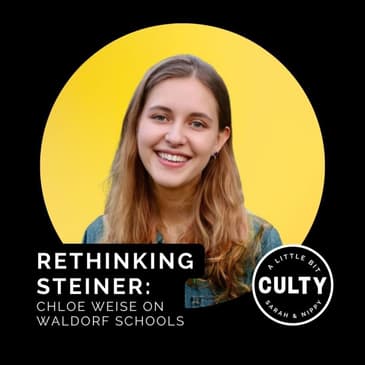
In this episode Chloe Weise sheds light on her decade and a half in a Waldorf School before leaving for college and grad school. Now steeped in the scientific method and working in the tech industry, Chloe raises questions about Waldorf’s founder, Rudolf Steiner, and teachings openly called “Occult Science.”
Was Rudolf Steiner an early 20th Century German mystic, or an arrogant semi-Christian evangelist for things like astral bodies, clairvoyance, and overtly racist pseudoscience. We're here to find out what Chloe thinks. This is Chloe’s first time speaking publicly about her misgivings with Waldorf. We’re honored she trusted us with her experience. Without further adieu, here’s our chat with Chloe Weise.
NOTES:
Chloe Weise holds an MS in Evolutionary Biology and is a data analyst at Lumen Energy. Her research on paper wasps and logical reasoning was published in Proceedings B, the Royal Society’s flagship biological research journal. You can find links to Chloe’s research on Twitter.
Chloe’s Instagram: @chloeweise
Chloe’s Twitter @WeiseChloe
Waldorf Watch: https://sites.google.com/site/waldorfwatch/welcome
Jennifer Sapio, PhD on why she “wouldn’t drink the kool-aid”: https://medium.com/age-of-awareness/waldorf-schools-are-inherently-racist-cults-91193d1fbef6
Please note, this series includes details of sexual abuse. Listener discretion is strongly advised. If you, or someone who know, is a survivor of sexual assault, abuse, grooming, child abuse, or human trafficking, RAINN’s National Sexual Assault Hotline offers support at 800.656.HOPE (4673).
Also…
Hear Ye, Hear Ye:
The views and opinions expressed on A Little Bit Culty do not necessarily reflect the official policy or position of the podcast. Any content provided by our guests, bloggers, sponsors or authors are of their opinion and are not intended to malign any religion, group, club, organization, business individual, anyone or anything. Nobody’s mad at you, just don’t be a culty fuckwad.
Other Links:
Check out our lovely sponsors
Join ‘A Little Bit Culty’ on Patreon
Get poppin’ fresh ALBC Swag
Support the pod and smash this link
Cult awareness and recovery resources
CREDITS:
Executive Producers: Sarah Edmondson & Anthony Ames
Production Partner: Citizens of Sound
Producer: Will Retherford
Senior Producer: Jess Tardy
Writer: Holly Zadra
Theme Song: “Cultivated” by Jon Bryant co-written with Nygel Asselin
See Privacy Policy at https://art19.com/privacy and California Privacy Notice at https://art19.com/privacy#do-not-sell-my-info.
[00:00:00] This winter, take your icon pass north. North to abundant access, to powder-skiing legacy, to independent spirit. North where easy to get to meets worlds away. Go north to Snow Basin. Now on the icon pass.
[00:00:27] This podcast is for informational purposes only and should not be considered legal, medical, or mental health advice. The views and opinions expressed do not necessarily reflect the official policy or position of the podcast
[00:00:37] and are not intended to malign any religion group, club, organization, business, individual, anyone, or anything. I'm Sarah Edmondson. And I'm Anthony, air quotes Nippy Ames. And this is A Little Bit Culty. A podcast about what happens when things that seem like a great thing at first go bad.
[00:01:02] Every week we chat with survivors, experts, and whistleblowers for real cult stories told directly by the people who live through them. Because we want you to learn a few things we've had to learn the hard way.
[00:01:12] Like if you think you're too smart to get sucked into something culty, you're already prime recruitment material. You might even already be in a cult. Oops, you better keep listening to find out. Welcome to season six of A Little Bit Culty. Welcome back to ALBC everybody.
[00:01:46] We have a great episode on the docket here, Sarah. What did you say? I think so. And this is something that has been brewing since the beginning as a topic many of you have requested. And I just didn't have the right person to interview.
[00:01:59] And I was thrilled when Chloe Weiss reached out to us as a former student of the Waldorf School. From the onslaught of never ending plastic everything to school shootings to tweens posting sexual content online, the world is a scary place this day and age with social media.
[00:02:19] And it's no wonder that Waldorf schools flourish. There's no screens in most classrooms, cross-ditch, paper crafts, bread making, all natural materials rule. Tons of wooden things and outdoor play.
[00:02:32] And for anywhere from about, I don't know, 16k to 30k a year the schools are said to nurture creativity and expression. And in their language, the whole child, which sounds great.
[00:02:43] But what is less publicized about Waldorf schools is the underlying spiritual science and yes we're using air quotes, a.k.a. anthropocopy, which is in their language not ours, a system of personal optimization that leads spiritual growth. And that's where the culty stuff comes in.
[00:03:00] I think the better term is bro science. Today we're joined by Chloe Weiss, who sheds light on her decade and a half in a Waldorf school before leaving for college and grad school.
[00:03:10] Now steeped in the scientific method in working in the tech industry, Chloe raises questions about what the founder of Waldorf teachings openly called occult science. Some say Rudolf Steiner was an early 20th century German mystic.
[00:03:24] Others say he was an arrogant semi-Christian evangelist for things like astrobodies, clairvoyance and overtly racist pseudoscience. And we're here to find out what Chloe thinks. I think we know where this is going to go. This is her first time speaking publicly about her misgivings with Waldorf.
[00:03:40] We're honored she trusted us with her experience. Without further ado, here's our chat with Sarah. Chloe Weiss. Welcome Chloe to a little bit culty. Thank you so happy to be here. As I mentioned to you when we chatted, when you first reached out, Troy was in Waldorf.
[00:04:08] Not the full program but the mommy and me Saturday, baked bread, play with wood. Play with wood. Yeah, wooden toys. Yes, all things silk, lots of silk, sing songs. Sing songs, sniffle.
[00:04:21] And then we left because we were leaving Nexium and I also found it a little bit culty, but I couldn't totally... I didn't have the education that I have now. Also it was a little bit of a drive. Also far, yeah.
[00:04:33] So we were lazy, but we're here to hear your story about your experience at Waldorf. Introduce yourself to the audience. Who are you and how did you end up here on this podcast?
[00:04:42] I work for a startup now, but I grew up and I attended a Waldorf school from two years of kindergarten through 12th grade. So that's 14 years total. You're an expert. Yeah. That was my only schooling experience until college.
[00:04:55] And then I went to a large state school, which was, you know, a little shock, a big change socially and educationally. And I didn't really have a sense. Like I knew that my background in my education was like foundational to who I was forever.
[00:05:14] I really like kind of attributed everything about myself to my schooling. And I didn't really realize how that impacted me in the long term until kind of recently. It didn't occur to me that it was anything, anything culty until about a year ago.
[00:05:31] And then it was more like kind of, it felt like a joke to me, like to say, oh, it kind of is like a little bit like a cult. But as I've gotten more educated about actually what is behind the curriculum and what anthropocopy is,
[00:05:43] which is basically Rudolf Steiner's kind of like esoteric philosophy and how that shapes the education system. I feel very strongly that people should understand what goes into the education before signing their children up, specifically because it isn't shared broadly within newcomers into the community.
[00:06:04] And even within the community, it isn't shared very broadly. It's kind of like the best kept secret. So I'm hoping to make it less of a secret. That's great. That's a really good goal to have and perfect platform to share that secret because as we know,
[00:06:18] where there are secrets, there's usually something not good going on. And that was always my impression of that too. There's like the hidden agenda a little bit. So I like our episodes when they can blow the lid off the hidden agenda of extreme beliefs. Yeah. No, totally. Yeah.
[00:06:35] In this case, just to put it all out there, the hidden agenda is clairvoyance and being able to interact with the spiritual realm effectively through magic. No one interviewing you right now is shocked. Yeah. We've been here before. Yeah.
[00:06:50] And also, I know we'll get into this isn't part of the hidden agenda also sort of like a racist hierarchy of how do you describe that? Oh, it's complicated.
[00:06:58] It's challenging because Steiner, so the man Steiner basically developed Waldorf education back when he was alive in the early 1900s to educate the children of workers in the Waldorf cigarette factory and kind of just got free rein to develop this curriculum.
[00:07:18] And within all of that, he felt that he was a clairvoyant and had this way of interacting with these other realms and believed in basically like a racial hierarchy in a different way than, for example, the Nazis believed in a racial hierarchy,
[00:07:36] but not that different, not different enough. So he thought basically that humans went through different levels of spiritual evolution and that some races were effectively left over from the previous evolution of humanity.
[00:07:57] And if we wanted to move on to the next version of humanity, there needed to be this like purity retained within the Aryan race. Yikes. Conveniently landed on his race. Yeah, so interesting. Right.
[00:08:15] That's not on the website and not in the literature about Waldorf. Let it be known. No. I also want to say a little caveat because I know I have friends listening.
[00:08:23] The people that I know that have their kids in Waldorf and we were also in that group are great people. And this is what I want to things I really want to draw attention to.
[00:08:32] They really kind of draw in humans, parents who don't necessarily want traditional education, who want your kids to be outside more for those who don't know, right? Well, the progressive. Yeah, progressive like. Yeah, air quotes. Yeah, progressive, natural. Don't want plastic. Yeah. Definitely hippies.
[00:08:50] Yeah, definitely left mostly, left leaning hippies and like earth children. And the thing about it, so if you look on like the Waldorf school, American Waldorf School, like association website, there are references to Steiner's like racist ideologies and, you know, a general like we don't support this.
[00:09:10] We reject this. Like this isn't fundamental to how we develop our education and like fine. That's great as they should. But at the same time, like was he a clairvoyant or was he a man of his time?
[00:09:22] Because if you think he's a clairvoyant, then how do you get to pick and choose which parts of his like clairvoyance you follow and which parts you ignore? Right. That's a very good question. Yeah, that's one of the things that really like sticks with me. Yeah.
[00:09:38] Well, let's just start from the beginning and give people the sort of the arc of your journey. Yeah. Your parents signed you up when you obviously didn't you weren't choosing Waldorf when you were five or four or five. What were they going for?
[00:09:49] Were they also left leaning granola eating hippies? Totally. Yeah, I was born at home like all of that.
[00:09:56] But I've talked to my parents about this a little bit lately especially but my dad growing up didn't like school like he hated school and I have an older brother who was attending kind of a different progressive.
[00:10:08] It was like a progressive public school but they had multiple classes within the same room so multiple like grades that is. And he was bullied by some of the older kids in the class and wasn't enjoying school.
[00:10:22] This was when he was in kindergarten and my parents were like, let's change this up. Like we shouldn't keep sending him to a school where he isn't happy when he's a child.
[00:10:30] And I'm not actually totally sure how they landed on Waldorf but they transferred him over to the Waldorf school and then just started me out at the Waldorf school. And for me, like I was already an outdoorsy kind of imaginative kid and definitely artistically prone.
[00:10:51] Like all of these things that kind of made me the perfect candidate. And I loved it. I felt like I was ruling the world. I felt like I was the smartest, most interesting, funniest, most beautiful child ever.
[00:11:07] And I think like some of that was attributed to the way that my education was training me. That doesn't particularly seem unhealthy to have a child thinking that way unless it starts to get into kind of a sanctimonious kind of righteous, I don't know.
[00:11:24] Did you feel like you had that going on in early age or did you just feel like it was a healthy nurturing environment? Because that's really how you want your kid to feel. Right, right. Entering the world and I don't have any strong objections to that.
[00:11:36] No, I know. That's the thing. Like I think it's potentially fine. I think that it can cause problems later in life if you are raised to kind of believe in magical thinking. Which is something I've been talking about in therapy a lot lately.
[00:11:49] Well, unless you're being taught to be delusional about things. Exactly. One of the things that I think I kind of developed without realizing I was developing it was seeing signs everywhere. I kind of attributed the spiritual value to crows as a child, like the birds.
[00:12:08] I would see these flocks of crows and I thought that they were like my spiritual symbol. It was like the world saying, I see you Chloe. Here are the crows, like I see you. And that was like as a young child.
[00:12:22] I still will see crows and I'm like, oh my crows. Here they are, my like symbol. But that's not necessarily that damaging. But I think there are more insidious ways that that kind of plays out in life that I don't necessarily recognize until I really reflect.
[00:12:38] Were you making life decisions based on crows? Not yet. No, we'll see. I think it's important for listeners who don't necessarily relate to like the crunchy hippie thing, which I totally do.
[00:12:51] Because as everyone on this audience knows, my parents were former hippies and very outdoorsy and left leaning and all this stuff. And I certainly see a place where like, you know, I was really drawn to the idea that Troy would be like immersed in natural wooden products,
[00:13:10] like wooden toys and silk and gauze and homemade puppets and making bread. Like we made bread, right? Every sat we were there for the mommy and me. So we started off with making bread. Bread was good. The bread was delicious. It's good bread. It's a good bread.
[00:13:25] It's good bread. It's a business there. Yeah. I remember that the school, like the room itself was so peaceful and like, you know, surrounded by greenery outside. Like I don't know if all the schools were like that, but I know that was sort of the mandate.
[00:13:36] But like tell me about some of the good things that you remember. Oh yeah. So the school that I attended was kind of surrounded by greenery and there is definitely an emphasis on like in like beauty within the actual school.
[00:13:49] So soft light, candles, art everywhere, not many sharp lines as much as possible. They would have the walls like not have right angles. And we can talk about that more later.
[00:14:03] There is like a reason, but lots of things like that, that were very beautiful and kind of like a lot of people. And kind of like a lovely womb that you're in as a child.
[00:14:12] Like you go in and you feel like you're somewhere beautiful and you're special and there's a lot of pageantry. We're coming up on May Day here, which is May 1st. And there's like a big celebration where you like dance around the May Pole and it's really fun.
[00:14:26] So some lovely traditions. Yeah. Especially in early childhood, like really that was so wonderful. I think in high school people started to push back a little bit more. The students, so I grew up with the same group of 28 for the most part from ages five through 19.
[00:14:42] And that was my whole class and they were like my family. I really felt nobody would ever be as important to me as those people and nobody could ever be as important to me as those people.
[00:14:53] And that was a really magical environment to be in as a child and a really, really challenging departure when you actually leave. Right. And that was some of those classmates I haven't seen since I graduated. And that's natural. You move on, you grow up, you do other things.
[00:15:11] But it felt like such a loss, almost like a death that I have dreams regularly that are like the tragic last day with all of them. And I wake up really sad. It's a big adjustment. How old are you now? When did you graduate?
[00:15:27] I'm just trying to put this into context. Oh yeah. I graduated from high school in 2016. I'm 25. Okay. I mean, it sounds like with all these things, some serious pros and cons. Yeah. I would love that for Troy to have consistency with his classmates and ace as well.
[00:15:41] But obviously some cons being that you're so insular. Well, and part of it is also like this, they as a school and as a culture really don't want you to have very much access to media as a kid.
[00:15:55] And I think that's supposed to be kind of like just this, you know, fundamental like you're growing up in nature, like the olden days and you're like not really exposed to media influence. And I think there's something to be said for that now, especially when we're like, right.
[00:16:10] But then I also know that a lot of my classmates who are I'm like still, you know, in touch with and close with.
[00:16:15] And I all have the same thing where like if we go out to a restaurant or a bar and there's TVs on, don't expect to talk to us because we're going to be totally zoned into the TV. It's like really hard to not focus on media now. Right.
[00:16:29] So because it was kept from you, you're more hooked in when it's available. Is that accurate? Totally. Yeah. Totally. Yeah.
[00:16:38] And I mean this is a constant struggle like Nipi and I are, you know, I think most parents know that they shouldn't rely on screens and screens are not great.
[00:16:43] But also like there's a reality to also wanting your children to have some relationship to the pop culture trends of the day so they can relate to their peers. Which is such a hard balance.
[00:16:54] It's interesting to hear that because, you know, when we see our kids in our screens, we're like, uh-oh, they're going to be addicted to their screens for the rest of their life.
[00:17:02] Which is total BS because when I had my experience of wanting to watch television a lot, eventually there's something that comes on in transcends watching television. Right. Whether it be girls, sports, other interests, you know, they're going to go like the screen's not as interesting.
[00:17:17] But I can imagine if I never had that fix to recognize that its screens aren't as interesting as they seem, I might be interested more as an adult. Totally. Oh yeah. It's the forbidden fruit. Right. You're like wanting to get access.
[00:17:31] I had friends in my neighborhood who did not attend the Waldorf school who, you know, I would like sneak over there and watch TV all the time. And I don't think my parents were like under the impression that I wasn't doing that.
[00:17:43] But still, I felt like I was doing something a little sneaky. Like I would go over and watch I-Carly for hours in their basement during the summer. This podcast wouldn't happen without our amazing supportive generous patrons. Are you with us?
[00:18:00] Come find us over on Patreon at patreon.com slash alubitculti for bonus episodes, exclusive content, and the occasional zoom with our fan favorites from our past episodes. It's a lot of fun over there people. The Frankies were a picture perfect influencer family, but everything wasn't as it seemed.
[00:18:24] I just had a 12 year old boy still up here asking for help. He's emaciated, he's got tape around his legs. Ruby Frankie is his mom's name. Infamous is covering Ruby Frankie, the world of Mormonism and a secret therapy group that ruined lives.
[00:18:43] Listen to Infamous wherever you get your podcasts. This episode is sponsored by BetterHelp. What are your self-care non-negotiables? Maybe you never skip leg day or never miss yoga. Maybe it's getting eight hours of sleep. I mean, that's my personal and everyone's dream isn't it?
[00:19:00] Well, I definitely have some non-negotiables. Like I'm in Vancouver right now and I'm spending literally as much time as I can outside of nature. Hashtag cold pools, hashtag crushing it. Nature is a non-negotiable.
[00:19:11] Not enough time in the fresh air and the trees around me and I start to feel not great, not myself, not grounded. Therapy day is a bit like my nature walks.
[00:19:19] I try to not miss it and I know I'm just going to feel so much better all around if I make it a priority. I get so much out of it. It helps me put my worries and anxieties in their rightful place and helps me clear my mind
[00:19:29] so I can focus on what I really need and sometimes what I don't need. Like I don't need to be overbooking myself just because I hate to say no to people. You know what I mean? Thanks therapy. Thanks for helping me see that.
[00:19:38] And if you're thinking of starting therapy, give BetterHelp a try. It's entirely online designed to be convenient, flexible and suited to your schedule. Just fill out a brief questionnaire and get matched with a licensed therapist and switch therapists anytime for no additional charge.
[00:19:51] Look, even when we know what makes us happy it's hard to make time for it. But when you feel like you have no time for yourself, non-negotiables like therapy are more important than ever. Never skip therapy day with BetterHelp.
[00:20:02] Visit betterhelp.com slash culty today to get 10% off your first month. That's better help H-E-L-P dot com slash culty. You've heard from our sponsors. Now let's get back to a little bit culty, shall we? Before we get to the red flags, anything else that was positive?
[00:20:22] Yeah, honestly, I think I felt so seen and understood that it did help develop like a large sense of confidence that I to some degree still carry with me. And that is something that I really missed when I went to like college
[00:20:38] at a large state school and my professors didn't care about me or like know who I was. So that was really valuable also as a kid. Just like, I remember, sorry we're going to go a little TMI for a second,
[00:20:50] but when I got my first period I was one of the first people in my class and you know it's a really challenging time of life to be like kind of an awkward preteen teen feeling like you are younger than you look and all of that.
[00:21:04] And I also had the same class teacher from first through eighth grade. So she kind of taught us everything for those eight years. Wow, that's one person teaching you. Interesting. I don't know how she found out that I got my period.
[00:21:16] I'm guessing my parents told her or maybe I told her. I don't really know, but I remember going into school and on my desk she had given me like a little moonstone and she liked it a little watercolor background and then written in like beautiful writing,
[00:21:31] something like welcome to womanhood. And I was like, oh, this is actually something like special and valuable and I think I still have that moonstone. Things like that were really nice. It made me feel like you were part of something more. That was really valuable.
[00:21:47] I think that's so important. That would have gotten me too. Especially like compared to the opposite of what normally happens in school when a girl gets her period. It's like it's shamed and you know people make fun of early bloomers and stuff like that.
[00:22:02] And I actually remembered something else positive. If you don't remember this, but when we were checking out Waldorf before we signed up Troy, we went to their Christmas fair, right? Do you remember Nip and Northman? That's right. We had a mutual friend who I'm still friends with.
[00:22:15] I'm not going to mention his name who was like sort of running the school and who I really liked. I still really like and he invited us and I just remember really getting the sense of the community
[00:22:25] and the type of parents were all people that I really like respected and this is when we were still in XM. You know, seekers and people who were growing and challenging the status quo. Do you remember? I remember like some of the people were like,
[00:22:38] oh yeah, this is it wasn't just a community for the kids. It was a community for the parents, right? Totally. And I felt like even though it was quite far. So we lived in Olympic Village and this was in North Vancouver like minimum 30 minutes, like 28 to 30,
[00:22:52] like could be up to 45 minutes with traffic. So it was a big commitment if we were going to consider going there. And we were like, well, we'll check it out for when Troy's three and if he really likes it, we'll go there for kindergarten.
[00:23:01] But then we were like, we'd have to move. Like we'd have to move to the North Shore if we were going to do this. So like we were considering that and part of that draw was the adult community as well.
[00:23:10] Like if you've been following me and Nippy's journey, I got into next year more for the community or the perceived community than he did. For him, it was more about other stuff, but we'll get into that anyway. My point is that it wasn't just for the kids.
[00:23:22] Like it was a whole way of being if you really committed to it. Yes. There's a huge sense of community for parents and for the teachers and for the students and for any like kind of tangential person who may be involved.
[00:23:36] And there's a sense that the community will stay with you forever if you want it to because there are older schools kind of all over. And like if you want to find people who have similar backgrounds, you kind of have to go to people
[00:23:48] who grew up in similar environments. 100%. Yeah. There was also I felt for a long time like nobody would understand me if they didn't understand my background and they could never understand my background unless they grew up in a Waldorf community. And it's funny to say now,
[00:24:04] but like my partner who I've been with for five years who like was not involved at all with Waldorf schools, I felt for years like he wouldn't ever understand me because he didn't know my background. And even if I tried to tell him,
[00:24:17] I didn't feel like he would really understand it and there was nothing I could do to get him to understand it. And so I felt like there was this barrier between us. It's a very non aggressive us first them. Yeah. Right? Exactly.
[00:24:32] And there are things that like happen that kind of feed that us first them just by virtue of growing up in a very insular community. Like we kind of developed our own slang. Ours was like, you know, people will say something like,
[00:24:43] oh classic, oh classic Chloe, you know, like that kind of thing now we said vintage. We thought that that was like the same term. So we would be like, oh vintage Chloe doing that and went to college and would say things like that
[00:24:53] and people in college were like, what are you talking about? Like, what does that mean? But we thought we were blending in. Like I didn't know that people didn't know what that meant. I would say something and be like, wait, you don't say that.
[00:25:03] What do you say instead? Classic. Now you said you spent the last year realizing that there were some problems. What were some of the things when you look back that you think make it culty? Oh, well, yeah, there's a lot.
[00:25:14] I think one thing that comes up a lot is people will say like, you seem like you had a good education. And I'll say like, yeah, I think so. But also I feel like if I had a good education that's almost incidental. Like it's not really the point.
[00:25:28] And maybe I was lucky with like the teachers that I actually had because of course there are people who end up going into Waldorf education who really want to prepare children for like the real world. But I ended up studying biology and undergrad and grad school
[00:25:42] and I didn't realize like how different the biology that I was learning at college was from what I was learning at Waldorf schools until I found this book. Actually some of my old teachers from the school that I attended gave it to me and said like,
[00:25:59] oh, like you really seem like you make like a really great Goethe and scientist. And I don't know if you know Goethe, the like poet, the German poet from the 1800s. Yeah, yeah. He had some science ideas that, you know, he was a poet and a philosopher.
[00:26:14] So like was it science? No, it wasn't. And this is a book that was published by like the Waldorf Press and it's called Man and Mammal. And I was like, oh, I'll read this. This seems like it might be interesting.
[00:26:27] And it was interesting, but not in the way that I thought it was going to be. There was like a lot of attributing reasoning to why certain animals were the way they are because of things that had nothing to do with actual like evolution.
[00:26:41] It was more spiritual for example. The mouse lives in burrows because he is less evolved and therefore needs to keep more of his things in external sources than in his actual body. So like things like that where you're like, wait, what do you mean less evolved?
[00:26:56] I know now, like as a scientist that that's not how evolution works and saying like that that is why their behaviors are the way they are is like a really strange roundabout explanation for something. It's personifying evolution. Oh yeah. It's totally personifying and spiritualizing evolution.
[00:27:16] And now I know that Steiner also thought that that was the case for some, I'm putting big air quotes for people listening, less evolved groups of humans. And for example like tribes who live more closely with the earth than some of the quotes again,
[00:27:34] more evolved Western cultures are therefore less evolved like the mouse. And how twisted to come up with your own science. That's quite a challenge. Yeah, you're like come up with your own decisions about science and then use that to describe your racial ideals.
[00:27:51] Now I've like, I can reflect back and think about there are a lot of things that I just like totally glossed over when they were happening and because it didn't occur to me that they weren't normal. I remember the first time my classmates
[00:28:03] and I kind of pushed back against something we were being taught was in a physics class where the teacher took us out. There was a golf course kind of behind the school and we like walked to the golf course and we were looking at this lake
[00:28:14] and the block that we were in, it was a block schedule so we would have like four weeks of intensive something. The block we were in was called optics. So it was like about the eye theoretically like the physics of the eye
[00:28:26] and we were looking at the lake and the teacher was like, oh what is it that you like, what are you seeing? And of course we're seeing our reflections and we were like, oh the light refracting off of the different water droplets is doing the way
[00:28:39] like we were trying to describe it scientifically and the teacher was like, no more simply than that, what is it that you're seeing? And eventually was like, what you're seeing is you're looking into another dimension. And we were like, but not literally, what are you talking about?
[00:28:51] And he was like, no, literally you're looking into another dimension. And I think we just kind of all brushed it off and assumed that there was some explanation that was more scientific that he was trying to get us to think in a certain way
[00:29:04] that would help us in the future think more scientifically. But now I'm like, he probably actually meant that because that's the kind of thing that Steiner and Anthropocopy really actually believed. What is Anthropocopy? What does that mean? Anthropocopy was like Steiner's kind of philosophical movement.
[00:29:23] So anthropocipists are people who like practice his like kind of, one of the terms is cosmic Christianity and it's kind of a different, more like pagan mode of Christianity that Steiner believed that he saw clairvoyantly and then gave a lot of lectures about. When you say pagan,
[00:29:44] what does that mean in this context? Because it was not supposed to be religious, right? It's not supposed to be religious. It's officially not religious, but unofficially it's totally religious. Right. And so in what way? Like if someone's like, oh, I'm a left leaning hippie
[00:29:59] looking for alternative schools for my kids and I don't want any religion, what do you tell them? Like why was it actually religious? Oh yeah. So, you know, most American schools like at the beginning of the day you like stand and say the Pledge of Allegiance.
[00:30:13] We stood and we recited a poem that Steiner wrote that now I'm like, yeah, that was kind of a prayer. Like it refers to the world creator. Do you remember it? Oh yeah. Can you say it? So there's one for when you're in like
[00:30:27] kindergarten through fifth grade and then it switches from sixth grade through high school. So this is the high school one. Okay. I look into the world in which the sun is shining in which the stars are sparkling, in which the stones repose, where living plants are growing,
[00:30:40] where sentient beasts are living, where human souls on earth give dwelling to the spirit. I look into the soul that lives within my being, the world's creator weaves in sunlight and in soul light in world space there without in soul depths here within. To the creator spirit,
[00:30:56] I now turn my heart to ask that strength and blessing for learning and for work may ever grow within me. What was that like for you? How did you feel about it? It was so normalized that I don't think I felt anything. Yeah. It's open for interpretation too.
[00:31:11] It's also worth noting that it's a translation. From German. From German. So one of the lines in the English translation is where sentient beasts are living. Steiner did not believe that animals were sentient. He didn't think they had any like sense of consciousness.
[00:31:24] He didn't believe that humans were the only ones with a sense of consciousness. The actual German word is more like feeling where like feeling or sensing beasts are living. And so there is a certain degree of like as things get translated
[00:31:38] and there are different translations of things that he wrote including his lectures, some of them more kind of extreme or religious elements are actually lost in the translation and I think that's worth noting. Yeah. Well, I'm learning so much. Steiner and Waldorf were two different people. Oh.
[00:31:55] That's how little I knew. I thought that Waldorf and Steiner got together and made the Waldorf school based on Steiner's teachings. The Waldorf cigarette factory and Steiner got together and made Waldorf schools. Got it. How did Steiner get the job? Like what was his credentials?
[00:32:13] I wish I knew. I wish I knew. I don't. So the optics of this is this guy has a rigid belief system, right? Yes. Rooted in some pretty extreme beliefs and then sets up a system that pretends to not be or did he think that far through
[00:32:28] or did he think he was doing something good? What's your take on that? Yeah, this is kind of like a weighty part of it, which is that so Steiner thought that there were two different ways you could achieve clairvoyance. One is through like true clairvoyance,
[00:32:41] which is what he thought he had, which is where you can just like see different realms, see the like spiritual creatures that are walking on earth because he thought that there were like goblins and things like just out and about.
[00:32:52] And he also thought that if you couldn't achieve that kind of clairvoyance, you could just kind of imagine and that was kind of clairvoyance. And he was trying to prepare humanity for the next evolution of humanity.
[00:33:06] And there was this idea that there were some like malevolent spiritual creatures in the next iteration that would punish you if you weren't basically spiritually prepared. And he thought that and kind of accurately thought that children have more active imaginations than adults.
[00:33:22] So children were kind of this lens through which potentially you could actually view the spirit realm. So if you probably know this, but at Waldorf schools, especially early childhood, there's a lot of painting and the painting is kind of in this Waldorf style
[00:33:36] and it's like wet on wet watercolor. So you like soak the paper and then you get the special watercolor. I mentioned like no right angles and no sharp lines. Part of that was also you couldn't like do outlines in your watercolor paintings.
[00:33:48] So the color palette that Steiner selected for early childhood were the colors that he like thought best reflected the spirit realm and this idea that children would be able to like paint the spirit realm kind of accidentally through their imagination if they were given the right techniques.
[00:34:05] So there's this combination of like maybe you can kind of develop clairvoyance in a child as they grow through their education, but also maybe you can kind of develop your own clairvoyance as an adult
[00:34:18] by observing the children and making sure that they like kind of go through this education the way that he thought it should be done. I read his book called Occult Sciences, which was talking a lot about basically how you can develop clairvoyance.
[00:34:32] It gave like a practical list of what you can do to develop clairvoyance. And I've also read a lot of his lectures where he says the whole point needs to be that you need to make anthroposophy, which is this philosophy that he developed available to children
[00:34:46] by putting it in terms of children understand. And these were lectures that he would give to teachers in a lot of cases also and I'm sure they're read during teacher trainings. So he was definitely aware of what he was doing.
[00:34:58] It's interesting because he's dead like there's no like living guru or anything like he's dead, but the education kind of continues. And I think some of these more like deep knowledge of the foundational principles
[00:35:12] are kept for more invested world or teachers as they go through the different trainings. We were invited, I don't know if you remember Nippy, every month they had like a like basically how to parent series that was offered at school
[00:35:25] and we just never went because well A, we were too busy with next year and B, it was too far. I never read the emails. I read the emails and I was like, oh, but I remember I have a friend whose son is still in Waldorf
[00:35:38] and she would tell me some things about like, oh, not like their milk teeth coming in at a certain age and like until that age you don't do certain things. And then those are things that she learned at the talks.
[00:35:50] I will send her this episode so I'm not going to say her name because we've been talking about it and she knows that I think that Waldorf is a little bit culty and her son is having a good experience but she's got her radar up.
[00:36:02] See, I find that the most problematic thing is the bait and switch of like, Of course. You know, hey, we're doing this all natural, wooden outdoor play. Great. That's one thing. But then we also to have a philosophy underneath it is the problem.
[00:36:17] Well, the philosophy that they're selling isn't the one that they're implementing. Right. Right. There's a hidden philosophy and including this sort of like even though that a lot of the North American schools have rejected the racist part of it, apparently. I don't know how you separate at all.
[00:36:32] I don't know how you take that out. So you were talking about the milk teeth. There are things like child development stuff that was sprinkled in. Like the reason I repeated kindergarten, one of the reasons like you may not proceed into first grade
[00:36:46] is because you can't go to first grade until you can reach your arm over your head and touch your ear. Because you know, like a kid like has a bigger head relative to their body. So it was like a way of saying like,
[00:36:58] you're ready for first grade once you can reach across and touch your ear. So like that's one thing. The other thing was one of my best friends who I have known since kindergarten and who like kind of dabbled in teaching at the Walder School after we graduated.
[00:37:14] She was a first grade assistant and the teacher who was teaching the first grade class that she was an assistant for handed out a pamphlet to the teachers that was basically like how you can use somebody's facial features to determine how they operate more intellectually.
[00:37:30] So the idea being that if you have a larger face relative to your head, so like a wider face, that means that you're more grounded and if you have a smaller face relative to your head, that means your head's in the clouds.
[00:37:45] And children with these different features should be taught differently. Wow. Yeah. Because like I mentioned, we had him in this just Saturday only, right? He was three, so he was doing another type of daycare, two other types of daycare at the same time.
[00:38:00] We were seeing what he liked the most. Meanwhile, I'm in Nexium, right? And we got out of Nexium in May and left in June, which was the tail end of his year of Waldorf. And at the same time as we were leaving Nexium,
[00:38:14] we were also making decisions like where is he going to go to pre-K or whatever. And I didn't have the language I have now in terms of like us versus them and you know the righteousness of like the community. This way is the only way, right?
[00:38:28] All I knew is that I was leaving Nexium. It was a cult and I didn't like Waldorf. I like didn't like it. And one of the things was even though the rules were good, like I agree no screen time or less screen time,
[00:38:40] I didn't like that it was so dogmatic and I didn't like that we weren't allowed to have him the righteousness of it and you couldn't wear any branding. Like you couldn't have, like there was no uniform
[00:38:51] but there was a uniform like you could only have like solid color. You couldn't have like a Nike swoosh or whatever. Like okay, someone's going to write to me in this episode and be like well that's good because it doesn't promote capitalism or whatever. All right, like fine.
[00:39:04] But the fact that there's just too many rules and the rules and the dogma I just am fucking allergic to and that's my problem. Well, and the other thing about that is that Steiner, like the person also had lots of ideas about medicine
[00:39:19] and about how medicine should be practiced specifically in this kind of naturopath way but you know that's one of the reasons there are a lot of like anti-vaxxers who get involved in Waldorf schools or like become anti-vaxxers after they're involved. I don't know like what leads to what
[00:39:33] but there are things like that and there are practicing like anthroposophical doctors like medical doctors and a lot of the people in my community growing up would go to see these doctors like as their like general practitioner
[00:39:48] and the argument was always like well like they also have an MD and then like yeah I don't really care if they also have an MD if what they're prescribing you is oil of oregano so that you can like get rid of your strep throat
[00:39:58] and I think there's a time and a place for homeopathic remedies I think there are ways that they can be used rather than the overprescribed pharmaceuticals that are everywhere so anecdotally one of my high school boyfriend was basically told that he was allergic to gluten and dairy
[00:40:17] and so he didn't eat anything with gluten or dairy and I have this like vivid memory of like injecting him in the back with like some homeopathic thing for his allergies it was like a vial and I like put the thing and I was like injecting it
[00:40:33] and that was like part of like his daily life and then I sense have learned that he is not allergic to gluten or dairy someone else in this podcast just figured out they weren't allergic to gluten and dairy after being dogmatic back in our house
[00:40:45] do you know anyone Sarah? That's actually true story and not from Waldorf but I mean I've been gluten and dairy like mostly dairy free for about 20 years but I have definitely been dogmatic about it and I don't know if I was... Little modern science got involved
[00:40:59] and told you what Sarah? Well, I got my blood work done but I don't know if I like to stay off because you can get you can be like sensitive to it at a time and then not so I don't know
[00:41:08] I mean just hanging on to that belief well you can also become sensitive to something because you never eat it that's the other thing is like I genuinely believe that his stomach was upset if he ate gluten or dairy because he never ate gluten or dairy
[00:41:20] I mean I got off it for different reasons I had really bad skin and that cleared my skin so then I believe that that caused it who knows what It may have Well the answer to who knows what is a blood test
[00:41:30] I'm currently not sensitive to gluten or dairy but my doctor was like if you don't feel good eating I don't eat it so I still eat it but point taken that there's a lot of pseudo science in this world but I understand like
[00:41:44] you know there's people who don't trust big pharma The problem with extreme beliefs generally speaking is what makes them extreme is you can cite grains of truth to justify your extreme belief but it doesn't mean modern science is all bad you know Right
[00:42:02] There's human elements in every hierarchy that we have right now and you're just going to have to educate yourself a little bit more diligently to make a more informed decision Right And now a brief message from our a little bit culty sponsors This episode is sponsored by BetterHelp
[00:42:21] What are your self-care non-negotiables? Maybe you never skip leg day or never miss yoga Maybe it's getting eight hours of sleep I mean that's my personal and everyone's dream isn't it? Well I definitely have some non-negotiables like I'm in Vancouver right now
[00:42:36] and I'm spending literally as much time as I can outside of nature Hashtag cold pools Hashtag crushing it Nature is a non-negotiable not enough time in the fresh air and the trees around me and I start to feel not great, not myself, not grounded
[00:42:48] Therapy Day is a bit like my nature walks I try to not miss it and I know I'm just going to feel so much better all around if I make it a priority I get so much out of it It helps me put my worries and anxieties
[00:42:58] in their rightful place and helps me clear my mind so I can focus on what I really need and sometimes what I don't need like I don't need to be overbooking myself just because I hate to say no to people you know what I mean? Thanks Therapy
[00:43:09] Thanks for helping me see that And if you're thinking of starting therapy give BetterHelp a try It's entirely online designed to be convenient, flexible and suited to your schedule Just fill out a brief questionnaire and get matched with a licensed therapist and switch therapists anytime
[00:43:22] for no additional charge Look, even when we know what makes us happy it's hard to make time for it but when you feel like you have no time for yourself non-negotiables like therapy are more important than ever Never skip Therapy Day with BetterHelp Visit BetterHelp.com
[00:43:35] slash culty today to get 10% off your first month That's BetterHelp H-E-L-P dot com slash culty Meals bring people together but for many families providing their next meal can be a challenge You can help by participating in Macy's annual Feeding the Hungry food drive All proceeds go toward
[00:43:54] local food banks and families Now through January 31st you can purchase an icon in-store or online or watch out for the blue feeding the hungry shelf tags where a portion of your purchase will be donated to local pantries Together we can combat hunger in our local communities
[00:44:11] at Macy's Break time's over people Let's get back to this episode of a little bit culty It's a good one One of the things about Steiner as a person is that he really thought that he was like applying scientific principles to everything he was doing
[00:44:25] or at least he claimed he did because in occult sciences his book, one of his many books but the one that I'm talking about with like the clairvoyance stuff he'll say things like I applied the scientific method to my observations of the spirit world so therefore it's science
[00:44:42] because I observed it and that makes it real and I'm like That is so interesting just to point out process here there have been two people recently in Sarah and I's kind of travels who have kind of presented some things as I call them truth experts right?
[00:45:01] And when you challenge their process one of the first things out of their mouth is that no my process has gone through blah blah blah blah but it's really them implementing their own process on themselves and not finding any problems with their process it's happened twice
[00:45:16] it's happened twice in the last two or three months and that's always come on the heels of them being questioned a little bit Yeah, and like even in this book he'll say something like the traditional scientist would say that this is bogus
[00:45:28] but I am saying this is not bogus and then we'll say something like well the traditional scientist will say that this is just a metaphor that can be applied I do not mean that this is a metaphor I mean this literally
[00:45:40] like he'll just say it explicitly in this book and you're like okay so you say you're applying the scientific method but also don't trust traditional scientists because they'll tell you that this isn't what it is but I'm saying that this is science like it's this circular
[00:45:57] discussion of like wait so do we trust traditional science and you are practicing traditional science or do we not trust traditional science and therefore we also don't need to trust the scientific method that you claim to apply He uses it as he sees fit Yeah, and ultimately
[00:46:12] most of the parents that sign up don't know any of this Oh, totally they totally don't So that was the thing I was noticing it seems like that the screening process is the school and if you're bought in at that point it allows
[00:46:26] him to make assertions through his writings that I would imagine he's hoping you're not challenging after earning your trust through the traditional means Well and the other thing is that his writing style is so esoteric it's so hard to process so people like don't Of course
[00:46:42] People don't read it like why would you it's not like a fun read I'm bored just thinking about it I know I know it's it's boring and it's hard like when I was reading it I found that I had to like
[00:46:52] read it out loud in order to comprehend Sounds like some serious word salad there Word salad Yeah, so a lot of it is like reserved for like I said like these teacher trainings where there are like you know meditation sessions and reading sessions where you like
[00:47:06] read Steiner's lectures and you discuss them and you do all the study stuff obviously I've never attended like a Waldorf Future Training session so I can't really say what goes on there but my understanding is that it's a lot of like minded teachers
[00:47:19] in one place staying many nights and spending the whole time kind of discussing this philosophy that's like when you get to learn this kind of thing Yeah, and then you asked earlier and I realized I could kind of just segue about what's the point if you like leave
[00:47:33] you like grow up and you leave right what's the retention I think that's complicated because I think there's a certain degree of this idea that students who attend Waldorf schools will often filter back as teachers because I mean can you blame them? You go into the world
[00:47:49] and you're like I feel there's no purpose like this is very dark but you go from this like beautiful very spiritual lots of pageantry like all of these things in your life that makes it feel so meaningful and then you go out into the world
[00:48:02] and you're like wow like the buildings are gray and ugly and there's trash everywhere and nobody is celebrating May Day or Micklemas Yeah, like this isn't happening So of course you want to go back Right, of course you want to go back it felt like heaven
[00:48:17] and like suddenly you have to it's the fall from grace you get like pulled out of heaven and you have to like go operate in the real world and it's sad It poisons you to reality Yeah, it does You know what then it makes sense
[00:48:29] one of the articles that we look at to research and we'll include this in the show notes I'm not sure if you've heard Jennifer Sapio, PhD she wrote Waldorf schools are inherently racist cults or why I wouldn't drink the Kool-Aid right, the opinion piece great piece
[00:48:42] Yeah, so good and that's on medium and we'll put that in the show notes but she talks about how like she was brought in as a teacher for certain you know philosophical and ideological ideals and then she totally talks about the bait and switch
[00:48:54] and one of the quotes that she says that I think kind of nails that she soon observed a disconnect between what parents understood being offered by the school and what teachers are discussing inside the faculty meetings and she really felt like she had to
[00:49:05] like fully commit to be a Waldorf teacher and I think that's where this stuff is going to be exposed because if somebody like you goes back and be a teacher you're going to accept it all and not question it where she's like wait what the fuck
[00:49:15] right, what is this right this other quote the Waldorf movement is the same arrogant evangelizing mission of Christianity the same Eurocentric hegemony British studies and with just enough crunchy nature and hippie love to attract progressive folks spending nearly 20k per child to attend
[00:49:30] and then the other thing is that the students kind of like Sarah after hearing you in the vow and your podcast talk about how you were like a very good recruiter the students kind of become recruiters like I felt because I attributed so much of my own person
[00:49:46] to my education I felt like I could happily tell anyone who was like oh I'm curious about Waldorf like you went to a Waldorf school I could happily say like this is why I am the way I am this is how it made me capable
[00:50:00] at art and writing and science and whatever this is how it helped me socially this is how it helped me in the real world I had all of it queued up and ready to go because it was an opportunity for me to validate my own experience right
[00:50:15] leadership or dominance especially by one country or social group over others if that's the basis of it it's going to make you that in the world it'll make you that type of recruiter because you think that you're that's where the righteousness comes in right totally the transcendental mentions
[00:50:32] one of our other guests Daniela came up with the term transcendental mission so you always have these people that are on these transcendental missions that don't have any real quantifiable results they always have the feel that you're helping the world and there's a term I have
[00:50:46] when ESP we were throwing rocks at tanks we weren't really making any real headway given the mission we thought we had but we felt like we were and we believed we were we would like go you know we had some sports teams
[00:51:00] they were small but we would like play against a lot of Catholic schools like small private schools and we would go to these schools because we didn't have a gym so we would like go to play for example like basketball or volleyball
[00:51:11] and we would see the like art and stuff that they had on the walls and I remember my teammates being like this is like the ugliest art anyone's ever seen like who are these people who do they think they are and also then it would move on to
[00:51:23] we're so much more beautiful than their team like we like had this whole like kind of group mentality of like just general superiority that even now I'll talk to some of my classmates who I've been talking to about all of this
[00:51:36] and they'll be like but we were more beautiful than well you probably were but we probably were I mean like just in terms of artistic beauty like the Waldorf schools are prettier than any other school I've seen in terms of art you know we meant our personal beauty
[00:51:53] like as individual humans we thought like we were more attractive more interesting like all of these things that we just like developed and then just kind of like ran with it and I have this memory also of so in our senior year
[00:52:07] we went on a trip to Italy to like go to all of these you know museums and like do sketches of like you know Michelangelo's David and like thinking this was like the cultural center of the world and all of this stuff it was this big
[00:52:22] it was kind of like the keystone for the whole education and there's a lot of build up over 12 years for this trip and one of the things that we would do to prepare was we were like learning all of these like four-part harmony songs
[00:52:35] that we would sing when we were in Italy like in public and we took a lot of pride in that so we would like practice and practice and practice and I remember there was a teacher who came who was going to come with us on the trip
[00:52:48] who was talking to us right before we left and was like Italy is waiting for you everybody who you will see there is already sitting in anticipation of the best part of their year which is when this school students attend their museum showings and tours
[00:53:06] and everybody will love you because you are the best in the world basically go out into the world and make your impression you sing more beautifully you draw more beautifully you think more critically go out and show them and it was almost like a call to action
[00:53:24] where we were like yeah, we're going to go out and show them So like the ultimate pep talk Oh yeah but then I also remember at the time thinking I don't believe for one second that the nuns we're going to be staying with
[00:53:36] are so excited to see us that they just are sitting by the door Yeah, I hope not That's definitely extreme and all of this the good part of it is that these kids have an incredible, solid positive view of themselves
[00:53:52] which is great but you want it to be based in reality Yeah, oh yeah Have you guys seen the movie Midsommar? Looks creepy to me but I should watch it right? Oh it's so creepy, first time I saw it I remember thinking like I was almost like mad
[00:54:06] that I was watching it because it was so disturbing to me and the people that I was watching it with were like Waldorf people they were friends from grad school and my partner and everyone was like this is a great movie
[00:54:20] and there's a part at the end where Are you going to ruin it for me? No, no, no, no, no, no I promise, I promise but there's a part at the end where they're like going to bury an offering to the crops so they gather all this meat
[00:54:36] and stuff and they dig a little hole and they bury it and they're like what? I've done that I've buried an offering to the crops and they were like what are you talking about? We went on a farm trip in ninth grade to basically an anthroposophical farm
[00:54:54] because there's an anthroposophical everything and we were helping out and one of the things we did was I think it was at the full moon we got up in the middle of the night from our tents and one of the farm owners was like stirring this giant
[00:55:08] compost tea to sprinkle on crops but this giant cauldron full of like compost exactly and I think we were singing along it was very serious we were singing and stirring and then we were the thing that we needed to do then was go and distribute that
[00:55:32] magical juice out onto the crops but the other thing that we had to do I know it's you can laugh it's fun we wore sashes Chloe yeah you get it but there was a cow horn and we like stuffed it with I don't know what we stuffed it
[00:55:50] with like different substances there were all like some parsley composty things yeah like probably some parsley like definitely some like dust from different kinds of rocks that were like maybe like granite I don't know what it was we stuffed this horn with it
[00:56:06] and we buried it and the reason you bury that horn is because of course cows with their horns the horns act as like an antenna for the astral spirit and can channel it into the crops so we like buried it yeah it makes sense so we buried it
[00:56:24] so that we could channel the astral juju into the crops and then therefore have better healthier crops one of my problems on the podcast is I can't help thinking about episode titles as we're interviewing and I think the title might have to be bury the horn Chloe Weiss
[00:56:38] on why Waldorf's a little bit culty something like that I don't know bury the burry the horn what do you think that it's got a nice ring to it bury the horn if you want I'll support you yeah I have to tell you I have one Waldorf story
[00:56:52] that Nipi and I still still still talk about and probably why we wouldn't have lasted even if we hadn't like gotten out of next him and realized that it was a cult like even if we wanted to stay in Waldorf
[00:57:02] I'd say that bread would have kept me in an extra year or two the bread I mean I learned some great sewing skills some good bread making skills but the fondest memory I have and probably why we would have gotten kicked out is because
[00:57:14] there was at the Christmas fair remember Nip so this is like oh yeah I remember this is the December before we woke up so like six months before and we're at the Christmas it wasn't called Christmas fair it's like holiday bizarre probably yeah
[00:57:26] yeah like the holiday bizarre because it didn't want to be like Christian right right anyway so all I remember is that all the kids are sitting up at the front in Troy's classroom the kids were at the front and all the adults were at the back
[00:57:38] so I wasn't near Troy he was like up ahead of us like totally great he was separate from us the kids were at the front and it was like some story that was being reenacted with like like there was a fox and there was like a blue
[00:57:50] silk cloth that was like the river and like the fox was coming out and there was like a puppet I don't remember the story and there's like heart music playing and some you know melodic you know and then the fairies dancing through the grove or whatever and then
[00:58:04] this little puppet comes out and Troy in a really loud voice so emphatic the room got silent oh yeah it was silent like it was almost like it was queued up yeah and super peaceful and silent all of a sudden Troy sees the fox and goes
[00:58:22] fuck that's amazing and I'm just like but his annunciation was non-existent until that point yeah he's three fuck that's amazing and the timing the timing was like the comedic time part of me was proud and part of me was like oh god I don't know
[00:58:44] but also because he was separate from us we didn't we couldn't like I didn't say anything I didn't say like I didn't know how far he was going to go down you know we were just like quiet
[00:58:52] and hoping no one would know that we were the parents of this delinquent child for the record it wasn't that amazing but for three of us I mean a gossamer silk homemade fox puppet is pretty impressive it's gonna be pretty good there are some
[00:59:08] pretty impressive things that come out of there and some less impressive things yeah that's awesome and if anyone's listening to this going like well my kids are in Waldorf and they're happy like you know great again I'm not hearing to go you're in a cult
[00:59:22] that's a cult but like just you know get educated see what happens when they question you yeah I mean just know what it is just know what it's about and like if you don't care then fine but if you don't want your kid to be
[00:59:36] kind of conditioned to be clairvoyant or a little bit culty yeah then it's not the place for you it's not and also another red flag should be moving forward and let it be known I've know we've said this in other episodes but it's not like that
[00:59:50] I mean I'm not sure what to say but I'm not sure I think it's a good thing so we're gonna show you what we've done so we're gonna go through the first part of the story and then I'll give you a little bit of what we've done
[01:00:08] and then we'll go to the next part and then we'll go to the next part and then we'll go to the next part and then we'll go to the next part program that was being developed, right? There was the rainbow program,
[01:00:19] which we should do an episode about Nip at some point. And that was a whole different philosophy about having like teachers that spoke in a different language. So when you were learning, you would, Chinese teacher only spoke Mandarin
[01:00:31] with that person for a chunks at a time from birth. So while we were trying to get that going, which never really got off the ground because it was a stupid business bottle and again we'll save it for that episode.
[01:00:40] But a lot of the parents who were having kids put their children in Waldorf because Keith went there and it seemed like a good kind of fit until rainbow was up and running. So that's sort of like how it became on my radar
[01:00:55] is because Keith, it was sort of, you know, part of his resume is part of his biography. Oh yeah. Proudly. Yeah. It's the kids version of ESP. Yeah. Yeah. Yes. And I mean, there was a lot of language stuff at Waldorf schools that it was pretty effective.
[01:01:10] Lots of like immersive language stuff. Not surprising. I guess I shouldn't be surprised, but yeah, I'm like, whoa. And of course when I was first watching the Val like at the very beginning, I think it was maybe just the first episode,
[01:01:21] but it's kind of more focused on some of the like how you get drawn in to Nexium. I was watching it and I was like, yeah, I would have gotten, yeah, I would have totally fallen for this. Yeah. Yeah, sounds good. It's the same lure.
[01:01:33] Yeah, if I had met you in, you know, 2016 after you graduated and I was still in Nexium, I would have scooped you up. I would have been happily scooped. I would have been like, great. Thanks. How perfect. You can continue your education this way.
[01:01:49] We're just super appreciative that you reached out because there's so many episodes that are like, oh, I wanted to do an episode about that. And then like, I just don't have the person and then for you to reach out and come to us and say, I'm your person.
[01:02:00] I mean, great, great for us. Great for me too. Thank you so much. This has been so much fun. I could just chat with you guys for hours. So when this episode comes out, we'll set up a live Zoom with that interest you. Yeah, definitely.
[01:02:13] I do have kind of one story that I'd like to share. It's possible. Oh yeah, please do. It's more of a chaps my ass. There we go. Oh yeah, we meant to ask you. Of course, what chaps your ass? Okay, I was saving this story for that question.
[01:02:25] But one of the other trips that we went on as a class was to Maine and it was in senior year also. But it was a bunch of Waldorf seniors from all over the country. And one of the teachers from a different school was leading this first night.
[01:02:38] We were kind of at, imagine like a camp, like room where you would, the mess hall or whatever. But it was dark and it was stormy and it was nighttime and we were all sitting on the floor and there was a fire and we were chanting the earth,
[01:02:51] the air, the fire, the water, return, return, return, return. Right? Chanting that of course. And then the guy who was leading the whole thing was like, oh, you guys should go baptize yourselves in the ocean, storming out.
[01:03:02] So everyone just kind of like went to go and do it. And I was like, I don't want to do that. So I just went outside in the rain for a second and came back in and pretended that I had done it.
[01:03:10] Then we sat back down and it was time to be led in a guided meditation. And the meditation started with, get in touch with your anus, like really focus on your anus, think about it. And the idea apparently was that like a starfish forms anus first
[01:03:25] and we were like supposed to like think about what it would be like to be a starfish that was forming anus first. But as a biologist now I can say that a starfish doesn't have an anus. They have like this kind of multi-purpose hole
[01:03:38] that's like a mouth and an anus and reproductive. Like it's all one thing. So he could have said get in touch with your mouth but it was getting touch with your anus to a bunch of teenagers who of course we were just giggling about it.
[01:03:50] I'm sure you're laughing your ass off of that. We're laughing our anus is off. Now, it was hilarious but also like now I'm like that's actually so alarming. And I've told people about that and they'll say, oh, did you tell your parents?
[01:04:02] And the answer I think it's no. Like it didn't even occur to me when I got back from that trip that I should like tell my parents that. Oh, the weirdest. Yes, it makes me so uncomfortable. If I found out that Troy was doing that
[01:04:13] I'd be calling the principal like ASAP. ASAP though, that's so disturbing. Oh man. So bad. Parents beware do your research. That's I think the nugget. That's the idea I wish to do. Do a little reading. Yeah. Do a little reading. Yeah. Anyway.
[01:04:33] Well that definitely chaps literally my ass. Well, chaps your anus. Chaps my anus a lot. Oh God, oh God. All right, keep it social. No, no, it's fine. Thank you so much for your time. You are awesome and really appreciate your wisdom and your willingness to be shamed
[01:04:52] by your friends and family. Because that might happen. It might. We'll see. It's aggressive. It's aggressive. Yeah, it was so nice to talk to you both. Thank you, Chloe. All right. Keep shining that light. You like what you hear? Please do give us a rating, a review,
[01:05:08] and subscribe on iTunes or wherever you listen. Every little bit helps us get this cult awareness content out there. Smash that subscribe button. You know what to do. That was great. How many years was Keith involved here? Did we figure that out yet?
[01:05:23] We found out all we know is a couple of years for sure. When we get more information, we will be sure to update all y'all on Keith's journey with Waldorf. But the main thing to know is that he used it as a reference point in his education.
[01:05:36] It was definitely on his resume about what a great teacher he was because he went to Waldorf. Well, it also feels like it's a place that would have nurtured his delusion. So we learned a lot. You learned how to pronounce hegemony.
[01:05:48] And we learned about what Waldorf is potentially really about. Right. And a little more about Chloe we meant to mention earlier. She holds an MS in evolutionary biology as a data analyst at Lumen Energy. Her research on paper wasps and logical reasoning was published in Proceedings B,
[01:06:05] the Royal Society's flagship biological research journal. You can find Chloe's research on Twitter. We'll put that in our show notes. And the website she mentioned, Waldorf Watch, we'll put that in our show notes as well. You can find her on Instagram at atchloewice and Twitter at Weisschloee.
[01:06:20] Great episode, Sarah. Hegemony. Hegemony. That sentence I love. The Waldorf movement has the same arrogant evangelization mission as Christianity, the same Eurocentric hegemony as British studies and just enough crunchy nature and hippie love to attract progressive folks and to spending nearly 20k per child to attend.
[01:06:37] And that is from the article that we'll also put in our show notes by Jennifer Sapio. Please share your experience. Don't write us about how Waldorf is great because we know lots of great things. I was there too. We're talking about the bad stuff.
[01:06:50] If you feel defensive, check yourself. You might be in a cult. Anything else, babe? Bye for now. Thank you everybody. Long time coming on this episode. See you next week. Bye for now. Thanks for listening everyone. We're heading over to patreon.com
[01:07:18] slash a little bit culty now to discuss this episode. In the meantime, dear listener, please remember, this podcast is solely for general informational, educational and entertainment purposes. It's not intended as a substitute for real, medical, legal or therapeutic advice. For cult recovery resources
[01:07:35] and to learn more about seeking safely in this culty world, check out a little bit culty.com for more information on the cult. Check out a little bit culty.com slash culty resources and don't miss Sarah's TED talk called How Cult Literate Art, Great Stuff.
[01:07:50] A Little Bit Culty is a Trace 120 production, executive produced by Sarah Edmondson and Anthony Nippy Ames in collaboration with producer Will Rutherford at Citizens of Sound and our co-creator and show chaplain slash bodyguard, Jess Templetardi. Our show writer is Holly Zadra
[01:08:04] and our theme song, Cultivated, is by John Bryant.