
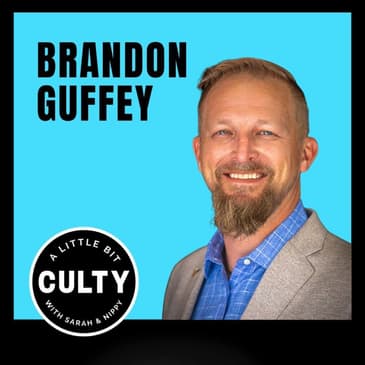
Online sextortion scams are on the rise, targeting young victims—especially teen boys—by coercing them into sharing explicit images, then blackmailing them into silence. These predators use fear, humiliation, and intimidation to trap their victims, often with devastating consequences.
Our guest today, South Carolina Representative Brandon Guffey, knows this horror firsthand. In 2022, his 17-year-old son, Gavin, fell victim to sextortion and tragically took his own life. Since then, Brandon has dedicated his life to raising awareness, passing Gavin’s Law to make sextortion a felony in South Carolina, and fighting for accountability from tech giants like Meta. Through his nonprofit, Less Than Three, he works to educate families, protect young people, and prevent future tragedies.
This conversation is both heartbreaking and urgent. If you or someone you know is struggling, help is available 24/7. Call or text the Suicide & Crisis Lifeline at 988 for support.
Trigger Warning: This episode contains discussions of suicide, coercion, and online exploitation. Listener discretion is advised. UPDATE: Since this episode was recorded, the alleged scammer, Hassanbunhussein Abolore Lawal, has been extradited to the U.S. and is currently in custody awaiting trial.
Also… let it be known that:
The views and opinions expressed on A Little Bit Culty do not necessarily reflect the official policy or position of the podcast. Any content provided by our guests, bloggers, sponsors or authors are of their opinion and are not intended to malign any religion, group, club, organization, business individual, anyone or anything. Nobody’s mad at you, just don’t be a culty fuckwad.
Check out our lovely sponsors
Join ‘A Little Bit Culty’ on Patreon
Get poppin’ fresh ALBC Swag
Support the pod and smash this link
Cult awareness and recovery resources
Watch Sarah’s TEDTalk
CREDITS:
Executive Producers: Sarah Edmondson & Anthony Ames
Production Partner: Amphibian.Media
Writer & Co-Creator: Jess Tardy
Associate producers: Amanda Zaremba and Matt Stroud of Amphibian.Media
Audio production: Red Caiman Studios
Theme Song: “Cultivated” by Jon Bryant co-written with Nygel Asselin
See Privacy Policy at https://art19.com/privacy and California Privacy Notice at https://art19.com/privacy#do-not-sell-my-info.
[00:00:24] Guffy Ames
[00:00:54] I'm Sarah Edmondson. And I'm Anthony Nippy Ames. And this is A Little Bit Culty. Cults are commonplace now, from fandoms to fads, we're examining them all. We look at what happens when things that seem like a great thing at first, go bad. Every week we chat with survivors, experts, and whistleblowers for real culty stories told directly by the people who lived through them. Because we want you to learn a few things that we've had to learn the hard way.
[00:01:19] For example, if you think you're too smart to get sucked into something culty, you might be prime recruitment material. And who knows? You could already be in a cult. If you're not aware of your programming, you're probably being programmed. So keep listening to find out. We'll talk about all sorts of topics on the show. But be aware, this podcast might contain stories that could be alarming to some of our listeners. So please check our show notes for more detailed descriptions and take care of yourself.
[00:01:45] Subscribe to our Patreon for Thursday bonus episodes, Q&A, and all sorts of exclusive content. That's patreon.com slash a little bit culty. Welcome to Season 7 of A Little Bit Culty. Hello everybody and welcome back to this week's episode of A Little Bit Culty.
[00:02:10] As you know, if you've been following this podcast, we were at CrimeCon in Nashville last spring. And we met some wonderful people, including Mike King and others who are coming on the show. And just to set the scene, there's so many people at this hotel. People with lanyards that say CrimeCon, of course, is normal people. It's also set the scene of like it's at the Grand Ole Opry, which is like... A cruise ship. A cruise ship. In a big hotel. Yeah, yeah. And there's normal people there. Like people were just there to stay at the hotel. Everyone was normal.
[00:02:38] But then there's the CrimeCon people who are special people. That's what you're calling them, special people. But you're sort of checking out people's badges and trying to figure out like who's a speaker and who's an attendee. And when we were checking in, we met somebody who... Pass it over to you, babe. Well, we were all looking where to go. And we meet this guy, friendly guy. Start talking to him. Crack a few jokes with him. He had a suitcase. His suitcase. And he was rolling a suitcase over to the venue that we were at. Didn't know much about him. And he said he was speaking there.
[00:03:07] And it turns out, when we see his story... Yeah. Yeah. Just to say, we divided and conquered to see different things. Nippy went to see Brandon speak, and I went somewhere else. And Nippy was texting me from the ballroom going, oh, my fucking God. Yeah. And then also through tears. It was the first thing I saw when I was there, and his story floored me. And every parent needs to hear this. Coercive control, as we know, and our listeners well know, is the hallmark of culting manipulation.
[00:03:36] This includes using threats, fear, and humiliation to get what you want out of people. On today's show, we're examining how online predators use these tactics to scam their victims, specifically with victims online of what is being called sextortion. In case you haven't heard of this, it usually involves someone posing as a potential romantic partner to con nudes out of a person. These scammers use shame and fear to blackmail their victims by threatening to distribute the nudes if money isn't sent. The most common victims are teen boys.
[00:04:05] Our guest today is Brandon Guffey, and he's lived through the most tragic outcome of these scams. His 17-year-old son, Gavin, committed suicide after falling victim to a sextortionist. Brandon is a member of the South Carolina House of Representatives. He helped pass legislation that made online sextortion a felony in his state. He's also suing Meta, the company behind Facebook and Instagram, for their negligence in dealing with online predators. Brandon is here to tell us how these scammers manipulate people, especially teens, and what can be done to prevent it.
[00:04:35] His experience ended in tragedy, so please note our trigger warning for suicide. Yes, listeners, please listen with care. Let's meet our guest, Brandon Guffey. Welcome, Brandon, to A Little Bit Culty. Thank y'all for having me on. Glad you're here.
[00:05:03] For those of you who don't know, we met Brandon at CrimeCon, was it last May? And so I got your card, and I was like, you're coming on our pod. That was the first one I attended. Have y'all attended one before? No, that was our first one as well. Same. Yep. What was that like for you? Well, I was in and out. That's right. You were there. I flew in, just did my presentation with Chris Hansen, and then flew right back out. So I didn't get to stay the whole time, but I'm looking forward to going to the next one
[00:05:32] and actually being able to experience more. I was shocked at the size of it and the amount of people that come out. We literally, actually, you were coming into the hotel with your bags when we met you. That's right. Yeah. And we walked to the actual venue when that happened. That's right. And then you're out that night, I think. Right after. Did you left? Yeah, I left right after I got done speaking. I took an Uber back to the airport and flew right back out. I had to get back to another event. You're a busy guy. So I guess we'll get right into it.
[00:06:00] Can you let our audience know the origin of the story without getting too in the weeds of it and then what you're up to now? And then we'll fire some questions at you as it pertains. So I lost my son due to a crime known as sextortion. And as I started looking into it and finding out what a huge problem this is across the country, as a legislator, I ended up passing law to criminalize it within my state and have spent
[00:06:28] every waking moment trying to make everyone aware, whether that's through legislation, whether that's through awareness of how prominent this crime is and how it's affecting all ages, not just children like my son. And what have you learned in terms of how these people that are sextorting, I guess is that the appropriate word, how are they using coercive tactics in order to get young children?
[00:06:54] As far as children, I mean, we've had just since we met, we've had the rise of AI being used quite a bit. Oh, man. So we see it in children as young as eight years of age to where they become friends with them on video games such as roadblocks. And they tell them how to access the email or platform hop. And once they get a picture of the child, they'll use AI to create a full nude photo of
[00:07:23] the child and say, if you don't send me more photos, then I'm going to tell your mommy and daddy about this photo. And then that creates this sexual grooming with these young children that are consistently sending images and sending videos to these pedophiles online. My God. That's on the young side. On the teenage side, they're pretending to be an attractive male or female.
[00:07:51] And they friend the person because they're friends with their other friends. And they start a conversation. And this generation, it's nothing to exchange images. And it typically starts out with a simple selfie of a face. And then they compliment on how cute you are. And then the scammer will often send over a nude photo. And the victim on the other side feels like it's safe because it's on a program such as
[00:08:20] Snapchat or Instagram to disappear messages or end-to-end encrypted. And they'll send images. And once they have those images with girls, they use it more as grooming. They get more pictures and videos. And most of the females do not report it because they feel like they can get away with it and that it will eventually stop. But with boys, they use it for financial sextortion and say, if you don't send me $500, then I'm going
[00:08:48] to share this with all of your friends or we're going to make this go viral. And that's what's triggering many of the suicides within our teens across the country because they are being financially extorted. Then we actually go into early 20s or say divorced men often fall for this. They get on dating sites. And we're seeing this scam typically happen from prisons. And what they do is they get on the dating sites.
[00:09:16] They're pretending to be a girl, say 20, 21 years of age that is attracted to you. You start chatting and then you start to exchange images. And as soon as you exchange images, you end up getting a phone call from a spoof number typically shows the sheriff's department of where you are located at. And they state that you're going to be charged with distributing images that this girl was actually
[00:09:40] only 16 years of age and that you have been receiving child pornography and sending images to a minor. And if you can work this out with the father, then we'll, you know, they don't have to press the charges, which every man is typically saying, yes, I want to work this out with the father. So I don't have to go down because I thought that this girl was of age to begin with. And then they'll have another prisoner call pretending to be the father saying, oh, well,
[00:10:07] they destroyed the room and they, they need mental health aspects. You know, give me $10,000 right now. And if everything's good, then we'll let this go. And they start scamming the person. And that never stops because the girl always needs some type of mental health aspect. And then we see it in the older community, typically with older women that are in unhappy marriages, start online relationships, and they're getting a strong connection with someone that's catfishing
[00:10:35] them that they never meet that may go on for years. But they end up emptying their, them and their spouse's bank account, earning that trust, trying to help this person out. There's always some issue. And then now we're seeing it with elderly people through emails to where they claim that they have installed this Pegasus software on your computer and they've recorded you on these adult websites.
[00:11:02] And, you know, I've had a deacon within a church call me that was suicidal over an email because they used a Google image of his house saying that they had all these videos. And his response was, you know, I haven't been on an adult site many, many years, but I don't want my reputation ruined with this. And you'll see people empty out their bank accounts. If you talk to the banking industry, the elderly will come in and basically drain their accounts to try and keep their entire reputation from being tarnished.
[00:11:31] So it is a growing problem. And now we see a new form called sadistic sextortion, which is a little bit more of the, I would say, cult-like. It's more about control. So these guys will extort a girl and it turns into the control aspect where you may have, say, an 11th grader in school and the guy texts her and says, hey, I want an image now. You've got five minutes to send me this image or I'm going to make this go viral.
[00:12:01] So the girl runs to the bathroom, takes an image, sends it to them. And then it turns into, well, I want you to cut yourself and I want to watch. And it's actually went into where they've carved screen names in their arms all the way to suicide live on video. Holy shit. Good God. Were you aware of this before you lost your son? Not at all. I'd never heard of the term sextortion before.
[00:12:28] I'd heard of catfishing, but I never really understood like, how could you fall for this? Why would you fall in love with someone that you've never met? Or why would you trust someone so much that you've never met? But the truth of the matter is we have a lot of sadistic people out there. And sadly, money makes the world go round. So whereas we started off with more of the sadistic people that were performing this,
[00:12:52] now we've got organized criminal industries that are using this just to make money. And while mostly that was overseas, now we're seeing it happen within our prisons in the United States because federal can block cell phone signals, but they do not allow the states to block cell phone signals within our state prisons. So a lot of these scams are coming from within the prisons and they refer to it as Johnny in our prisons now. So they're protected by the prisons? They really are.
[00:13:22] How do they even have access? They pay anywhere from six to $10,000 for a cell phone. They get these cell phones. And then in order to get protection, you have someone new that comes into a prison. Well, if you want to be protected, you're going to be the one making these phone calls. We're going to teach you how to perform this scam. We're going to keep a lookout for the guards. And you go online, you create a dating profile using images that you might have extorted from another girl. And typically that's what it is.
[00:13:51] Now we have AI to where you can take a picture of anyone eight to 80 and create a full nude photo. So there are lots of tools and then they can use a spoof phone number through Google, you know, create their own phone number to make it look like it's coming from anywhere in the world. And they're creating this trust and creating these profiles just so they can get money. Now, the money typically involves someone from the outside, but there is lots of money.
[00:14:18] If you're paying six to $10,000 for a cell phone, imagine how much money you're making off of these scams. Even with teenagers, you know, in the crime that took my son, if you're getting say $200 per teen and every teen in the United States typically has access to that type of money if they needed it. But if you're over in some poor country and you can extort 10 to 15 teens in one night
[00:14:45] at $200 a pop, that's some serious money. And especially whenever you start talking currency exchanges, there's an entire group in Lagos, Nigeria called the Yahoo Boys that started off with the Yahoo Prince emails that everyone's heard about. But now they have turned into these extortion rings. It's become a major problem. So much of a problem that Meta alone, now this is just one social media company.
[00:15:10] In one day, in one country, we removed 63,000 sextortion accounts from Lagos, Nigeria. That was in the past month. Holy shit. In one day. I see the shot. In one day. And that's only one country. And we don't have a digital border to protect our citizens. So are those bots that are just kind of playing around? No, these are individuals. Individuals. Individuals. I say individuals, but say the case with my son, the person had 14 different accounts.
[00:15:39] So the person that targeted my son that caused him to take his life, that account was investigated. And through the investigation, they had it pulled down, say, within 48 hours. And it was a username number 28. Well, username number 30 with exact same friends list, exact same pictures, then began to extort my 14-year-old cousin because he did not want his cousin's name to be ruined while we're trying to bury my son. We haven't even buried him yet.
[00:16:07] And then was also trying to extort my 16-year-old son. And then went as far on what would have been Gavin's 18th birthday to send me a message saying, did I tell you your son begged for his life? With a laughing face emoji. I mean, these are sick individuals. Once they found out that I was in politics, they really went after me. Did they ever find them? It's still under investigation. And these are typically with these, and let's say it's happening out of the country.
[00:16:35] With my case, I can't speak directly on it, but I'll give you a good scenario of one of the cases that I'm aware of. There is, you know, my son pays a amount of money. It goes to a cash app or a Venmo or whichever payment system. That money typically goes to someone that is also being extorted, that no longer has the money. Because once you decide that you're going to send them money, they know that they have you on the hook.
[00:17:04] And you're forever their slave to do what they want you to do. Because your most important thing is not allowing these images or videos to get out. So they use those kids that run out of money to then become the money mules. So let's say Bob in Maryland ran out of money. Well, now they say, well, this is what you're going to do. Whenever I send you money, you're going to send it to this account. And they know that they're going to send the money out because if they don't, then they're going to release the information.
[00:17:34] So they might have, say, my son send the money to Bob. Bob then sends it to a guy in Oklahoma that they're also extorting. And they may do that two or three times before it starts going overseas or into cryptocurrency before they can get it back to their bank account. So it's sophisticated. Yeah, it is organized crime. I can't even explain the sickness that is happening. That's the most diabolical thing I've heard. And it is happening worldwide.
[00:18:01] You know, I think we are up to 40 deaths now since my son. Those are just public. But I know the dozen just within the Carolinas that have not went public with their story. And that's just on the teen level. Anytime that I see a grown man commit suicide now, the first thing I think is they're being extorted. I think that they got on some dating website. They think that they're going to have an affair with someone.
[00:18:26] And then they end up getting scammed and they don't want their entire reputation with their kids or their estranged wife to be ruined. And so they typically will get rid of the phone or the device and then they will go and commit suicide. And very rarely do these people release the images. They will send a message with your friends and family or something on it to make it look like they're going to share the images. But once they send the images, they lose their leverage.
[00:18:54] It's so obvious thinking about it now, but I hadn't really thought about it. An element of what happened to us at the end and what became very problematic as I was invited into a secret society for women, a sisterhood. And to be involved and even to be accepted, I had to give what they called collateral. I guess what I'm recognizing is I'm hearing your story like in shock and I'm feeling deepest empathy for you. And I'm going, oh my God, this is so crazy. And then going, wait, that actually happened to me. And I hadn't seen it in that.
[00:19:23] I hadn't called it sextortion before. Yeah. And they didn't release the videos, but they threatened to. And then when they were caught, they said, well, we were never going to. This is just so the idea was that they were holding it so that we would keep this secret. It wasn't, it was, it was like friendly threatening. Once it's released, they lose their power. Yeah, you're right. Right. Hey, Kalti listeners. As you probably know, Nippy and I are working on a manuscript for our first book together.
[00:19:50] And as you probably also know, maintaining control is important to us. That's why we've decided to produce our book with the Self-Publishing Agency or TSPA. Unlike traditional publishing, where you're often left waiting for months or even years to get your story out, the Self-Publishing Agency lets you take control of your timeline. You'll have complete creative freedom with insights and guidance from pros in the publishing world. So if you're like us and you have a story or a message that's burning to be told,
[00:20:19] we highly recommend TSPA as your go-to partner. They offer everything you need from expert editing and eye-catching cover design to marketing and distribution strategies that really make a difference. They make the entire process seamless and inspiring so you can focus on what matters most, telling your story. Go to theselfpublishingagency.com. That's theselfpublishingagency.com to start your very own publishing journey today. Enjoy.
[00:20:46] This podcast wouldn't even exist without our amazing, supportive, generous patrons. Come find us on Patreon. We are at patreon.com slash a littlebitculti. Go there for bonus episodes, live Q&As with past guests, exclusive content, and lots of other goodies. Subscribe now and help us keep this podcast going. That's patreon.com slash a littlebitculti.
[00:21:15] And now, a brief message from our Little Bit Culti sponsors. And remember, when you support our sponsors, you're supporting this podcast. Valentine's Day is right around the corner. And if you're looking for a way to make someone feel truly special this year... Which I know you are. ...1800flowers.com has you covered. Whether it's for your partner... That's me. ...a loved one... Oh, that's me. ...or someone who just deserves a little extra love... That's me too. ...1800flowers is my go-to for stunning, high-quality bouquets. Don't you know it?
[00:21:44] This year, we're partnering with 1-800-Flowers to bring you an incredible offer that'll make you a Valentine's hero. Right now, when you order one dozen roses, they'll double your bouquet. Yes, double to two dozen roses for free. It's the perfect way to wow someone without breaking the bank. And truly, 1-800-Flowers always delivers on quality and beauty. We are new fans, and we can attest to this. Just last week, we ordered roses and lilies for my mom's 79th birthday, and she was over the moon.
[00:22:12] And now, we just got our roses, and they are stunning. All roses from 1-800-Flowers are picked at their peak and handled with care every step of the way to ensure they arrive fresh and last longer. And just to be clear, these do not mean that you are not also sending me flowers for Valentine's Day, Nippee. These are from 1-800-Flowers. I have a place. If you're looking to make a memorable impression this Valentine's Day, two dozen roses say it all. And with this amazing deal, you're getting incredible value too. Bouquets are selling fast, so do not wait.
[00:22:42] Lock in your order today. These roses are vibrant. They are fresh. They are carefully arranged. Exactly what you want for such a special occasion. To claim your double-your-roses offer, go to 1-800-Flowers.com slash culty. That's 1-800-Flowers.com slash culty. And happy Valentine's! We're Teresa and Nemo. And that's why we switched to Shopify. The platform, which we used before Shopify, has used regularly updates, which have sometimes led to the shop that didn't work.
[00:23:11] Our Nemo Boards shop will make a good figure on mobile devices. And the illustrations on the boards come now much clearer, what is important to us and what our mark also makes us out. Starte dein Testen heute für 1 Euro pro Monat auf shopify.de slash radio. You've heard from our sponsors. Now let's get back to a little bit culty, shall we?
[00:23:39] Whenever I passed Gavin's Law, you know, as a father that lost a child, I wanted the worst sentence possible. If I could give these people the death penalty, I would give them the death penalty. But of course, I need to understand that while my situation, I've still got 170 plus people that I've got to convince to get this bill across the line.
[00:24:01] And I'm very thankful that even the person that I probably most disagreed with within the house, my bill wasn't moving. And of course, the people on my side wouldn't tell me what's wrong with my bill, because how do you go to a grieving father and say, well, this just isn't going to happen? And I think it was more staying silent. I went to the person on the opposite end of the aisle and said, look, you're the only one with the balls to tell me what's wrong with my bill. Will you help me?
[00:24:29] And he brought up the point and he said, you know, what is your nonprofit do? Your main focus is raising awareness, correct? I said, yes. He said, so why don't we mandate it within South Carolina Department of Education that we teach what sextortion is to all students? And we added it. And, you know, my approach was I didn't know that we could do that. Right. And he said, absolutely. He said, I tell you what, go grab a couple of Republican lawmakers.
[00:24:55] I'll go grab a couple of Democrat lawmakers that are attorneys. And we will sit down and we will go through this bill with you. And it took maybe 30 minutes and what we call the cookie room, which is the back area where the Senate and House meet. And we rewrote the entire bill. You know, we made it to where it's a felony to do this. We added great bodily harm. We took into account, which I never looked at it this way, but any at risk adults.
[00:25:22] So we have a huge rise in autism and special needs. And what about if this person is an adult that special needs and they're being extorted? We added additional penalties. So if you target a child or an at risk adult, it's now up to 15 years per offense. And then if bodily harm or death results in it, then it's an additional 20 years added on.
[00:25:48] So we have one of the strictest laws and what makes it most important. And I'm very thankful for this because as a father that lost a child, I want it harsh. But at the same time, it was brought to my attention. Look, Brandon, your son, you know, our argument is that your son fell for this because his mind was not developed. He's not an adult to be able to pick out these signs. What about the child that makes the mistake of committing this crime?
[00:26:18] How do we handle that? So what we did for minors that may commit this crime, we left it completely up to the family court. And the first person charged under Gavin's law in South Carolina was a 14 year old. And I'm so thankful that we left it up to that instead of having these mandatory sentences. Because the last thing we want to do is ruin someone's life for making a bad decision.
[00:26:41] Now, this 14 year old was one of the only people I know of that has used artificial intelligence to commit the crime and being called. He's the only person I know of been charged under artificial intelligence in South Carolina. And they use Gavin's law to do so because under Gavin's law is simply the threat of sharing the information for you to get personal games. So in your case, as you said, they use that as collateral.
[00:27:09] Once they do that in South Carolina, they would be guilty of Gavin's law. And they're looking at 15 years per offense. Can I still charge them if they don't live in South Carolina? That's one of the problems that we have is this happens overseas. Right. And across state lines. And you can charge where the victim is. So if you were living in South Carolina and they were doing this, then yes. But we also can't go back on someone that might have committed a crime prior to the law being passed.
[00:27:39] So even the people that committed the crime on my son, I can't use Gavin's law to prosecute them. Got it. Because it happened before the law was written. Are other states following suit? I think there are close to 40 states now that have sextortion laws in place. But I'm not happy with the way that they're doing the laws because the most important thing is awareness.
[00:28:03] And it's not just awareness with the students or the youth that are being targeted, but the awareness within our school so our teachers know how to deal with it. And truthfully, I think the most important aspect is awareness within our law enforcement. Yeah. Because typically our law enforcement has this alpha male type personality.
[00:28:24] And their first response, I can't tell you how many law enforcement professionals, their belief, if you want to stop this from happening, whenever they're talking to a teen, they tell them, well, you know, I could charge you just for sharing images because you're underage. And my response is that's like telling a woman she shouldn't have wore a short skirt. These are victims and we have to protect those victims. So now law enforcement is getting educated on the resources that are there and educated on how to handle it.
[00:28:54] And they are treating whether it's young or old. They're starting to look at this and see this more as a victim. But at the same time, you know, as a father, I'm working on an app right now that can be a one-stop resource for people going through this. And one of the things that I want to do, because I was always that alpha male, rub some dirt on it. Yep. You know, I often say my wife seen me cry twice in our marriage the day that Gavin was born, the day that he died. Because to me, crying was a sign of weakness.
[00:29:25] And whenever all of this happened, it started making me self-reflect. And I think the first video I did, I went live in under 24 hours because I couldn't find a resource on how to deal with suicide. And everything was down the road. So I just went live, snot-faced crying, and just sharing my heart, telling fathers like, Hey, quit acting like you've got to be this man and that you're trying to be this man for your child. Because what's stronger than a man that can own his emotions?
[00:29:56] And say, now what? Why are we sitting here so worried about what other people think about us? And truth of the matter is, I tell people it took me 30 years to become a Christian because I thought everyone was perfect or a hypocrite. And it wasn't until I learned that we're all messed up that I could move forward. And that's the approach that we need to take in life in general. We have forgotten grace. We're too busy judging people on the mistakes that they made instead of knowing that those mistakes helped them become the person that they are today.
[00:30:24] And I want to take this video on the app. And I want to use parents like me talking to another father and saying, You know, I understand. First of all, you're going to be angry at what your child's about to tell you. But what I want you to realize is that you're angry because you couldn't protect your child. Do not take your anger out on your child. Yeah. Understand that your child was brave enough to come to you for help.
[00:30:52] And this is how bad the situation could be. So open your heart, open your ears and shut your mouth and just listen. Be there for your child. Be that resource. And I want to do it with all different types of parents of us parents that have lost children. Just so the kids have different resources depending on how their parent is. We're seeing a huge rise of, you know, LGBTQ plus kids. That are getting targeted. And they may not have even came out to their parents yet.
[00:31:22] So it's a double whammy for them. Double shame. Yeah. Yeah. Two layers to go through. Yeah. I imagine they'd be the most vulnerable too. Yes. And the predators are seeing that. Yeah, of course. Of course. I mean, they know what to look for. I mean, that's the thing about this whole, you know, you touched on a good point. Like our justice system has physical crimes down, you know, in the physical world, it's pretty obvious. You go in, you throw, you know, handcuffs and you do the, you know, the macho, you know, the man up thing.
[00:31:52] In our case as well, law enforcement had to be educated to coercive and emotional crimes. And that's really, you know, what it seems like is this apparatus, the internet and all these apps have allowed emotional crimes to thrive. And it's very hard to put language and quantify what those are because they're easily dismissed. It's hard to draw that line in the sand. Yeah, it is. It's not a clear one. It always has plausible deniability in certain cases.
[00:32:21] Well, I mean, we have the issue with artificial intelligence. That's one of the discussions that we're having because technically you could use one of these apps and you could take and always go start at eight because that's the youngest age of I know of anyone that's fallen for this crime. But you could take an app and create a full pornographic video of AI just by using two eight-year-old's faces. And let's say you're a pedophile and you're watching this and getting off on it.
[00:32:49] Well, how do we charge you? Do we set a level to say a certain percentage of it has to be real? Because we can't just say animated because if we ban anything that's animated as a crime, well, now we're banning video games. We're banning Call of Duty. We're banning Grand Theft Auto and things of that nature. I wouldn't have a problem with that. Yeah. I wouldn't have a problem with those games.
[00:33:11] But it's how do we protect the freedom of expression without and also protect our children or our adults? And I think the approach is anytime with this, that even in your situation, if they're threatening to release the videos, if we just simply apply the name, image, and likeness that we do with college sports and we applied it across the board,
[00:33:37] everyone owns their own name, image, and likeness and you cannot use it or post it without my consent. I think that would be the way to approach it. That's a good idea. That's a great idea. Our Congress is the least effective since the Great Depression right now. And I want you all to think about something. I mean, we all remember Y2K. Yep. And the signs that said, shut down your computer on 1231, 1999.
[00:34:04] The last time a bill was passed to protect children online was 1998. Come on. Whenever we thought that was science. And in that bill, you know, it essentially gave these websites free reign for anyone 13 years and older. It says they can't be held responsible for anything on their websites as long as the person is 13 years or older. So we are essentially treating 13-year-olds as adults on websites.
[00:34:31] We don't have those physical laws. There's a Kids Online Safety Act right now in Congress. And the most disheartening thing that I've seen is that the people that I thought were most righteous and the ones fighting the good fight whenever I got in politics, I'm seeing are the ones that are taking the money from big tech, feeding their organizations to protect members of their party in different states or to grow their group and to grow their brand.
[00:35:01] And then they still stand up there pretending to be righteous. Meanwhile, they're not allowing the bill to pass. Okay. So that comes full circle because we were talking about prepping for this episode. I'm like, what's the cult angle here, babe? And, you know, talking about coercion and the cult about the algorithm. So tell us how the tech companies control the algorithm and abuse their power in that way.
[00:35:23] Let's say a girl wants to lose five pounds to fit into a bathing suit and she just Googles or searches on social media that she wants to lose five pounds. That algorithm eventually leads them to eating disorders and is causing many issues that way. It is causing anxiety because it is taking away everyone, not just our children, but our children is primarily who we need to protect first. It's taking away people's ability to think.
[00:35:53] There are people in this country within my own party that really believe Joe Biden is a lizard man right now because of algorithms, because it continues to feed down these narratives. And every great conspiracy theory starts with a little bit of truth, but eventually you get way off base with it and you can try and tie everything into it, which is kind of what a schizophrenic brain does. But the algorithms are simply trying to elicit emotion.
[00:36:22] If I wanted to control you with an algorithm and let's say I want you to hate cat or I want you to be pro dog. I've got multiple ways of doing this. I could show you cute, fluffy dogs for you to like dogs or just to ensure that you're not going to go buy a cat and I want you to buy a dog. I could show you a cat attacking an infant in a crib or a cat destroying property.
[00:36:48] So if I elicit anger or emotion from you, I get more response than if I do showing you something that's happy. So the algorithm is going to show you more of this anti cat stuff than it's going to show you pro dog stuff to get you to the same point. Right. But that's just the way the algorithms work. And these tech companies can truly control whatever narrative there is. Okay. So excuse my ignorance. Is there somebody programming?
[00:37:15] Like we've talked about the problems of the algorithm for a while, but I don't think I really even understand how it works. Like, is there a programmer sitting there in a tech company going, we are going to make the algorithm do this? How does it like, how does it? It's ones and zeros. Yeah. I mean, you can control it. It's basically, it's a, I always revert back to a spreadsheet. If a equals this, refer it to Z. You know, that's kind of the way the algorithm works.
[00:37:42] If you watch this video for 30 seconds, well, then these videos and these categories, that one video might have a hundred tags on it. Well, once you watch that, those hundred tags become because you watched it and you were engaged in it longer. So then it starts feeding you additional information. I tell people the only way to stay truly informed is to intentionally seek out opposite opinions.
[00:38:09] Because if you want to get an honest algorithm, that's not going to control your mind. You want to make sure that you're hearing from both sides, whether they're extreme or simple. You have to. What's your main piece of advice that you want people to know? And I guess specifically parents, but what's your main talking point now in terms of educating? Well, first of all, it's about grace. We are too busy as adults trying to act perfect, use filters.
[00:38:38] Imagine what stress that's putting on our kids. Whenever we were entering into adulthood, how hard it was to feel like our parents had it all together. We've got to realize, and I always go back to me saying that I didn't become a Christian because I thought everyone was perfect or a hypocrite. But that's the way that we are in society. It's either you're with me or you're against me. And we need to understand and accept that everyone's going to make mistakes.
[00:39:07] Not only have I made mistakes, I will continue to make mistakes. And if we can all strive to just be better tomorrow than we are today, the world will be better. Whenever it comes to protecting yourself online, my big push is I think that we need a social movement to hold big tech companies responsible. I agree. They need to step up. They have the tools to stop this. And instead, it's all about the advertising dollar for them.
[00:39:33] If you look at the world's richest men, what do they all have in common? It is a race to collect data. Everyone says Elon Musk bought Twitter because he had this patriot view. No, bullshit. He wanted one of the mass data sets to collect. What we are facing right now in America is propaganda times 200 with algorithms. They can control whatever narrative that they want. That is the scary part.
[00:40:02] So we have to learn to disconnect, not rely on anything. And we thought that the more information that we had once the Internet came available, the smarter we would be. We never accounted for misinformation, disinformation. Or whenever you're giving solid information, someone calling it misinformation or disinformation. So it's a constant battle.
[00:40:23] And if we can't accept the simplistic truth within life, then you can make people think anything is real or not real. And it's total mind control. For more background on what brought us here, check out Sarah's page turning memoir. It's called Scarred, the true story of how I escaped NXIVM, the cult that bound my life. It's available on Amazon, Audible and at most bookstores. Highly recommend, of course, because she's my wife.
[00:40:53] And now a brief message from our little bit culty sponsors. Remember, when you support our sponsors, you support our podcast. We're Teresa and Nemo. And now we've switched to Shopify. The platform, which we used before Shopify, has used regularly updates, which have led to the shop to do, that the shop didn't work. Our Nemo Boards shop makes the mobile device a good figure. And the illustrations on the boards come now very clear, what is important to us and what our brand also makes us out.
[00:41:24] Start your test today for 1€ per month on shopify.de. Okay, culty listeners, as you know, I know you're counting down the days. Valentine's Day is coming up fast. If you want to make a big impression, we've got you covered. A Little Bit Culty has been partnering with 1-800-Flowers.com this year and they recently sent us a bouquet to try out. And let me tell you, it was stunning. Their roses are vibrant. They are fresh. They smell absolutely amazing. And here's the best part for our listeners.
[00:41:52] When you buy a dozen roses, 1-800-Flowers will double your bouquet to two dozen roses for free. You cannot afford to not do this. That's a double negative. I know. Figure it out. You can't afford to miss out on this deal. It's the perfect way to show someone that you care without breaking the bank. When the roses from 1-800-Flowers arrived in our porch, we were blown away. Not only were they perfectly arranged, but they were fresh, picked at their peak. I currently have them on our table and they let up the whole room and they smell amazing.
[00:42:18] Whether you're giving them to a partner, a friend, a co-worker, or even yourself, because yes, self-love totally counts, these roses are guaranteed to wow. 1-800-Flowers makes it easy to send the perfect gift. Their roses are cared for every step of the journey, shipped fresh to ensure they last and look amazing. Plus, with this exclusive deal, you're not just getting a dozen roses, you're doubling the bouquet for free. And let's be real, double the roses equals double the love. Also, roses are just classic. Cannot go wrong.
[00:42:45] Bouquets are selling fast, so now's the time to lock in that order and make Valentine's Day unforgettable. To claim your double your roses offer, go to 1-800-Flowers.com slash culty. That's 1-800-Flowers.com slash culty. And happy Valentine's, dear listeners. We love you from the bottom of our culty, culty hearts. Mwah! Break time's over, people. Let's get back to this episode of A Little Bit Culty. It's a good one.
[00:43:12] And that's kind of a lot of what our podcast has been about. It's like, how do you protect your mind and maintain that... Autonomy. Also, I'm 50, so I've been through a lot of mistakes in my life and sat with a lot of the existential questions that we all should be sitting with. Who am I? Why am I here? What's my purpose? What am I doing?
[00:43:32] And this data bombardment of our kids for kids who haven't sat with those questions, don't even know the relevance of them, the pertinence of them, and their brains aren't developing, are getting bombarded with all this stuff. And it doesn't create an ecosystem for them to discern appropriately, or even should they be discerning that stuff at that age. Right. And for me, I joke with my wife, it's like, I feel like as a parent, I'm protecting my kid from two things, iPads and sugar.
[00:44:03] And I feel like, I mean, if I can get those down, I'm doing my job. I got everything else down. I spend time with the kids. I throw them. So what do you suggest? For parents. For parents. Specifically, yeah. You know, I think it's got to be a collective effort. Yeah. I mean, and you're seeing a big push from schools that are blocking mobile devices in schools. And the funny thing is, is the people that are complaining are the parents because they want that safety feature. Yes. Of if something happens and I want to get it.
[00:44:33] But whenever we are actually going back and talking to the kids that have been without their devices, they all are praising that their mental health has improved. Their anxiety has lowered. They don't feel the need to have to check in. Even with their parents. They don't have to worry about their parents texting them in the middle of the day. Whenever they're at school, they're disconnected and they are focused on what is there. We've seen improvements in grades.
[00:44:57] I mean, we have 42 attorney generals doing meta alone for the mental health crisis. That's just one company. Is that one of the lawsuits that you're part of or is your lawsuit different? I filed mine separately. I did not want to be part of a class action suit and I'm not asking for money in my lawsuit. My lawsuit is solely to let Zuckerberg know I'm here. I'm not shutting up and I'm not going to get caught up in any non-disclosure agreements or anything of that nature.
[00:45:27] My mouth will not stop until the day I die. Love it. Either you're going to step up and you're going to do something right or I'm going to keep on coming. And what do you want from him or them specifically? I want them to utilize the technology that they already have. As an example, in my son's case, it was Messenger going back and forth through Instagram. Well, at the time, Messenger was open. So an investigation is able to pull all these messages.
[00:45:54] Well, then meta goes back and says, no, we're going to end to end encryption. So we can't tell what's in the messages now. Basically saying we're going to be we're going to absolve ourselves from any liability. So there's no information to give to law enforcement. And then what we've seen is going from that on the end to end encryption. Now we're seeing the big push on meta to say, OK, well, they just announced actually this week or a few days ago.
[00:46:23] We're going to blur images that any sexual images that are coming to a kid. But they blur them. You still hit the button to say, see this. And if we take our physical world and apply it to our digital world, if I handed you an envelope full of child pornography and I just said this may contain child pornography and it's your job to open it. Shouldn't I be charged for distributing it? That's exactly what meta is doing.
[00:46:50] Another point in case that I make comparing our physical to digital world. Apple stores more child pornography in this world than anyone else. And they do it in the name of privacy. If I were in Georgia, I'm in South Carolina, big gun states. Right. So if I opened up two acres and said, I'm going to open up a storage facility and I'm only going to store guns. The majority of the people that are going to store their guns are law abiding citizens.
[00:47:19] But I'm also going to store guns for terrorists and I'm going to store guns for criminals. In law enforcement, you can't get into it unless you have the digital ID. We would think that's nuts. But that's exactly what we do with child pornography. I mean, it leads us to a question that, you know, ultimately it comes down to protect our people. It's I don't think it's that our government doesn't work. I think the people in our government aren't running it appropriately and they're not running it competently. Yeah.
[00:47:48] Well, it's kind of like as a man, it's very easy for us to get this. I often say men are great at giving advice, but we're horrible at following. But we get this confidence at times and you might get this cockiness or confidence. And it's almost like, oh, well, my shit doesn't stink. I can do whatever I want to do. And you think that, you know, it all. But then you get slapped back to earth and you realize that you are wrong. I think the same of it is within politics.
[00:48:16] As someone gets to that position, well, now you've got these companies coming to you and you've got these companies offering. Matter of fact, the tick tock documents that were just released showed how tick tock was going to lawmakers and then not giving them money, but going to them and their biggest donors and boosting those businesses and boosting that legislator. And it's funny how that whole tick tock bill just died in Congress.
[00:48:42] You know, I mean, to me, that's that's paying them off because they're boosting not only you, but your biggest donors. And if you go and kill tick tock at that time because they're boosting your biggest donors and your biggest donors are making the most of the money off of it. Well, then how's it beneficial to your constituents to kill their biggest source of revenue? I mean, the ultimate goal, if we could just eliminate child sex abuse material, period. We have AI technology out there now.
[00:49:09] I'm working with a company called Cyber Dive in Arizona, and they have created an AI nudity detection that they are installing on their next wave of devices, which will be huge. But if we simply just said, look, if you're under 18, you shouldn't see nudity, period. I agree. On any device. It should block it. And if you want to, once you're above 18, I believe in being as free as you want to be, so long as you're not harming any children or harming someone else.
[00:49:38] And the big push is let's move it to 16. To me, it's very simple. We define adult minor. And if we could just keep everything to that simplistic form and if we could apply our physical laws to our digital world. Yeah. But as I often say, you know, my job as a father is to protect my family. And I often felt as failure whenever I lost my son because it is I'm too busy trying to protect my child from the outside world.
[00:50:09] Little did I know that a predator could come into his bedroom. And within an hour and 40 minutes, he took his life. It was that quick. And he got contacted right at midnight and took his life by 1.40 a.m. Some of these kids, it's under 30 minutes. And this is, there is a great video put out by NICMEC, which is National Center of Missing and Exploited Children. It's only about seven minutes long, but it's interactive. You answer questions.
[00:50:36] It's called noescaperoom.org. I highly recommend anyone that wants to learn how easy it is to fall for these sextortion schemes as a teen. And just answer the questions as a teen would, you know, and go through that little video. You will see how simple it is to fall for this and how we as parents don't even realize whenever our kids are sitting there texting on the phone that this may be going on.
[00:51:03] I use it whenever I'm talking to schools now. I'd say middle school and up, once you've learned about sexual education, it's something that can be seen. It doesn't use any images and it doesn't talk about sex. It's just the guy and girl chats that go back and forth. Is that something you do often? You go speak at schools? That is my primary focus. Let's get them out. How do we get you? I'm the country boy that shouldn't have ever been elected.
[00:51:34] I ran to keep somebody I thought was too extreme from getting in office to begin with. And the only thing I've often said that no one will outwork me. And the only thing that God blessed me with was a big mouth. And so my focus is to go, go, go and run my mouth until the day I die. So I've been to Georgia, like I went to Roswell and did a presentation with the Chamber of Commerce last year. So I drive an old hippie bus.
[00:52:03] Gavin loved to sticker bomb everything. It drove me crazy because his old dash was sticker bomb. But I drive this hippie bus that he wanted to drive off to college. And I drive it around and the whole thing is sticker bombed. But it's sticker bombed by teens as I'm talking to them about mental health and cyber crimes. And we call it the struggle bus. And so as I'm discussing this with them, they put stickers on it. And, you know, that's I originally did the band just to kind of honor my son.
[00:52:31] But now it's become one of the biggest talking points within my nonprofit. And I go around talking to high schools. If I can keep another child from feeling the way that my child felt. That's ultimately what is most important. And trying to get that awareness out. That stuff. That's what moves me. I have a mission to the end of my days. And that is what it is. I don't even though I'm in politics, I don't give a damn about politics.
[00:52:59] I'm there because I feel like God wants me there. And if I'm able to make a difference, I'm going to make a difference. But I'm never going to be this person that's more focused on getting elected as opposed to my mission in life. I've had financial success in life. And now I don't have the financial success, but I have a mission. I will take having a mission any day. As you said, these conversations with ourselves of what is my purpose? I finally know my purpose. And that's my... It is the...
[00:53:29] I don't want to say top purpose. And you don't know how many people might reach out to you just from this episode. And that would be my hope. Well, we're going to get it out there. That would be my hope. It's just to have people come back and say, Hey, this made a difference to me. It wasn't what I was expecting, but this made a difference. And it helped save my child. If somebody is caught up in a sexploitation case, what should they do? What is the resource out there that they should look to?
[00:53:59] Well, I have changed my approach on this. So I always say to talk to someone. But the number one thing that they need to do is forgive themselves. Understand that they are a victim. The number two thing that I recommend people to do is to go to NCMEC's website, which is the National Center of Misin- and Exploited Children. The reason I send people there instead of to FBI or Homeland or local police to start off with
[00:54:28] is at NCMEC, they have a 24-hour call center. So you can reach out and chat with someone live. They have connections with big tech. They have connections with law enforcement. They can help guide you. And then they also have mental health counselors to follow up, to help you find any mental health moving forward. And it is a continuing resource, not just for the kids, but for the parents as well. But that only applies to people 18 and under.
[00:54:57] If you are above 18, the first thing I tell people to do is to record the conversation, whether that's pictures or recording, and then get offline. Period. Period. Make sure that your phone is not showing that you're online. Stop communication. They're going to do anything and everything to try to get you to communicate. But keep in mind, once they send images or share a video, they have lost their leverage.
[00:55:27] And that doesn't help you with your anxiety. So at that point, once you're offline, you need to report it, or you need to talk to someone about it. And often I say, call your local law enforcement if you're an adult, and get this filed right away. You would be surprised, and local law enforcement would tell you, like, they are overwhelmed. Someone told me the other day, the FBI has had so many cases of this. Well, actually, NCMEC alone, which is just one national organization,
[00:55:57] has had over 3 million cases of sexual exploitation just last year. Jesus Christ. Just last year. So you want to talk, and that's just one organization. So imagine how prominent this is. I think the latest statistics said 1 out of 17 teens have been victims of sextortion. That means every middle school class, every high school class, has a victim of sextortion sitting in there.
[00:56:25] And the kids, they're not going to share it. It's the biggest shame. If it wasn't for people like you sharing your story, and showing that braveness, and letting people know, like, hey, yeah, I got caught up in this, but anybody can. And we all want to act big and bad, like nothing can affect us until it hits home. And I often say God has a way of teaching you tolerance. Sure. But that's part of my grieving process. But even at first, my wife didn't want me discussing this.
[00:56:55] It was the fear of, oh, well, people's going to look at our son as some type of pervert or something. And it was like, I don't want to ruin his name. And that's not the case. My point is, is that this is very, very, very common. Most of these teens, I think it's, you know, the statistics are more than 50% of the teens admit to sending nudes. So if that's the case, I mean, this is just something that's going to happen.
[00:57:22] We have to take the approach that we did in the 80s, whenever abstinence was the big push. And we all want to preach abstinence. But what would happen is some girl would get pregnant and everybody would point at her and call her a whore. It's the wrong way. That's what we're doing with this crime now. Whenever the fact of the matter was, everyone was having sex. You just wanted to push your shame off on someone else. We all need to sweep under our own rugs before we start blaming others. That is so true. I don't have anything else to say, Brandon.
[00:57:51] I appreciate you. I appreciate where you come from. I appreciate your message. I appreciate what you're doing, obviously. And however we can support. And this is the beginning, hopefully, of a relationship where we help to get this story out there and get your word out there. I'm really grateful that y'all had me on. I don't know. I want to pull this hat up. But do y'all see that less than three sign? Yeah.
[00:58:16] And I don't know if I explained to y'all what that was, but that was the last symbol that my son sent out before he took his life. And it was a heart just telling his friends that he loves them. With the less than three, I'll wear the less than three pins, lapel pins to open up conversation whenever I'm out. But our message is tomorrow needs you. And it is multiple. I mean, the average, the majority of suicides are impulsive.
[00:58:44] The average time it takes someone to make the decision to commit the act is typically 20 minutes. And statistically, if you can make it to tomorrow, all of that changes. Yeah. And so our message, and ultimately with my nonprofit, I'd love for it to get large enough to where I can convince gun manufacturers to print the less than three and the suicide hotline number on it.
[00:59:07] Because I can only imagine how many of our soldiers that we're losing each day before they go to commit the act to look down and just to see that message or to be able to reach out to the suicide hotline and seek help just to get to tomorrow. But whenever we're talking about on the tech side of things, it's not just the mental health aspect. Tomorrow needs you. What an inspiration. Thank you, Brandon. You've got friends in Atlanta. So please reach out if you're here.
[00:59:36] Yeah, next time you're here. And we'll do our best to get you, at least in our son's schools. I think this is so important. Thank you all so much. Do you like what you hear on A Little Bit Culty? Then please do give us a rating, a review, and subscribe on iTunes, Spotify, or wherever you listen. Or even better, share this episode with someone who you think needs to hear it. Maybe they're in a cult. Maybe they're a little bit susceptible. Just share the love. Thanks.
[01:00:07] This episode, for me, is one of the most I'm proud of. I really hope this reaches a lot of people, and I hope Brandon's story reaches way more people. And we really appreciate Brandon for making the time to do this. Hopefully this conversation spreads awareness and empowers the victims. If you'd like to learn more about the topics we discussed, please visit Brandon's nonprofit at lessthan3sc.org. We'd also like to remind our listeners that there's help if they have suicidal thoughts.
[01:00:33] If you or anyone you know struggles with mental health, you can contact the Suicide and Crisis Lifeline by calling or texting 988. They're available 24 hours a day. Thank you for listening, everyone. Stay safe out there, and see you next time.
[01:01:05] A Little Bit Culti is a Trace 120 production. Executive produced by Sarah Edmondson and Anthony Nippy Ames, in collaboration with Amphibian Media. Our co-creator is Jess Templtardy. Audio engineering by Red Cayman Studios, and our writing and research is done by Emma Diehl and Kristen Reeder. Our theme song, Cultivated, is by the artists John Bryant and Nigel Aslan.