
Today’s episode is sponsored by BetterHelp.
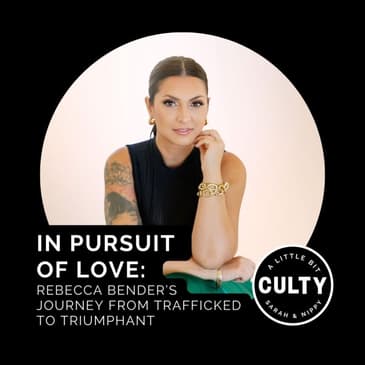
Rebecca Bender grew up in a small town, played varsity sports, made high school honor roll, and would have started college early except she got pregnant. She was a little ostracized. And a lot lonely. Then she fell in love — kind of. She followed her knight in shining armor to Las Vegas only to be sold among three human traffickers.
She was branded, thrown in jail, and hospitalized, her face broken in five different places. But she wasn’t kidnapped. And there was no duct tape involved.
Now, Rebecca Bender is a mentor/survivor/expert flipping the script on who leads the fight to eradicate human trafficking. She’s blazing trails with the largest online school in the world for survivors. And, as an internationally recognized subject matter expert, she’s equipped the FBI, Homeland Security, and the US Department of Justice to spot this stuff before it gets any worse.
Check out the Rebecca Bender Initiative, the RBI Instagram, her personal Instagram and her book In Pursuit of Love: One Woman’s Journey from Trafficked to Triumphant, 2020.
Please note, this series includes details of sexual abuse. Listener discretion is strongly advised. If you, or someone who know, is a survivor of sexual assault, abuse, grooming, child abuse, or human trafficking, RAINN’s National Sexual Assault Hotline offers support at 800.656.HOPE (4673).
Also…
Hear Ye, Hear Ye:
The views and opinions expressed on A Little Bit Culty do not necessarily reflect the official policy or position of the podcast. Any content provided by our guests, bloggers, sponsors or authors are of their opinion and are not intended to malign any religion, group, club, organization, business individual, anyone or anything. Nobody’s mad at you, just don’t be a culty fuckwad.
Other Links:
Check out our lovely sponsors
Join ‘A Little Bit Culty’ on Patreon
Get poppin’ fresh ALBC Swag
Support the pod and smash this link
Cult awareness and recovery resources
CREDITS:
Executive Producers: Sarah Edmondson & Anthony Ames
Production Partner: Citizens of Sound
Producer: Will Retherford
Co-Creator & Senior Producer: Jess Tardy
Writer: Holly Zadra
Theme Song: “Cultivated” by Jon Bryant co-written with Nygel Asselin
See Privacy Policy at https://art19.com/privacy and California Privacy Notice at https://art19.com/privacy#do-not-sell-my-info.
[00:00:00] This winter, take your icon pass north. North to abundant access. To powder skiing legacy. To independent spirit. North where easy to get to. Meets worlds away. Go north to Snow Basin. Now on the icon pass.
[00:00:27] The views and opinions expressed by a little bit culty are those of the hosts, and do not necessarily reflect the official policy or position of the podcast. No they don't.
[00:00:37] Any of the ridiculously thought provoking content provided by our guests, bloggers, sponsors, or authors are of their opinion and are not intended to malign any religion group, club, organization, business individual, anyone or anything. Also we're not doctors, psychologists, or her supreme holiness, Gwyneth Peltrow.
[00:00:52] We're just mortals trying to make a gluten free, holistically helpful podcast that helps in forums and entertains, and maybe moisturizes. Silky silky smooth. Hey everybody, Sarah Edmondson here. And I'm Anthony Ames, aka Nippy, Sarah's husband, and you're listening to A Little Bit Culty, aka ALBC.
[00:01:21] A podcast about what happens when devotion goes to the dark side. We've been there and back again. A little about us, true story, we met and fell in love in a cult, and then we woke up and got the hell out of dodge.
[00:01:33] And the whole thing was captured in HBO docu-series The Vow, now in its second season. I also wrote about our experience in my memoir, Scarred, the true story of how I escaped next to him, the cult that bound my life.
[00:01:45] Look at us, couple of married podcasters who just happened to have a weekly date night. We interview experts and advocates in things like cult awareness and mind control. Wait, wait, wait, this does not count toward date night, babe. We gotta schedule that, that's separate.
[00:01:58] So it's two days we gotta hang out? We do this podcast thing because we learned a lot on our exit ramp out of Nexium. Still on that journey, and we want to pay the lessons forward with the help of other cult survivors and whistleblowers.
[00:02:10] We know all too well that culty things happen. It happens to people every day across every walk of life. So join us each week to tackle these culty dynamics everywhere from online dating to mega churches and multi-level market.
[00:02:21] This stuff really is everywhere. The Cultiverse just keeps on expanding, and so are we. Welcome to season five of A Little Bit Cultie, serving cult content and word salads weekly on your favorite podcast platforms. Learn more at ALittleBitCulti.com A Little Bit Cultie
[00:02:48] Hello everybody, welcome back to this week's episode of A Little Bit Cultie. This will be breaking news for us and a little bit dated by the time you hear it because this is on a two-week delay. But good news, Anthony, want to deliver it? The rule 33 motion.
[00:03:08] Which is? For Keith to appeal has been chucked. Why? He won't even make it to the court because Cammie said basically those pictures of me taking when I was 15 years old and it's kind of all you need to do.
[00:03:21] So for those who aren't following the drama of Keith Reneary trying to get out of 120 years in jail plus five years probation,
[00:03:27] he's basically appealing and he's saying there was FBI tampering and that they took the camera and they changed the date so that it doesn't prove that Cammie was underage, blah, blah, blah.
[00:03:36] Everything that they got, Claire's lawyers paid Alan Dershowitz to do and all that stuff, all that hype. I think the other lawyer was Kuiper, whatever that guy was. The gist of it is all that hot air is over.
[00:03:48] She's basically saying that no those pictures were of me and the FBI didn't tamper because why would they need to tamper when she can prove it herself? Right. So there you go. Yeah. There you go. Wasn't really worried. You weren't worried? I mean, I wasn't even following it.
[00:04:04] You know, the fact is that ever since the beginning I do know that he's a slippery little fuck nugget and I just didn't know what he was willing to do to avoid responsibility and find some loophole. But that's his only play. That's true. You're in a jail cell.
[00:04:19] What else are you going to do? What else are you going to do? Right. It's a Hail Mary. It is a Hail Mary and here's my segue. He was held accountable.
[00:04:25] The person involved in the case we're talking about today was not held accountable and is out roaming the streets today. And you know what? That chaps my ass. Yeah, we're going to kick this off with a little ass chap. I'm going to kick it off.
[00:04:35] I'm going to put it in the intro. My ass is chapped. This exists and that perpetrators such as the scumbag in our guests today case is still walking this earth.
[00:04:46] It's the theme of all this stuff that like the apparatus that are set up to protect the people oftentimes end up protecting the perpetrator. Yep. So in our case we got lucky. Our guest today. Because it was high profile. High profile.
[00:05:01] This was not high profile but maybe it's starting to be. Hopefully this podcast will shine some light and thank you to our guests Rebecca Bender who grew up in a very small town in northern Oregon. She played varsity sports, made high school honor roll.
[00:05:14] She would have started college year early but she got pregnant. Most of her friends went out of college and did what single people did while Rebecca stayed home. The first time young single mom to a new baby girl. She was a little ostracized and a lot lonely.
[00:05:26] I couldn't imagine having a child at age 17. 18. And then she fell in love. Kind of. She followed that knight in shining armor to Las Vegas only to be sold among three human traffickers. She was branded.
[00:05:40] She was thrown in jail, hospitalized multiple times and her face broken in five different places. However she was not kidnapped and there was no duct tape involved or dirty mattresses and basements but there was a dark sisterhood and bonding with abusers and a false sense of belonging.
[00:05:55] Sound familiar? Sound a little bit culty. Eventually, thank goodness Rebecca got out. Now she's a mentor slash survivor slash expert flipping the script on those who lead the fight to eradicate human trafficking. She elevates survivors and she equips them with job skills they need after escape.
[00:06:10] And as an internationally recognized subject matter expert who understands from the inside out what human trafficking looks like and how to stop it. She leads government agencies and NGOs to spot this stuff before it gets any worse. Talk about turning a negative into a positive.
[00:06:25] Rebecca joins us today to share more about what she experienced in Las Vegas, how she got out, how she turned a personal nightmare into a relentless source of power to thwart this modern day slavery happening right beneath her noses. Please enjoy our riveting conversation with Rebecca Bender.
[00:06:41] Rebecca, thank you so much for joining us on a little bit culty. I'm so happy to see you in person after everything that you've been through. It's just really warms my heart that you're here to tell your story. So thank you for taking the time.
[00:07:02] Well, thanks for having me. I'm really excited to share with you and get into it. I didn't get to tell you this before, but since we started this podcast, we've been wanting to do an episode on sex trafficking. And I truthfully did not know that much about it.
[00:07:16] And I learned a lot from hearing you do other interviews and hearing your story. And I really think it's important for our audience. Obviously a big overlap with cultic abuse.
[00:07:24] I'd love to hear like the cliff notes of your stories and whatever you feel comfortable sharing with an emphasis on like what you've learned and how you're healing. Yeah.
[00:07:32] I was so excited when we got to connect because I think one of the biggest questions I get all the time with being a survivor of human trafficking, which I'll share. Like you said, clip notes on my story in just a minute.
[00:07:43] But one of the things that people ask all the time is like, why didn't you just run? And my answer generally is well, I did run.
[00:07:50] That's why I'm standing here today one, but two, people don't understand the brainwash and the mental chains that take place when you're being trafficked. Because if it was all physical kidnapping, that's not a very sellable product for a trafficker, right? Like sex cells.
[00:08:06] And so having someone that's tied up in a basement that's crying and screaming, that's not really sellable. It's not sexy. And so traffickers work really hard at brainwashing you into feeling like you're a part of this family.
[00:08:19] You're part of this community because they want to keep you in mental chains because it keeps the product more sellable. And so it's hard to wrap your mind around how would someone get brainwashed?
[00:08:27] You know, how do you join a group that makes you feel all the things that cults do? It's really bizarre. But that is what happens in human trafficking. The term that's emerged in our travels has been coercive control.
[00:08:39] I think, you know, just listening to your story and other episodes and other podcasts, I think the course of control is the main precursor and the main thing that really, I think people generally need an overall education about what it looks like and sounds like. Yeah.
[00:08:55] To legally define trafficking in the US is the use of force, fraud or coercion. So, you know, that consistent coercive tactics that are employed by traffickers, threats of harm, making you feel like you're going crazy, gaslighting,
[00:09:09] taking things that really mean something to you and holding it hostage in order to keep you in compliance. And the other thing people don't think of is the rewards. I mean, that's how you train people, pets. Potty training, right? Potty training is like you reward people for cooperation.
[00:09:24] And I think we don't realize that with trafficking. We think, well, if she's enjoying the car he bought her, then maybe she wants to be there. And it's like, well, maybe that was a reward for cooperation, which is actually fueling the coercive brainwash that's taking place.
[00:09:38] So helping understand how that works with your mindset, it makes it easier to be empathetic why it's hard to sometimes just walk away. For sure. And obviously you didn't know any of this when you were 19, when you met your trafficker.
[00:09:50] So you give us a little bit of the background of what was going on for you in your life when he came into the picture and swept you off your feet. I mean, I grew up, you know, typical kind of normal small town kid.
[00:10:00] I grew up at a little lumber farm town. My dad pulled green chain at the local lumber mill or just a small town blue collar family. Wouldn't have been put in an at risk youth category though my parents divorced when I was nine
[00:10:11] and it was a really ugly divorce, a lot of fighting, a lot of drinking. And so there were some vulnerabilities that took place from about nine to 13. My mom, she was involved in the domestic violence. So I was predisposed to violence in the home.
[00:10:23] And then we moved to the big city of grants pass 37,000 people. So it felt like a big out from my little small farm town and my mom was a single mom. And so I learned that if I just said yes to everything, I wouldn't have to be alone.
[00:10:37] And that can be a real, real toxic environment for, you know, a kid going into high school to just kind of have no boundaries, right? Yes to every party, every sporting event, every activity, every boy, just whatever to not be alone.
[00:10:50] And that created some experiences that again kind of desensitized me culturally to just not be so shocked when things might be happening around me because I'd already done it or seen it. And at the root, it was this vulnerability of feeling really all by myself
[00:11:05] with no parents around and you're just kind of raising yourself. But that was the extent of it. And I graduated high school year early at 17, my junior year. I had enough credits and then I got pregnant.
[00:11:15] And I had been accepted into Oregon State University, had my dorm room assigned and I gave up my dorm room and stayed in my small town and had my daughter and went to community college. And that's when, you know, after having the baby,
[00:11:26] my friends moved out of the dorm and into an apartment and invited me to move up with them. And I thought this is it. I'm going to get out of my small town. I'm going to go off to this college city and have fun
[00:11:34] and kind of try to figure out life. And when I got there as a single mom with a baby, it brought up all those vulnerabilities of feeling really alone, no support. And that's when, you know, I met the most amazing guy.
[00:11:46] He seemed to have all the answers and he was charming and funny and just swept me off my feet, took me and the baby kind of in and created this feeling of family that I think broken little me really wanted and that I really wanted for my daughter.
[00:12:01] And so I fell in love and that's one of the red flags we give people is any fast track to a relationship should be a red flag if someone's really trying to fast track and love bomb and all of those sorts of things.
[00:12:13] And I didn't know that he had a criminal record, that he was not the age he said that he already had a victim in Las Vegas. I didn't know about. He was basically using all of the money he was making off her
[00:12:23] to whine and dine me in another city. And that's what traffickers do. They have a dating and grooming phase they call it. I just didn't know the red flags back then. You know, I was taught trafficking was kidnapped kids in foreign countries
[00:12:34] and I didn't understand that I was involving myself in a really dangerous situation. I just didn't know. And did he target you? Oh, for sure. It's a college town and 24 years ago young people with babies were not that common 24 years ago.
[00:12:49] We see a lot more single moms going to college nowadays but 24 years ago like it was very rare. So I do think he targeted me. So it's a case where he comes from Las Vegas up to was it Oregon or Oregon state?
[00:12:59] So I lived in Eugene, Oregon at the time, which is where you have a ways. He said that he lived in Portland, Oregon. And we went up to his condo up there in Lake Oswego.
[00:13:08] And he told me that he worked in the music industry, that he was like a producer manager. And we went to a couple of concerts on what I thought was like date nights and we were backstage.
[00:13:17] It's feeling like normal, but you don't know at that age what to ask or to like listen in intently when you're back. You know, like that's just not what you're doing as a young kid at a concert. So it seemed believable.
[00:13:28] And then he told me that his job was relocating him to Las Vegas. And so I begged to go. I wasn't this kidnapping scene. I heard that in an interview that he actually used reverse psychology on you and said,
[00:13:39] I don't think you should come because it's not a place for families. Yeah. And I remember thinking he called us a family like he sees us as his family. It was the first time he said it and it made me enamored and feeling like,
[00:13:51] oh my gosh, he sees us as his family. And as a young teenager, like it just felt finally I had met someone that was going to help me figure out life. I'd been trying to figure out life since nine years old all on my own.
[00:14:03] And finally someone was there to help me and that's what I think really swept me into his web. And then he brings you to Las Vegas and pays for everything. What was the first moment that you had the oh shit, the first big? Uh-oh.
[00:14:19] The first it was within almost the day of arriving. Within a day or two we got there and he said get dressed up. I'm going to show you out on the town. I'd barred my friend's fake ID. I'm ready to go to Vegas, you know, it's nightclubs.
[00:14:31] I'm excited. I'm from a small town. I think, you know, it's an exciting place to be. And he had his brother watch my daughter, which I had met his brother lots. It was, you know, it felt like a normal progression of a relationship to meet each other's families.
[00:14:44] I'd already met his brother lots. So we left my daughter with his brother and we were supposed to go out. And he drove me to a dead end street. There was like a deserted strip mall on the right hand side. There's just this big, great empty building.
[00:14:55] No lights, no signs. And he said, I spent a lot of money to get you here. And that was money I was using for my business and we need to get the money back. And everything was about we and us.
[00:15:05] And, you know, all the time there's always the language he used, which I didn't catch on to later. But I remember feeling guilty. I felt dumb. I felt naive. I thought, oh, I didn't realize. I'm so sorry. And then he said, well, this is an escort service.
[00:15:18] You need to go sign up and like escort. That sounds like prostitution. And he's like, no, this is just like dancing.
[00:15:23] And I had danced before I'd worked in a strip club and I had done a private party at a frat house before in Eugene in the college town. And so he was like, you know, it's like, you haven't done this.
[00:15:33] And this is just how it works in Vegas. This is how they get private dancers to sweets. And, you know, you got to trust me. And I remember thinking like, well, he knows the entertainment industry.
[00:15:41] I don't even though I'm getting these gut checks and these red flags, you're kind of pushing them aside. Like he loves me. I love him. He knows this world. I don't. You know, you're kind of justifying in your mind.
[00:15:52] And then still I was like, yeah, I've been still I'm I don't feel right about it. This doesn't it doesn't sound like this is it, you know, I still pushed back and that's when he slapped me across the face.
[00:16:01] And I had all the emotions of obviously being like hit for the first time by someone that you love. But the big kicker for me was immediately I had this thought, I don't know where my baby is. I don't know my address by heart.
[00:16:13] I just got here yesterday. If I tried to jump out of the car and run in my mini skirt and high heels. I literally wouldn't even know where to go to get her. And so I thought maybe it's fine. Maybe I can trust him. He loves us.
[00:16:27] We're his family. I just want things to go back to being better tomorrow. We'll just get the moving money back. I'll dance in a couple of suites and then things will be better tomorrow.
[00:16:36] And that's what I just kept telling myself and got out of the car and went in the service and signed up. Did he have an ecosystem around him like a brother and all these people supporting him knowing what he was doing? Yes. Wow.
[00:16:48] So one of the things I thought was interesting when I got in the escort service for the first time, when I walked in it was like three desks butted up together, three phone girls.
[00:16:56] And on the wall was a dry erase board and it said Blonde Burnette, Redhead Asian Exotic. And under those categories were names like Bambi, Sasha, Ivy. And so I'm like, oh, it's like a strip, you know, it is like a strip club.
[00:17:07] So you're thinking every step I took, it felt like, oh, okay, maybe I can believe him. And you know what I mean? So it's like every little step like, okay, maybe it is just dancing.
[00:17:17] And then the one phone girl, she took out paperwork for me to sign and I was checking all the boxes. And you know, you're pretending to read them like you would end it like a medical office. And she said, this just says you won't solicit.
[00:17:29] We don't hire those kinds of girls. And I thought, okay, good. So like every step it felt like it's going to be okay. It's going to be okay. But it wasn't. I got back in the car, he's driving. You know, I'm not driving at the time.
[00:17:40] And I mean, I could drive it. I just didn't have a vehicle. So I'm completely reliant on freedom of movement and transportation from him, which is a tactic used. Right.
[00:17:49] And the phone rang and he pulled out a notebook and pen from his center console ready to write down either address or hotel information. So he was ready. He was ready and prepared. And he drove me to my first call and it wasn't just dancing.
[00:18:02] And I kind of froze. And I thought, you know, I'm in someone's house. Like do I run for the door? Will I get hurt? And every time you're kind of thinking through what to do, it's like your situation changes.
[00:18:14] And so you're having to try to rethink like what do I do? So you're just kind of freeze. I think we forget that people can freeze in the moment of like not knowing what to do. And it leads to judgment really quickly.
[00:18:24] And I got back in the car after and he said, how much did we make? And I pulled out from my wallet. I was like, I think I have like, I don't know, 300 and something dollars.
[00:18:33] And he took the money out of my hand and he said, you didn't have sex for this, right? You'll do better next time. And I just, I just started crying and I remember thinking like, how did I get here?
[00:18:43] How did this moment happen where I kept taking little step forward, apprehensive, lots of red flags? You know, no, he loves me. It's going to be fine. It'll be better tomorrow. I had all this big hopeful future. He didn't want it to leave so quick.
[00:18:56] He thought, you know, like I'm in love and excited. I don't want it to go away. And then I'm embarrassed of what just happened in that room. Like I felt sexually assaulted and I don't want to tell anybody. And he gave me money.
[00:19:07] So then I feel embarrassed and ashamed. And I just felt like, how did this happen? Like I just want to go back to yesterday when I was excited and in love and feeling like I finally had this family and future for me and my daughter.
[00:19:21] And that's kind of how my first time happened. Wow. I mean, first of all, I'm like so sorry that you went through all that. It's just horrific. And it's just so heartbreaking that someone's wishes and dreams could be manipulated in that way.
[00:19:37] I'm really sorry that this has been your trajectory. I almost just want to like skip to the healing part because I want to hear about that, but like can you give us a little, because I know that it was years before you were able to successfully leave.
[00:19:50] And I know you tried many times. So that was the first, I've known since you've left, you've learned a lot and made a lot of parallels between cultics stuff, cultic abuse and, and your situation.
[00:19:59] So like we talked about love bombing and, you know, him being the authority and controlling your movement and making you dependent and all of those things. What were some of the other things that happened along the way?
[00:20:09] Yeah, eventually I was brought into a home of women that became like my family and you would call it your family and you'd call them your sisters or your wife-in-laws, which is another phrase we'd use.
[00:20:17] You know, the University of Northern Colorado did a big research study that proved that domestic human trafficking fits all indicators of cult behavior. Checked every single box. Wow. So over nearly six years I ended up being bought, sold, traded between three different traffickers.
[00:20:33] The one I was with the longest was the larger crime family that had, I had three wife-in-laws and my daughter and then there was another little boy in the home. So four women, two children and our trafficker and we all, you know, kind of shared one big house.
[00:20:44] Eventually we were in separate houses in the beginning and then, and then we were in one bigger home and I felt more like a polygamous where we were like celebrating anniversaries together and picking up each other's children and
[00:20:53] traffickers do this thing where they create an us and them mentality, which is a checkbox on cult behavior. It's very much like our family is the only one that knows everything about us and
[00:21:03] doesn't judge you and you get to be your full authentic self here and we know it all and you're always welcome but the world and the squares and the cops, those, you know, those were the thems and they didn't understand us and they
[00:21:16] didn't have our best interest and they really replace your ideologies with a new set of rules and beliefs that you have to follow in what's called the game and so it's like these are the rules. You obey these rules and you won't get in trouble.
[00:21:28] If you do get in trouble, it wasn't always just physical punishment. It would be social ostracism. Two women had been sent away from the home if they didn't obey the rules. One was sent out to the bunny ranch, the legal brothels.
[00:21:40] She couldn't come home for 20 days because she didn't obey a rule. One was sent to a hotel. You didn't obey a rule. You don't get to come home until you obey the rules. You didn't have choice on what you dressed, on what you ate and they
[00:21:50] would restrict you from outside sources of information. So we didn't get to have social media. He controlled going on the internet and other little things would happen in that time like I can remember the very first trafficker.
[00:22:01] I got a text from one of my high school friends, which had, you know, early on I was still only barely 19 so you're still kind of friends with that group and I remember him getting mad and I thought it was more like a jealous boyfriend.
[00:22:12] He was like, why would you still have high school friends? You need to delete those contacts from your phone and in hindsight now that I know about cult behavior, removing contacts and moving you out of your city, isolating you from contacts is a big part.
[00:22:25] And what I think people don't understand about trafficking is it's not this black and white like you meet him and then one day you're trafficked. It's the slow, subtle removing all the contacts from your phone. Slow, subtle move you to a new city.
[00:22:37] Slow, subtle you don't need a Facebook page or let's have one together like these slow little subtle things along a period of time that if they all happened on the same day, of course you'd be running. Of course you'd be like, something's wrong here.
[00:22:51] It's a sophisticated process and it's very calculated and that's what people don't understand is it's done very carefully. They stop when they get a little pushback probably wait for the compliance. Love bomb reward. Our cult leader called it lifting.
[00:23:07] You don't just say like, can I put my initials on your body? Let's do a personal development program. Help you with your goals and then, you know, lift, lift, lift. To draw parallels it's how totalitarian governments do it.
[00:23:18] I can remember so all the other girls had tattoos of his initials on their neck, on the back of their neck. And when I got there I can remember probably after maybe a month or two we were laying in bed cuddling and he would draw his like
[00:23:32] trace his initials with his finger on the back of my neck and he would say, when you've proven yourself, you can be one of us. Wow. And I can remember having this, it's like embarrassing to admit
[00:23:43] but I can remember having this feeling like I wanted to be a part. I wanted to be a part of this family that had each other's back and looked out for each other and contributed to the community
[00:23:54] pot to make sure we all would get out of this with something that it wouldn't all be for nothing. And it felt really inviting to have a community that was going to help you figure it out and make sure you got out
[00:24:05] with something and no one else was doing that for me but them. And no one else wanted me for not sex but them. Like my sister and wives were the only friends that I got to have and they were the only ones that didn't want anything from me.
[00:24:20] And so there becomes this really strong bond like soldiers at war when you like live through a lot on the streets, live through a lot in the home, you only have each other. And so it became this dependent feeling of I wanted to be a part.
[00:24:32] Makes total sense. And I think our audience will see the parallels and feel the parallels. It's so human. It's such a human desire. Yeah. It also has the built in component of humiliation which keeps people compliant. You know, it's one thing I've noticed in all these things
[00:24:48] is people are so embarrassed that they don't want to come out and tell their story because number one, you went through trauma. Number one, which is hard enough as it is. That's a real, very real thing physically, emotionally, intellectually, all that stuff.
[00:25:01] And then you want to go share with people that you went through that trauma and then have everyone know about it. So those are two components that keep you somewhat compliant. And that's what makes what, you know, you're doing so brave and so important because every time
[00:25:15] you tell the story and every time someone hears it, it gives them the courage to go do it as well. He would also do little things like at Christmas time he would buy us all like a plane ticket home to go see our families.
[00:25:27] And then the day before our flights, he would pick a random fight about anything and physically abuse us so we would have like a black or blue eye. And so you would cancel your flight home because you don't want your family to see you like that.
[00:25:42] And after about, I think year three, I can remember kind of coming to the other women and being like, Hey, are we noticing a pattern? He always buys us a flight home, but then he always picks a fight.
[00:25:54] Like I think to him it's worth the loss of a plane ticket to make us think that we were going to get to see our family. And that year I went home anyway. I had like a purple bruise on my face. Good for you.
[00:26:06] I went home anyway and that's when my family started asking questions like, are you in domestic violence? Can we come up with a safe word and a skate plan? My grandma even tried to hand me $200 and say, if you need to run, like everyone knew something was wrong,
[00:26:19] but I just don't think anyone thought trafficking. They just thought, are you being beaten at home? Like what's going on with your boyfriend? This is the golden age of cult recovery. The more we speak up and share our stories, the more we realize we are not alone.
[00:26:35] Your voice and your story can empower others. This is Sarah and I'm proud to be a founding collaborator of the hashtag I Got Out movement. Learn more at IGotOut.org. I'm not going to skip leg day or never miss yoga. Maybe it's getting eight hours of sleep.
[00:27:06] That's my personal and everyone's dream, isn't it? Well, I definitely have some non-negotiables. Like I'm in Vancouver right now and I'm spending literally as much time as I can outside of nature. Hashtag cold pools, hashtag crushing it. Nature is a non-negotiable.
[00:27:20] Not enough time in the fresh air and the trees around me and I start to feel not great, not myself, not grounded. Therapy day is a bit like my nature walks. I know I'm just going to feel so much better all around if I make it a priority.
[00:27:30] I get so much out of it. It helps me put my worries and anxieties in their rightful place and helps me clear my mind so I can focus on what I really need and sometimes what I don't need. Like, I don't need to be overbooking myself
[00:27:40] just because I hate to say no to people. You know what I mean? Thanks therapy. Thanks for helping me see that. And if you're thinking of starting therapy, give Better Help or Try. It's entirely online designed to be convenient, flexible and suited to your schedule.
[00:27:52] Just fill out a brief questionnaire and get matched with a licensed therapist and switch therapists anytime for no additional charge. Look, even when we know what makes us happy, it's hard to make time for it. But when you feel like you have no time for yourself,
[00:28:04] non-negotiables like therapy are more important than ever. Never skip therapy day with Better Help. Visit betterhelp.com slash culty today to get 10% off your first month. That's Better Help H-E-L-P dot com slash culty. The Frankies were a picture perfect influencer family, but everything wasn't as it seemed.
[00:28:24] I just had a 12-year-old boy show up here asking for help. He's emaciated, he's got tape around his legs. Ruby Frankie is his mom's name. Infamous is covering Ruby Frankie, the world of Mormonism and a secret therapy group that ruined lives.
[00:28:42] Listen to Infamous wherever you get your podcasts. And I know you've defined the actual term trafficking. How do people know when to spot that? What are the clues of trafficking versus domestic violence? That's a great question. And one thing I say to people,
[00:28:59] it's like how do you spot an alcoholic? How do you spot domestic violence in a grocery store? Like you're probably not, to be very honest. It's not gonna like, you're gonna see one person one time and there's some big red flag you can see.
[00:29:11] But what is important is that people that are intimately involved in those people's lives, they are seeing things. Just like I would know if my dad was drinking a lot. I would see that. Maybe the grocery store cashier wouldn't, but I would.
[00:29:24] And so the signs that we encourage people to look for with those that are in their lives, it's a real easy equation. We say abuse plus money is gonna be trafficking. The monetary component has to be there for trafficking. So if you're seeing frequent trips out of town,
[00:29:38] suddenly fancy car, closer jewelry or designer bags that you know that maybe the job they tell you they have couldn't probably afford or budget. And then any signs of abuse, right? Less and less communication. So more secret about their life. Maybe sleeping a lot during the day
[00:29:54] and up more later hours. Signs of physical abuse or even just heightened emotional responses or withdrawal and then a real obedience to their partner. So kind of any signs of those domestic violence plus any signs of more money.
[00:30:08] That should be a red flag to call your local human trafficking detective, call your local anti-trafficking nonprofit and start seeing like how can we assist in helping someone I love escape. And we say to people, you know, very much like on this podcast,
[00:30:22] it's like, well, how would you help someone escape a cult? It's not just like run, don't you not want to be there? Run. This whole deep programming, it's the whole psychology. Like it's a lot and you have a lot of survivor guilt to leave other women behind.
[00:30:35] It's a lot that comes into to exiting and so getting a local group involved that can help with that process of stabilization will be really important. And I want to talk more about that. And before I do, like I know you've made multiple attempts
[00:30:47] to leave and you learned every time what doesn't work. Like you can't buy a ticket after 9-11 with cash. I heard you say that once, but that's, I didn't know that that you couldn't buy a ticket with cash at the airport. That's wild.
[00:30:59] Yeah. I got all the way to the airport and they won't sell you a ticket and you're like they're begging running for your life with your little girl and no one to sell you a ticket and you just panic, right? Like these are these moments.
[00:31:10] I have a survivor leader that I know named Wendy Barr and she says my life wasn't a series of choices. It was a series of reactions. And I think we can forget that. It's like you're traumatized and you're making these life and death split second decisions.
[00:31:22] It's easy for someone to go, well, why didn't you do this? Well, why didn't you do that? You're like, I did the best I could in the split second. I reacted. It was a reflex. And at the airport, I can remember thinking,
[00:31:31] just get back home before I'm gone too long so that he won't notice and I'll figure it out tomorrow or I'll, I started wiring my mom money about 50 bucks a night so that he wouldn't notice too much being gone. And of course she started panicking.
[00:31:43] Like what's going on? I said, just save the money. I'll call you when I need it. And that's how I ended up, you know, she was able to put my plate to get on a credit card when it was time to finally run. But that's the process.
[00:31:53] It's a process of being only able to scrape 50 bucks off the top for a long time to not notice. Also, he would strip search you sometimes to see if you were what they call stacking money, which is a rule that's not allowed.
[00:32:04] So if you were caught stacking money, you'd be beaten. So he'd look through vents in your room. He'd look through your drawers. He'd strip search you. So it's a real risk to have 50 bucks found on you. So I can remember driving.
[00:32:14] There's a Western Union and Drays nightclub on Flamingo. It's the only one open 24 hours. And I'd go in, why are my mom 50 bucks? And I'd burn my receipt at the counter. So I wouldn't have any money and I'd have no receipt.
[00:32:25] So I felt clear walking back in, but it's scary. Like did he see me? Did he follow me? Is there is my phone tapped? You know, you start feel like paranoid all the time. In those six years, how much of that time were you trying to get out?
[00:32:37] I had multiple attempted escapes in six years. It felt like domestic violence where you'd run and he'd find you and he'd promise it wouldn't be anymore and you could retire and you're so close and you'd live through this honeymoon phase with them.
[00:32:51] I know he took one of our wife-in-law's on vacation to Mexico after she ran, he took me and my daughter to Disneyland. So there's these like honeymoon phases where you think, well, maybe this will be okay. And then all of this won't be for nothing.
[00:33:02] You know, all of the criminal record I now have, the trauma I've lived through, at least I'll get out with something that feels like such failure also to be like, gosh, to leave and choose homelessness is really hard. And it's this tear in your mind of like,
[00:33:16] then all of that was for nothing? Like it was for nothing? So when you have the dangling carrot of the honeymoon, it feels like, okay, well, then maybe I'll try it a little longer being with him and it'll be okay
[00:33:28] and I'll get out with a house in my name and then being a single mom will be easier if I don't have like a mortgage payment, right? And so those were the things you'd think. So it would be cycles, cycles of up and down of come and go
[00:33:39] but the catalyst I should say that caused me to run was the feds raided our home in 2006. Raided one of my traffickers' homes down in Dallas. He was laundering money through a pizza shop in a suburb of Dallas, Texas and feds raided the home with an arrest warrant
[00:33:53] for one of the women and she wasn't there at the time and so we knew that it wouldn't be short until they were up in Vegas and I think it was maybe six or seven months and US Marshall surrounded her house up in Vegas
[00:34:04] where she was staying and they brought her in and I was in a different house with the kids and I was told to take the kids and run. I threw the kids into the neighbor's backyard and then we went and stayed at a hotel in Lake Las Vegas
[00:34:13] for about a month and everyone got lawyers and started figuring out plea deals and the feds were really trying to get the women to flip for human trafficking. They came in on the RICO Act but everyone took a plea deal on a tax evasion charge
[00:34:25] and two out of four of us, more sentenced to 13 months in federal prison. Two of the victims. That's when I ran. Right. Okay. So that's when you ran and you went home to your parents and did you ever have to see him or face him again?
[00:34:37] No. Originally I ran. I went home to my mom's briefly and then I went to London. I lived in London with a buyer. I wanted to get as far away. I felt like I had one year to figure this out because he would be locked up.
[00:34:49] If I was in another country, he wouldn't be able to find me. You know, you're really scared and you thought he was capable of killing you and so you're afraid and he knows where I lived in Oregon. He had already shown up there once
[00:35:00] when I ran one time before. I showed up to my... So like there's a lot of fear. You know, I never recommend... I call it my Richard Geary year because I thought maybe Pretty Woman was real and I went and lived in London for a year
[00:35:12] but it was there that I got to sleep and eat and I wasn't looking over my shoulder every day and so why I don't recommend it it was definitely a year where I felt like I could let the dust settle and breathe again for a minute
[00:35:24] to kind of figure out my next step and then I went back to Oregon came back to the US in February of 2009 and started life over with nothing. Right. And tell us about picking up the pieces. What was that stage like? It was hard.
[00:35:38] I think it was one of the hardest because you're right back to the same vulnerabilities that got you trafficked in the first place. I'm back to being a single mom trying to figure it out and go to school and live in poverty
[00:35:47] but now it's compounded with six years of huge amounts of trauma, PTSD, night terrors, triggers, criminal record, huge gap in job history. Like it's worse than the first, you know. And poverty isn't freedom and living on government housing and food stamps and walking to and from work
[00:36:07] or riding the bus. It's just like it's hard to figure a way out and I can remember, I got a job, a minimum wage job at somewhere that I knew wouldn't do background checks because they hired felons and so I got a job there
[00:36:19] and it was a great first job for me. I learned a lot but there's still the stigma and fear that people will find out about your background and you live in a small town so it's like, are my kids, my daughter's friends, parents,
[00:36:30] if they find out will they let them come over and play? You know, at the time the guy was dating that became my husband, now ex-husband but at the time he became my husband, you know, his co-workers found out would they judge him,
[00:36:40] would they make fun of him? So it's a lot of shame to kind of hide in the background of your small town and then one day it kind of had this moment of like how can I sit here and do nothing when I know what it's like
[00:36:50] to be more afraid to go home than I was to get in the car with a stranger and not really hit me like home should be your safe place where you can come home and let your hair down and unwind and relax and feel safe
[00:37:01] to be more afraid to go home to rather be out on a street corner. I thought how can I do nothing? I've got to sound the alarm that this is happening everywhere, it's not just in foreign countries and it's not kidnapping. Like this stranger danger looks very different
[00:37:14] than what any of us have been taught and so that's kind of why I started just sharing my story anywhere that would hear. I didn't really have a specialty back then I just was word vomiting my story without any healing trauma and there was a lot
[00:37:28] and I'm embarrassed of things I've said publicly now but you learn as you go I guess learning publicly is hard. I trust me. We're with you on that one. Trust me. Oh man. So in my early interviews I was like, oh god.
[00:37:41] I didn't even know you could vet journalists. I just said yes to any interview and then I look back like I cannot believe I went on that. I can't stand what that place represents you know it makes you look like you're associated. I'm like, I didn't know.
[00:37:52] No one was mentoring me on how to tell my story or just kind of thrown into the den. Mmm. This episode is sponsored by BetterHelp. What are your self-care non-negotiables? Maybe you never skip leg day or never miss yoga. Maybe it's getting eight hours of sleep.
[00:38:33] That's my personal and everyone's dream isn't it? Well I definitely have some non-negotiables like I'm in Vancouver right now and I'm spending literally as much time as I can outside of nature. Hashtag cold pools, hashtag crushing it. Nature is a non-negotiable. Not enough time in the fresh air
[00:38:48] and the trees around me and I start to feel not great and I'm not myself, not grounded. Therapy day is a bit like my nature walks. I try to not miss it and I know I'm just going to feel so much better
[00:38:58] all around if I make it a priority. I get so much out of it. It helps me put my worries and anxieties in their rightful place and helps me clear my mind so I can focus on what I really need and sometimes what I don't need
[00:39:08] like I don't need to be overbooking myself just because I hate to say no to people you know what I mean? Thanks Therapy. Thanks for helping me see that. And if you're thinking of starting therapy give BetterHelp a try. It's entirely online designed to be convenient,
[00:39:19] flexible and suited to your schedule. Just fill out a brief questionnaire and get matched with a licensed therapist and switch therapists anytime for no additional charge. Look, even when we know what makes us happy it's hard to make time for it.
[00:39:31] But when you feel like you have no time for yourself, non-negotiables like therapy are more important than ever. Never skip Therapy Day with BetterHelp. Visit betterhelp.com slash culti today to get 10% off your first month. That's BetterHelp H-E-L-P dot com slash culti. Meals bring people together
[00:39:48] but for many families providing their next meal can be a challenge. You can help by participating in Macy's annual Feeding the Hungry Food Drive. All proceeds go toward local food banks and families. Now through January 31st you can purchase an icon in store or online
[00:40:05] or watch out for the blue Feeding the Hungry Shelf Tags where a portion of your purchase will be donated to local pantries. Together we can combat hunger in our local communities at Macy's. We have talked about that on this podcast. I can't take on something else right now
[00:40:21] but I would love to be a firm or PR or something that helps survivors get out there and manage their book deals or their PR requests because it's a lot to manage. There's some vultures out there too. And there's vultures. Everybody wants a piece
[00:40:38] and it's just as freaking sensational and objectifying in some cases. Not all of it, not all the media but a little bit. How did you go from there to what you're doing now in terms of the Rebecca Bender Institute and the Elevate Institute?
[00:40:52] Like how did you become such an advocate for survivors? I just started sharing my story anywhere would hear and then I can remember being invited to an event in Washington, D.C. and there was a phenomenal survivor speaker there named Shamir McKenzie. And when she told her story
[00:41:05] she had such this like call to action and solutions. And as I sat through different workshops at that conference I could feel myself just soaking up this information of like, wait, there's policy reform and demand reduction and prevention methods and screening tools and stabilization centers.
[00:41:22] And I thought, I didn't even know this existed. Like I didn't know there were thousands of advocates in the world that were like fighting for girls like me. No one told us. I just had this like, I want to do this. I want to be a part.
[00:41:35] I want to figure out my lane and my specialty and then use my story to have a call to action like I was seeing kind of in front of me. And so I wrote out my timeline on a piece of paper
[00:41:45] and I saw some common themes which a lot was a rest. I'd gone to jail a lot and then I had this federal case from the RICO Act so I thought I could put together a few case studies and do what I saw other people doing in workshops.
[00:41:56] And so I tried it and it just kind of blew up but now year to date we've trained well over 115,000 law enforcement agents undercover cops, police academies, FBI, secret service at work ops. I do investigations and trials now
[00:42:10] and at the time I didn't know this is where it would lead but I just kind of kept going through each door that opened and as I did that other survivors started reaching out and saying how did you do that?
[00:42:19] Like how did you take your story and find a theme and then create a company and what did you charge and what are taxes like and you know our traffickers aren't teaching us this and there's a lot of resources to help people get out
[00:42:30] but then not a lot to help you become a leader in the field and use your story for purpose. There wasn't a lot of mentoring on that. At the time I was finishing my degree online and I thought one day if I can get a master's online
[00:42:40] I could mentor online and so I replicated what my university was doing got the technology, wrote 16-week curriculum and I launched Elevate Academy. We started with just five and now we have 1,300 students in 600 US cities in 17 countries and... That's awesome. I'm just shocked.
[00:42:57] Like I'm shocked that we can help survivors find seats at the table in their communities and help them find a specialty and be a voice to make change because you want to feel like everything you lived for matters that it wasn't for nothing.
[00:43:09] That same feeling like if I leave all of it for nothing you know if you leave you can build something that's for purpose. You can make significant change and you can get it all back and it will have meaning and it will have power
[00:43:19] so that's what we really are kind of helping people do today. That's amazing. That's so amazing. Everyone in the school is a survivor of sex trafficking or labor trafficking. Yeah labor or sex but we also see a lot of labor trafficking survivors those in agriculture or domestic servitude
[00:43:35] can oftentimes be sexually assaulted by the men in those communities. So you do see some overlap but the general element of monetary exchange either is the labor or the sex. And when you talk about this what's the biggest misconception that you see from the public?
[00:43:51] I just think all the conspiracy theories are so radical and extreme that are not accurate. It's doing a disservice because it's continuing to fuel a misconception that doesn't exist which means we're going to keep not finding victims if we're looking for the wrong thing. And more than anything
[00:44:07] as a survivor of trafficking I grew up in the same communities as all of you. I'm watching what you're posting I'm watching the same things as you and so if you're telling me that's what to look for that's what I'll look for and then in the meantime
[00:44:19] I'm stepping into quicksand and no one's warning me. So it's not just like what do we want to look for but how can you help victims to identify when they're being groomed when their boundaries are being tested if you keep telling everybody look out for strange or danger
[00:44:32] in the white minivan or someone that's going to take you through a tunnel to some like none of that's happening in our lives so you're actually giving us the wrong red flags for us to self-identify and yell for help. I just think we've got to start
[00:44:44] better understanding what this looks like in communities across the country. I totally agree. I totally agree. So we can sound the alarm better. Another thing to your point is like there's people who are abusing but to a lesser degree with the same tactics
[00:44:57] so like I'm sure there's people that are in situations it feels off it's not going to go to the extent of sex trafficking. It might be a nice boy at a party or something like that who does something to you and who's boundary testing.
[00:45:10] Just having that knowledge is valuable as well. Absolutely. You mentioned conspiracy theories which ones are you referring to? Yeah, Q-naught, something like the Wayfarer thing or even just little things like if you find zip ties on your doorknob it's a trafficker in the parking lot
[00:45:27] or if you see your license plate bent like we're constantly tagged on like TikTok videos and things where people are just constantly fueling these really inaccurate recruitment tactics that don't exist. It's the sensationalism that's just like none of that's reality. The reality is your trafficker
[00:45:43] is somebody you know and trust. That's the reality. It's not some stranger that's hiding under your bumper. It's someone you know and trust and so knowing boundaries, knowing some of those red flags is so crucial. That's key. Like you're saying it's regardless of the type of predator
[00:45:57] regardless of the type of crime that they may have an intent on committing it could be something not as extreme as commercial sex trafficking but we've got to start teaching people how to recognize when your boundaries are being tested and what to do to get out quickly.
[00:46:11] I teach my daughter, she went off to college, my daughter that was with me, she just graduated from Texas A&M with her master's degree. Wow, amazing. She's on a professional track and field contract. She's a professional athlete now. She's eighth fastest woman in the world
[00:46:24] for the 400 hurdles at this time. She'll be going to Olympic trials this year. She's just doing phenomenal. I'm so proud of her. Amazing, Rebecca. That's so great. But when she went off to college for the first time, she did undergrad at Berkeley and when she went off,
[00:46:37] we had the talk of like when you're at a party and you feel uncomfortable, what do you do? Just that. When someone, you know, you get a ride with your friend, your friend might be there with someone they like and now you got someone talking to you
[00:46:47] that's making you feel uncomfortable. You know, you don't want to be the Debbie Downer and want to leave the party. Like those are those social pressures that make you sit in situations where your gut instinct is going off and you sit through it
[00:46:57] because you don't want to be, you know, the weird one or you don't want to be rude, all the things that were taught. And so we go through like what's an excuse you could get out of the room and do you have a ride share app ready
[00:47:07] and a credit card like active on it? So you can always get out of a situation. You always have something you've said out loud. So it's muscle memory of like, oh, I forgot I have this event tonight. Oh, I forgot I was supposed to pick up my mom,
[00:47:19] call your ride share and get out. If you feel uncomfortable, just get out now. Don't wait for them to sweet talk you and love bomb you. Get out quickly. Let's pull that line in the sand back a lot closer.
[00:47:30] If you can leave a couple nuggets with our audience of like what parents could tell their kids and things like that in terms of some, you know, you're totally right by the way about the white van and like that's what I learned in the 80s.
[00:47:40] You know, someone trying to show you his pet bunny. Happy in a candy. Call for mom. Yeah. And we should always teach stranger danger. Like of course, minimizing not teaching stranger danger, but we know that predators are getting more savvy with their tactics.
[00:47:53] And so we've got to teach all of those tactics, not just one. Some things I would encourage people to teach their kids when it comes to just being careful for predators. Again, not everything might be sex trafficking, but there's a lot of online image based abuse right now.
[00:48:07] It's what's known as CCAM commercial sexual abuse material. Used to be called child pornography. They've kind of outdated term. We don't use that as much anymore, but that's really rampant online with everything in our world. Image based abuse is huge.
[00:48:21] And so we encourage people to teach their children, especially those in like middle school age where gaming is really big. Teach your kids that a stranger danger moment is if you're on a gaming app with somebody and they want to switch talking to a new app.
[00:48:34] Most games for kids don't allow the exchange of images in their chat rooms. They protect children that way. Predators know that. So they'll pretend to be a kid. They'll gain your trust and your child will think they're talking to another friend.
[00:48:45] And then suddenly they want to take the chat to a different app. That should be a stranger danger moment you teach your kids to run in and tell mom. Because at some point they're going to want to exchange photos.
[00:48:55] That's the intent of trying to get them off the game to chat on a different app so they can finally exchange photos. And so we've had a couple times where my kids have ran in like, Mom, someone's trying to me give me to chat on a different app.
[00:49:07] I'm like, let me see my daughter. Don't worry. I blocked it and reported. I'm like, well, I would really like the handle so we can investigate next time. But good job. So those are some things we want to teach younger kids
[00:49:19] about is just the dangers of online safety. And social media is such a recruitment tactic. We have cases all the time where traffickers are sending out recruitment DMs to people online. And oftentimes it's coming from other women. They're going to use another girl in their stable
[00:49:35] to recruit another woman. It's not as much of a red flag if a girl reaches out. I was like, girl, I love your outfit. You look so great. Where are you from? It doesn't send as many red flags as if a guy is sending that.
[00:49:44] So they will use other women. Be careful, be thoughtful, be smart, be safe. Ask questions, do some research. Be careful for signs of grooming. If they're pushing your boundaries, if they're trying to isolate you from family and friends, offering trips out of town,
[00:49:58] not having a job anyone can visit or verify, attempt to fast track a relationship. Those are all signs that altogether should be a concern for you to look into who these people are. That's so helpful. Technology changed so much with COVID, every industry, including sex trafficking.
[00:50:12] I mean, we saw a rampant increase of porn made by traffickers. And so it's really hard because you don't know if what you're seeing on a screen, if someone's there by choice, force or circumstance. You just don't know as a viewer.
[00:50:24] And we have cases where women have been forced to have only fans accounts to the point of, we have a case where it's all been all over the news where the trafficker ended up murdering her daughter for only fans videos. What are we doing? What are we doing?
[00:50:38] This is crazy. So it's like technology has changed. It's put so much online. Now you just don't know. And that's the scary part is what are we engaging and feeling as a society too? Like where is our responsibility? I don't have the answers.
[00:50:51] I'm just like, I don't know, but I feel bad for the people that don't have choice, that are being forced and we can't sift through it all to figure it out. It's so important that you're leading this work and especially with educating people in law enforcement
[00:51:04] and FBI, that was definitely something that we struggled with at the beginning. We still struggle with. Yeah, but I feel like things are changing, you know, with like Cosby and Epstein and Weinstein. There's just a groundswell of new understanding. People are on call. Absolutely. They're on notice.
[00:51:22] Yeah, and we're getting a lot more like trauma informed interviewing research for really specialized detectives, but still so much criminal justice reform is needed, especially in the crime of prostitution because everyone that's getting arrested is the victim. So we're really trying to figure out like,
[00:51:38] how do you assess culpability? Right. How do you build cases without victim testimony? You know, there's lots of things to help reform in our criminal justice system. It's just the beginning. Well, I have to ask your perpetrator, is he in jail? Is he still out?
[00:51:52] All of three of my traffickers are still out trafficking women today. Wow, unfucking believable. What the fuck? They went back to the industry. Yeah, well the only one that went to jail was the guy that did tax evasion. The other two never went to jail.
[00:52:05] And we tried to come forward. It's not to say that we didn't try. We're just going to go, I don't think that the couple is going to go to jail. Right. They were going to take our case because the perpetrator was the one who had a long,
[00:52:18] long time before they were going to take our case. And I just can't believe it. I'm not even going to be able to do that. I'm not even going to get to jail. I'm not even going to get to jail either.
[00:52:27] I can't believe that because I like you and I didn't have anything to do with this. So I'm going to take my case and I'm going to go to jail. I'll take my case as well.
[00:52:36] hundreds of cases. If they have a child right now being trafficked today, does that take priority over trafficker that trafficked me? Well, yeah. And maybe he has a victim today, sure, but they
[00:52:46] don't have that case yet. They would only have my case or a case. Right? So I understand why it's hard to pick. We have so many cases. How do you set up a parameter of what to prioritize?
[00:52:56] It's not easy. Right. No. Is there any chance in going the other way and going through the buyers? I mean, there are always buyer targeted operations all the time for sure. In terms of my
[00:53:06] case, it wouldn't put my trafficker in jail. It would potentially put some buyers in jail. We'd have more names out, but I'm not there yet. So infuriating. We need reform. Lots of work to be done. There's so many ways for people
[00:53:18] to get involved. Our audience does like to get involved. Okay. Yeah. Tell us everything. Rebecca Bender initiative. You can even just go rebeccabender.org. And we have a great free e-course on finding your lane to identify. There's 10 ways to fight kind of trafficking,
[00:53:31] whether it's prevention for kids at risk, policy reform, demand reduction, stabilization centers, job readiness. There's so many ways and sometimes you might find one that you're more interested in than others. And so encourage people to go check that out. We have lots of resources online,
[00:53:46] lots of links to documentaries and books and e-courses. But you can also follow us on social media. I'm Rebecca Bender. We're always putting out new content all the time on there. And we'd love for people to partner with us. We need monthly partners like any nonprofit,
[00:53:58] 50 bucks a month for a year. It will radically help us put survivors through school and reform operations in your city. So anytime we can have people join us, we would obviously be so grateful for any resource, time, energy, money, time talent, treasure. We were so grateful for
[00:54:13] anyone that wants to help join the fight. I guarantee you there's going to be some people from the a little bit Calty listenership jumping in. I also would love to connect you with a soon to be a nonprofit hashtag I got out. I'm not sure if you're familiar
[00:54:24] with their app too. Oh, I love that. No, I can't wait to learn more. And also, can I add your website to my resource page? Oh please, I'd be so honored. For victims of sex trafficking? Yes, absolutely. Thank you.
[00:54:35] Okay, I'm going to do that. That will all be in our show notes and also you're, I'm assuming, active on social media, Instagram. I am Rebecca Bender. And your book, wherever books are sold. Amazon, mainly Audible, all the things.
[00:54:50] I think it's so important to support people like yourself and authors in that way because it's such a reclaiming of your story. And I wish you nothing but the most success for yourself and
[00:55:01] your whole family. Oh, thank you. You guys too. This has been such an honor to join you and learn more. Thank you. Thank you. I'm honored. Rebecca, thank you so much for sharing your story. This podcast is brought to you by Citizens of Sound, a podcast production agency
[00:55:15] committed to developing and launching shows with gravity and depth. From conception to launch, citizens will partner with you every step of the way, whether you're an actor, business owner, doctor, fitness coach, hairstylist or influencer. Connection is the future of
[00:55:29] communication. Jump on board with Citizens of Sound today and start your show. Go to CitizensofSound.com and follow them on Instagram. And trust me, it'll be a really good decision for you. What I particularly appreciate about Rebecca and a lot of the people that do it,
[00:55:46] she has to do is oftentimes the humiliation that you have to go through to tell your story and then turn it into a positive is what most people are reluctant to do. And an understanding
[00:55:58] that if you don't do that, it allows the perpetrators to exist. So in the case of Keith, to probably to a much lesser degree or I don't know, I mean, shame and humiliation,
[00:56:06] you know, or how you handle it and to put yourself through that in order for a higher purpose to me is an inspiring story and one that we should always be championing and believing. Yeah, specifically like what was going on as somebody who's had a similar journey,
[00:56:23] you know, getting branded and that kind of thing. Like you have to ask yourself what was going on in your head when you put yourself in that situation, right? Like in the first place, what were the first steps that you... Well, it wasn't her fault.
[00:56:32] No, of course not. She would never choose to do that. It happened slow increments, but what you just said, there's shame in admitting that we all missed red flags. We all said yes to things that in retrospect we shouldn't have, but we didn't know what we know
[00:56:48] now, right? There was something going on. Like for her, she was very... I mean, she felt trapped. Yeah, but very honest and admitting that she was lonely and said yes to somebody who provided a
[00:56:57] lot of things that seemed great. And there's people that understand that about your psychology, identify it and then pursue it predatorily. Is that a word? Predatorily? That is now. Okay. Please check out all her links in our socials, her Instagram and her
[00:57:12] Polaris Project, her books, Exodus Stop Walking in Circles and In Pursuit of Love, One Woman's Journey from Trafficked to Tramphant. I love that title and Roadmap to Redemption. Let us know what you think. Hopefully we'll be doing a live Zoom with Rebecca in our Patreon
[00:57:28] after this episode drops. Stay tuned for that and lots of love from a little bit culty. Bye everyone. Bye. Hope you liked this episode. Let's keep the conversation going and come hang out with us
[00:57:59] on Patreon where we keep the tape rolling each week, special episodes just for Patreon subscribers and where we get deep into the weeds of unpacking every episode of the VAL. And if you're looking for our show notes or some sweet, sweet swag or official
[00:58:11] ALBC podcast merch or a list of our most recommended cult recovery resources, visit our website at alittlebitculty.com. And for more background on what brought us here, check out Sarah's page-turning memoir. It's called Scarred, the true story of how I
[00:58:25] escaped Nexium, the cult that bound my life. It's available on Amazon, Audible, narrated by my wife and at most bookstores. A Little Bit Culty is a talkhouse podcast and a Trace 120 production. We're executive produced by Sarah Edmondson and Anthony Nippy Ames
[00:58:39] with writing, research and additional production support by senior producer Jess Tardy. We're edited, mixed and mastered by our rocking producer Will Rutherford of Citizens of Sound and our amazing theme song Cultivated is by John Bryant and co-written by Nigel Asselin. Thank you for listening.