This episode is sponsored by Better Help.
Anna Lebaron is one of more than fifty children born to infamous polygamist cult leader Ervil LeBaron, aka “Mormon Manson.” So you can probably imagine that her upbringing was both extraordinary and devastating: As she recounts in her excellent book, The Polygamist’s Daughter, she lost multiple family members at the hands of other family members, including those she lost in the infamous “4 o’clock murders” — a bit of blood atonement that led to four people being killed. Those murders are depicted in the 2024 Hulu documentary “Daughters of the Cult.”
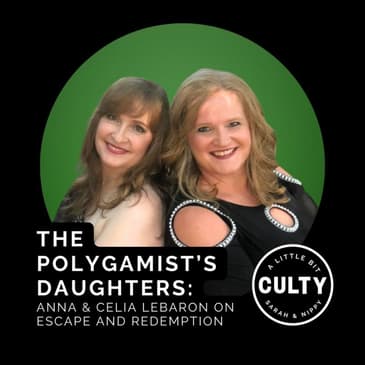
This week, we hear from Anna and her sister, Celia, about their stories — and their capacity to believe in rehabilitation and redemption. You might think that Anna would hold a lot of resentment against her father. (We sure would!) But that’s not the case. Anna and Celia speak candidly about their father — and compassionately of their siblings who committed murders at their father’s bidding.
Learn more and buy Anna’s book at: https://annalebaron.com/
Also… let it be known that:
The views and opinions expressed on A Little Bit Culty do not necessarily reflect the official policy or position of the podcast. Any content provided by our guests, bloggers, sponsors or authors are of their opinion and are not intended to malign any religion, group, club, organization, business individual, anyone or anything. Nobody’s mad at you, just don’t be a culty fuckwad.
Check out our lovely sponsors
Join ‘A Little Bit Culty’ on Patreon
Get poppin’ fresh ALBC Swag
Support the pod and smash this link
Cult awareness and recovery resources
Watch Sarah’s TEDTalk
CREDITS:
Executive Producers: Sarah Edmondson & Anthony Ames
Production Partner: Citizens of Sound
Producer: Will Retherford
Writer & Co-Creator: Jess Tardy
Theme Song: “Cultivated” by Jon Bryant co-written with Nygel Asselin
See Privacy Policy at https://art19.com/privacy and California Privacy Notice at https://art19.com/privacy#do-not-sell-my-info.
[00:00:00] This podcast is for informational purposes only and should not be considered legal, medical, or mental health advice. The views and opinions expressed do not necessarily reflect the official policy or position of the podcast and are not intended to malign any religion, group,
[00:00:12] club, organization, business, individual, anyone, or anything. I'm Sarah Edmondson. And I'm Anthony, air quotes Nippy, Ames. And this is A Little Bit Culty. A podcast about what happens when things that seem like a great thing at first
[00:00:35] go bad. Every week we chat with survivors, experts, and whistleblowers for real cult stories told directly by the people who live through them. Because we want you to learn a few things we've had to learn the hard way. Like if you think you're too smart to
[00:00:48] get sucked into something culty, you're already prime recruitment material. You might even already be in a cult. Oops. You better keep listening to find out. Welcome to Season 6 of A Little Bit Culty. Hello everybody and welcome back to another episode of A Little Bit Culty.
[00:01:21] This week we're exploring the story of Anna LeBaron and her escape from a polygamous cult run by her own father. And not just any polygamous cult, Nippy. Anna and Celia's father, Ervel LeBaron, earned the title of the Mormon Manson back in the day. That's quite a title.
[00:01:37] Yes, Mormon Manson, known for ordering members of his own cult to murder other members based on an old doctrine of the Mormon church. Crazy story, but this isn't the first time someone's claimed to have a direct line to God.
[00:01:49] Yep, sounds familiar, right? In this case, Ervel evoked blood atonement, an old and mostly abandoned principle from Mormonism where sinners must shed their blood to atone for their sins. Essentially, it meant that anyone who sinned enough in the eyes of Ervel required the death penalty. Good God.
[00:02:06] Yeah, I know. Through blood atonement, Ervel ordered the deaths of at least 25 people connected to the cult. Ordering murders. Does that sound like something God would tell you to do? Nope. Sounds a little more like an organized crime rather than as a religion.
[00:02:20] Not mutually exclusive. An offshoot of another Mormon polygamous sect, Ervel founded the Church of the Firstborn of the Lamb of God in the 1970s. That is a mouthful. The Church of the Firstborn of the Lamb of God. Wow. He used intimidation,
[00:02:35] coercion, and murder to keep his members in line. He even orchestrated the murder of his own brother when he didn't agree with his doctrine. That's pretty intense. Imagine there were some family dynamics that went along with this.
[00:02:47] Imagine reunions. No, we don't have to imagine. Today we are talking with Anna LeBaron, the daughter of Ervel, who fled the abusive cult when she was only 13. Her sister Celia joins us as well. Anna was just a kid and Cecilia wasn't much older.
[00:03:00] Nope. It was an incredibly brave choice. In 2017, Anna published the memoir The Polygamous Daughter detailing her experience in the cult and shedding light on its inner workings and leader, a man she barely knew. Earlier this year, Anna also appeared in Hulu's docuseries Daughters of the Cult, a five-episode
[00:03:18] deep dive into Ervel LeBaron and the polygamous cult. We really enjoyed watching this. I preferred reading the book first and then watching the documentary so I could see it all come to life, but it was also very wild to see that
[00:03:29] this is a gripping read and a gripping watch. These are real people. This is their lives. Right. And I'm curious to learn more about Anna's experience, in particular, you know, reasserting her identity despite the family name.
[00:03:41] Well put. A very infamous family name. Let's hear from Anna and Celia LeBaron. Anna and Celia, welcome to A Little Bit Culty. We both just loved your book, Anna, and I had lots of tears shed and just was so moved by your bravery and your passion for telling
[00:04:11] this story. And I, you know, I just first of all commend you for all, both of you, for all that you've gone through. It just, you know, it's one thing when you read a book
[00:04:18] and you feel all these things, and then we also watched the documentary and seeing pictures like this isn't just like a, this happened to real people. This is your lives. Like this
[00:04:25] is your, this is your childhood. And I had a lot of grief for you both and what you went through. And I really appreciate you telling your story and being willing to. It's very well done.
[00:04:34] Very well done. First of all, before we get into the book and why you wrote it and all that, how are you both doing now? How like you've, you've done this documentary, you've been through all these things. How are you right now?
[00:04:43] I'm doing really, really well. I have been through over a decade of professional therapy. And so that started in 1995 and I've had two main therapists, five years each. And in December, right before the documentary came out, I said, I should probably be under
[00:05:01] the care of a therapist when the documentary comes out. And so I found another one and we've been deep diving into some other stuff that bubbled up with the release of the documentary.
[00:05:13] And so it was a good choice to have a therapist and had some real important breakthroughs and things that I've been able to let go of that I'd held on to for 35 years. And so I'm in a really good place.
[00:05:26] But can we tell them what happened this past weekend? Oh, yes! I just graduated with a master's degree. Oh my God. That's awesome. In what field? It's Christian spiritual formation and leadership. And I'm going into a doctoral program in formation
[00:05:45] and soul care in the fall. I want to teach and write books at the intersection of religious trauma or spiritual abuse or deconstruction, all of that in one big hand right here. And
[00:05:58] the other one being the formation of our souls and our spirits so that people that want to embrace their spirituality can do so in a way that's life-giving and forms you in ways that enrich your life instead of the ways we were formed, which took life away.
[00:06:18] So interestingly enough, Ana is just a, she was able to come out of it young enough to where she still has the ability to have just faith. And she's just like a really generous and kind and open and loving Christian, not the judgmental, harsh kind of Christian. So
[00:06:35] I just love her and appreciate her so much, even though I come from a place of do not talk about religion with me. I am so over it, not interested. It's garbage, but her version
[00:06:47] of it is not. Hers is a very welcoming and open and very, very kind. And inclusive. All the things that you want to see in people that are expressing spirituality, all the things you want to see real love, real joy, real peace.
[00:07:05] So Ana, what was the motivation for you to write your story down? And experiencing this as a child is one thing, but what was the process of reviling, reexamining experience as an adult in hindsight? There is a whole stack of books, several feet high,
[00:07:23] written by the adults and the people and journalists and news people just talking about all the salacious things and the murders and the polygamy and who killed who, when, why, and where. And what was missing from that conversation was the perspective of a child born and raised
[00:07:45] in that environment and the ways it shaped and formed us. And so that was my motive. And that's the perspective from which I wrote the book. So in the documentary that just came out, you can see that, you know, we're talking about everything that happened. They're naming names
[00:08:01] and saying what happened in my book. I did my best to tell my story from my perspective. And so in the reading of the book, if I don't know something generally, my reader doesn't know
[00:08:14] because I wanted people to feel what it felt like to be me growing up like that. I thought you did a great job because how you revealed what you were in the periphery of with
[00:08:28] what you knew, I went through and didn't even realize how bad it was until you started revealing, oh my God, she was in this and this and this. Wait, your whole life you were on the run from
[00:08:39] the FBI? You didn't know it? It was amazing, amazing way you wrote it, the way you constructed it. For me, now that the book is out, my story from my perspective, and now that the documentary is
[00:08:52] out where it gives this overarching story of our lives, but also including the history and the things that happened that were swirling around us that we didn't know about. It reveals all of it.
[00:09:07] I feel like, oh, my story is outside of me now. And it has been so freeing for me to not feel that urge to tell it because for many, many years, I had the urge to write the
[00:09:26] story and to write the book, but I had no idea how to start. And I'm free of that. It's all out there. That's great. You know, and I can move on with my life, this really good life that I have in this
[00:09:39] really good space that I'm at. I'm now a grandma. I know that I don't look like a grandma. Definitely not. I have a five-year-old granddaughter and another one on the way. And I'm just in this really great
[00:09:52] space and life is good. And I'm on the other side of all of it. That's awesome. What a beacon of hope. And it's such a contrast to the image on the cover of your book where
[00:10:04] this sweet young child and you're being censored, and you're being censored your whole life. Yeah. It's what a great cover. I love it. There were things we weren't allowed to see, and there were things we weren't allowed to say.
[00:10:16] What a juxtaposition to you being able to speak so freely now. So take us back there, and then we'll come back to you, Celia. Before you were 13, as you were on the run, you didn't know this. What was life like amongst the fear and being transported to different
[00:10:31] cities and never knowing where your mother was, not knowing your father? Tell us a little bit about that world. We lived a life characterized by fear, chaos, and insecurity. Our mother was gone often. And
[00:10:48] our teenage sister would be left to care for six or eight kids at times for days, sometimes weeks. We moved so often that we didn't even take anything with us. We had a few belongings
[00:11:03] that we could put in a little cardboard box on the side of the living room wall, and that was our stuff. And we rarely had good furniture. Sometimes people would find it. I mean, we were so poverty-stricken, like abject poverty. We had to dumpster dive for food
[00:11:21] in the back of the grocery stores. We robbed the Goodwill boxes. Like, I was in the dumpster, in the Goodwill box, handing out stuff to people waiting outside. And that was the clothes that we
[00:11:34] wore. We had to just hope something fit. My first taste of a Yoplait yogurt was from the dumpster. And it was just a life that nobody should have to live. Childhood developmental trauma characterized everything about our lives. All the developmental milestones that you want for
[00:11:57] children to go through and experience, we didn't have adults that were paying enough attention to know or do any of that. Our siblings, we raised each other. And that's why, in spite of
[00:12:09] our differences, you know, in the way that we are and, you know, our beliefs and all of that today, Celia and I just are thick as thieves, but we're not thieves. But in spite of all the differences,
[00:12:27] our siblings, we just adore one another. And I think you could see that in the documentary, you know, the way we interacted, you know, because two of our sisters and our brother Hiram came along. He calls himself the non-daughter of the daughters of the cult. Right. So-
[00:12:46] That's so sweet. We raised each other and were attached to one another. And, you know, I didn't have a mom that I was attached to. You couldn't be attached to her because it wasn't possible. She had to leave too
[00:13:00] much and too often. And I didn't even know my dad. I met him for the first time when we lived in Mexico, when the Mexican police raided our home. That was brief. That was what, like a year? Is that right?
[00:13:13] No, not even that. Just a few weeks. So I mean, weeks of what? Spending time with my dad. Like I met him, spent time with him twice during that very brief period. And then he was poof, gone again. And then that was the end.
[00:13:27] How many of his kids did he have? Fifty-six. He has 51 biological children. My mother had five children from her previous marriage. So between our mother and our father, we have, there's 56 of us. Wow. But polygamous math is hard. It is.
[00:13:46] But if you count the stepchildren then that came in, you know, other wives from their previous relationships, there's 65 of us or so. Celia, would you tell us a little bit? And by the way, Ana, I really appreciate how you,
[00:13:58] in your story, you really focus on your story. You didn't tell other people's stories. And you were very mindful. Very mindful of that. And I didn't find out till later that your mom was married, and that man
[00:14:08] brought her into the fold. And that's when she met Irvel and fell in love. Is that right, Celia? That is right. So our mother was married. She had five children who was living with her husband and children in Arizona. And a preacher came into town. And her husband,
[00:14:27] her then husband, went and listened to this preacher. And he was teaching that the Mormon church, the Church of Jesus Christ of Latter-day Saints, the modern day, what some people think of as the Mormon church, had apostatized from the truth. They weren't living the fullness of
[00:14:44] the gospel that Joseph Smith had brought to the earth. So Joseph Smith was the founder of that church. And they had left, set aside so many of the doctrines and teachings and beliefs and were
[00:14:55] not living the fullness of the gospel anymore. So they had apostatized from the truth. And this preacher had the real truth. And he had an organization formed, a church formed in Mexico, and was gathering people to this true church. And my mother's husband at the time converted.
[00:15:17] He could see the truth of it because this preacher was very, very knowledgeable and could show how the teachings were divergent from the original teachings that were brought. And so he got converted and he's like, well, I want to go down to your colony in Mexico and join
[00:15:35] the righteous. But you have to get my wife and she has to come with me. My wife and children need to come with me. So this preacher said, OK, bring her and let me talk to her. Let me convert her.
[00:15:47] And well, his name was Nephi, my mother's husband at the time. So he came back and he's like, Anna Mae, you need to come and listen to this preacher. And she utterly refused. She would not do it
[00:16:00] because she's like, no, I am Mormon and you cannot take me out of this true church. And so her husband went back to this preacher and said, listen, my wife will not come. And so
[00:16:13] you need to come to our home and convert her there. So this preacher did. He came, he came to the house and the very first meeting that they had, my mother was smitten with him and utterly
[00:16:29] believed what he was saying. He converted her hook, line and sinker. And this preacher, I know the short version, this preacher was our father. Right. This is Herbal. Anyway, yes, she ended up converting and then they moved to the Mexican colony where it was
[00:16:47] super impoverished. And then when Nephi, her then husband, went back to the US to finalize things in Arizona, when he returned to the colony, my mother said, you can't kiss me. I am no longer your wife.
[00:17:04] I am married to Herbal. Spiritually married. Right. How did Nephi handle that? She never legally divorced Nephi till the day she died. She was legally still married to him, even though she never had anything more to do with him romantically. It was all Herbal at that point.
[00:17:21] How do you go from, I don't want anything to do with this, to I'm peacing out on you? Like what did Herbal do in that amount of time? And how much time was
[00:17:31] that? It was very quick. Like the first meeting she said, she said to me on her deathbed that she was in love with him from the moment she met him, the first meeting. But he was tall, handsome,
[00:17:43] highly intelligent, and I guess had charisma. I don't see it, but I guess. But tell how Nephi handled it. Yes. What did Nephi do? He was fully converted. So when he took, I mean, I'm sure he had his feelings about it,
[00:18:02] but he ended up getting two other wives. He stayed in the organization. And my dad gave him two wives in exchange for his one wife. Two for one. Two for one deal.
[00:18:14] I don't know if it was like a trade that way, but he did end up with two wives. That's wild. Anna, like when Herbal was proselytizing and just so you know, we've done a couple episodes on the Mormon Church and different offshoots, but we've not
[00:18:30] done this particular one. What was the main fundamental difference in the belief systems that people are saying no to in the Mormon Church and yes to in this new belief? Well, I'm going to let Celia answer that question because she's the one who
[00:18:45] was very, very converted and believed it. And I did not go down that path. Got it. So she was only 13 when she left. I served a mission for my cult. So the big differences were polygamy obviously was one that the early doctrines were very,
[00:19:01] very clear. The early prophets were very clear that this had to be and continue to be part of the religion. So when the LDS Church went away from that, that's clearly documented they can't. So they were in apostasy. But also another thing that
[00:19:22] our father carried out that used to be carried out in the early days of the Latter-day Saint Church was blood atonements, meaning if there are certain sins that are so egregious,
[00:19:34] they cannot be covered by the blood of Christ and the individual must atone for that sin with their own blood and meaning they have to die. And so our father was big on carrying out
[00:19:48] blood atonements on people, especially people that left the truth because that's the unpardonable sin is knowing the truth and then turning your back on it. So he carried out a lot of blood atonements.
[00:19:59] Well, he didn't carry out any. He sent his people and his teenage children and teenage wives to carry out blood atonements for him. And that's why he's known as the Mormon Manson because, you know,
[00:20:12] with a reference to Charles Manson. Pete Was that something that he kind of evolved into? Or was that what he started with? Kirsten So, the polygamy was for sure, blood atonement was what he picked up from the doctrines that Brigham Young was teaching. So
[00:20:32] I want to say something, though. It was the combination of Ervil and Dan Jordan. It was that combination that started the blood atoning. They were really into death penalty and the blood atonement. So and blood atonement, like the modern day church, you know, distances themselves
[00:20:55] and said they weren't really practicing it. But that's not really the case. If you go back and you study the very violent history of the early days when Brigham Young was in charge after Joseph
[00:21:08] Smith was killed. So, you know, the Mountain Meadows Massacre and John D. Lee, just go Google those and start there if you're questioning whether this was real or not. Well, also, all the teachings and the preachings are documented. The doctrine, I mean, the Journal
[00:21:28] of Discourses has all of that in there. What they were teaching about, it was very, very much a part of their religion was blood atoning. And it's not something that's taught today in the modern day
[00:21:39] Church of Jesus Christ of Latter-day Saints. And so people that are faithful members of that church will think, no, we never taught that. That was never taught to me. And that's because it isn't taught today because it's no longer socially acceptable to do that. Just like the racism
[00:21:56] that was taught is no longer socially acceptable. Jodie It got disavowed. Debbie Polygamy became socially unacceptable and they had to disavow that too. And so they've been, you know, moving forward as much as they can as a church to become lighter and more accepted
[00:22:14] by society. But this is still what it was founded on. Pete Right. To keep the business going, so to speak. Jodie And our family of origin history, through our father's side, the polygamy goes back four generations to a man named Benjamin F. Johnson,
[00:22:31] who was the spiritually adopted son of Joseph Smith. And so the generational part of it on our father's side, we're first generation monogamists. Jodi Wow. Pete This podcast wouldn't happen without our amazing, supportive, generous patrons. Are you with us? Come find us over on Patreon at patreon.com
[00:22:55] slash a little bit culty for bonus episodes, exclusive content and the occasional zoom with our fan favorites from our past episodes. It's a lot of fun over there, people. Jodie Break time's over, people. Let's get back to this episode of A Little Bit Culty.
[00:23:16] It's a good one. Just curious, did either of you read Under the Banner of Heaven? Debbie Yes, absolutely. Jodie That book is what started my path to healing. Debbie What? How? That's a very non-healing book.
[00:23:33] Jodie I know. But what it did for me, because there's a whole chapter in there about my dad. So when the book first came out, I went to the bookstore, read the chapter about our dad,
[00:23:42] put it away and that was the end. But I had put my whole family of origin history behind me, like put it in a box, put it behind me where I can't see it and moved on with my life because
[00:23:52] that's what I needed to do to survive. But later, a few years after that, somebody I know, Bob Hamp, had read the book. So like, oh, this is, I know somebody. And then he said,
[00:24:04] Have you read it? And I said, Well, I read the one chapter about my dad. Then I went and read the whole thing. He gave me the book. So I was like, Oh, man,
[00:24:11] I might as well read the whole thing. And what that book did for me psychologically, I wasn't ready for because the way John Krakauer, right? That's his name. Yeah, the way he can spin a yarn and tell a story and piece together things is incredible.
[00:24:29] He's a great writer. And so I read the whole history starting from the beginning all the way to present day. And psychologically, that brought all of my history that I had tucked away behind me in
[00:24:44] a little box and said, you know, no more. It brought it full front to the front, the box was opened, you can't unsee it. And it was psychologically jarring to me to recognize that
[00:25:00] this is my history, and it's caught up with me. I mean, I was already in therapy at that point. And that was like 2005 or something when I read that book, but I had started therapy in 1995.
[00:25:14] So again, it was just making the connection with my family of origin story and really having a reckoning with it. What connections did you make from that? Just that the polygamy and the violence and the blood atonement and all of that,
[00:25:33] that it's not something I could really put behind me and ignore anymore. Right. And it caused me to have to just really wrestle with that internally. And again, that was like 2005. So that's like 20 years ago.
[00:25:49] And, you know, I feel like telling my story and the documentary and all that, just like I said earlier, it's outside of me now. And I don't have to try to disconnect from that part of me that lived that.
[00:26:02] I have integrated that younger part of me and the younger parts of me. And people that have done internal family systems therapy will recognize the language of parts that I'm using. And I have integrated those parts of me back into my heart, into my being.
[00:26:21] And I don't have to disconnect from those parts of me anymore in order to carry on with life and survival mode. I am in thrival mode now. Right. You know, I was diagnosed with complex post-traumatic stress disorder, of course. Of course.
[00:26:41] It was a shock to me. But you know, people that understand those things, it's not shocking. And what I've learned in the past five years or so is that there's a thing called post-traumatic growth. And I am here for it.
[00:26:59] Like, yes, you do not have to stay suppressed and harmed by the experiences of the past. Post-traumatic growth is where I'm focusing my attention now. What was your turning point to say, no, I'm not going to do this?
[00:27:21] Well, it was the $50 that Dan Jordan didn't pay us after we worked all summer. That's true. I talk about it in the book. I don't need to go into that whole story.
[00:27:32] But that bitterness that I felt when that event occurred and the injustice of how we were treated compared to how his children were treated, which was so evident. But again, you weren't allowed to say it. You weren't allowed to complain about it.
[00:27:53] So when we moved to Houston and we were under the care of Mark and Lillian, who were the, you know, leading the Houston branch of our cult, he was more benevolent. He paid us for our work, not a lot, $5 a week.
[00:28:09] But when you've never had anything and then you're given $5 a week and I'm a saver, so I could save up for six weeks or so and then go into the mall and buy a pair of
[00:28:20] Gloria Vanderbilt jeans with the little white swans stitched on the pocket, you know, and then they fit. We weren't dumpster diving for food and clothes anymore. And then I could save up again and buy myself a little pair of Nike two-tone brown tennis shoes.
[00:28:34] And I could take my $2 and go to the little college, the beauty school and get a Farrah Fawcett wings, you know, haircut. And, you know, I was hot stuff at 12 and 13. I live in my very best life. I love how you tell me to do the short version.
[00:28:55] Still sisters. So it was going, it was mom saying we're going back to Denver where it was super abusive. And that's my story. She's telling my story. And the audience doesn't know that it's her talking, not me. I'm just trying to shorten it a bit.
[00:29:13] So when my mom decided to go back to Denver after my dad died in prison, I was not, I was like, not just no hail. No. I love that part of the book. Sometimes I have swears, but also that was really the, the internal thing was no way,
[00:29:32] no way. And I ran away from home. I didn't know I was running away from a cult. I didn't even know I was in a cult. I just didn't want to go back to Denver and to Dan Jordan and to the severe abuse that we experienced there.
[00:29:45] I was so glad you got away when you did. And it is hard to encompass so many things into an hour. It's true. And, you know, there's a six part docu-series, your book, which we listened to on Audible.
[00:29:56] Like all of this tells a much fuller, richer story, but in terms of the key moments, you know, you, you have these, this, and there is true. There's nothing like injustice to really plant a seed of like, even if it's internal. It plants the seed of bitterness. Yes.
[00:30:12] You were not okay with it. And then you had this unthinkableness Mark and Lillian took you in, and I was so happy that you had this alternate life that you could start to flourish in.
[00:30:20] When did you figure out, because you said you didn't know it was a cult. When did that recognition occur? I found a book living with Mark and Lillian, you know, a couple of years into it called The Prophet of Blood. And it's written about our family.
[00:30:34] It was hidden and tucked away in a cupboard or a drawer or something. And I found it and hid it and ran upstairs with it and spent about 24 hours. Like reading every word of it completely shocked that what all these people I care about that
[00:30:52] just disappeared are dead. And people that I cared about were the ones doing the killing and all this stuff about my family. And all these people were tried and some acquitted, and my dad was convicted and sentenced to life. Like this was shocking.
[00:31:09] I'm a teenager eye opening, like all of a sudden everything about my childhood made sense. Whereas before nothing made sense. I just had to finish reading the book, swallow it all down and go and then go and put the
[00:31:25] book back where I found it so that I wouldn't be discovered because I didn't know how to process any of it. So as a teenager, I'm on my own processing this information and the people I lived with knew all of this stuff. They were part of it.
[00:31:41] It was they were in the book. But they were out by that time. Yeah. So they just couldn't tell people they were out because they didn't want to get murdered. Right. Because saying you were out put a target on your back. Right.
[00:31:52] So it was at that point that I realized, oh no, no. When I realized I was in a cult was when I read Kingdom of the Cults and this book from the 80s, just like, oh, there's the Mormon church and there's Herbal Baron.
[00:32:09] And like, oh my gosh, I was in a cult. And your dad was the leader. Here's a funny story about that. When I was in Mexico with Ramona by living in the little beach house when I was nine
[00:32:21] and turned 10 and she made me pancakes for my birthday, I was reading a newsweek, I think, article, US News and World Report, something about the Jonestown massacre and was thinking to myself, oh, those poor people in a cult. We've had those moments. Yes, we've had those moments.
[00:32:42] And I'm wondering, like, we've obviously covered not covered all the bits of your childhood, but when you were nine, you were sent away to live on your own away from your mom because Herbal had this revelation that his kids were in danger.
[00:32:55] And there was this time where you were, you know, away from your mom and you were meeting potential suitors that you didn't understand. Did reading the book fill in the gaps of what was happening for you like that you were actually being groomed? Yes.
[00:33:06] That's when I realized that our dad was using his daughters as pawns to gain favor with the men to go and do his bidding. Celia, what was going on for you during this time? And how did you snap out of it? What was your wake up?
[00:33:22] So I wouldn't say I had a real wake up, but I there was so much abuse. And like we I was an adult when I finally got out. I was 19 years old.
[00:33:33] You would call me an adult, but I was more like a 14 year old because we were so limited and so controlled. But it was my need and my desire to be educated. So we sometimes were in school. Sometimes we weren't in school.
[00:33:49] We missed a lot of school, but I always loved learning. So I always begged to go to school wherever we were. I did some of my schooling in Mexico. Some most of it was in the US when I was in school.
[00:34:01] But kids were often taken out to work full time in the warehouse, like literally 12 hour days, six days a week. Some of my siblings didn't go past second or third grade.
[00:34:10] But I was really lucky in that I would always beg to go to school and I was usually allowed at some point to go. And I was a really good student. I was in honor society.
[00:34:21] And so when I finished my junior year and I served this mission in Utah to convert LDS people to the true church, when I got back from that, I wanted to finish my senior year and I was not allowed to.
[00:34:34] And I'm doing the short version because I had received a terrible beating. And again, I'm 19 years old. I don't have money. I don't have a bank account. I don't own a car. And all I wanted was just to finish my high school degree.
[00:34:51] I had to get my high school diploma and they wouldn't let me. Refused. They wouldn't let me. And I just cried and cried to my mom and just said, please talk them into it. Just one more year.
[00:35:02] Let me just get my high school diploma that I worked so hard for. And finally, she under her breath said, I guess you better go because I said I can go to Houston and with other members who had other excommunicated members and apostates
[00:35:22] and go and finish my diploma, which is what I wanted. And they wouldn't permit it. So that was my point of I'm out of here. But I still believed everything. I thought I was choosing hell.
[00:35:35] I thought I was being very selfish and choosing hell over the kingdom of God. And they had to ostracize me. I didn't speak to my mom or any of my siblings that were in the cult for over three years. But that was my final breaking point.
[00:35:50] Ana got out long before I did, several years before I did. She loved her and she was just a child. So she wasn't considered like an apostate because she really was never converted. Never really converted. So there was hope for her. Absolutely.
[00:36:06] And I found out later that mom would call her every year on her birthday. That was my only communication with my mom was on my birthday. She would call me in the evening.
[00:36:17] And so I never wanted to be anywhere else besides right by the phone because I knew that my mom was going to call me at some point. And we didn't we didn't have any idea.
[00:36:25] And then the other thing is in November, I would bake cookies and put them in these little tins and send them to the house. And sometimes they got them, sometimes they didn't. But I wanted that connection, but it was just absolutely forbidden.
[00:36:40] Correct me if I'm wrong, being labeled an apostate, you felt like you might be in danger. Is that correct? I didn't. At that point when I ran away, I didn't even know there was a danger.
[00:36:51] So when Irvel was alive and in charge, oh yeah, if you left, you were probably going to end up in a grave in a shallow grave somewhere. Once our father died in prison, it became more dangerous in many ways because it fractured
[00:37:12] the cult and different people were saying, oh, I'm the next one in charge. Oh, I'm the prophet now. And it fractured into multiple pieces and they were all killing each other. And some of these fractures were more violent than others.
[00:37:28] And I just happened to be in one where they weren't actively carrying out blood atonements. There were other groups and you know about it as in the four o'clock murders, that division, they were definitely still feeling like they had to carry out the orders of my father to
[00:37:46] blood atone under Dan and Mark. They had kind of said we're stepping back from that practice. So when I left, I didn't think they were going to come after me and kill me. But Dan was still abusive. Oh, no. He was a very, very violent man.
[00:38:01] He was the one that helped organize blood atonements and things like that. I just realized we haven't explained who Dan Jordan is and how did he die? So Dan Jordan was our father's second in command. So he was right there with my father organizing everything, running the organization.
[00:38:20] And he was married to eight women. They were all teenagers when he married them. All of them but one were related to us, either a half sister, a stepsister or cousin. And he took over.
[00:38:34] He was one of those that said I'm the next prophet after our father died. But also talk about that he was the one who carried out the first blood atonement. Yeah, he was the one that killed our uncle Joel, which was the first murder by.
[00:38:50] And according to which investigator, there was twenty eight, twenty seven, twenty seven official like deaths that were committed and carried out by people that my father ordered. And some people count others that committed suicide,
[00:39:08] those and then the count goes up to like thirty five people that my dad was. And Dan Jordan were responsible for those. The cult is responsible for. And let me just say to six of those people that were murdered by the cult were Irvall's biological children. That's unbelievable.
[00:39:26] Unbelievable. How did you feel when he died? Sad. I did not have an emotional attachment. I was 12 years old, so it was like you're watching other people be sad. So you act sad, you know, but I didn't have that emotional attachment. I was devastated.
[00:39:44] I was 15 when Irvall died in prison and I did have a little bit more of a connection. I was a little bit older and I had memories of him and it was more in mourning for the
[00:39:55] things that I had hoped for someday to have, not because I had a really good connection with him. Right. But there was just that was never going to happen. So I grieved wholeheartedly for it.
[00:40:06] But I was still in the organ in the cult like I still thought he was a prophet and he was a great man and I was still super, super brainwashed. So it was a lot of us experienced a lot of grief on his passing. What about with Dan?
[00:40:19] When Dan passed, I knew too much and I got very scared. The worst that I had was now we're very scared. I was not sad for Dan passing because he was literally when I ran away from the cult for 10 years, I had nightmares about him.
[00:40:35] So he was not a good soul in my story. No, not at all. Quote Hiram in the documentary, he was a despicable human being. And what he did to the LeBaron children was unconscionable the way he treated us.
[00:40:49] You have to understand that he was married to a lot of my family. Like the girls that he married were all related to me. Two of our sisters are married to him. Two of our half, three of our half sisters. And a step sister. And cousins. Yeah.
[00:41:05] You feel for them and for the children that didn't realize how vile he was. And so conflicting emotions in our family story are just, there's no other way to get around it. You're going to have conflicting emotions. Right. It's not black and white.
[00:41:21] And do you think Ervil was aware of how Dan was treating you guys? No. I don't think he was. I don't think Ervil was in his right mind enough to be aware of anything except his own stuff.
[00:41:33] He was always in this celestial realm, thinking about higher things and more important things. Not grounded things and not about his children. His children and our needs and none of those things. Has he ever been diagnosed? That would involve going to a psychologist or a psychiatrist.
[00:41:52] And he was the prophet of God on Earth. He doesn't need that. So I am certain, and I am not a therapist, but I'm certain he was bipolar. I know he was narcissistic. He had delusions of grandeur. In my view, he had layers and layers of mental illness.
[00:42:11] I don't think it was just one thing. But he was never diagnosed, so I cannot diagnose him. But absolutely, he was undeniably mentally ill. For more background on what brought us here, check out my page-turning memoir.
[00:42:27] It's called Scarred, the true story of how I escaped NXIVM, the cult that bound my life. It's available on Amazon, Audible, and at most bookstores. And if you want to see that story in streaming form, you can watch both seasons of The Vow on HBO.
[00:42:45] You've heard from our sponsors. Now let's get back to a little bit culty, shall we? I've said this in other episodes as well, just how astounding it is just to hear somebody say, well, I'm the prophet, and I spoke to God, so blah, blah, blah, blah.
[00:43:00] And that people wholeheartedly believe that. That's the part that's hardest for me. All the other stuff, the indoctrination, the fear, I can imagine. But for me to hear somebody say, well, I spoke also because I don't have the same relationship with God.
[00:43:15] It's just not how I was raised. So to me, that's just, I can't quite wrap my head around it, especially with all these people saying, no, I'm the true prophet. That's the playbook, right? I'm the true prophet. I spoke to God.
[00:43:26] I just pictured them on the phone like, OK, he's got a phone with God. And here's the deal. We'll be doing this all wrong. I'm going to marry all of you, even though you're 12. OK? So that's what we're doing.
[00:43:35] Was there times when you were in Celia that you ever doubted that? Or are you just like, oh, no, he spoke to God because he's the prophet? When you're brainwashed from birth, and there's a lot of fear in doubting.
[00:43:46] Like you must serve, and you want to be celestial, and you want to be pure, and you want to be high-minded. So I remember having little moments, little glimmers of, oh, well, what if? And then looking around and saying, we're the only ones with the truth?
[00:44:04] Like our little tiny group amongst all these masses of people. And I had moments of it. But I would squelch them. Like God hears all your thoughts. And you don't want God to—you want to be in favor with God. So you put those aside.
[00:44:22] What a powerful control mechanism. Mind control. It's very real. Yes. And when you can take little tiny babies who are dependent on you and start brainwashing them from their very birth, it gives you a lot of power.
[00:44:39] Like people want to judge my siblings for the horrors that they did. I'm just saying, Anna and I are good people. And we are just lucky that we didn't do anything horrible. Because, I mean, especially I can speak for myself. I was fully brainwashed.
[00:44:56] And I couldn't—I don't know what I would have done if they'd have sent me. And so I have a lot of compassion for our siblings that carried out these blood atonements and stuff. They never would have done that had they had decent parents.
[00:45:13] They never would have done it on their own. It was not in their hearts to do it. And that they were sent and forced into this out of just pure fear and brainwashing.
[00:45:23] I think people need to have a lot more compassion for them and understand this is not what they would have ever chosen. You need the compassion in order to understand it. Otherwise, if you don't have that compassion, you don't have the lens to understand it
[00:45:36] and prevent it from happening again. Which is, by the way, one of the huge reasons we do this podcast. And I think that our audience will have that compassion. The other half of that equation is there are so many victims. Absolutely.
[00:45:53] And so we never want to just overlook the fact that there are people whose lives were turned upside down by the crimes. Worse than upside down. Yeah, I mean, just devastated. Devastated. Death and destruction and just countless victims out there.
[00:46:13] And we feel like those have to be acknowledged as well. That the pain and suffering that was caused by our siblings, that you can't undo that and unsee it. It's a fact. And we have a lot of compassion for that as well. Thank you for saying that.
[00:46:32] That's absolutely true. But in my mind, the true responsible parties are in the grave. And that's Irva LeBaron and Anne Jordan. They're the ones that forced it upon people and perpetrated it. So, Anna, has writing The Polygamous Daughter changed your life or changed your experience with your family?
[00:46:54] Well, we've learned that you connected with a cousin while publishing this book. Has there been any other developments? Yeah. I mean, writing the book, there are so many people in my family who've supported me 100% in that endeavor.
[00:47:07] And then there are other people who have been very resistant to the idea that I'm going to bring up the past again and speak my truth, my experience, and that did not appreciate that. And it's for obvious reasons. It brings up the past for them too.
[00:47:26] And putting it back into the forefront, just like that book, John Krakauer's book, brought it to the forefront for me. And I wasn't quite ready for that at that point in my life. Me doing this at this point in my life may not be good timing for them.
[00:47:40] And so I do have a lot of compassion for them. And so there have been people in my family who have distanced themselves from me and wanted absolutely nothing to do with the documentary. I'm not going to touch that with a 10 foot pole. And I understand that.
[00:47:58] I understand the distancing and respect it. It's healthy for them psychologically to maintain their own life and how they are and how they want it to be. And I respect that 100%. The other side of that is that many people that were terrified of Ervil and all of his
[00:48:18] children have come out of the woodwork to now have relationships with us. I mean, Facebook friend us, message us, talk to us and are no longer afraid. Yeah, I've had many, many, too many to count experiences where somebody private messages me or sends me an email.
[00:48:40] And multiple times I've been asked, so I don't need to be afraid anymore. Our family doesn't need to be afraid anymore because in the media, Ervil LeBaron's children have been depicted as bloodthirsty killers. And that narrative has continued in spite of the fact that it's been since 1992 over
[00:49:02] 30 years have passed. The cult ended. We grew up. We got to make up our own minds and our minds are not following Ervil and his terrible teachings. Yeah. Does anyone still follow? No. The last, very last thing in the documentary you see is on the screen.
[00:49:19] It says, you know, all of us have disavowed Ervil LeBaron. All of his children have disavowed Ervil LeBaron's doctrines. That's great. And that was the message. That was the reason why we wanted to do the documentary was this narrative is still out there. Right. A podcast came out.
[00:49:37] I'm not going to name it where they got the story pretty much right. But at the very end, in the final minutes, it's like, oh, one of Ervil's children might come up and we're like, oh my God, please. Yeah. Please stop that narrative.
[00:49:54] And so this was our attempt to put a halt to that narrative. Good. Were you happy with your experience with the documentary? I would say we went through the first three episodes and we're like, okay, yeah, they got our message right. We were all pleased.
[00:50:10] We had a great director, a great videographer, like very, very talented people. We got really, really lucky. We were concerned with our siblings that we felt like might've been left vilified. And that was never our intent.
[00:50:25] We wanted everybody to understand that this was not their choosing to do any of the things that they did, that it was forced upon them, et cetera. And I don't know if they put a fine point on that, but they didn't have 18 episodes.
[00:50:37] So they couldn't tell us the stories in detail. We are here to say that now. Yeah. So there was one line that they left in that we were absolutely livid about. And then there was one line that they cut that I'm still absolutely livid about. What was it?
[00:50:53] Now, I don't know. Do it. It's saying bad things about me. We're not saying bad things about them. We are overall very pleased. We loved it. We're so happy and pleased with it. You can have both feelings. You can be pleased and wish they had included the line.
[00:51:06] But the line that they cut that in the ways that we were talking about our siblings and trying to help people understand how you can be so indoctrinated and brainwashed that you do these things.
[00:51:20] I said at one point, we can't speak for our siblings, meaning the ones who had done these things. I can't speak for them, but I sure can speak up for them. That is a good line. And I think we'll keep it here in this podcast. Thank you.
[00:51:36] And the one that we're upset about is one prosecutor who I'm sure got traumatized by my family and probably threatened at some point. So I don't want to make light of that.
[00:51:47] I think he had his reasons, but he was the one who said, oh, but the book of the covenant is out there. And one of our goals, posterity might rise up and start carrying out blood atonements again. That really upset us that that was left in.
[00:52:01] But we're here to say that's not what's happening. The director said there might be people who say things that we disagree with, but she was going to give us the last word. And she kept her word about that. And for that, we are grateful. Yes. What a gift.
[00:52:17] So you did EMDR, you did family integrated systems. Tell us about some of that. So I didn't know what type of therapy my first therapist was using. It took me like five years of her to just begin to feel emotions because I had shut
[00:52:32] down my emotional, the emotional aspect of myself. Renee Brown says you can't selectively numb your emotions. If you numb the negative ones, you're numbing the positive ones too. And so I was basically flatlined emotionally because I didn't have access to them.
[00:52:47] And it took me five years with working with her. She said, it's like peeling back the layers of an onion. Finally, the last during the fifth year is when I could finally cry and sob my eyes out at the sad parts of my life.
[00:53:01] And the things that I should have experienced and missed out on. And so that was the first five years. The second five years was working with a trauma specialist. And I don't know what therapy things she was doing at the beginning, but towards the end,
[00:53:19] we did internal family systems therapy coupled with EMDR. And those two things combined were such an incredibly useful, helpful in my therapeutic journey. I'm currently doing cognitive processing therapy with my current therapist. And this is also very, very helpful for where I'm at.
[00:53:46] And so what I tell people is when you start with a therapist or even just having coffee with a friend that you trust with a safe person, there's a book called safe people. So I'm not going to go into that.
[00:54:00] But with a safe person, getting your story from the inside to the outside is the most important piece of it to begin. Whether it's a therapist, a coach, a counselor, a friend, a mentor, just take that step.
[00:54:18] If saying it to someone is too hard, writing it in a journal. Just the way of externalizing the story. And when you tell it to safe people, you can name names and say what happened. You own your story.
[00:54:34] As Annie Lamont says, if people wanted you to talk kindly about them, they should have behaved better. Celia, what's your journey been? So interestingly enough, I went through a divorce back in the 2000s and I did marriage counseling, but I never did therapy for myself.
[00:54:55] It wasn't until the documentary was about to come out that I started having those nightmares again that I, you know, that I had when I first left the cult. I started having those nightmares again.
[00:55:06] And I thought, oh, because it was a little frightening to be so vulnerable and go tell your story. And how are people going to judge you? That was really frightening for me. So I put myself in therapy for that. And I'm just starting.
[00:55:18] Like, I'm just starting, which is interesting, though, because I have three children and my oldest daughter is a therapist. Anyway, so I'm very proud to have a daughter who, because I always loved education. And so one of my children also did.
[00:55:35] And she went and got her bachelor's degree and then got her master's and she's a therapist. And she's always said, hey, mom, I'm surprised and amazed at how well you're doing, considering where you came from. But therapy could probably help you, too.
[00:55:47] So I am working with a therapist and we're just now kind of to the point where I think there's enough trust for her to actually start using therapies on me. I'm a little bit of a hard nut to crack.
[00:56:00] Both of my parents are in this field, so I'm all for it. And, you know, I also have to say that not everyone's going to embrace that journey full on. And sometimes it's reading books.
[00:56:08] And here's another book I want to recommend to both of you, which I talk about all the time on the podcast called Take Back Your Life. She is what I would call a self-help junkie. I want to read memoirs and historical fiction.
[00:56:21] Well, that's probably your version of self-help. OK, listen, I'll send you this one and I'll send and Celia, I'll send you my memoir. We're a book club now. I belong to like three book clubs.
[00:56:34] I love books, but not this self-help one she tries to get me to read. OK, I won't endorse any of those. I've stopped recruiting for both of those books. But at the beginning, we did mention that your faith journeys are very different.
[00:56:46] And I did want to share something with you. I know you don't know much about my story, but I don't come from a religious background. My mom was culturally Jewish. My dad was like Anglican. We celebrated Christmas. We lit the menorah.
[00:56:56] I never really went to church or synagogue. My relationship with, quote, God was just that—or Jesus. Like those were not really things. Later, as it became more spiritual before NXIVM, I would say like the universe or source, which I think are just other names.
[00:57:10] But I have to say, Ana, in your book—let me try to say this without getting emotional—the way you described how you—for you found Jesus or found God after leaving was the first time
[00:57:20] that I as a secular person had a sense of what that would feel like. You used the word Jesus or God. And for me, it was like, oh, I—for the first time in my life, also talking to all these
[00:57:33] people, many ex-religious cult survivors, I was like, that's what the good part of what these things offer in terms of that wholeness and that joy and that connection and that love that I think so many people are looking for.
[00:57:48] And when you say things like—I don't know the religious word—when you basically proclaim that, right? Like that you found that. I guess I'm just saying like I think that's a real gift because for someone who doesn't
[00:57:57] have that in their lives but wants to understand it and also respect it— Right. For people that have it in a healthy way versus I think there's a lot of like, oh, they're religious, you know? Like you're either religious or you're not religious. And I don't know.
[00:58:10] I just think that's a really beautiful gift for someone who wants to understand it, experience it, relate to it in a healthy way. Yeah. I mean, we spoke about it beforehand. I thought it was like they ensure that that's the only place you can experience that, though.
[00:58:23] So it's a very kind of like— As long as you can experience it outside of just like that church. Like you can experience it always. I talked about my book. My first book was Escaping Mormon Fundamentalism.
[00:58:37] The church that I went to where I found Jesus, if you want to say that, or was saved. That's the religious language for those experiences that many people know. That church ended up being a very, very dogmatic and very oppressive and fundamentalist Christian experience for me.
[00:58:59] And so in the deconstruction world, I did have to deconstruct everything I learned in my family of origin and in my spiritual family of origin, if you want to say it like that. And so I say that deconstruction is such a healthy thing.
[00:59:19] Lie to match, burn it all to the ground. The good things that are solid will remain. And for me, that was my relationship with God, Jesus, whatever you want to call it. And people call it different names. And it's okay to use different language for those experiences.
[00:59:41] And so for me, let's burn it all to the ground and see what remains. And let me—I'll sit next to you and light the match, you know? And the good stuff will always remain. Love will remain. Joy remains.
[00:59:58] I'm still in this cognitive processing therapy, finding an internal sense of well-being. And that is what I'm working on with my therapist right now. And I can find that in brief moments. But my actual experience when I'm not fully present is anxiety.
[01:00:22] And so I'm in the process of undoing the harm that I experienced. And so it's a lifelong journey for me. And I'm in a good place, though, to be able to do that.
[01:00:32] And I just feel very blessed to be in a place now that I feel safe where I live and where I'm at that this kind of work is possible because it wasn't for a very, very long time. Right. Celia, you seem very supportive of your sister's journey,
[01:00:51] even though you're in very completely different places. Which is so great because you're not in a cult anymore and you can have different opinions. And no one's controlling it. So yes, I landed in Christianity. And she's very comfortable with that.
[01:01:04] She's a very open, loving, kind, and inclusive Christian, which I appreciate and I support. I would call myself not religious. I am not open to dogmas and one organization being the one true anything. I don't believe in scriptures. I don't think they're the word of God.
[01:01:26] I don't have any of those beliefs, but I still have an idea that there's a God. I just don't think anybody knows this God, like a leader or whatever it is. I don't know what you want to call it, universal.
[01:01:38] You know, but I just believe my religion, I boil it down to, I believe we need to treat God's children with kindness and integrity. And anybody that doesn't do that, like their religion for me is not acceptable. What was your quote from the documentary?
[01:01:58] Oh yes, my favorite quote in the documentary that was left in is any religion that requires you to abandon your children, please question your God. Because so many religions are in a box. And if you don't fit in a certain little box, then you're out, you're othered.
[01:02:18] And oftentimes you have to set aside your children and follow your religion because they are not fitting quite inside that box. If your religion expects that from you, then that's toxic, unhealthy, and not of God. Such good advice. So I agree with her. Like we do fundamentally agree.
[01:02:40] Love, kindness, compassion, goodness, all those things. I love that. And you know, I cannot recommend your book, The Polygamous Daughter and the doc as deep dives for anyone who wants to know more. Is there anything that we missed? Any little sound bites or messages for the listeners
[01:02:59] that you think are important for people to know? I mean, I love to say that it doesn't matter. You're a family of origin story. It doesn't matter what you've experienced or been through or had happened to you, what anyone has done to you.
[01:03:14] Others don't get to decide for you how you get to enjoy your life and live your life. And when you embrace that, and if you've had any hard things happen, please tell a friend or go see a therapist, make an appointment if you can.
[01:03:30] And if that's accessible to you, you get to decide the trajectory of your life and the direction your life is going to take from this moment onward. And in my life, I don't want to give those abusers that we were raised under,
[01:03:46] I don't want them to have power over my life now. I get to choose joy. I get to choose goodness. I don't need to choose bitterness. And you know, I don't want to stay in a place of martyrdom or suffering.
[01:04:00] They don't get that much power over my life. Well put. Well, I'm so grateful for this time with both of you. I hope we get to meet and high five in person one day. Where can our listeners find you on social media if they want to reach out?
[01:04:14] Okay, so I'm going to take charge here and say, go and find Celia. You can find me anywhere. I'm on all of them. But specifically to your listeners, I would love for Celia to write a book one day.
[01:04:27] And in order to do that, you have to have followers. She's on TikTok and that's specifically the one. If you're on TikTok, please go find her. I have a lot of followers on Facebook now since the documentary. I say a lot, not compared to Anna.
[01:04:40] I mean, but follow my sister, find her. And you know, when you're on that social, go click on her profile, see what she's up to. Because I would really love for her to write her book one day.
[01:04:54] And in order to get a book contract, you kind of have to have a social media following. So I'm going to appeal to your audience on her behalf since I've already written my book. So she's so supportive. You guys are great. I'm CK LeBaron. Yeah. In most places.
[01:05:12] I recently changed my name back to my maiden name. Yeah. Oh, my gosh. That's the where we end this. Like, anyway, I hid behind my ex-husband's last name. I've been divorced since 2009.
[01:05:24] But I hid behind my ex-husband's last name because I didn't want people to know I was a LeBaron and associated with all those atrocities. And now I'm just like, well, everybody knows it's in the documentary.
[01:05:36] And I want my siblings to know I support them and I'm not ashamed of them. That's great. And that Ervil does not get the last word on what it means to be a LeBaron. You're taking the narrative back from him. That's great. Take that name back.
[01:05:49] You two are awesome. You're heroes in my mind. We can't thank you enough for your time. So please, please do keep in touch and wishing you all the best on your respective healing journeys. Thank you. Yes. Thank you guys. You like what you hear?
[01:06:04] Please do give us a rating, a review, and subscribe on iTunes or wherever you listen. Every little bit helps us get this cult awareness content out there. Smash that subscribe button. You know what to do. Wow. I don't know what to say. Celia and Ana, thank you.
[01:06:20] And Ana, thank you for writing about your experience. Her story of redemption is amazing. And the work that she did to get there is amazing. Inspiring to all of us survivors. In her childhood alone, she's had enough experiences to unpack over several lifetimes of therapy.
[01:06:34] And I'm so glad that she's, I don't want to say doing the work, but in therapy to evolve some of the pain around and the trauma around some horrific things that should never happen to any child. Yeah.
[01:06:46] I mean, her experience as a child, I think gave her the legs to go do the work to heal as well. So she's turned a negative into a positive for sure. Unbelievable. I am so impressed with her ability to not only grow past all that trauma,
[01:07:00] but also share her story with the community and to keep shining light. Very inspiring. I'm so glad to have met you Ana and Celia. And thank you for sharing your story. Me too. And that about wraps it up for this episode. We'll catch you back here next time.
[01:07:12] Thanks for listening. Thanks for listening everyone. We're heading over to patreon.com slash a little bit culty now to discuss this episode. In the meantime, dear listener, please remember this podcast is solely for general informational, educational and entertainment purposes.
[01:07:45] It's not intended as a substitute for real medical, legal, or therapeutic advice. For cult recovery resources and to learn more about seeking safely in this culty world, check out a little bit culty.com slash culty resources. And don't miss Sarah's Ted talk called how cult literate are you?
[01:08:02] Great stuff. A little bit culty is a trace one 20 production executive produced by Sarah Edmondson and Anthony Nippy Ames in collaboration with producer Will Rutherford at citizens of sound and our co creator and show chaplain slash bodyguard, Jess Temple Tardy and our theme song cultivated is by
[01:08:17] John Bryant.