
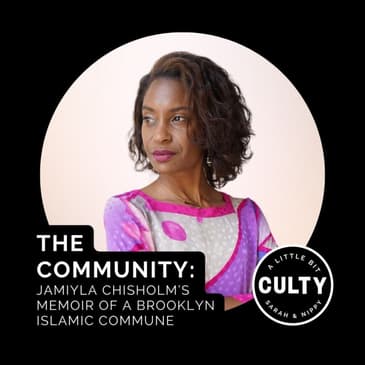
This episode is sponsored by Better Help. Hold onto your seatbelt, cuz we’re blasting back to the ‘70s for this one. Here’s the scene: we’re in Brooklyn, New York, at a time when all five boroughs were spiraling into ungovernable anarchy, with crime, violence, and widespread racism leaving the deteriorating metropolis totally ungovernable. If you were Black, you were particularly ostracized and lived in constant danger as a second class citizen (if only this weren’t still true today). And so it’s no real surprise that when people like Jamiyla Chisholm’s father heard about a religious community that would, as Jamiyla put it, protect them from the hellish world and teach them how “they should live as Black people,” they were drawn like moths to a flame.
While we’ve seen time and time again that cults prey on the vulnerable, this often takes advantage of an individual’s current mental, financial, or even physical state. In this particular case, one leader took advantage of nation-wide racial tensions in order to seduce hundreds of people into his community, which merged practices from Islam, Judaism, and various political ideologies.
Who was this leader? Well, we don’t want to give it all away…but here’s a hint: the supreme douchebag is serving 135 years in prison for what’s been reported as the largest prosecution of child molestation ever directed at an individual in the history of the USA.
To find out who we’re talking about, tune in to hear author, journalist, storyteller and educator Jamiyla Chisholm discuss her own experience as a member of this cult, as detailed in her memoir, The Community.
Also…
Hear Ye, Hear Ye:
The views and opinions expressed on A Little Bit Culty do not necessarily reflect the official policy or position of the podcast. Any content provided by our guests, bloggers, sponsors or authors are of their opinion and are not intended to malign any religion, group, club, organization, business individual, anyone or anything. Nobody’s mad at you, just don’t be a culty fuckwad.
Other Links:
Check out our lovely sponsors
Join ‘A Little Bit Culty’ on Patreon
Get poppin’ fresh ALBC Swag
Support the pod and smash this link
Cult awareness and recovery resources
CREDITS:
Executive Producers: Sarah Edmondson & Anthony Ames
Production Partner: Citizens of Sound
Producer: Will Retherford
Senior Producer: Jess Tardy
Writer: Mathias Rosenzweig
Theme Song: “Cultivated” by Jon Bryant co-written with Nygel Asselin
Learn more about your ad choices. Visit megaphone.fm/adchoices
See Privacy Policy at https://art19.com/privacy and California Privacy Notice at https://art19.com/privacy#do-not-sell-my-info.
[00:00:00] The views and opinions expressed by A Little Bit Culty are those of the hosts, and do not necessarily reflect the official policy or position of the podcast. That's true. Any of the fire content provided by our guest bloggers, sponsors, or authors are of their opinion
[00:00:13] and are not intended to malign any religion, group, club, organization, business individual, anyone or anything. Unless you're abusing people then I have a problem maligning you. Also we're not doctors, psychologists, or wizards. We're just two non-experts trying
[00:00:27] to make you a friendly, informative podcast that helps you understand culty shit. Hey everybody, Sarah Edmondson here, and I'm Anthony Ames, aka Nippy, Sarah's husband, and you're listening to A Little Bit Culty, aka ALBC, a podcast about what happens when devotion goes to the dark side.
[00:00:54] We've been there and back again. A little about us, true story, we met and fell in love in a cult. Then we woke up and got the hell out of dodge. And the whole thing was captured in the HBO docu-series The Vow, now in its second season.
[00:01:08] I also wrote about our experience in my memoir, Scarred, the true story of how I escaped Nexium, the cult that bound my life. Look at us, a couple of married podcasters who just happened to have a weekly date night
[00:01:19] where we interview experts and advocates and things like cult awareness and mind control. Oh wait, this does not count toward date night, babe. We gotta schedule that, that's separate. So it's two days? We gotta hang on?
[00:01:30] We do this podcast thing because we learned a lot on our exit ramp out of Nexium, still on that journey and we want to pay the lessons forward with the help of other cult survivors and whistleblowers.
[00:01:40] We know all too well that culty things happen. It happens to people every day across every walk of life. So join us each week to tackle these culty dynamics, everywhere from online dating to mega churches and multi-level market.
[00:01:51] This stuff really is everywhere. The cultiverse just keeps on expanding and so are we. Welcome to season five of A Little Bit Culty, serving cult content and word salads weekly on your favorite podcast platforms. Learn more at alittlebitculty.com.
[00:02:23] Welcome back to A Little Bit Culty. Thank you guys for going on this journey with us. I have a feeling that some of you don't listen to the end so I'm going to say something upfront.
[00:02:34] If you're appreciating this show and you are getting value out of it, we'd love to see you over on Patreon where we have lots of bonus content and goodies and debriefs and a little more word salad. More word salads. I think it'll make it worth it.
[00:02:49] It really does allow us to keep going and we appreciate it. Sarah, let's her hair down. I love my hair down a little bit. It shakes it out and lets it out. It dance to Taylor Swift and so does Nippy.
[00:03:00] I saw Nippy Glazer do a roast. It was a roast of Jewel and she's like Jewels here tonight or as I like to say trailer Swift. I don't get it. You don't get it? No. I'll let our audience tell you.
[00:03:13] On that note, we just actually recorded with our guest and there's just, I keep thinking this is, I'm not going to get emotional on this one. And then I- It took you to the end. It took you to the end.
[00:03:24] I got it all the way to the very end. And then you true to form, you announced it and I hid my emotions. Just so you know, Nippy doesn't have a problem with me getting emotional. He has a problem with me announcing it. No, it's great.
[00:03:37] But that's part of for me being emotional. I hid mine. I suppressed it and pretend it wasn't there like every- Yeah. In my culture, it's actually called in Yiddish, it's kvelling. I kvel. You say, oh, I'm kvelling.
[00:03:50] So I say I have to express that I'm emotional. It's part of the experience for me. Kvelling doesn't sound like the appropriate word, but we'll leave it there. It's Yiddish. There's no segue after we're just going to launch right in.
[00:04:00] But I will say this, Dwight York is like a page out of Keith Reneary. They don't know who Dwight York is. We didn't know who Dwight York was. I didn't know Dwight York was and that's one of the things I was thinking about
[00:04:09] beforehand is how the hell do I know who this guy is? I mean, it happened, you know, 20-something years ago, but it seems to me there's a lot of parallels in his case to Keith's in terms of the pieces of power.
[00:04:20] Yeah. Being a philosophical teacher and abusing people. His sentence, which we'll get to, is over Keith's. 135. 135. Does he have any probation? I don't know if he has any probation, but I know that he's getting out in 21-20. Let's set the scene. Let's set the scene.
[00:04:37] So Christmas time 1978, New York. Jamila Chisholm's mother, whom we'll call Umi, decided she was going to quit her job and become a Muslim. She packed three outfits in a small bag with some sanitary napkins, some underwear and socks, and a toothbrush before heading out with her two-year-old
[00:04:51] daughter, Jamila, to some more only referred to as the community in Brooklyn, New York. It had been Jamila's father's idea who became excited after regularly visiting a mosque that, as Jamila writes in her recent memoir titled The Community,
[00:05:04] could tell her family how they, quote, should live as black people, end quote. If you're familiar with the vibes on this show, you'll already know that things didn't work out quite as planned. In her memoir, Jamila tells the herring story of her family's indoctrination
[00:05:16] into what she eventually understood to be a religious cult, the cult's leader whom they called Imam Issa at the time, separated her from her parents and unleashed horrific abuse upon all of his followers in coming years. Several decades after having unknowingly joined a cult as a little girl
[00:05:31] and thankfully leaving, Jamila decided to finally ask Umi about what had really happened and why. True to form with these stories, it's interesting to note how much politics and racial tensions were involved. The story really plugs into the state of the USA
[00:05:47] both in and now because there's no one who can speak to that better than Jamila herself or thrilled to have her on her show today. And so we'd like to welcome author, journalist, storyteller and educator Jamila Chisholm onto the
[00:05:58] show to tell us her very important story. Good morning Jamila. Good morning Sarah. Welcome to a little bit culty, finally. Thank you. Thank you for having me. I'm happy to be here and yes finally to sit down and talk to you.
[00:06:26] I think it probably took maybe 85 to 100 emails between myself and your publicist to make it happen. It's mostly my fault. It was an exercise in tenacity. Yes. How do you like to introduce yourself? What's your elevator pitch regarding this
[00:06:43] book and you in this world right now? I'm Jamila Chisholm. I am a writer, a storyteller. I think of myself as a creator for a creator. Not quite sure what the terminology is there. I'm also an educator so I work full time telling stories with
[00:07:01] Barnard College in New York City but I also teach at Columbia University and Baruch College. I teach storytelling actually at both of those places. I am a native New Yorker. I love being a native New Yorker and I don't know what else to say.
[00:07:19] And your book is so good. We literally just finished and O'Courtney sent me a hard copy but I like to listen and it was a really well read audible. I also do voiceover for a living
[00:07:32] so I listen for these things. Your narrator did an incredible job and your writing is really beautiful and descriptive of something that I feel like must have been so hard to write about
[00:07:44] since you were so young when you were in the community which we will talk about. But I feel like it's so much more than a book about, I mean obviously we're here on a little bit culty,
[00:07:55] it's so much more than a cult. It's about the cultural and political landscape. It's about your family. It's about identity. It's about love. It's just like it was really gripping. To finish your commentary, the parallels of the abuses that went on in there that go in
[00:08:12] in our culture are really the lane that I love to draw the parallels from so people can relate. You did that so well, so it was really good. And with the language and that I hadn't heard it put
[00:08:23] to particularly Sarah just and I just listened to your epilogue so I'll let you take over. Thank you. Thank you. That means so much. I think as a writer one never knows what the outcome might be right. How it might land with readers. You're absolutely right that
[00:08:38] the through line of what was happening within the community behind the gates with the people who were a part of this movement which I need to say was officially called the Ansarul law community
[00:08:54] and we called it the community for short. No one was going to say all of that all the time. And also the idea of calling it the community helped to reinforce what the people were trying
[00:09:07] to do which was build a community within a space that turned out to be something else which is the whole point of the story. But the through line that I was also exploring was that
[00:09:20] culturally in the United States there were all of these issues racially and culturally and maybe even gender and religious religiously around the 70s that I realized is what inspired this group to actually form this community right like there was a sense of disenfranchisement. There
[00:09:41] was a sense of a lack of power, a lack of agency within themselves and within their own family and within their you know silo communities within you know black communities across the
[00:09:52] nation. The irony for me though is that once we get inside of this community there is a mirror that is happening from the oppression that these people my family included were trying to escape
[00:10:07] and they landed in that boiling frog pot of hot water and I don't think the people once they were in this hot water understood that what they were trying to escape is where they landed. So that was something that parallel world that parallel universe was something that was
[00:10:27] very stark to me as a child. I don't know why honestly I was able to recognize it in a lot of adults were not but I think maybe because it wasn't my choice to move into this place right so
[00:10:41] I could view it with a level of objectivity that the adults may not have had at their disposal. So yes once I saw oh my gosh this is kind of like a neo-slavery situation
[00:10:55] that we have moved into once that became clear to me then I just needed to unspool that thread and the point for me was to understand the why. I really wanted to know why hey how could a place
[00:11:09] like this exist but the answer to that was what was the need? Right well that's actually always our first question for guests and usually our guests are those who not always but chose
[00:11:22] something you were you know you were brought in you didn't choose what did your parents and they I guess it was mostly your father who well 100% your father that led this decision and then
[00:11:35] so look what was he choosing and what did he think he was signing up for? I'd also love you to talk about your mom because I think what your book does so beautifully is share her childhood tapestry
[00:11:46] and how that formulated her I don't want to use the world vulnerabilities because people interpret that differently but you know basically what made her susceptible to not say screw this this is not okay but let's start with your dad because he led the charge. I think for my
[00:12:02] father I think what he was looking for was what a lot of young black men during that time in that time being the 70s you know he and my mom but I think more so him because they had very
[00:12:17] different upbringings and childhood experiences which I can explain a little bit but for my father and I think maybe being a man or a young man in this world and seeing what the energy was of the 1960s
[00:12:35] just how contentious it was culturally and how you know there were literal marches and protests you know with young men wearing signages saying I am a man right something just as simple as please
[00:12:51] see me as the person who I am and so if I think about what was happening culturally at that moment which was a lot and his own headspace of coming from a family where he was the only boy in this
[00:13:07] family he had a lot of agency within his family but not so much I would imagine in the world in New York City in the United States and what the community was offering a lot of young black men
[00:13:23] was exactly what they did not have out in the world which was agency self-empowerment of voice and I think that that's what he thought was being offered to him was some self-empowerment
[00:13:38] he might have gotten some of that but I don't think he got everything that he thought he was going to get which is you know the narrative of most cults you know there's a smoke and mirrors
[00:13:51] dance that happens so you know things sound really really good until you get behind the door and then once that key is turned you know it's a clown show from my mom my mom was very very much
[00:14:05] and she still is she still is this person to this day but she is very much driven by family and by the not only the concept but the actual physical need to have family and so both of
[00:14:18] my parents I mean they were quite young when they decided to start a family yeah I was going to ask you how old was your dad and your mom at the time early 20s so he probably might have
[00:14:28] heard about the place initially maybe in his late teens okay took some time studying what this place was you know someone close to him constantly feeding him you know propagandizing and then
[00:14:44] eventually you know he decides yes I'm going to make this move and when he decided I'm thinking just trying to do the math here my mom was so I was two that made her 21 22 years old
[00:15:01] that made him 23 24 so they were under 25 children in my eyes very very you know the the age that I am now I think oh gosh they were kids you know yeah but for my mom yeah you know
[00:15:16] it wasn't just that yet obviously a they were young very young adults but also her drive her extreme drive to not have her family broken apart to keep her family together by any means necessary
[00:15:32] and I think also honestly she was not as well informed about what this place was as my father was I'd like to say that so she really kind of I think took his word for it that this would be
[00:15:46] a place where we could still have a nuclear family we would be together the only difference is that we would become Muslims you know it was just a changing of religion as my mom saw it but
[00:16:01] it was an absolute change of in our way of life and what was the the promise of that in terms of the core philosophy my understanding was self-autonomy and the ability to have no government
[00:16:19] no outside forces tell us how to be how to raise our children how to love each other how to practice our religion how to dress what to eat we get to be our own people I don't think
[00:16:34] there's any sexier way to say that I don't think it needs to be sexier I think you look at any sort of thing throughout history even allegedly how America became America it was one group of people
[00:16:47] telling another oppressive group of people you don't get to tell us how we're gonna live our lives and I think that that it's so easy to capitalize I think on a group of people who have historically
[00:16:58] been disenfranchised and a person if they are smart enough and if they've done their homework well enough and if they know the history they can maybe ride it ride in on a white horse and try to
[00:17:13] save the day you know and and tell these people who have been historically told be quiet you have no rights here and tell them the complete opposite of that and I think that for people like
[00:17:28] my father specifically that was really really what was needed at that time and what else was there right you know I can either go to this space where this man who looks like me and who is telling
[00:17:46] me the things that I want to hear I can either go here or stay out in this cesspool of struggle where no one is listening to me that's what I why I played the your epilogue again for Nippy just
[00:18:00] now before we jumped on because I really felt the depth of that you called it cultural vulnerability at the end of the book and I feel like that's why this episode is very important
[00:18:13] specifically in a way that I hadn't like connected the dots before in regards to a lot of things you know when people reach out to us with new content to cover I've generally heard of it and I hadn't
[00:18:23] heard about Dwight I mean we're not called experts like we didn't go to school for this we just had our own experience and now we have this podcast but I generally feel like you know even
[00:18:32] though we haven't done a deep dive on Jim Jones I know who he is and it's referenced a lot and I hadn't heard much about Dwight York well the tactics are the same I mean Jim Jones when I
[00:18:41] read about Jim Jones one of the people that he targeted specifically was black women and black women he used the disenfranchisement as leverage to enroll them and my experience I don't know if
[00:18:54] you experienced this Sarah is one of the things that and it's going on a lot right now because particularly economically things are hard and that traditionally makes people susceptible to alternative ways where they can feel like there's a place to thrive and you see an extremes
[00:19:07] in our culture right now so I think that's a very important thing to establish is the ecosystem a lot of these people particularly at that age your 20s that's why I asked that age because that's when
[00:19:17] you're going what are the next 30 40 50 years gonna look like where where is there a structure that I can go and thrive in right who do I think I am exactly right who do I want to be
[00:19:29] it's a very formative time for us right and oftentimes around that age we're seeking it is definitely a time of self-discovery right and a time of finding one's voice and one's place in this world right and you know depending I think on you know what one's foundation is
[00:19:48] we either go back right like back to our nuclear family because that's what we know we're comfortable there right or we say nope I'm going the opposite way right you know at least I know from my mom
[00:20:03] you know that's what my mom did you know but she didn't have much of a family foundation to begin you know so yeah it's such a formative time and it's if there's very little guidance
[00:20:15] you know around that age I think it can be a scary time for young adults who really just want to try out different flavors and they have absolutely every right to do so right we should
[00:20:27] be able to try everything out that feels safe and comfortable but realizing belatedly when this thing that we're trying out is harming us or harming our communities right I think that takes a lot more
[00:20:41] maturity and a lot more nuance of understanding and it's hard to see especially when I'll speak for myself as well totally different circumstances obviously but there's just like you said running the opposite way there's an individuation there right so when you individuate and you choose something
[00:20:59] you kind of got to stick to your guns because otherwise you've made a big mistake right and no one wants to do that you know no I made a good choice I'm really happy here in this big white
[00:21:08] house and sleeping on the floor so wait tell me by the way Nipi and I were we're laughing at my princess nisk because you know everyone when they hear about our story or any cult has a point
[00:21:19] where they're like oh I would never do that and people say that to us all the time right like I would never do that and then I'm like and then they tell me about some other thing that they do
[00:21:26] that's totally culty and I'm like okay right so everyone has their thing for me because I'm such a princess I would I would be like uh-uh I'm not sitting on the floor I am out right like but
[00:21:38] that was that's my line where other people would have been like I'm not wearing a sash you're ridiculous is in our case so what tell tell me about what your mom saw and like what
[00:21:47] were some of the red flags that she had to ignore so that she could make her decision a good one my mom is a princess yes well kudos to her for for getting through it for two years I would not have lost her
[00:22:04] the night it's one of the things that I I really find so fascinating about her endurance you know and just like you you dip this for how long but in the whole time in the back of her head
[00:22:15] she's like why am I doing this you know like there's a scene that I write about in the book a whole scene around a mattress right speaking of floors my mom when we moved she moved with a mattress
[00:22:28] a physical mattress that she had shipped from the Bronx to Brooklyn and she did not know because let me back up she thought erroneously that we my father her and myself would have our own
[00:22:44] apartment so that was what she thought when we rang the doorbell of the community so that is why she thought that she could have a mattress in this space so the mattress comes but there's no way
[00:23:01] to really put the mattress because what she soon discovers as I soon discover for myself also is that there is no family apartment there are rooms that people are broken up and down into
[00:23:17] so my mom walks into a room that she is expected to share with about you know half a dozen women so within that space imagine where's a mattress going nowhere so what she then witnessed when
[00:23:32] she walked into this room was oh her first question was well how do you fit so many adults in such a small space how are we supposed to live and co-habitate in this space and what she saw was
[00:23:47] a kind of new city honestly that the women whom she was sharing this space with that they had created within this room there are crates maybe no carton crates that have now turned into
[00:24:02] little cubbies for them to store their personal belongings crates that have turned and who that have doubled as bed foundations so if you happen to have had a really small mattress you could
[00:24:17] elevate your mattress off the floor right that was a little bit of luxury that people creatively thought of my mom saw clothing lines strung up around the room so that women could dry their
[00:24:33] clothes their undergarments in the room because there was nowhere else to do these things she learned that she would soon be hungry a lot because food was rationed actually everything was rationed food as well as personal much needed garments like sanitary napkins for women
[00:24:55] sex was rationed when couples got the opportunity to have sex with each other so what she learned was that she had moved her family into a world of extreme restrictions and lack that is the word
[00:25:10] that i that i'm looking for scarcity scarcity yes yes scarcity and lack i think scarcity is one thing but i think lack is you just don't have it right scarcity as you might have a little bit
[00:25:22] of it whereas you know the lack of a food the lack of clothing i know for myself i had two outfits that i rotated through the shoes i had one pair of shoes and i and i know some people might
[00:25:37] say well how many how much does a two-year-old need right but children normally have different attire for different situations there's there's play right there's sleep there's school you know there there are different things for how we dress and we did not have any variations in what our
[00:25:59] activities were so there weren't any variations really in what the clothing was we didn't need much because we didn't do a lot of things we actually didn't even leave the the compound
[00:26:11] the women and the children so i guess we didn't mean much of clothing or shoes anyway the world wasn't seeing us just for our listeners she was not told any of this she found this out when she
[00:26:23] got there that is absolutely correct yeah i believe that my father was a lot more knowledgeable about what this ecosystem was in the way it worked whereas my mom i think what she knew
[00:26:37] was that we were going to become muslims i know that sounds very juvenile and questionable you know i questioned her very much so which is in the book you know my constant need to understand
[00:26:55] how she was so easily in my my feelings then so easily moved but now you know after having done the research obviously and spoken with her over and over and over and over over a year
[00:27:07] actually of interviewing her i understand how things were presented to her and also how busy she was personally as a working mom that she did not think i need to take time out of my life to
[00:27:23] research this place that i'm going to move into this is the golden age of cult recovery the more we speak up and share our stories the more we realize we are not alone your voice
[00:27:37] and your story can empower others this is sara and i'm proud to be a founding collaborator of the hashtag i got out movement learn more at i got out org the frankies were a picture
[00:27:56] perfect influencer family but everything wasn't as it seemed i just had a 12 year old boy still appeared asking for help he's emaciated he's got tape around his legs ruby frankie is his mom's name
[00:28:12] infamous is covering ruby frankie the world of Mormonism and a secret therapy group that ruined lives listen to infamous wherever you get your podcasts this episode is sponsored by better help what are your self-care non-negotiables maybe you never skip leg day or never miss yoga maybe
[00:28:33] it's getting eight hours of sleep i mean that's my personal and everyone's dream isn't it well i definitely have some non-negotiables like i'm in Vancouver right now and i'm spending literally as much time as i can outside in nature hashtag cold pools hashtag crushing it nature is a
[00:28:48] non-negotiable not enough time the fresh air and the trees around me and i start to feel not great not myself not grounded therapy day is a bit like my nature walks i try to not miss it
[00:28:57] and i know i'm just gonna feel so much better all around if i make it a priority i get so much out of it it helps me put my worries and anxieties in their rightful place and helps me
[00:29:06] clear my mind so i can focus on what i really need and sometimes what i don't need like i don't need to be overbooking myself just because i hate to say no to people you know what i mean thanks therapy
[00:29:14] thanks for helping me see that and if you're thinking of starting therapy give better help or try it's entirely online designed to be convenient flexible and suited to your schedule just fill out a brief questionnaire and get matched with a licensed therapist
[00:29:27] therapist anytime for no additional charge look even when we know what makes us happy it's hard to make time for it but when you feel like you have no time for yourself non-negotiables like
[00:29:36] therapy are more important than ever never skip therapy day with better help visit better help com slash culty today to get 10% off your first month that's better help h e l p dot com slash
[00:29:47] culty one of the things that i love so much about your book is that part of it is your journey of understanding as somebody who was brought there and also left quite young but those are you know think you probably know better than most people though how formative
[00:30:04] those years are and how that affected you affected your dreams affected your emotions affected your view of yourself affected the world and so much of this the book is that journey in a way that i think that many people will be able to relate to even though the
[00:30:20] circumstances are so different in terms of that self discovery and the forgiveness and all of those elements you know when you're seeking to understand someone and their perspective of how they make this decisions normally you come down to their intent was normally pretty good
[00:30:36] and it becomes difficult to maintain anger or or whatever it is once you're able to humanize a very human decision and see the ecosystem in which they're making those decisions and maybe
[00:30:48] even some of the blind spots and mistakes that they made you know and one of the ones i'm hearing is like i can speak for myself and this is when making a decision like that when you outsource
[00:30:59] your trust to someone of maybe doing the research or something like that it can normally lead to a bad decision and in my case you know i trusted someone you know and sounded like your mom
[00:31:10] trusted your father with that and then found themselves in a situation and maybe not even recognizing that was the origin of the decision later on until they go back and do the work to
[00:31:19] trace you know what this was the choice point for me where i made a decision that wasn't best for me and the people around me. I do want to jump in on that because i think that is for me it was
[00:31:30] kind of a it was like the screw that i kept turning because for years the narrative from my mom was while i was following my husband and i saw it as a cop out honestly you know i i love them both
[00:31:45] and i love my mom more than anything in this world but i thought she was being unfair to herself by saying she did not have any agency she did make a decision and that was the thing that i
[00:31:59] eventually wanted her to own up to was whether to say yay or nay is making a decision and whatever the outcome is she may not have expected it to have been as awful as it was and no she did not
[00:32:18] want to risk losing my father right and the dissolution of our family but that happened anyway so decisions you know when we all make decisions right and i think it is important
[00:32:31] for us to acknowledge them because that's then to me is when the healing can happen is when we can actually say yeah i did that now why did i do that what was the impetus behind it what was
[00:32:45] driving me and it seems in your book and i don't want to ruin it for our listeners but one of the more powerful moments was it seemed to me you understood that she made it from love and community
[00:32:56] absolutely absolutely and your father's was different yes you know it's interesting from the beginning they were moving in two different directions you know their intentions were very different had they communicated that to each other there might have been an aha moment
[00:33:12] well they didn't have a lot of time together they did not no they did not yeah and before we get to that stage can you just fill us in a little bit i mean we've read the book but for those who
[00:33:25] haven't yet obviously we highly recommend it but paint a little bit of a picture of what the day to day was like inside this white house and these walls yeah yeah but day to day as i said earlier
[00:33:38] you know we didn't have a lot to do but what we did do it was always regimented it was very much like being little baby soldiers i think i might have used that term in the book actually so
[00:33:50] i will start with the children and with my cohort we were broken up everybody into every possible category that you could think of so when i arrived i was with a room full of toddler girls
[00:34:05] boys were separated from girls just like the women were separated from men and then everybody was separated from each other so i never got to see what happened with my parents with their
[00:34:15] day to days or like and the reason for that was because i eventually got new guardians i had these four aunts who we called ums ums and they were essentially the guardians of my group the older
[00:34:32] i got i then graduated into an older group so what it was is we would wake up early we would cleanse ourselves oftentimes there would be three little girls at once either in the tub
[00:34:50] trying to clean up or at the sink because there were maybe 40 to 50 of us in this room so we're on a schedule we have got to get to school we did go to arabic school i learned arabic
[00:35:05] because english was forbidden so we did not speak english at all none of my ums none of the kids my mom she did not speak arabic so she had her own language struggles there which i can't imagine
[00:35:21] was fun for her so i would go to arabic school and it was a real school within the community i could see the little wooden desks if i like envision the room and you know we there would
[00:35:33] be a teacher and then after that we would have time for play so there was a playground that was also built onto the back of the children's house the children's house was literally a big house
[00:35:48] and it was divided up for the different age groups of the children so maybe one floor was where the young kids resided including myself maybe another floor was where infants resided and another floor was maybe where you know kindergarten age children you know so that
[00:36:09] that was kind of the layout of everything and so we had this playground that was built to the back of the house and then the kids would have an opportunity maybe an hour i'm not quite sure to
[00:36:20] just let off steam we got to run around in this playground and we would not interact with each other really i remember that and i think it was because we were terrified of showing fun in any way
[00:36:35] possible so we would just go at least for myself i played alone often we would return and then several times throughout the day there would be time for prayer in the Islamic tradition
[00:36:48] Muslims makes a lot five times a day so there would be time throughout the day for us to have prayer time and we always ended the day usually if i'm remembering this quickly and my my memory
[00:37:01] might be really foggy here but we had a prayer room in the basement in my mind it was in the basement in the basement of one of these houses i think it was the children's house so that the
[00:37:13] children would never have to leave the house that was our world honestly it was this house in that playground and then we would say prayer prayer in this circumstance we would get to see everyone's
[00:37:26] we would get to be in the room with other kids it was a mixed gendered space but still segregated within prayer men prayed at the head women prayed behind them boys prayed behind the women
[00:37:41] and we little girls got to pull up the rear in prayer and then once prayer was over everybody would just first back to their respective rooms and we usually my group would end the night on a
[00:37:56] blue gymnasium mat we did not have beds we slept on a mat on the floor and we would huddle and watch tom and jerry we would watch cartoons and we'd have our dinner and night night start the
[00:38:09] whole ritual of that world all over again for my mom though my mom worked she was a worker b within this world she had a lot of different jobs over the time that she was there but her
[00:38:25] main job was to be an oom for infants and toddlers she really disliked taking care of the toddlers but she really liked being with infants so she and another woman would so whereas there were 40
[00:38:40] to 50 girls that I stayed in a room with and slept with my mom and another woman would care for about eight babies in one room so she described that there would be three babies in one crib
[00:38:55] so she's raising eight other kids and not around that's right that's right so she would be yes women would literally give birth and bring their kids their babies their infants their newborns to my
[00:39:08] mom who would then be responsible for taking care of them and these new moms their opportunity to see their babies was during nursing time now how involved was Dwight with this and with the design
[00:39:23] of it and do you think it was intentional or do you think it was negligence and he gave little resources to it or like how what level of psychopathy do you think it was operating at to be
[00:39:32] like I want to do this to stress them on purpose or I just don't have the resources you guys figure it out he was the kingmaker and the brain behind the community behind and Saru Allah
[00:39:45] he was the quote unquote imam he ran this place no one did anything without his approval unless they were sneaking honestly and it was about breaking the rules if a person did something
[00:40:00] that was not what the Dwight York mandate was so this was his design even down to the teachings even down to the literature that he produced and published those were all his words you know he
[00:40:16] wrote everything he was in charge of his image he was in charge so when I say that food was rationed he was the one people had to go to and say I'm hungry I need socks I need to leave the compound
[00:40:36] so I could cash a welfare check all of this went through him and then it trickled down so he was the voice of God on in this place it was even him my mom said who gave the okay for when
[00:40:55] couples could have sex it was him he said okay so I'm going to now open the rooms and when he felt like it he would close the rooms that meant no sex so this was his design
[00:41:08] from A to Z he was very much in charge and when it comes to a psychopathy behind it when I think about what happened when he formed the Nwabiya nation in Georgia right this was years 20 years after
[00:41:24] the community night three that's right yep 20 years after my family you know that when he formed this place even you know I worked on an article about it once the FBI rated his compound in Macon Georgia and the Nwabiya nation then dissolved but people were terrified to speak
[00:41:46] about him people were terrified to speak about their experiences and he was arrested looking at you know decades of imprisonment he had abused or was accused of abusing hundreds of children
[00:42:05] some as young as five years old this is the level of insanity that York brought everywhere he went you know and he used children sadly as his pawns this was I think how he obviously was able to
[00:42:24] get the parents to almost do anything that he wanted them to do we were his hostages I want to talk more about that before we do I know I asked what your mother's first red flags were do you remember
[00:42:36] what your first WTF moment was that you had to squelch yeah it was when I realized that my mom was not going to be with me full stop and that was on day one that was on day one when
[00:42:52] I was shown my room and my mom walked in the opposite direction and my mom actually asked so we will not get to be together and when the woman said no that's when I understood exactly then that
[00:43:07] I was in trouble like my life was about to become something that I could not have foreseen and that I did not know how I was going to navigate you know I had come from a very nuclear
[00:43:19] space where I was only child I was her joy we loved each other immensely you know my mom worked really really hard to make sure that I was okay as a child so to lose her to not have access to her
[00:43:33] it hit me that moment I knew that this was not a good place because for me any place that was taking my mom away from me was not like just on a very elementary level this was not good
[00:43:47] I mean everything else that happened afterwards just solidified for me that I was in a hellscape at least that's how I interpreted it you know you know I'm sure there were maybe some other
[00:43:59] kids who did not feel as awful about the places I did you know that's perspective and we all have it we all have our own experiences but for me losing my mom was devastating and I knew I
[00:44:12] just knew instantly this isn't good and I think she knew also but I think for her you know I think she tried to intellectualize it you know and said well if this is the way things are right then I'm
[00:44:25] not being slighted this is the system my two-year-old brain did not see a system no you know I saw a personal slight I saw you're taking my mom hey there listener hope you're enjoying this episode and that you're remembering to hydrate stretch and unclench your jaws sometimes listening
[00:44:46] to conversations about heavy topics can really make you tighten up you know and remember a little bit cult he loves you also come hang out with us on patreon after you finish this episode
[00:44:56] it's fun over there fun is good and now here's a brief message from our sponsors meals bring people together but for many families providing their next meal can be a challenge you can help by participating in Macy's annual feeding the hungry food drive all proceeds go toward local
[00:45:15] food banks and families now sir january 31st you can purchase an icon in store or online or watch out for the blue feeding the hungry shelf tags where a portion of your purchase will be donated to
[00:45:27] local pantries together we can combat hunger in our local communities at Macy's this episode is sponsored by better help what are your self-care non-negotiables maybe you never skip leg day or never miss yoga maybe it's getting eight hours of sleep i mean that's my personal and everyone's
[00:45:45] dream isn't it well i definitely have some non-negotiables like i'm in vancouver right now and i'm spending literally as much time as i can outside in nature hashtag cold pools hashtag crushing it
[00:45:55] nature is a non-negotiable not enough time the fresh air and the trees around me and i start to feel not great not myself not grounded therapy day is a bit like my nature walks i try
[00:46:04] to not miss it and i know i'm just gonna feel so much better all around if i make it a priority i get so much out of it it helps me put my worries and anxieties in their rightful place and
[00:46:13] helps me clear my mind so i can focus on what i really need and sometimes what i don't need like i don't need to be overbooking myself just because i hate to say no to people you
[00:46:21] know what i mean thanks therapy thanks for helping me see that and if you're thinking of starting therapy give better help a try it's entirely online designed to be convenient flexible and suited to your schedule just fill out a brief questionnaire and get matched with a licensed
[00:46:33] therapist and switch therapists anytime for no additional charge look even when we know what makes us happy it's hard to make time for it but when you feel like you have no time for yourself non-negotiables like therapy are more important than ever never skip therapy day
[00:46:47] with better help visit better help comm slash culty today to get 10 off your first month that's better help h e l p dot com slash culty i feel like how she was victimized the most is
[00:47:00] having well a the leverage trust right with your dad but also her leveraged fears like that if she said no and walked out she was going to lose your dad and given her desire for family
[00:47:12] and thinking that that's what she was going to be building there this bigger family i also you know painfully understand the decision although it's as a mom is just like it's heartbreaking and i'm also really sorry that you went through that would give me nightmares too
[00:47:28] so what was the final straw for your mom that pushed her to leave finally i still almost sort of maybe don't know your best guess of what she's told you i feel that there were a succession
[00:47:43] of things that led up to it she has told me that for her she feared the fbi rating the community she said that was the impetus for her now i have a different idea and i wrote about this in my book
[00:48:00] but for her she said that she saw the writing on the wall that a child abuse was indeed a thing this thing that she did not want to believe because she didn't want to believe that she had
[00:48:13] brought her child into a space where i was then vulnerable to abuse for any other child for that matter but that is what happened that's what the space was it was just a space of abuse for
[00:48:26] everybody she saw 20 years in advance actually that we were being watched and and we were being watched by you know government people as they like to call it i call it law enforcement but
[00:48:41] you know but that you know we were being surveilled and within that surveillance there was obviously fraud taking place but for her it was more about what was happening with the children
[00:48:54] and how she was really afraid of losing me and then herself being sent to prison for well this situation so that is that is what i was told that is i think the place that she stands in that she
[00:49:11] feared losing me forever i think that that's part of it but that this trust this broken trust that we keep going back to right the broken trust of the community and what the community had sold
[00:49:28] my parents so there was that there were people leaving who were very close to her there was another break in trust there she did not think that these people would leave her just like she
[00:49:40] did not want my father to leave her for this place but then my father transgressed and she found out about it he had an affair inside of this place and i think that just really pushed
[00:49:55] her over the edge because we're talking about a woman who had given up everything to keep this marriage together and to keep her family together and this was an idea that he brought to her
[00:50:10] and through extreme trepidation she said yes and so that betrayal i think was a step too far for her because i want to remind listeners that we were not together my family it's not as though
[00:50:28] my mom could just go to my father's room and sit down and have time with him that was not allowed at all so the fact that he could find time for another woman was devastating and i think that
[00:50:45] if in my brain adding all of those things up you know no child no husband she's hungry all the time honestly when we left my mom is five nine she weighed 115 pounds oh my god that's so tiny
[00:51:03] tiny yeah that's how i mean that's how bone thin she was when we left this place so the sacrifice that she made to then be the trade in such an awful way i think that was the straw that broke the
[00:51:17] camel's back and she said we are out of here i can't i cannot reconcile not having a marriage thinking i have a marriage and then hearing through the grapevine that my husband is unfaithful ouch
[00:51:31] no everything's gone it's all gone everything she sought to preserve is gone it's over yeah wow she went through it how is she now my mom is without a doubt the strongest person i have ever had the
[00:51:47] privilege of sitting down and interviewing and speaking with i mean she a i will say this whole process of me working on this book the whole process of me even interviewing her was not easy
[00:52:03] she squirmed through everything everything but her candor i mean she was so honest with me in ways where she was embarrassed at times you know because obviously you know hindsight is 2020
[00:52:19] of course now she's you know in her 60s i mean then she was in her 50s when we were going through the interview process but you know she could look back and say oh my god i was so dumb you know and
[00:52:29] it's like no i don't see it as dumb anymore i just see it as something different it was a seeking moment in a moment of extreme vulnerability and extreme desire you know a lot of desire there
[00:52:44] so i'm still waiting for her to forgive herself for the community i have forgiven her and she is actually happy as hard as this process was that i have told the story because
[00:52:59] she feels like secrets is part of what gets people into trouble and so she's like buck the system of secrets you know so good for her she's great she's great and of course therapy helps well
[00:53:14] secrets are the adhesive or the glue to abuse right so that's right and shame expose those yeah you know one of the things that in telling your story in anyone's story it's you have to take a bite
[00:53:25] out of the shame and and sandwich and the embarrassment sandwich and your capacity to do that directly correlates to how powerful your story is going to be i think so back to healing obviously this
[00:53:37] book must have been very cathartic and you shared already what it was like interviewing your mom so therapy what else have you been doing to to heal from was it a very intense childhood trauma
[00:53:46] i would imagine i knew i was off yes growing up i knew something was just you know a little uncentered but i couldn't source it honestly because you know i was so young when the community
[00:54:00] happened so i went through my childhood bouncing between extreme anger that i could not source and then extreme joy that i also could not source and it wasn't until i turned around 14 years old
[00:54:17] and i knew what the source was i'd been having these dreams these haunting dreams about this girl in this this place which was me but i did not make the connection so you know finally once i understood
[00:54:31] okay this place that i keep dreaming about that really frightens me and but i don't know who this little girl is and i'm scared for her once i realized that i was actually that girl
[00:54:42] my entire head exploded i mean not literally but you know like my understanding and my perception of myself and my family and who i was and why i had been such a raging child it all made sense at that
[00:54:58] moment and then of course i had to spend the next few years of my life by going through my adolescence which is awful for anybody but for me now i have the answer and now i'm an adolescent
[00:55:12] with an answer everybody watch out and it turned into that you know i was like a fireball because i completely understood oh my goodness my family walked away from me obviously it was not that
[00:55:24] simple but that was my adolescent brain right they were so silly that they let some man tell them what to do it's not that simple right but i'm a child this is how i am now understanding all this
[00:55:37] information that i have so the way i processed it was i wrote i did a lot of writing a lot of writing a lot of journaling eventually when i got older i did a lot of traveling and that was to
[00:55:47] escape everybody in new york everybody in the united states to just get away from it all and as we said earlier about you know creating our own identities that's what i did you know so
[00:56:00] whereas some people like to run to their family i was like bye everybody goodbye and within that time though hey i got to know myself right i got to know what my boundaries are i got to reconcile my
[00:56:15] understanding of my parents because now i'm at an age that they were and i can see myself in them in a way that i wasn't able to as a child and that ability really helped to open up
[00:56:30] healing for me and my parents and for myself you know i soon understood okay i hadn't done something wrong which is a thing that i had thought for a very long time which is why my parents would
[00:56:44] walk away from me that was a thought that i had was i must have been a bad child that they would leave me in a bad place alone but you know through talking to my mom really because my father
[00:56:57] does not like to talk about it that's why i give her all the credit really you know is that she really helped me to understand what her thought process was and what she thought my father's
[00:57:07] thought process was and how it wasn't an abandonment as much as it was a searching that i just got caught up in because i was their child the sentimentality as the pitch that was the guitar solo
[00:57:20] of your book it was it was so good we we replayed it like i was like wow wow and it was so good i love hearing different language to the same thing and it was just it was brilliant at what point jimela
[00:57:30] in your healing journey did you connect the dots that this was a cult or i don't know how did you come to terms with a little bit culty or fully culty what's your take on that and
[00:57:40] where did you learn this i think i knew it was a little bit culty at that age of 14 when i got the answers to what that place was that i kept dreaming about i was sure it was a cult when
[00:57:57] the new abbey nation went down that was the confirmation that i needed that to white york was indeed a cult leader and not a religious scholar or a religious leader the new abbey nation
[00:58:12] is what did it for me so that was 2003 and the reason why i felt that was law enforcement confirmed it you know the charges that was leveled against him they were so heinous they were
[00:58:27] awful and then the fact that he was eventually convicted on these really awful charges and granted he was not convicted for being a you know running a cult i don't know that's even a crime but
[00:58:39] his mecha nations right the fact that what happened with the new abbey nation mirrored what had happened in the community and that this was just you know this was the way he operated it became
[00:58:51] very clear to me that oh if i can see the new abbey nation as a cult i must see the community as one also did your mom agree she doesn't now it took her some time it took her some time because
[00:59:05] i think cult the you know that word it's it's so loaded and it's loaded in a way that i think make people who have been involved in one feel victimized or that they're dumb in some way well
[00:59:19] one thing i was going to say sidebar for your mom is have her watch season one and two of the vow and i think that she will feel less dumb and lots of forgiveness for herself and others
[00:59:32] i've been told it's it's helpful in that way seriously do you mind repeating in the best way that you can your your beautifully written words about sentimentality and how that works to
[00:59:44] tap into people's vulnerabilities in this case before i do that do you mind if i read the source from where this thought came from sure i could not include the quote in my epilogue
[00:59:57] which i wanted to because james baldwin says it's so much better than i do but his meaning is the thing that really hits me so james baldwin in notes of a native son he's talking basically
[01:00:13] about his own perspective what it means to be a black man in the united states in uh i think he did notes of a native son in the 70s i think but the quote that he says is sentimentality
[01:00:28] the ostentatious parading of excessive and spurious emotion is the mark of dishonesty the inability to feel the wet eyes of the sentimentalist betray his aversion to experience his fear of life his arid heart and it is always therefore the signal of secret
[01:00:48] and violent inhumanity the mask of cruelty that quote spoke to me so very much about what the community was built on and what my argument is in that epilogue is that it was a community built on sentimentality when i spoke earlier about the disenfranchisement
[01:01:12] of black people in this country and the need to find and to have agency and self empowerment it's easy for someone like a white york i think to then step in and be sentimental about what could
[01:01:31] be right we could be great you could be the king your child doesn't have to face racism as long as you're in this space that we run that we are in charge of and that we have say over and i think
[01:01:51] for a lot of people who said yes to this pitch that it is in wanting something or remembering something maybe psychically the reason why i say psychically for the community is
[01:02:04] Dwight york had a lot of teachings that was based on racism a lot of it it was very very heavy in black man as god white people are dangerous devils this is a very sentimental and simplistic way
[01:02:21] of thinking about people but if you can pit people against one another and then the person who is feeling so trampled upon gets to be the one who tramples gets to be the one
[01:02:37] who calls the shots oh wow so much there's so much that one can do with that and what i wanted to also show was that this idea of sentimentality as a monster is not exclusive to what happened
[01:02:54] within the community i think a lot of people who fall vulnerable to coats it is a lot about sentimentality and when i watched january 6th 2021 happened to me that was a culmination of
[01:03:10] a nationalistic sentimental pitch by former president that's what maga maga is that's what it is it is we want the old days the good old days and those good old days are never coming back because they weren't
[01:03:27] good in the first place right so that's what i think baldwin was describing in that quote and what i liked so much about how it mirrored what i saw in the community that level of vulnerability that
[01:03:43] need that need that you're so blinded you can't even see you know your periphery is the same thing that i see with maga well you said it best that they miss sentimentality as the pitch that's right
[01:03:57] i thought that was so because i think that is the pitch yeah when you were speaking just now i realized why your book was so emotional was that i feel like it answers you know potentially a way
[01:04:09] out of what is very much a divided world right now romanticizes it as well yeah i mean i i think we're a year apart you born in 76 i was yeah so born in 77 you know a white canadian very different
[01:04:25] backdrop you picked a good country very different backdrop yeah different backdrop obviously but like separate from your pop cultural references of you know janet jackson and you know the music you were
[01:04:40] listening to and shane o'connor in the background like i guess what i'm trying to say is like sometimes my emotion takes the better of me sorry jimmy l i'm trying to put words to this but there's like
[01:04:49] this this feeling of the pain that you're specifically i guess your dad and your mother were feeling at that time and how that drove them and then how that was used to create like what you
[01:04:59] just said this the opposite of what i think we all want we all want to feel belonging in this world not just within a community want to feel it in the world and be different and have our differences
[01:05:11] and feel accepted and safe i think we all want that and these leaders pray on that pain and pit us against each other in a way that's so binary so divisive and so literally black and white
[01:05:25] well your good gets leveraged yeah i guess that's what just hit me in a way that i hadn't felt before and we all got into these things for different reasons when i heard you say that part about
[01:05:33] sentimentalism i was re-read at tinnipi because his draw in tinexian was a totally different draw than for me but it was about that like hearkening to it was ideology it was you know
[01:05:44] it was looking at the behavior of our leaders and then there's a book called death of outrage that i had read like a week before i rolled up to take a training and it was similar less so a
[01:05:54] marketing campaign like maga is but it was also hearkening back to like a day of like when we had leaders that spoke about ideas and this guy was speaking about ideas you know and i was
[01:06:05] the reason i asked about the age because i was 26 27 we were also like the ecosystem of where do i go wasn't clear absolutely absolutely and i think that you know those are very ripe ages
[01:06:19] you know it's right before we figure out exactly who we are and what i relied in the sand is exactly and you mentioned boundaries earlier and boundaries are a big one one other thing i don't want to
[01:06:32] leave the interview without mentioning because someone asked you a pointed question and your i don't remember the exact question but it was like we know what do you do and you said look out
[01:06:40] for your children oh yeah and that one to me was like because sarah and i you know we're we have an eight year old and a three year old and whatever system we put them into and what
[01:06:50] schooling and whatever it's it's it's tumultuous right now because no domain is has been left alone from politicizing a lot of things right now and i just want our kids to be kids
[01:07:00] and i want to protect them from that and i want to keep that as long as we can so that that response to me made me really excited to interview you and and and how you articulate things
[01:07:12] is i learned which is great my job you're an educator you are an educator yeah your story is wisdom and it was certainly wisdom for me and thank you and thank you for sharing i really
[01:07:24] appreciate that thank you i really do because as i said a writer never knows how words will hit with someone else you also someone's always gonna have a problem and then there's that yeah
[01:07:35] and i think it's important to you know bond with people that are telling stories and let them know that it worked and it's working and i'm gonna i'm gonna walk away from your story more informed
[01:07:47] about how i'm gonna go out into the world oh that makes me feel so good inside period exclamation point so thank you it's true and you're absolutely right we have to look up for
[01:07:56] our kids we do it's our job that's our job yeah is there anything that we didn't cover that you wanted to say that before we share with our audience where people can find you
[01:08:07] i think the only thing i will say is that i hope my book is a i mean it is a it's a love story right it's a cultural retelling it is a story about a cult but at the end of the day for me also
[01:08:24] i hope that it is a story that gets readers to think deeper about what's coming at them and why something is being presented to them and i'm not saying to be overly cautious as we move through
[01:08:38] this world because i like trusting people you know but we should always be a little critical and i fear that a lot of the maga stuff is a lack of critical thinking it's a lot a
[01:08:51] lack of critical thinking but i think people who are too lazy to do the critical thinking yeah it's possibly unfortunately yeah and they're riled up you know i look at your journey and it
[01:09:01] started with judgment big time right and once you took the time to be a journalist about it which is effort critical thinking requires effort that's why most people judge that's not my quote
[01:09:11] i read that somewhere so that's not mine but i think ultimately if you're able to do that then you get the wisdom and you expand your sphere of the thinking and understanding so this was really
[01:09:22] fun actually thank you i appreciate it likewise we appreciate you i'm gonna give it to my mom for Hanukkah because we have our own different journey postcult that i think she'll appreciate it and if anything there's a good mother daughter story there yes it's definitely a good mother
[01:09:37] daughter story for sure thank you please keep in touch and let us know how we can support you absolutely same here you got emotional i did i got emotional how was that well i mean like i
[01:10:01] told her i was informed particularly with the sentimentality as a pitch i thought it was just a different way of hearing it right yeah it's like a more elaborate understanding of the idealism and
[01:10:17] crazy that after this after this happened in the community he went he went to upstate new york i wonder if he ever crossed paths with kate a and b she used a term to describe him that i've also
[01:10:27] said about alan i should call him not keith that he was stealing souls yeah i heard that and i thought that was something that's interesting that she she made that analogy as well but also specifically
[01:10:38] pointing out that like the most insidious part of it his he makes it look like people are choosing because they're choosing but there's always that big switch if you love this episode please do
[01:10:48] read her book it will link to it in the show notes again it's called the community oh and i also forgot to mention if you look it up the cover of it i think is really interesting because it totally
[01:10:59] for me it's a visual representation of the fragmentation of being in a cult the different pieces put together of the white house and the memoir element with the the backdrop and it's
[01:11:11] like all the pieces are there in the in a sort of stained glass suffice to say there's really a lot to this gemela's book and we're going to put the link in our show notes again it's called
[01:11:20] the community and it goes way more into detail than we ever could in the episode yeah and not just about the cult like like she said mother daughter story forgiveness story and just to wrap up really helping people understand what happens when people are desperate or disenfranchised
[01:11:37] and how people will give up and what people will give up for freedom acceptance and love and also how does a family heal after experiencing life altering betrayals check out her book come join us over on the patreon and thanks for joining bye for now
[01:11:53] sinking down to the depths of the ocean i'm hanging on to the weight of my love if i let go of it all i could leave but i know i want hope you like this episode let's keep the
[01:12:14] conversation going and come hang out with us on patreon where we keep the tape rolling each week special episodes just for patreon subscribers and where we get deep into the weeds of
[01:12:23] unpacking every episode of the vow and if you're looking for our show notes or some sweet sweet swag or official albc podcast merch or a list of our most recommended cult recovery resources
[01:12:33] visit our website at a little bit culty dot com and for more background on what brought us here check out sarah's page turning memoir it's called scarred true story of how i escaped nexium
[01:12:42] the cult that bound my life it's available on amazon audible narrated by my wife and at most bookstores a little bit culty is a talkhouse podcast and a trace 120 production we're executive produced by sarah edmondson and anthony nippy aims with writing research and additional production
[01:12:59] support by senior producer jess tardy we're edited mixed and mastered by our rocking producer will rutherford of citizens of sound and our amazing theme song cultivated is by john bryant and co-written by nigel aslan thank you for listening