Today’s episode is sponsored by BetterHelp.
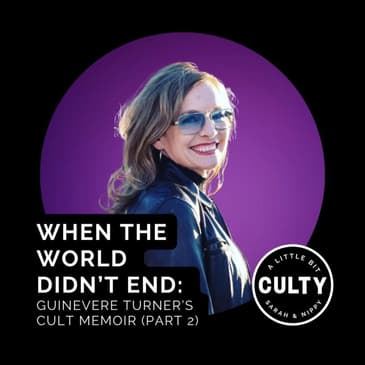
Here’s Part 2 of our conversation with Guinevere Turner whose memoir When the World Didn’t End is drawn from fastidiously kept childhood diaries written while she was raised in a cult. If you haven’t listened to Part 1, back up and listen. In Part 2, Turner shares what it was like to return to “normal” life, how her story became a thriller, and what’s helpful, not-so-helpful, and just plain weird about life post-cult.
Please note, this series includes details of underage sexual abuse. Listener discretion is strongly advised. If you, or someone who know, is a survivor of sexual assault, abuse, grooming, child abuse, or human trafficking, RAINN’s National Sexual Assault Hotline offers support at 800.656.HOPE (4673).
Note:
Guinevere Turner is an acclaimed writer, director, and actor who’s worked in film and TV since her 1994 debut film Go Fish, which she wrote, produced, and starred in. She teamed up with director Mary Harron to write the films American Psycho; The Notorious Bettie Page; and the 2019 film Charlie Says. She was a writer, story editor, and played Gabby Deveaux on Showtime’s The L Word. She’s written and directed seven short films, two of which premiered at the Sundance Film Festival. She can be seen in film roles including The Watermelon Woman, Chasing Amy, and American Psycho. Guinevere has taught screenwriting at Sarah Lawrence College, Columbia University, University of Georgia, UCLA and NYU.
She can be found on Instagram. In these episodes, we reference the story she wrote for The New Yorker.
Also…
Let it be known far and wide, loud and clear that…
The views and opinions expressed on A Little Bit Culty do not necessarily reflect the official policy or position of the podcast. Any content provided by our guests, bloggers, sponsors or authors are of their opinion and are not intended to malign any religion, group, club, organization, business individual, anyone or anything. Nobody’s mad at you, just don’t be a culty fuckwad.
Other Links:
Check out our lovely sponsors
Join ‘A Little Bit Culty’ on Patreon
Get poppin’ fresh ALBC Swag
Support the pod and smash this link
Cult awareness and recovery resources
CREDITS:
Executive Producers: Sarah Edmondson & Anthony Ames
Production Partner: Citizens of Sound
Producer: Will Retherford
Senior Producer: Jess Tardy
Writer: Holly Zadra
Theme Song: “Cultivated” by Jon Bryant co-written with Nygel Asselin
See Privacy Policy at https://art19.com/privacy and California Privacy Notice at https://art19.com/privacy#do-not-sell-my-info.
[00:00:00] The views and opinions expressed by A Little Bit Culty are those of the hosts, and do not necessarily reflect the official policy or position of the podcast. That's true. Any of the fire content provided by our guest bloggers, sponsors, or authors are of their opinion
[00:00:13] and are not intended to malign any religion, group, club, organization, business individual, anyone or anything. Unless you're abusing people then I have a problem maligning you. Also, we're not doctors, psychologists, or wizards.
[00:00:26] We're just two non-experts trying to make you a friendly, informative podcast that helps you understand culty shit. A Little Bit Culty A Little Bit Culty Hey everybody! Sarah Edmondson here. And I'm Anthony Ames, aka Nippy, Sarah's husband, and you're listening to
[00:00:47] A Little Bit Culty, aka ALBC, a podcast about what happens when devotion goes to the dark side. We've been there, and back again. A little about us, true story, we met and fell in love in a cult,
[00:01:00] and then we woke up and got the hell out of dodge. And the whole thing was captured in HBO docu-series The Vow, now in its second season.
[00:01:08] I also wrote about our experience in my memoir, Scarred, the true story of how I escaped next to him, the cult that bound my life. Look at us! A couple of married podcasters who just happened to have a weekly date night
[00:01:19] where we interview experts and advocates in things like cult awareness and mind control. Wait, wait. This does not count toward date night bait. We got to schedule that that's separate. So it's two days we got to have?
[00:01:30] We do this podcast thing because we learned a lot on our exit ramp out of Nexium. Still on that journey, and we want to pay the lessons forward with the help of other cult survivors and whistleblowers.
[00:01:40] We know all too well that culty things happen. It happens to people every day across every walk of life. So join us each week to tackle these culty dynamics everywhere from online dating to mega churches and multi-level marketing.
[00:01:51] This stuff really is everywhere. The Cultiverse just keeps on expanding and so are we. Welcome to season five of A Little Bit Cultie, serving cult content and word salads weekly on your favorite podcast platforms. Learn more at alittlebitculti.com
[00:02:24] Welcome back everyone to part two with Gwendolyn Bear Turner. If you missed part one, put in reverse and see you next week. Enjoy. I wanted to ask how all that informed your career and your career choices.
[00:02:46] And just from what I saw, like you had a lot of time to be creative. And I'm wondering if you're going to glean some positive out of what you are doing. How did you turn it into that positive to have the career that you've had?
[00:02:59] I don't know. It's kind of a chicken egg thing really. Do you know what I mean? We were all given diaries and only some of us really took to them. And I found myself constantly trying to catch up just sort of in education and cultural understanding
[00:03:13] once I was out of the family. I was so ahead in so many ways and so behind in other ways. So I think it also just made me such an avid consumer of culture
[00:03:25] because I was trying to study, study, study so I could do how do people talk and what do people talk about and you know like how what's normal and what's what's normal amount of eye contact, what's normal clothes, what's normal music.
[00:03:36] And so I think that's almost where the actor comes from. You're right. And the writer it's like study it, imitate it, go be it. Like you're sponging all the time. Yeah, sponging and then regurgitating and then trying to form a person
[00:03:51] that is socially acceptable based on my findings. Amazing. You know what I mean? All of which is basically like writing scripts and being an actor. Yes. Okay. How did you extract yourself from the second culti part two with F.P.?
[00:04:04] I'm moving with my grandmother, but then he keeps stalking me and stalking me. And finally he shows up. My grandmother got a restraining order against him. He wasn't allowed to be in that house and I was like, okay, it's done. He's never going to be here.
[00:04:17] I am safe. And then one day I'm just home with just my baby sister and brother dancing, singing, watching MTV, messing around. And I just turned around and he's just standing there in the doorway and it's just me and them home. And he's like, we're going.
[00:04:30] This is it. I'm enough of this bullshit. Everybody pack up. We're going right now. And I didn't realize this until a friend of mine, my friend Mary Haran who I do many of my films with, she was like, I didn't expect it to turn
[00:04:41] into a thriller that I just needed to figure out how to get the fuck away from him. And what happened was I made up a bunch of lies because that's a thing that you get good at saying that I needed to go to this job
[00:04:50] that I had in the mall when I really didn't. And he's like, well, you're quitting that fucking job anyway. So who cares? And I'm like, what does this man care about? What does this man care about? Oh, money.
[00:04:58] But I have to pick up my paycheck lies, lies, lies on the spot lies. Smart being around him is, you know, a huge part of how I hone those skills. And so he dropped me off there and said he was going to come back
[00:05:08] right when my shift was over and I ran into the stock room and called my boyfriend at the time. And my boyfriend called me back like 20 minutes later and said, my dad said, you can come live with us.
[00:05:17] Which was like, I just was saying like, can I just, can you just come get me now and like so we can figure out what the fuck to do. But then his dad said, come live here. And so I had a place to go. I'm so glad.
[00:05:26] But it gets crazier because then my mom won't let me go to school because she has to sign a piece of paper and because she wants me to come back so that I can be everybody can be in an abusive household, not just her.
[00:05:36] And it's pretty relentless until it's not. Okay. We won't go into the details A because I'm going to finish reading it as soon as this interview is over or listening to it. And then also we want our listeners to obviously buy the book.
[00:05:47] Dear listeners, this is a very, very good book and super fascinating and so well written. So we won't reveal the end of the thriller aspects of it. I'm just glad that you're out. Okay. In the New York Post story, you reference the late 60s as a kind of
[00:06:01] golden age of cults that blossomed because people sought change and knowledge and spirituality and alternative ideas that made everyone kind of vulnerable to being manipulated. Where do you see us now as a culture? And is there something to be said about U.S.
[00:06:13] culture and individualism that feeds into cult dynamics like QAnon and New World Order and what do you see happening right now since you're such an observer of culture? Like most forms of power that have been called out and identified it's morphing.
[00:06:28] Cultiness is morphing in all these different ways like next. I'm obviously started as this kind of corporate thing and there's something safe, sounding about that. And I think that the internet, you know, in the case of things like QAnon, which is obviously very culty, internet
[00:06:43] just changed everything because it's cults can exist virtually and so that you can isolate yourself. I grew up isolated, but I grew up surrounded by people. Now you can be isolated with a system of beliefs and be in
[00:06:55] your freaking basement and not ever actually have any kind of human interaction and that I think creates a whole other level of madness and potential for violence and for things like, you know, what happened on January 6th, but it should
[00:07:06] be noted that it feels like cults are really American. But I mean one of the most famous cults was Shoko Asahara in Japan in the 90s, you know, bombed a subway in Japan, the UK, Australia seems to be brimming with all kinds of cults, you know. Popped. Yeah.
[00:07:25] So I don't think that it's distinctly American. Is it distinctly Western? I don't know. Japan. Oh, and there's this whole documentary I haven't watched yet about a Korean cult. And there's one in Kenya. Oh yeah, the one in Kenya where they're digging up all the bodies. Yeah.
[00:07:37] So they're everywhere. I mean, that's really why I talk about that people think of it as, you know, something that was really happening back then and then we're just generations of people dealing with it. I mean, less so now that all these documentaries have come out.
[00:07:48] Well, America has the media there to scoop it up right away and make a story out of it and sometimes blur the message. No, make a lifetime movie on it. Yeah. Exactly. Yeah. Did they make a next-day lifetime movie? Oh my God.
[00:08:02] Is it just like the most unbearable thing ever? Oh my God. I look forward to the commercials. I used to do lifetime on Hallmark movies as an actor. I may never work for Lifetime again because I've been very vocal about it. It is so awful.
[00:08:14] It is so disrespectful. It is so poorly written and so inaccurate. Like they chose this very handsome guy to play Keith Reneary. Root. Root, like Root. And then also like Nancy is this very expressive like, oh my gosh, you know, she's so vibrant and
[00:08:29] like over expressive and bizarre. The woman playing her was like, it's really important that you work on your goals. Oh, because they were doing like, she's going to be culty instead of like those sort of chip or kind of vibe that she has. Yeah. That's just bad homework.
[00:08:42] Do you know what I mean? Yeah. Such bad homework. It's such bad homework. But more importantly, how do you feel about the actors who played you, Sarah? I mean, she made me look fucking bat shit crazy. She's totally honest.
[00:08:55] But that being said at the time, I was pretty off my, I mean, I was, I was not in a good place when I figured out that like Keith's initials were on my body. I was manic, you know. Your response was appropriate. Yeah.
[00:09:08] And I haven't watched it since it came out. And when it came out, I was very much not in a good place. So maybe I'll watch it again and think differently, but either way shame on them. I'll never sit through it again.
[00:09:17] What's crazy about that lifetime movie is cut to six years later, I'm standing in the playground here in Atlanta. We've just moved and it's our like the grade three play date in the fall and I meet another mom and she's from LA and she's a writer and I'm
[00:09:33] like, oh cool. And I'm like, oh, what would you just write about? And she's like, oh, I just wrote a book about a cult and I was like, oh, that's cool. Like how'd you research that? She's like, I watched a lot of docu series
[00:09:41] and I'm like, did you watch the bow? And she's like, of course. I'm like, oh, hi, I'm Sarah. And she's like, oh, I thought you looked familiar, but I couldn't place it. My best friend played Allison Mack in the lifetime movie and I was like, oh, wow.
[00:09:54] Allison Mack was like at my wedding and she's like, that's just weird. Her name is Kat Petrovich. Her writing name is Kat St. John and she writes fiction. And anyway, we just instantly connected because she knew the story and her friend played Allison Mack really well.
[00:10:05] That's the best thing about that movie is that the woman playing Allison Mack nailed it. What are the odds that you're standing next to this woman? You know what I mean? When shit like that happens to me, I'm like, does this mean that there's an alternate reality
[00:10:16] or does it mean just that I'm in the right place at the right time? I'm not really sure what it means, but does this mean I'm magic? What does it mean? Yes. I think it's magic and then like,
[00:10:25] I just was like, okay, you're going to be my friend because like you get me and you know my story and it's just easier. And actually that was a question I have for you because you wrote somewhere, I think it was in your book or the article
[00:10:33] about how like when people ask you, where are you from? There's like, if you really say where'd you grow up that your answer is so long. How do you summarize it now? And like, what's your way of interacting in the world now?
[00:10:44] I have a feeling it's about to change because now where I'm from is something you can buy and read about. Right. But generally speaking in most contexts, I just say New York. I just say that I grew up in upstate New York
[00:10:56] because it's kind of like when someone says, how are you? Like they don't really want to know how you are. Yeah. Do you know what it means? Most of the time when someone says, where are you from? They just want a simple answer. It's almost rhetorical. Right.
[00:11:06] Well, we do. We want to know how you are. I am good. I'm a little tense. The tricklings of how my generation, the generation of people that I grew up with are responding to the book are coming to me. What are they saying?
[00:11:20] There's one that I made it all seem so idyllic and beautiful and I'm like, did you stop reading the book after I'm not in the culture anymore? Right. More things happen. I'm not out out. I'm realizing things. That's one of the main complaints that I've heard
[00:11:32] and also because I know from a lot of them that they've said point blank to me everything got so much worse after you left. Right. It's because they all became teenagers. They all experienced just a lot of violence and conflict and drinking and craziness that I didn't see.
[00:11:47] On the one hand, they're saying you're making it seem so idyllic. On the other hand, they're saying, oh yeah, you missed the hard part. What got worse? Just got very violent. They think a lot because everybody kind of became teenagers
[00:11:56] and actually had agency and wanted things and that, you know, and the older generation wasn't ready for that and everybody needed to figure out like, we can't all marry each other. You know, like we maybe don't want to live this way
[00:12:09] and you have to let us find our own way in the world. And I think that everybody just had to figure out what that looked like because it involved disobedience. We've been raised really like leaving is the unforgivable traitorous crime,
[00:12:20] but like not really fair to expect a bunch of teenagers to just continue on this way in a whole new set of decades and also just should be allowed to be your own person. So many of us are related in or grew up as siblings.
[00:12:33] So it also just seemed incredibly unlikely that any of us would ever get together with each other and very few did. There's another thing to tick off the list of cultive behaviors is like keeping people dependent through fear and almost every group now has this thing
[00:12:47] where like if you leave then. Well, you can't leave the subtext. You can't otherwise bad things happen to you whether it's you live on the street, work at McDonald's, have cancer never worked through your issues, be labeled a traitor or whatever the fuck is.
[00:12:58] I have a question for you guys. Yeah. So cult documentaries come under the sort of broader roof of true crime documentaries and people are like, I'm obsessed with cults. I'm putting that in air quotes. I'm obsessed with true crime.
[00:13:11] I'm obsessed with cults as if you know, we're a knickknack store. Yeah. A cult is not a crime. Cults come into the true crime thing because there are documentaries made about the ones that committed crimes. My question for you is,
[00:13:22] is there such a thing as a cult that is okay? And of course it would never call itself that. But what would that look like? Are all cults criminal? What makes it a cult? If it's functioning in this group way and even if it's self actualizing,
[00:13:36] even if it's isolated, if there is no abuse, is it a cult slash is there such a thing as no abuse in those kinds of situations? I know that's a lot but this is something that I'm thinking about and wanting to write about
[00:13:48] because I feel like the cult documentaries, there's so many of them and it's kind of painful to watch it be entertainment. I know why I'm watching them. Yes. But I know mostly people, you know, it's not like the inconvenient truth where you watch a documentary about the environment
[00:14:01] and it makes you buy a Prius. That literally is what happened to me. You know, nobody's watching them and being like, okay, what are we going to do about cults? They're just like, whoa, those people are messed up. Do you know what I mean?
[00:14:10] I'm trying to formulate something really intelligent and I'm basically just workshopping it with everyone who thinks about these things too. Are you familiar with Stephen Hasson's work and the bite model and the spectrum? Yeah. My thesis now is like any group can become culty
[00:14:22] and any group can be labeled a cult. But I almost don't even want to use the word cult anymore because it's so divisive and people separate themselves in a way like, oh, I would never do that. It's marginalizing. The conversation is already comes with a lot of baggage.
[00:14:36] If you're using that in the C word. Exactly. We tend to look at like, what are the dynamics at play that are either healthy or not healthy on this? If you look at the spectrum. So like if you took your situation, which they ideal like part
[00:14:48] like people living on a farm, living independently, trying to live by a certain set of morality, maybe a separate from the outside world that could be really lovely. Word, does it become problematic? Is it healthy? Is it toxic? Like nevermind that again, the C word.
[00:15:02] There's a couple of questions like can people leave without being shunned, excommunicated or shit talked? If that can't happen, people can't come and go as they choose. That's a problem. That's not healthy for someone's autonomy and sense of self. Where does the sense of self come from?
[00:15:16] Is it come from themselves or from an outside doctrine or charismatic leader or person? Like there's just certain questions that I'm trying to formulate to give people to ask themselves because people write to us all the time. Like is this bad?
[00:15:28] And which is good like that this conversation is happening and I do think that's where the documentaries can move outside of entertainment and actually be a template for people. At least that was our experience with the vow. People write to us all the time
[00:15:40] saying it was a Jehovah's Witness, I was da-da-da-da and I've left. I left cause I could see it with your group. I couldn't see it in my group but I could see it in your group. So I feel like just showing how it happens in different situations
[00:15:53] allows people to go like is this right for me? Is this healthy for me? And do I want to continue being a part of it knowing that A.I. can't leave or I'm isolated or whatever that's like there's so many different things
[00:16:04] that I try to present to people like this is what makes it problematic and specifically coercive control. A thing that surprised me when I started engaging the Lallage Center and a lot of other different and you know, at any given discussion group in the Lallage Center
[00:16:17] it's Children of God, it's Scientology, it's Mormons, it's Orthodox Jews. It's you know, like offshoots of all of these religions that you know, and then it's family cults we've never heard of and then it's everybody. I was surprised at how many people said again, silver lining of COVID
[00:16:32] that during COVID they were finally isolated from their usual day-to-day busy work intensity group stuff blah blah blah that's partially what made them realize that maybe they were in a cult and then watching Wild World Country. Yeah. And I was like, okay so these documentary
[00:16:47] news are helping someone. That's not majority who's engaging with them but if they are making people kind of look at their own situation with new eyes then I'm not as mad at that but that surprised me. I realized that I assumed that someone who's coming
[00:17:00] from that kind of environment would be like I was which is like, God everyone's not a cult like calm down. Do you know what I mean? Because you're not ready to hear what that is and that means you have to examine yourself and that's just not something
[00:17:11] you're ready for. Let me be happier and less kind of mad about how much cults have become the best, most juiciest kind of true crime that people are just you know, can't wait to gobble up. This is the golden age of cult recovery. The more we speak up
[00:17:26] and share our stories, the more we realize we are not alone. Your voice and your story can empower others. This is Sarah and I'm proud to be a founding collaborator of the hashtag I Got Out movement. Learn more at IGotOut.org Meals bring people together
[00:17:50] but for many families providing their next meal can be a challenge. You can help by participating in Macy's annual Feeding the Hungry Food Drive. All proceeds go toward local food banks and families. Now through January 31st you can purchase an icon in store or online or watch out
[00:18:07] for the blue feeding the hungry shelf tags where a portion of your purchase will be donated to local pantries. Together we can combat hunger in our local communities at Macy's. The Frankies were a picture perfect influencer family but everything wasn't as it seemed.
[00:18:25] I just had a 12 year old boy still up here asking for help. He's emaciated. He's got tape around his legs. Ruby Frankie is his mom's name. Infamous is covering Ruby Frankie, the world of Mormonism and a secret therapy group that ruined lives. Listen to Infamous wherever you get
[00:18:46] your podcasts. I would add a caveat. I think a prerequisite for cold scissors is an abuse of power somewhere and what makes colds dangerous is that it's coercive. They don't know that it's going on. So putting a language to the coercive aspects of it because there's always plausible
[00:19:03] deniability. You can go to the subject and go, you're here by your want but the person who's administering the coercive control is the person abusing the power and they can maintain a front that they're not only not doing that that they're the opposite that they're actually empowering people
[00:19:17] when they're disempowering people. They're sucking your life force and the people that they're doing it to are none the wiser. Sarah and I had a conversation recently I addressed how I knew she viewed me. We were in a system that was designed to make you fail work really
[00:19:33] hard and make you fail. It was hard to figure out the forces behind your failure when you were doing the tenants and practices that you knew to be backbones of success discipline follow through all those things all those things and there are many people in the organization
[00:19:47] that we're doing that not yielding results in the certain way. It's because they're being subverted by the cold leader and since we've been out pretty much the projects that Sarah and I have gotten on without that subversive tug yeah coercive like almost invisible force we're starting to thrive
[00:20:04] in in certain ways in short we're not living our lives with those shackles hmm it was devastating for me because I someone who prides myself on my results you know in a lot of ways to my detriment I measure my self-worth on my capacity perform it's just how
[00:20:20] I've been able to measure not and there's probably work for me to look at there that's fine but like I do recognize there's a correlation to my self-worth my self-esteem and my capacity to build what I want to build and those things are happening in multiple areas
[00:20:33] in our lives right now it's taken five six years because it takes five six years to do something I think worthwhile and so there's so many variables and there's so many ways to look at how these coercive things manifest and it's hard to put language to it
[00:20:46] and I think what the current climate of cult recovery and all that stuff too is putting language to where there's a deficit of language to what these things look like sounded like and all that stuff which is one reason I decided to participate in the valve because
[00:21:00] I have a lot of friends who know me they're like dude you did not want to be there and I was like yeah I didn't want my personal life to be other people's entertainment that hurts that just hurts I didn't want to go through the slings and arrows
[00:21:10] but then I recognize you know what I can be a formidable force in this because how I was abused was different I wasn't targeted sexually I was targeted differently my trauma is different and you might say in some cases less but it's certainly targeted me
[00:21:23] where it hurt the most which is I want to feel successful and powerful in my own life protect my family and I was in a lot of ways unable to do that so that was that was a tough pill for me to swallow and then go on
[00:21:36] a documentary that showcased that yeah so I found my lane and I educated myself and found my language and tried to deliver what I felt like I could in my lane the best I could so I could add a brick to that knowledge base
[00:21:51] so people could understand it and hopefully you know that's what the podcast is done and this lane has opened up I believe if you have a lane to help the human team in some capacity you take it it's an opportunity for you to move the group of everything
[00:22:04] that we're doing forward and the conversations are going to be messy if they're effective and hopefully the emergent property is more understanding and more language to what abuses of power are going on because I do believe most people are good and it only takes a handful of
[00:22:18] of psychopathic people to get together and start creating these systems that are victims of it and none the wiser so I like that lane I'll stay in it as long as the world will have me in it and listen and your story certainly add more language
[00:22:33] to how I understand it Yeah writing it and talking about it that's one thing but talking about what necessarily happens as that people like as you were saying happens to you people reach out to me that happened when I wrote the piece of New Yorker in 2019
[00:22:48] a wave of people who felt like they didn't know have anyone to tell or they felt ashamed or they felt like isolated from their family or they just you know had like me had kind of erased their past because it was too weird for the you know
[00:23:01] trying to have a normal life and so for me I feel this immense responsibility to be educated to be you know have a counseling minded person and to have a place to point people to for resources because it's incredible how many people there are that's shocking and how
[00:23:19] unmoored they are and how they don't find each other and how they're just reaching out to me like through my website like finding all these different ways to find me because I spoke to something that they hadn't heard before about what it feels like to
[00:23:32] to be in a cult and and to not be in a cult and so that's the for me the my biggest job right now is to kind of be an advocate but that starts with having smart things to say it's also case by case that's the biggest thing
[00:23:45] you have to recognize like your story is different than mine and like when I hear yours I go oh my God and you hear mine and you go what yeah that's the thing that hopefully ties us all together like hey we're all in this together there's people
[00:23:58] that are abusive and yeah putting language to it and hopefully educating I really tried in my film Charlie says which is about the women who killed for Manson and and largely takes place in jail their time in prison but they had an entire crazy experience in prison
[00:24:10] one of the reasons I took that project on is because I wanted to really try a to humanize them and B to represent the baby steps of coercion that can make you stay and what love bombing looks like so that they became human beings
[00:24:26] who got sucked into something before they realized it was bad and how there's a point of no return where you've committed to something and even if it starts to feel fucked up you've come this far so you either have to admit that you've been a fool
[00:24:38] this whole time or you have to double down and that's where it gets dangerous and so that is a story that I want to continue to tell which is ironic because that is not what happened to me but I understand it and I understand that people
[00:24:48] don't understand it and with that misunderstanding comes judgment and a lack of empathy. Oh yeah 100% and that was actually one of my questions for you which is what are some of the inappropriate questions people fill in title to ask you or as you put it hashtag
[00:25:01] people who've never been in a cult say just people say things like oh is it like all like acid and orgies and you know they mean stuff like that where I'm like yeah if it was then maybe that wouldn't be like the easiest thing
[00:25:14] for me to talk about people say oh you grew up in a cult how was that how was that and to which I say how was your childhood I'll never be able to sum up that part of my life and like a sentence like oh yeah
[00:25:27] I had a great you know I grew up in Akron I had a great you know my mom was a cancer nurse and my dad was a blah blah blah you know it was great like sorry can't really sum up my experience in that way like
[00:25:39] or am I supposed to say oh it's fucked up man like what it's just always the weirdest like how was that I'm like I mean it might be why I wrote a book here's how it was here's 360 pages about how it was I think that's a really
[00:25:51] great way to solve that problem say you know why don't you read the book and then we go for coffee and talk about it it might actually be why I wrote the book is that actually it's going to save me a lot of money with therapists
[00:25:59] because I can say instead of spending like six or seven or eight sessions explaining to you where I grew up and what my trauma is I wrote a book about it so if you could just read that they'll save us both a lot of time
[00:26:09] and me a lot of money yeah absolutely actually one of the biggest gifts was starting therapy when I first got out with Dan Shaw who I mentioned earlier was a narcissist expert and he knew about Maxim already and he knew Keith and Nancy were
[00:26:22] so I could say things like oh like I'm so pained that I've lost my relationship with Lauren for example and he knew who that was and that was such a gift and circling back to our earlier conversation with the lack of therapists I think you'd make
[00:26:33] an excellent therapist until then if you don't become a therapist I don't have time I don't time either but I've thought about it but I think and one of the things I always say to people I have like a six-part healing regimen that worked for me and like
[00:26:44] this is what work for me might work for you I'm never going to tell anyone what to do ever again but one of the things is getting together with other X members not just the group so for us like getting together with X next year members
[00:26:55] and just like speaking freely and like shit talking be like well remember that time that so and so did that like that was such a fucking awful bitchy thing to do you couldn't say anything like that and look like you couldn't say speak poorly of anybody that's how
[00:27:08] Keith protected himself was called speaking with this honor so like just being able to speak freely without being suppressed without having all the rules and then also I didn't recognize until I started being public and actually that's where I met Yanya Lallich was on cults and extreme beliefs
[00:27:21] for who I think was Hulu and I met Yanya and all these members of other groups and we do sharing our experience it was so healing for me more so than even the therapy that I was doing yeah when I first started going to those groups I'm like
[00:27:35] I have never felt so at home in a group of strangers there's just stuff vibes experiences feelings that we barely even have to articulate in a way that we would do other people and like pretty much somebody's crying at all times if not all of us but also
[00:27:50] laughing do you know what I mean I'm like this is always a space like I've never felt before it's pretty incredible so good I'm on a journey of educating myself but more I am educated of finding the best way to connect with people and the other day
[00:28:05] I thought to myself in again trying to demystify how people get sucked in and that it can be anyone I thought to myself maybe this will work for people have you ever been so in love with someone or so crushed out on them that you made terrible decisions
[00:28:18] that didn't seem like you we've all done that right even if you got a little bit stalky but it was the name of romance or you know what I mean like you got you went in a little bit outside of yourself you talk too much about the person
[00:28:28] to your friends until they told you shut up like whatever it is like the traces of it are there like of falling in love and kind of losing yourself yeah or like been in a situation where like you know you were around a bunch group of people
[00:28:39] and they were doing something you didn't want to do there's nippy and I were just with some of the football people that nippy does his podcast with and there was a party afterwards and nippy and I were not really like we drink right now number we're not like
[00:28:52] heavy drinkers and they were doing sake out of a fucking super soaker and like squirting sacking and it was like a frat party like with super soaker sake and nippy is driving I'm there the kid I have a four year old and a nine year old
[00:29:11] at the party not a place for these kids to be and nippy is like I don't want it and there's a like oh what do you baby you know and like they were teasing him and and then they did it with Troy with the water you know
[00:29:23] and I said to Troy afterwards I was like it's super important that like what you saw tonight is I want you to understand like there because other adults didn't say that they don't want to do and then they caved and I was like if you don't
[00:29:32] want to do something like it's so important that you have that boundary and then you can say no and even people aren't going to like you and people are going to tease you funny like and we try to talk to him about it and I was like
[00:29:40] oh my god but people quietly are going to admire that you did that and also for you it's like he got to see his dad not being one of those people yes and I think this is probably really important for a kid to be like you know
[00:29:53] my dad doesn't have to do that I don't have to do that I don't have to be a person who gets basically bullied into shit yeah sorry I just really love stocking so part of this thing that's upsetting to me up the story is that the shear
[00:30:03] sort of brutishness of serving sake this way I know beer fine like whatever but like sake is like chilled little glass poured delicately for your dining partner not just like super super that shit into your throat that's crazy it's misappropriation of sake oh yeah and not only that
[00:30:20] like it's totally unsanitary like I couldn't stop thinking about like how gross the whole thing was and that's definitely basically vinegar and distilled I don't know what the fuck in like these kinds of things I think are super important we try to do that in our podcast
[00:30:37] is like talk to people about parenting and like how to teach kids healthy boundaries and how they can say no to things and those are the precursors to getting caught up in things so much of like my saying yes to nexium I'm missing red flags because I
[00:30:50] didn't want to rock the boat and wanted to be liked and all my things that made me susceptible to and wanting to be special and being popular and being part of a club and like those were what drove me like was a total nerd growing out of a
[00:31:04] complete nerd and then this was like everything I always wanted so I missed all the red flags because I was like this is amazing I'm so great I'm applying on a private jet to Alaska you know like great right yeah understanding how the environment that I was raised
[00:31:19] in which was wonderful and safe and amazing but also I had my own challenges but made me you know what I mean like that I think is key part of the conversation it just made me wish that there was like a thing a standardized test someone could say
[00:31:31] like I would never fall for that to you could actually give someone a standardized test that says you know gives them a meter how susceptible you are to course of control because I'm sure there that that is a number of all of us me personally because of
[00:31:45] how I was raised yeah you would be hard-pressed to suck me into something anything that has doctrine of any kind right but I'm the exception because you've been through it yeah hey there listener hope you're enjoying this episode and that you're remembering to hydrate stretch and unclean
[00:32:01] your jaws sometimes listening to conversations topics can really make you tighten up you know and remember a little bit culty loves you also come hang out with us on patreon after you finish this episode it's fun over there fun is good and now here's a brief message from
[00:32:16] our sponsors this episode is sponsored by better help what are your self-care non-negotiables maybe you never skip leg day or never miss yoga maybe it's getting eight hours of sleep I mean that's my personal and everyone's dream isn't it well I definitely have some non-negotiables like I'm in
[00:32:35] Vancouver right now and I'm spending literally as much time as I can outside of nature hashtag cold pools hashtag crushing it nature is a non-negotiable not enough time the fresh air and the trees around me and I start to feel not great not myself not grounded therapy day
[00:32:49] is a bit like my nature walks I try to not miss it and I know I'm just going to feel so much better all around if I make it a priority I get so much out of it it helps me put my worries and anxieties in their rightful
[00:32:59] place and helps me clear my mind so I can focus on what I really need and sometimes what I don't need like I don't need to be overbooking myself just because I hate to say no to people you know what I mean thanks therapy thanks for helping
[00:33:09] me see that and if you're thinking of starting therapy give better help or try it's entirely online designed to be convenient flexible and suited to your schedule just fill out a brief questionnaire and get matched with a licensed therapist and switch therapists anytime for no additional charge look
[00:33:24] even when we know what makes us happy it's hard to make time for it but when you feel like you have no time for yourself non-negotiables like therapy are more important than ever never skip therapy day with better help visit better help dot com slash culty today
[00:33:36] to get 10% off your first month that's better help H E L P dot com slash culty Meals bring people together but for many families providing their next meal can be a challenge you can help by participating in Macy's annual feeding the hungry food drive all proceeds go toward
[00:33:54] local food banks and families now through January 31st online or watch out for the blue feeding the hungry shelf tags where a portion of your purchase will be donated to local pantries together we can combat hunger in our local communities at Macy's I can't even tell you
[00:34:14] how many times people we talk about this all the time on the podcast they tell me how they're not susceptible and they would never fall for it and they they're glad I got out you know like I'm so happy you got out whatever and then they tell me
[00:34:24] about something that they do that's like super from transcendental meditation or they go to CrossFit religiously or they you know spin class spin class like not super problematic on the outset inside core inner circle major problematic all these things like next year was great on the outside
[00:34:47] for a lot of people for a long time Oh which to circle back to your earlier question and if you talked about abuses of power is just the concept of the bait and switch like you think you're signing up for one thing but it's actually this other thing
[00:34:57] so there's a lie you're signing up for communal living in an idealistic off-grid whatever but it's actually a hotbed for teenage brides and sexual abuse Yeah you don't sign up for that you have to hide it so there's always like some smoke and mirrors I have heard
[00:35:14] that you feel you Sarah feel like you rushed the book that you wrote and the reason I ask about this is a is that true and B because I teach this writing workshop and these are a lot of people who are relatively fresh out relative to me anyway
[00:35:30] fresh out of whatever environment they grew up in that they're you know in recovery from they immediately want to write a book and they want to talk to me because I have written a book you know the the obvious elephant the room there is it took me for
[00:35:43] it's 40 years later and so I would love to hear you talk about because what I kind of want to say is like hold your horses right right right right don't feel like the pressure to write a book but I'm saying that from my perspective and so
[00:35:55] I would love to hear from your perspective the short answer is that my publisher who was great and I loved in everything but wanted the pub date to be around the time of Keith sentencing so that it was like in the news cycle which really gave me like
[00:36:08] once the proposal was set and everything and then we started writing like three months it was very short Oh wow period of time and I had a newborn and I had a co-writer and she was great but the back and forth and the stress of it all
[00:36:20] and the deadlines and then like the zoom calls and there's a lot of things about the literary world which I don't like in terms of like pressure and that just was too reminiscent for me at the time and also like Oh you have to do it was a
[00:36:33] DateLine or something that be remember they really wanted me to do DateLine I was like I don't want to do DateLine and then I got like Oh my God totally shamed from somebody No I bailed and I said blame it on me blame it on me because
[00:36:44] I can tell by people's questions where they're coming from they reveal they reveals everything I can I can I can understand if they know what they're looking at I can understand also if they care what they're looking at and I just got a hit and I was like
[00:36:55] you know what I don't have to fucking do this I'm not doing it and I told Sarah I'm not doing it I don't like that I was like you know I have to draw boundaries in my personal life That's what I'm learning to do and I drew it
[00:37:05] the coercion to try to get us to do this and also they wanted footage that we'd already given to the vow the vow hadn't come out yet we didn't know what the vow was going to be but that was another thing is like the vow was like
[00:37:15] can you not give this to anybody else so that we can have it and we were like in ways it was like too reminiscent of what we'd just gotten out of in addition to trying to write the book No care right and not understanding everything of you two
[00:37:32] who are really processing so much but outside of any kind of media your life is just radically altered and you've lost all these people and you've lost all this structure and to me those are people who should be treated like people who just got out of a
[00:37:44] you know a natural disaster Yeah that's all I wanted that's really all I wanted and a base level was empathy and care and I just didn't feel like I was getting it from the people who are going to try and take care of our story in retrospect
[00:37:57] I've known what the vow was going to be I would have just like not I would just immediately know everything else because the vow really did do us a solid in terms of like actively showing the world what was good about it what the vision was like
[00:38:10] what like that I think they did a great job in that like yeah bringing people on the journey and giving us empathy as survivors and like I'm very grateful for that so back to the question of the book it was rushed I probably had like one
[00:38:22] or two passes of the final edit it was so intensely stressful and to the point where I didn't even time to read all the journals that I wanted to like you did I would have done it differently for sure I'm glad it's out there I feel like
[00:38:32] what's there even though it's a good book it's not like it's just in the season that a couple edits you know like they're just some things that are like that's not quite right but it's fine you know that's fine for explaining the chronology mm yeah I mean
[00:38:46] I guess might take away from that you know as a broader piece of advice to people that are thinking about writing a book is don't paint yourself into a corner like give yourself as much time as you need and let that be decades if it needs to be
[00:39:02] yes like if you must write about it don't rush yourself because don't rush absolutely it's just unnecessary trauma really that you're like immediately feeling the pressure to kind of sell your story either literally or figuratively I want to say like take some time to think about
[00:39:19] who you want to be outside of this identity before you solidify it in the culture that this you are like really think about that because it would take a lot especially for people who want to be actors yeah we'll take a lot for people to forget that
[00:39:33] people tend to remember this shit and the gnarly or your story is the more that we're member it yes I mean so that's another thing that I would I really want to moving forward talk to people who are writers and wanting to write about it is like
[00:39:45] just for a minute go macro with your whole life plan yes and think about maybe do another stuff and finding your way in the world and then talking about it because you'll just have you'll be smarter about how you talk about it too you know yeah
[00:39:57] I totally agree and to recap no deadlines like if you do sign with a publisher or whatever like make sure you don't have a deadline or make it that deadline be two years yeah yes that's sure you might be need to have a deadline but have a big
[00:40:09] big gap and yeah take your time as you think that writing things out chronologically is very cathartic for people do you chew like this happened this happened like I hear that a lot in that some cult therapist even if they're planning on writing or not just to like
[00:40:21] map out what happened because often there's like at least for me there were huge gaps in my memory of like what was I doing for three like where were we what did we do what was our I don't remember because we were so high strong and performance mode
[00:40:35] fill fill fill build build build go go go everything was intense I mean and that was like a different state it's like trying to remember what you did when you were drunk like it's not accessible right or what actually happened in a like a car accident yeah
[00:40:50] all of a sudden time's slow slash still to be sure who you were slash was that three hours or three seconds you know it's also kind of like you're in this place where your brain doesn't have time to process right yes so it just becomes blank anyway yeah
[00:41:04] I want as many people to write about it about their experiences possible but I also don't want people to write half-assed books that turn it into a genre that people don't pay attention to or take seriously you know that's a very good point I will initiate a conversation
[00:41:17] between you and Daniela and also T. Lovings who is in a number of different fundamentalist Christian offshoot she's great she is featured in the docu-series that's out now called shiny happy people about the Duggers and that whole Christian offshoot debacle but where can people find you
[00:41:35] what's the best way for them to connect with you if you like that I have a really low rent website ha ha ha ha by low rent I mean I just I'm so working on it but social media particularly Instagram I'm very present on right also Twitter
[00:41:47] but not as much but Instagram if you want to see videos of me and my dog opening a box of my books when they first got here already want to see me and my girlfriend looping around I mean but also I Instagram is the thing I pay attention
[00:41:59] to the most and it's easy to message me there and I I definitely respond to that great I can't remember even though we just talked about did you say you have or have not read my book it's actually right here but I'm only like page 40 I wish the
[00:42:11] knowledge center was a real place can you imagine like a library that was really called specific and what a great resource that would be and as a place to hang out I got big dreams big dreams for the Lallich Oh big dreams same here and if I die
[00:42:24] or I will die one day but when I die and it be can you donate my call books to the Lallich Center it's more but no to end on Jesus I will continue reading it because I am so curious to continue kind of the conversation about when
[00:42:37] and how we write our stories and how to shepherd people through that in a way that isn't harmful let's please do that episode in August cause I'd like to keep chatting with you be have you back and I think that would be a really good resource for
[00:42:49] a lot of our listeners our survivors and ask about how to write a book and we could put that episode out as like here is a resource for you Yeah that would be great I have so much to say about it and continue to sort of gather information
[00:43:01] when I meet people and when I talk to survivors who are thinking about writing Well thank you so much for your time apologize that we went for two hours but I also loved every second of it so much to say Sorry not sorry That was great
[00:43:12] That was great Please come back soon the conversation is not over and we're new friends now so Alright Thank you Thank you So every time I hear this story and obviously Gwynn of Eris highly intelligent and it's not an intelligence thing as we've established in our other podcasts
[00:43:58] and stories I just can't get out of my mind that there needs to be some sort of curriculum for kids something in schools to build awareness around what these abuses of power look like You know what I mean? Like there's always someone it feels like is lurking
[00:44:13] they look normal and there needs to be something in place that where kids can recognize it early and this is a little different because she grew up and it was all she knew but she's left with the aftermath of going and putting the pieces back together and
[00:44:25] there needs to be something like you know I think that's for Amy Seltzman and how to spot a spider and all these people who are trying to educate children at a young age to see the red flags The thing that really resonated with me the most after
[00:44:37] reading her book which again I really recommend is that I love the idea of living communally and so much of what she described at the beginning sounded great and I saw a video have a podcast recording recently where someone was saying that like what makes you happy
[00:44:51] as you grow older and you've got kids is just to spend time with people you like in their kids and have families together so she moved in with 20 people into a commune and I'm like well that sounds great but how do you keep it from getting culty so
[00:45:02] this obviously Mel Lyman was not able to prevent that and some really terrible things occurred and the conversation continues so we thank Gwynnevere Turner for putting it all out there for writing her essay for writing her book which she's now adapting into a film
[00:45:16] and working on a TV series about culty programmers and she has a dog named Marbles that she loves and we'll leave it at that thank you Gwynnevere thank you Gwynnevere please keep in touch we love you bye hope you liked this episode let's keep the conversation going
[00:45:49] and come hang out with us on Patreon where we keep the tape rolling each week special episodes just for Patreon subscribers and where we get deep into the weeds of unpacking every episode of The Val and if you're looking for our show notes or some sweet sweet swag
[00:46:02] or official ALBC podcast merch or a list of our most recommended cult recovery resources visit our website at alittlebitculty.com and for more background on what brought us here check out Sarah's page turning memoir it's called Scarred the true story of how I escaped Nexium
[00:46:17] the cult that found my life it's available on Amazon, Audible narrated by my wife and at most bookstores a little bit culty is a talkhouse podcast and a Trace 120 production we're executive produced by Sarah Edmondson and Anthony Nippy Ames with writing, research and additional production support
[00:46:33] by senior producer Jess Tardy we're edited, mixed and mastered by our rocking producer Will Rutherford of Citizens of Sound and our amazing theme song Cultivated is by John Bryant and co-written by Nigel Asselin thank you for listening