
This episode is sponsored by BetterHelp.
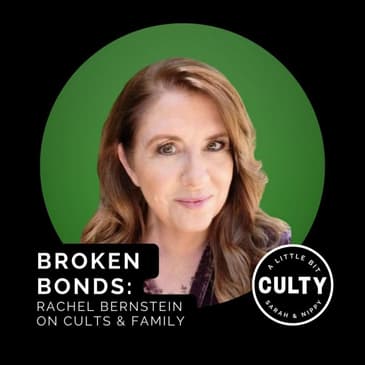
We get emails and messages from people every day who are looking for guidance on what to do when someone they love is in a cult, so we called in an expert. Here’s our chat with Rachel Bernstein, LMFT, of the mighty helpful and always bingeable IndoctriNation podcast. Is this technically a crossover episode? We don’t make those rules, but we do feel pretty confident in saying that this episode is a power hour on what to do if your loved ones become culty collateral damage.
SHOW NOTES: Rachel Bernstein is one of our all-time favorite cult awareness and recovery podcast hosts. She’s a Licensed Marriage and Family Therapist from Los Angeles, California who has specialized in cult intervention and re-acclimation for over 30 years. She serves on the advisory board of the International Cultic Studies Association and has worked with the Department of Justice providing therapy to cult victims who testify against their perpetrators. She's also made many media appearances over the years as a cult expert on CNN, MSNBC, BBC, NPR, Bloomberg, and many other news outlets. Ms. Bernstein is also the host of IndoctriNation: A weekly podcast covering cults, manipulators, and protecting yourself from systems of control where she has interviewed hundreds of cult survivors, journalists, and experts. Her book, "Kids Talking to Kids about Divorce" is available now on Amazon.
Also…Let it be known far and wide, loud and clear that…
The views and opinions expressed on A Little Bit Culty do not necessarily reflect the official policy or position of the podcast. Any content provided by our guests, bloggers, sponsors or authors are of their opinion and are not intended to malign any religion, group, club, organization, business individual, anyone or anything. Nobody’s mad at you, just don’t be a culty fuckwad.
OTHER LINKS:
Check out our lovely sponsors
Join ‘A Little Bit Culty’ on Patreon
Get poppin’ fresh ALBC Swag
Support the pod and smash this link
Cult awareness and recovery resources
CREDITS:
Executive Producers: Sarah Edmondson & Anthony Ames
Production Partner: Citizens of Sound
Producer: Will Retherford
Writer & Co-Creator: Jess Tardy
Theme Song: “Cultivated” by Jon Bryant co-written with Nygel Asselin
See Privacy Policy at https://art19.com/privacy and California Privacy Notice at https://art19.com/privacy#do-not-sell-my-info.
[00:00:00] This podcast is for informational purposes only and should not be considered legal, medical or mental health advice. The views and opinions expressed do not necessarily reflect the official policy or position of the podcast and are not intended to malign any religion group, club organization, business individual, anyone or anything.
[00:00:30] This is a Little Bit Culty. A podcast about what happens when things that seem like a great thing at first go bad.
[00:00:37] Every week we chat with survivors, experts and whistleblowers for real cult stories told directly by the people who live through them.
[00:00:44] Because we want you to learn a few things we've had to learn the hard way.
[00:00:47] Like if you think you're too smart to get sucked into something culty, you're already prime recruitment material.
[00:00:53] You might even already be an occult.
[00:00:55] Oops, you better keep listening to find out.
[00:00:58] Welcome to season 6 of A Little Bit Culty.
[00:01:00] Hello everybody. Welcome back to this week's very special episode of A Little Bit Culty.
[00:01:24] If you listen to a Little Bit Culty, you're clearly interested in a podcast that covers cults, manipulators and protecting yourself from systems of control.
[00:01:32] Which means you might already be a big fan of our guest today.
[00:01:36] Rachel Bernstein is the host of the indispensable indoctrination podcast. And every week on that show she sits down with former cult members, intervention experts, and people who've left narcissistic and controlling relationships of all kinds to hear their stories and discuss their past experiences.
[00:01:52] So, of course we are podcasting buddies.
[00:01:54] Is this technically a crossover episode?
[00:01:56] It's definitely a culty indoctrination and power hour.
[00:01:58] So what do you call that cross-training, cross-potting? Carry on.
[00:02:01] For 30 years Rachel Bernstein, LMFT, that's license marriage and family therapist in case you don't know, has helped former cult members and people with loved ones in cults and highly manipulative relationships.
[00:02:12] She also provides individual counseling, family counseling, and when possible, group therapy for former cult members.
[00:02:18] And she also helps families who are trying to reach out to their loved ones who are still in.
[00:02:22] That's what we want to talk to her about today.
[00:02:24] How to help someone you love who's caught up in something.
[00:02:26] We get emails and messages from people every day who are looking for guidance on this topic.
[00:02:31] What to do when someone you love is an occult. So we called in an expert.
[00:02:35] This is going to be part of our resource series because Rachel is not actually a former cult member. She's an expert.
[00:02:42] Here's our chat with Rachel Bernstein of the Mighty, helpful and always-bingeable indoctrination podcast.
[00:03:00] Rachel Bernstein, welcome to Little Bit Culty.
[00:03:02] You're me for over here.
[00:03:03] I got excited.
[00:03:04] Yeah.
[00:03:05] This has been in the works for a year at least.
[00:03:09] Yes, I know. At least it's really nice to be back talking with you and I can't wait to get into our discussion.
[00:03:15] I as well. This is something that people have requested time and time again and it's just-
[00:03:20] It's been woven with different experts this topic of family members and cults but we haven't done a dedicated episode.
[00:03:28] And we feel like you are the expert.
[00:03:30] It's an overdue episode.
[00:03:32] An overdue. So apologizing to our listenership took this long but you know better late than never.
[00:03:38] So we've been on your podcast. This is your first time on ours for anything in particular you want our listeners to know about how you got into this wacky little space we're in.
[00:03:50] Right? Yeah, it can feel sometimes even wackier than wacky but it-
[00:03:55] It's not so little either.
[00:03:57] And it's not so little. It had been, you know, when I started it was definitely little.
[00:04:03] It was definitely niche like niche within a niche and so or niche as I say out here in LA.
[00:04:09] But it is a very interesting subject to me, I think because it's always going to be timely.
[00:04:16] There are always new groups. I hear about new groups every day.
[00:04:20] And now with the internet there's so much more reach for people and ways people can kind of formulate themselves and look really good on camera
[00:04:30] and present themselves in a very slick way.
[00:04:32] They're doing unfortunately very well at recruiting new people truly every day.
[00:04:37] So how I got involved was I had a family member who suddenly got sucked into Scientology.
[00:04:43] And we- and this was in the 70s, we didn't know anything about cults.
[00:04:47] And the only books you could find that had anything to do with cults were often written by the leaders like El Run Hubbard's book which is not going to really help you know about a dangers of his group.
[00:04:57] And we hear about how it's perfect and the only way that you can, you know, get help.
[00:05:01] So once we started seeing and as I was sort of growing up with this visual around me seeing a family member who was- who was leaving us without leaving us like she just wasn't there anymore
[00:05:13] and she didn't feel present, the look in her eye was different.
[00:05:16] And suddenly there was a lot of secrecy and she was missing for periods of time.
[00:05:20] So what is this? What is this that could be out there that is just wanting to pray on people and wanting to take them away from their lives.
[00:05:30] And you know our- our family life was okay. It's not like she was needing an escape per se but they convinced her that our family was dangerous to her.
[00:05:40] And she needed to escape and she needed to go to safety.
[00:05:44] And for Scientology to call themselves a place of safety is ultimate irony but still when I started in college in Boston, I remember having already learned about some cult groups and the front names that they used on college campuses.
[00:05:59] And I know some of the adults will talk to kids about things and you think they're being kind of overly dramatic and maybe trying to make you scared but there they were.
[00:06:08] And there they were in the student union, there they were with their tables and their brochures and buses taking people away.
[00:06:16] And I thought oh this is a real thing. This is a real thing that you can help your child get to this place of going to college or wherever your child is away from home.
[00:06:26] And there are people they're waiting to just steal them, truly steal them away from you without their knowledge or consent, without your knowledge or consent.
[00:06:34] And so then when I went on to be a therapist right after graduating coming back to LA going to USC, I saw also cults on that campus but I also noticed that one of the teachers I had at USC who was running a support group class sort of how to run a therapy group, how to run a support group was running it like a cult.
[00:06:55] And it was fascinating to watch. It was a case study in favoritism. If you shared more, if you opened up about trauma you had been through, if you admitted your trauma even if you really didn't have trauma.
[00:07:08] A lot of people started making up stories. You would then be able to sit closer to the teacher. You would then be liked by her.
[00:07:15] You would have your, she put her arm around you and invite you out for coffee after like there was this whole hierarchy and people really being told that if they didn't share their trauma that they were withholding that they were not honoring the people there with their information like so much pressure.
[00:07:33] And so I did a little study because I thought she's not my therapist. These are not my friends, it's from my classmates. So I just went in and I'm finally because they thought I was you know really not taking this class seriously because I hadn't opened up about my trauma at that time I hadn't yet experienced trauma.
[00:07:51] I did the year after and when I experienced it, I remember thinking oh they would have loved me in my class and I thought well that's sick. So I just made up a story and suddenly she liked me and my grade went up and it was just fascinating to watch that this can happen within the therapy world.
[00:08:09] And people are learning how to run things in this way and I thought okay, I have to do this. I just have to be this person who's the counterbalance to this as much as I can. So that's how I got started since the space then wasn't what it is now. What was your first for a where how did you educate yourself?
[00:08:27] Right so I started going to conferences and at the time the organization that was connected to this was the cult awareness network. Right.
[00:08:38] And right it was started as this mom and pop organization around a kitchen table with parents who were just really concerned on a shoe string budget and they were trying to eke out you know being able to put conferences together.
[00:08:50] Scientology was very present at these conferences getting in people's faces heckling people who were coming forward crying telling their stories for the first time and they were really cruel.
[00:09:00] Scientology is really cruel. Very, very cruel. Yeah taking photos of the sign-in sheet so people didn't have privacy writing down people's license plate numbers so they could I don't know what on them. I don't know just for intimidation. Yeah just to mess with them.
[00:09:17] And I've since actually you know talk to people who were who are doing things like that who now are on the right side of the fence and we know some of those people but they were there at these conferences really like terrorizing people on behalf of the world on behalf of Scientology not just because they felt like it.
[00:09:36] So I learned also just from hearing from people like Patricia Ryan who's the daughter of Leo J Ryan who went to Guyana to Jones town to try to rescue his constituents who were brought there to be part of the people's temple and he was shot on the tarmac when he arrived.
[00:09:54] She became someone who was speaking at these conferences then was on the board of the Cult awareness network. In fact when I started my podcast I asked her to be my first guest ever to kick it off because I think for a lot of people Jones town would help kind of help people be educated that this thing can happen.
[00:10:12] And so really open people's eyes and her father sacrifice was an incredible thing.
[00:10:18] And then reading some books Robert J. Lichten books and others meeting Steve Hasen who I become friendly with in Boston because we realize we were both trying to do the same work.
[00:10:28] And then there was this place that got started which was shut down by Scientology pressure after a while and then picketing and threatening but it was called the cult clinic.
[00:10:39] It was part of Jewish Family Service Counseling Center in LA and they needed a clinician and I just become licensed and I said yes.
[00:10:48] And I learned as I went and I learned also by reading and I learned so much from my clients that was also my first direct Scientology harassment where they sent people into pose as clients and then I would get a full transcript of that session saying
[00:11:06] and with a handwritten note at the top just to let you know we're watching and listening.
[00:11:11] Oh my god. And I thought I'm 22 years old like this is freaking me the hell out and they would have their discredited and fired LAPD officers that then they snatched up to use as their PIs and their goons.
[00:11:25] They'd be leaning on my car when I came out of the clinic and following me home and I thought what is this?
[00:11:31] If I have to deal with this and I was never even in it and I don't have secrets and they're not seeing me as a huge threat.
[00:11:40] I can only imagine what they're doing to the people they've really harmed who are really in it and I remember staying home being afraid for a while.
[00:11:48] They also threatened to take my counseling license away complaint to my board which they've done numerous times which has been such a pain but still I remain doing this.
[00:11:57] I persevere. I stayed home for a week. I was nervous because they were outside my house and then I just heard my dad's words my dad had passed away about a year before and fortunately and I just heard him in my head say you can't let the bullies win.
[00:12:11] I thought okay I'm showing back up at work on Monday. That's how that started and I worked in LA for quite some time in New York at the Cult hotline in clinic which I think has since closed
[00:12:22] and that's also when I started doing not only clinician work and continuing that but running support groups for former cult members and for families and friends who want to know how to intervene which I know we're going to be talking about today.
[00:12:37] Perfect.
[00:12:38] When you were witnessing all this stuff going on in classes and stuff what do you think it was about you that didn't make you susceptible to wanting to participate?
[00:12:47] So interesting because what I noticed was for the first class I thought oh no my things are kind of okay.
[00:12:56] I mean I could kind of make up a story about some sort of trauma. Yes I've had some losses of grandparents and losses of beloved pets and things but I don't know if that is trauma person I think that's life you know but maybe I'm trying to think like how how can I get a good grade here
[00:13:14] and how can I be liked by the people here because I'm being rejected. They're really kind of even tilting their chairs away from me because I'm not sharing because I don't have enough to share
[00:13:24] and I remember calling people from my past saying what trauma have I been through?
[00:13:30] You know and I thought wow I'm feeling really anxious and I suddenly caught myself because I remembered hearing about the social pressure to conform.
[00:13:43] When you're involved in a group that's unhealthy and the fact that the more you reveal about yourself, the more power you're giving to the person who now has your information.
[00:13:54] The things that I learned about manipulation and control I realized we're playing out and causing me initially anxiety when I didn't realize they were techniques and I thought what is going on here?
[00:14:08] And I suddenly remembered a chapter that I read in some book I think it was Dr Margaret Singer's book and I thought well I'm actually experiencing something from one of her books.
[00:14:18] I think this means that this kind of control and manipulation can happen anywhere even in a safe space or what should be a safe space in a therapeutic space, in a college space, in a learning space.
[00:14:33] And I got mad. I got to how dare you do this people. How dare you use this in this way and what is wrong with you?
[00:14:42] And I went, I shifted from feeling like I needed to be liked by those people because everyone I think has this sense of not being invited to the cool lunch table.
[00:14:55] You know, and they're thinking how can they get there? It's part of human nature. It's part of carryover from teen years or pre-team years.
[00:15:03] And you can have that feeling like oh I have to be invited to the cool lunch table. What do I need to do to get there?
[00:15:09] And what do I need to do that might be kind of contrary to how I usually operate or think to get there.
[00:15:15] And I find an agree to say or agree to do to get there to prove something about myself.
[00:15:20] I realize wow this is fascinating that also this is the education that these master students are getting about how you run a group and that really made me mad because I realize it's dangerous potentially dangerous out there.
[00:15:35] Well, you really are the perfect person and I didn't realize how early on you'd been in this space.
[00:15:40] Like if you were doing this with cult awareness network and for our listeners, you don't know that was actually taken over by Scientology.
[00:15:46] Correct? Yeah. And doesn't exist anymore. Don't look it up and don't call them.
[00:15:50] Right. Exactly. If you call the cult awareness network now, you'll be talking to a Scientologist.
[00:15:56] Oh my god. So yeah, they sued the cult awareness network. I think it was like 40 times over a five year period just for fraudulent suits but still they had to defend themselves and it ran them into the ground.
[00:16:06] And then they had to file bankruptcy. Then the name became public domain. They bought the name and became the cult awareness network.
[00:16:14] And then I got involved in American Family Foundation, which was sort of the next organization after that and then learned a lot also about how to bring people to the table learned from Herbert Rosedale who then went on to head the International Cultic Studies Association.
[00:16:33] But how to have dialogue with people rather than being at odds and that was a great education for me about kind of how to get along with people and learn.
[00:16:43] And also how to help cultic groups learn about what they're doing if they're open to learning.
[00:16:48] Do you mean cultic groups that are actually cultic groups and don't want to be seen as one like they're interested in evolving their public persona?
[00:16:55] Right. So after AFF and then we switched over to ICSA there was a man still is man and named Anudama who was one of the heads of the High Krishna.
[00:17:08] And he came to a cult conference because he had suddenly heard about the abuse happening in High Krishna schools that he didn't know about.
[00:17:16] That was being hidden and child neglect just a lot of things and the control and the manipulation and families being torn apart.
[00:17:24] He was so into teaching the teachings and loving the teachings and wanting to spread it around the world that he wasn't aware of the inherent dangers that had been woven in.
[00:17:35] And he actually would go to conferences to learn and I thought that's amazing.
[00:17:40] No, now how how safe it is all across the board but I think he was trying. He was one of the people in a large organization.
[00:17:49] What's good to know that gives me hope for the future? Yeah.
[00:17:58] This podcast wouldn't happen without our amazing supportive generous patrons. Are you with us? Come find us over on Patreon at patreon.com slash a little bit
[00:18:07] Coltty for bonus episodes exclusive content and the occasional zoom with our fan favorites from our past episodes.
[00:18:13] It's a lot of fun over there people.
[00:18:20] Years of bad contracts with overpriced wireless companies taught me one thing. There's always a catch.
[00:18:26] So when I heard Mint Mobile offers premium wireless for 15 bucks a month, I was skeptical.
[00:18:31] But after actually talking to them it all made sense. Listeners we've done the research and get this.
[00:18:36] There isn't one. Mint Mobile cuts out the middleman and passes the savings on to you. That's their secret sauce.
[00:18:42] And why they offer premium wireless for a fraction of the cost. If you're looking to save money and make your harder and bucks go further,
[00:18:49] Mint Mobile's got our seal approval. For anyone who hates their phone bill don't hate celebrate because Mint Mobile offers premium wireless for 15 bucks a month.
[00:18:58] All plans come with unlimited talking text plus high speed data delivered on the nation's largest 5G network.
[00:19:04] Choose from 3, 6 or 12 month plans and say goodbye to a monthly phone bill.
[00:19:09] Use your own phone with any Mint Mobile plan and keep your same phone number along with all your existing contacts.
[00:19:15] Switch to Mint Mobile and get your first three months of premium wireless service starting at just 15 bucks a month.
[00:19:21] To get your new wireless plan for just 15 bucks a month and get the plan shipped to your door for free go to MintMobile.com slash Coltty.
[00:19:29] Additional taxes fees and restrictions apply. See Mint Mobile for details.
[00:19:34] Break times over people let's get back to this episode of a little bit Coltty. It's a good one.
[00:19:42] You have a very impressive resume and you've been doing the podcast for so long I know that you work with people one on one and you're in a lot of documentaries but you also help families.
[00:19:51] What's your initial advice to families when they bring that problem to you for lack of a better word?
[00:19:56] Right. So with families because I'm a licensed marriage and family therapist I've learned about family systems which has been helpful in doing this work.
[00:20:07] And what happens within a system it's very much like a mobile.
[00:20:13] You know if you kind of hold down on one piece of a mobile the other piece this move right and everything is affected by everything else and the changes the movement.
[00:20:23] And so when a family comes in I'll actually start by asking them about their trajectory how it's moved them how it shifted them how it's affected them and really ask them how they're doing.
[00:20:35] And sometimes that's when the tears come because they've been holding it together to be able to rescue their loved one or defend their honor to family and friends who are blaming them for their child let's say getting involved in a cult.
[00:20:50] A lot of people can be very critical of families of parents for that and people feel the need to kind of posture in response and say something like well I you know I know my child would never be able to do that.
[00:21:03] And I raise my child and so they've dealt with that you know that kind of abandonment and being pushed out and judged by community or just knowing that that might happen and so they're living in silence with it and feeling isolated.
[00:21:21] So I try to tend to the family first and I also want to see if they're aligned in what they want to do about this and how they feel about it because it might be causing a lot of discord within the family that sometimes one parent wants to do something in the other parent doesn't and thinks just let's just wait they'll come out they'll come to their senses what I hear a lot.
[00:21:41] And so there are odds with taking action versus not taking action and it's creating some tension so I try to do a little bit of family work before also sometimes that's on purpose because when a family if they're not actually being kind to each other and I notice that's part of the culture of the family but they want their child to come back into that.
[00:22:05] I think there's probably a reason right so i'll let them know that if they really want their child back I don't know if I can guarantee it but they need to be able to provide their child with the place they want to come back to.
[00:22:18] Right, imagine if it's that kind of family if there's toxic dynamics or narcissistic parent or all these other things that may have been the impetus for the child leaving in the first place and finding their their chosen their new chosen family right.
[00:22:31] Right it's interesting so I know this is a very nuanced thing but something that i've noticed is that sometimes kids are raised in environments where there's competition there's competition for being in favor with the parents okay.
[00:22:46] Okay, so there are times that when one sibling and yes i've dealt with where it's one of the parents who's gotten involved in a cult and.
[00:22:57] And all of the other permutations but just by and large mostly it's that parents are coming to me about their child right it's not always but mostly so that's why i'm using that example here or it's a spouse letting me know about their spouse who they're concerned about but again going back to the parent child thing.
[00:23:15] If there are other siblings sometimes the siblings are very worried about their loved one and really want to help in getting them back sometimes they're really sick of having that child be the one who seems to be getting all the attention.
[00:23:30] Because the parents are constantly talking about that child and wanting to rescue that child and family resources are going to that child and.
[00:23:38] They may have actually enjoyed having their stats raised in the family now as the good child who didn't get involved in a cult right and i've seen some competitive family systems with siblings who will sabotage some of the rescue efforts.
[00:23:56] And when i notice that i work then with the sibling i asked to meet with them separately interesting so that we can address it's yeah so again it's the mobile right.
[00:24:06] I have a sibling i'm one of five and this is going to be nippy's personal therapy session i'm just i've won that she still pissed at me for my involvement and there's really nothing i can say or do that's gonna change that and it happens in it's a human story and you know.
[00:24:23] Doesn't mean i don't love her she doesn't love me it's just where at this crossroads exactly everyone is different everyone has different needs and she needed for you to be there for her she needed for you to be that big brother and.
[00:24:34] You then abandoned her not that that's what you were doing but that's what it felt like sure she's gonna have her reaction there are also some siblings some other kids who will get very mad on behalf of their parents because they see the hurt.
[00:24:48] That other sibling caused the parents or that they didn't go to visit that parent when their parents in the hospital and and the rest of the family was there but not the one in the cult and they start to collect data on why they can be resentful and angry.
[00:25:02] Right towards the person in the cult well didn't help that tried to enrol her.
[00:25:06] Uh-huh i'm not having conversation with about like well i can help you with that help you with that so you know i get it no that's okay right i mean that happens to the recruitment i mean sure you supposed to you.
[00:25:16] Like target your family i think that for some siblings they have some unresolved stuff that they need to talk about and they might not because they it's still to whatever degree this is not to be judgmental this is just to understand it psychologically which is always where i come out on things.
[00:25:33] That someone might still be benefiting from that anger from putting that person down from not having the softer feelings of loss and feeling like something was wrenched away from them it's it's easier to have anger and resentment actually it's just because it's a stronger emotion it doesn't make you feel as vulnerable.
[00:25:54] Hey right.
[00:25:55] You know and sometimes people they choose it but it also shows they don't yet know or aren't open to learning about cults and control and that this wasn't something that you were choosing to do just of your own volition without the cult group you would not have done this in the same way and people are not always open to learning i said really good point there was the puppet master that she's not seeing in the picture yet.
[00:26:25] Right, I think that that's something that we forget is that we've done all this education and understand and the forgive ourselves and gone through the cycles and then we look at somebody like that i have family members who are in the same boat who are super judgey when i was in a super judgey when i'm out.
[00:26:42] I'm judging me too yeah but that's the sound but i'm going to put my pocket of like they don't understand that i didn't choose this and knowingly like if i know what the outcome would be of course i wouldn't assigned up for it and they don't know all the dynamics and just saying it again.
[00:26:55] So it gets in my there's no bad 10 here yeah and this is again not to judge anyone everyone is reacting the way they're reacting for a lot of different very you know valid reasons.
[00:27:07] But there's also a coldness that happens with people involved in cults and a lack of sensitivity about other people's feelings which is going to feel horrible for others who are used to more warmth but still they don't understand.
[00:27:21] That you haven't changed your nature hasn't changed you just have learned to be disconnected from those emotions and be disconnected from those emotions and other people and so you can seem call us you can seem cold but.
[00:27:35] You didn't change character logically and it would be great if she could see that in you yeah i do have to earn a little bit you might take time yeah do you get people coming to you like they're in the cult of q and on or they're in the cult of you get political stuff coming on right now is that a big.
[00:27:50] Those are your clients in that domain yeah i have that a lot in my therapy work also in the support group that I do that's.
[00:27:59] Every other week there are a number of people there who are dealing with family members who have gotten involved in q and on who.
[00:28:05] Who really believe in conspiracy theories across the board and they've had a very hard time addressing them those are those are interesting those are tough cases tricky they are they are I've noticed.
[00:28:20] Over the last.
[00:28:21] Number of years as people were getting I think more paranoid with the advent of you know someone new at the helm of our country and with the pandemic and etc etc there are a lot of people who were saying i've lost that sort of how they would started out not my my family got.
[00:28:41] Or my family member got involved in something they would say i've lost my husband my wife my parent my child to this like they just are so cut off but the feeling of loss also comes from not being able to talk about it these were cases where the people were so fired up and so angry and so insulting that they could barely sit long enough just to have a session they'd be up and pacing and getting even on zoom getting in the face of the camera pointing in my face.
[00:29:11] And calling me names and I thought what is this there's such vitriol and immaturity and but it was across the board it was very interesting it's a whole other way of relating to people.
[00:29:24] But I think I go back to this I don't know where it originally came from but it's something that I it's like a saying that I use a lot in my work that very often not always but very often scary people are scared people.
[00:29:39] And so they've been made to feel scared that unless they believe this unless they go along with this thinking they're going to be in danger unless you believe a two you're going to be in danger so they're yelling at you because they have to kind of drive home this point in their own mind in order to stay safe.
[00:29:57] And because they want you to take it on so that you stay safe and why are you being so stupid and not I mean they'll use words like that and not be open to the truth because you're just going to die unless you believe this.
[00:30:09] So there is this intensity that makes it very hard to have a conversation.
[00:30:14] What are the communication techniques you give to people who've said they've lost somebody to any any of these extreme beliefs whether it's political, COVID any of any of the choose any of the topics to do sure.
[00:30:26] I mean, I think what's interesting is that there's a defensiveness where they have often been made fun of at their workplace and that's why often why they need to connect with other people who are fellow believers.
[00:30:38] And so they're sure that you're going to make fun of them too and when I let them know that my my operating system doesn't include judgment when I'm doing my work in my personal life.
[00:30:50] But in my work note and I just want to understand.
[00:30:54] I want to understand what speaks to them about this, why they feel they need this.
[00:30:59] What's happened in their past that's caused them to not trust to not trust the government to not trust the media and believe me and we know there are plenty of people not to trust in
[00:31:09] planning a media outlets not to trust so it's not like it's coming out of nowhere for sure.
[00:31:14] But right is some did something happen where they really felt like suddenly everything could change on a dime and they need to then have the answer so they stay safe.
[00:31:26] Are they also more prone to anxiety in general so that having the ticket to the answer or safety is this thing that they've always been searching for so they can feel calm.
[00:31:36] Release more calm inside what is I try to understand their their personality and I try to get it.
[00:31:43] But I try to also see what has that hold over them and I found and I don't mean for this to seem biased but a lot of people who are involved in conspiratorial thinking I think are more prone to anxiety arm more prone to what we call catastrophizing.
[00:32:01] And so they're assuming the worst so they need to remain safe from the worst and people who tend to be a little more settled confident calm are not assuming the worst and even if they think the worst might happen they'll say well all right.
[00:32:17] They're so busy with their lives just doing their life that it doesn't have to be their focus in order to remain safe and you know we can lead into sort of how I just deal with families in general.
[00:32:31] But one of the things that I've noticed with this population is I've worked with a lot of kids who said my parents have let's say gone to these you know PTA meetings and are lashing out at people are kind of diving over the day and trying to grab the you know the head of the school.
[00:32:49] Because they say they care about the children well if they really cared about the children maybe they shouldn't act like this at the PTA meeting where I can no longer show my face because my mom or dad attacked my friends.
[00:33:01] Father at this meeting and so I wish they would actually care about me a little more than they quote unquote care about the children.
[00:33:10] And so there is this not seeing what's right in front of you and the damage that you're causing and what you're doing to your life and your family system while you're busy worried about some things in the distance that may or may not ever happen.
[00:33:25] I do tend to catastrophize but I don't think I'm conspiratorial a little bit yeah I mean I think it also comes from like I'll go down some rabbit holes and I'll go this just just make sense anymore.
[00:33:37] Right you know I just get to a point where like I have enough context and enough.
[00:33:42] History knowledge ago that's just doesn't make sense like the assumption the premise.
[00:33:47] For whatever reason just loses me also our story is showed up like I'll give an example you know that guy David Ike is.
[00:33:54] David Ike is like this huge like doomsday kind of guy and something came up because we did a training on what's his name.
[00:34:02] Nick or Ireland Richard Branson that now Richard Branson's names come up on Epstein and all that's like oh he was doing this with Allison Mac and in the in the
[00:34:12] Now we're linked to Epstein and now we're linked to that now some act wasn't even on the island and it was just like so I have enough context to go okay.
[00:34:21] So these people work nothing would surprise me.
[00:34:24] But there's also the case of like I didn't know Keith was doing what he was doing but I just don't think that was going on although you know
[00:34:30] we did.
[00:34:31] I have at this point in terms of what Keith were near was capable of I don't know so but that's not what I'm going to spend my time thinking about.
[00:34:43] For more background on what brought us here check out Sarah's page turning memoir it's called Scarred the true story of how I escaped next
[00:34:49] him to cult that bound my life it's available on Amazon audible and at most bookstores if you want to see that story in
[00:34:55] streaming form watch both seasons of the vow on HBO.
[00:35:01] Years of bad contracts overpriced wireless companies taught me one thing there's always a catch so when I heard Mint mobile offers premium wireless for 15 bucks a month.
[00:35:11] I was skeptical but after actually talking to them that all made sense listeners we've done the research and get this.
[00:35:17] There isn't one Mint mobile cuts out the middleman and passes the savings on to you that's their secret sauce
[00:35:23] and why they offer premium wireless for a fraction of the cost if you're looking to save money and make your hard earned bucks go further
[00:35:30] Mint mobile got our seal approval for anyone who hates their phone bill don't hate celebrate because Mint mobile offers premium wireless for 15 bucks a month
[00:35:39] all plans come with unlimited talking text plus high speed data delivered on the nation's largest 5G network
[00:35:45] choose from 3 6 or 12 month plans and say goodbye to a monthly phone bill use your own phone with any Mint mobile plan keep your same phone number along with all your existing contacts switch to
[00:35:57] Mint mobile and get your first three months of premium wireless service starting at just 15 bucks a month to get your new wireless plan for just 15 bucks a month
[00:36:05] and get the plan shipped to your door for free go to mint mobile dot com slash Coltie that's mint mobile dot com slash Coltie additional taxes fees and restrictions apply see
[00:36:15] Mint mobile for details. Hello dear Coltie listeners we would love to recommend a podcast you right now it's called sounds like a cult
[00:36:25] it's a podcast about all the Coltie groups we follow these days it's a more lighthearted twist on Colts think Disney adults church camp
[00:36:33] Swifties and those Stanley cups that everyone's using these days wait I have one of those Stanley cups does that mean I'm in a new cult
[00:36:40] here's looking to use her I mean how else do you bring so much water with you when you go to sporting events you need one of those Stanley
[00:36:46] yes Stanley's cult on sounds like a cults new season host Amanda Montel one of my favorite people chooses a different
[00:36:52] fanatical fringe group from the cultural zeitgeist and analyzes it with the help of expert guests listener Collins juicy stories
[00:37:00] and hilarious games to figure out if the group of the week is a live your life watch your back or I get the fuck
[00:37:07] out level call it's a great blend of fascinating and fun speaking of live your life or watch your back I love the
[00:37:14] episode about the cult of car practice now listen we go to the car practice all the time but some car
[00:37:19] practice can be a little bit Coltie Amanda brought up a great point I got a bit defensive at first about my
[00:37:24] car practice is I think mine's a good one but not all of them are but that sort of the point to look at the groups
[00:37:29] or the things that we follow and figure out if it's healthier not and that's why we love this show my favorite is
[00:37:34] one on Amazon I knew it Jeff Bezos he's a cold leader I knew it the whole time does this mean I have to give up my
[00:37:40] prime membership no no of course not just you know live your life and watch your back I guess so a new season just
[00:37:46] dropped most recently the one on kpop who knew and I'm definitely not in that cold I feel like the little bit
[00:37:53] Coltie listeners would also really love the cult of purity rings featuring Kelsey from normal gossip and of course
[00:37:59] the self help episode starring yours truly which was so much fun and by the way Amanda please help me back wait she
[00:38:05] to come back on ours I think so because Amanda has a new book and we can't wait to have her on to discuss that
[00:38:10] we cannot wait to have Amanda back Amanda we love you and we love your podcast I'm sure we're gonna love
[00:38:16] your new book too sounds like a cold is available on all major podcasts platforms and new episodes come out
[00:38:21] every Tuesday for more find the show on Instagram at sounds like a cult pod happy listening
[00:38:27] you've heard from our sponsors now let's get back to a little bit Coltie shall we are you still doing
[00:38:35] a lot of interviews for docs and stuff right now yeah there was one of them that came out about the
[00:38:41] twin flames universe right I was interviewed for it the Netflix one interviewed over a number of days
[00:38:47] and then I had to in a weird way I had to back out of it actually I talked to the producers because I
[00:38:54] was then getting referred by family so I could work with their children and if I then was in the
[00:39:01] documentary I wasn't gonna be able to be seen as an objective source of help for their families
[00:39:07] and now I have about four or five families I'm working with whose kids are in it two who are thinking
[00:39:13] about leaving okay and three actually who are still in it even though they've been tremendously hurt
[00:39:19] it's interesting so that was I think that was my latest interview but then it needed to get scrapped
[00:39:26] so I could still be I could still be kind of an objective therapist that seemed like there was some
[00:39:32] doing documentaries similar to some the drama like we had with Sadeelis and the Vow no that does
[00:39:38] happen I was very surprised when the the Netflix thing had begun and we were filming and then
[00:39:45] I was in touch with Cecilia Peck who I had worked with her on seduced and she said oh I'm doing a
[00:39:54] doc about twin flames universe I thought oh god here it goes again I have the same feeling like okay
[00:40:00] now we're gonna have this neck and neck kind of thing and I don't know but I'm glad
[00:40:05] I'm glad that there were two documentaries and I'm still shocked by how few people
[00:40:10] still learn about cults and learn about these groups even if there are two whole documentaries about
[00:40:15] I know it's amazing right in many ways it's like it's you know obviously tense for the survivors who
[00:40:20] were dealing with more what seems like betrayal and you know whatever the drama around who's doing
[00:40:27] what and being interviewed or whatever I don't like that for them but it's great for the world
[00:40:32] because not everybody has Netflix and what was it on prime because I'm prime right but then we're
[00:40:38] to not everyone has both yeah exactly great for the world what's been interesting though
[00:40:44] is when with the people I'm talking to who are still in it they said that they're the membership
[00:40:49] numbers and the people coming to their websites and people getting involved actually has increased
[00:40:53] interesting because people learned about the name of the organization and went to check it out
[00:40:57] and got kind of sucked into the promises of it which is really interesting that's mind boggling I
[00:41:04] guess I didn't watch the whole thing or they were really looking for love that was afterwards talking
[00:41:09] to people like oh has it really impacted your group because they hated that the documentaries were
[00:41:15] out there and they said no actually our numbers have gone up but that's right I have never wanted a
[00:41:20] Jeff and Shalela Shalala Shalula to that's what I call her to get arrested more than any other
[00:41:28] current they're despicable people really well yeah their karma is coming that's one things that I've
[00:41:33] learned yeah karma's a real thing or whatever you want to call it cause an effect karma you know
[00:41:37] you can't go around doing that forever right yeah being an asshole yeah yeah anyway yeah back on track
[00:41:43] yeah I guess like if we're gonna give like a you know here's the cheat sheet what like what are
[00:41:48] the main dues and the main don'ts after you've analyzed the family system and given people some
[00:41:54] you know own therapy within the group and then now they're going to deal with this family member
[00:41:58] there's some some really solid dues and don'ts that you ascribe to yes so over the years of like
[00:42:04] it's 32 years now of doing this work I've learned so much from families what has worked
[00:42:11] better than other things what has really not worked at all what's really sabotaged their efforts
[00:42:16] and what I've noticed is that if a family comes out in a very judgmental way like you are involved
[00:42:25] in a cult they use the seaworth right away and you need to get out of this and the leader is
[00:42:31] all these terrible things and judging the person like how could you be so blind
[00:42:36] how could you be so stupid how could you be so gullible all of that all of that needs to be
[00:42:40] shelved actually burned just like don't do that the way forever and instead I will guide families
[00:42:48] to do something that might feel a little more slow going and a little more subtle than they are
[00:42:54] wanting at first because you know they're they're wanting to go in and rescue and they're
[00:42:59] hoping that if they just say the most perfect or magical thing in a conversation it will kind of
[00:43:05] turn a light back on and their loved one and that's often not necessarily how how it goes down
[00:43:10] and so I try to have the family first we try to have them work on them if there are some things
[00:43:16] to work on so that if they're going to be giving or wanting to give their loved one kind of a safe
[00:43:21] place to land when they come out it really does need to feel safe needs to feel healthy enough
[00:43:26] for a person who want to be there but I think for families I'll guide them to have a conversation
[00:43:34] that feels relaxed that is calm that is slow and to be ready to end the conversation at any time
[00:43:42] if it gets tense that they don't have to throw it all in into one conversation and overwhelm
[00:43:48] their loved one with all these facts and figures about what they're involved in it is true
[00:43:53] that families often know more about the group than people in it because they're able to access
[00:43:58] information in a way that people in it can't so they know that and so they want to unload all of
[00:44:03] this on their loved one to educate them but that is overwhelming to do in in a great way
[00:44:08] and a huge way at first so I encourage families instead to come from a place of curiosity
[00:44:16] so that they are the student not the teacher at first tell us what you like about this
[00:44:23] tell us what works for you here what was the draw educate us about what you're learning because
[00:44:29] I think if you come across like here your loved one is smart and they got involved for some reason
[00:44:36] it could have been that they were lied to and they believed that this is what they were going to
[00:44:39] be getting but still that was the draw and it could be that along the way they have learned some
[00:44:44] things that have been you know valid and they want to be able to share that because then I think it
[00:44:51] was with anyone if you feel your respected if you feel like your mind is respected that there's a
[00:44:58] reason that you got involved there's a reason that you're staying involved you're going to be way more
[00:45:03] open to hearing why it's also not safe why it's not a good idea but if you feel you're being
[00:45:11] criticized from the start you're already shut down if you want to tell someone that you think
[00:45:16] that they've gotten involved in something that turns out to not be what it was promised first
[00:45:20] find out what they are getting from it learn from them first so they can feel good and they can
[00:45:28] feel like they are kind of on top within the conversation again as the teacher your teacher
[00:45:34] and then what you want to be able to do with them is to what I call talking about talking
[00:45:41] so I will have families say listen thank you for sharing what you like about it and what's good
[00:45:47] about it and I hope also that you can feel comfortable sharing with us what you don't like about
[00:45:52] it which might be harder to talk about and let's figure out how to talk about talking about it
[00:45:59] what are the rules of engagement do you not want us to say anything if let's say you do feel
[00:46:08] courageous enough or safe enough to say actually I am being mistreated in these ways while
[00:46:14] I'm learning x-way and zi am also feeling like something is really wrong here do you want us to
[00:46:19] just be quiet and be listening do you want us to make sure we don't say a told you so do you want
[00:46:24] us not to pile on with and that's yeah and that's one of the things that we heard about and there are
[00:46:29] these 12 other things do you just want us to be quiet so that you can fill the space with your words
[00:46:34] with your openness and just tell us how you want us to respond to you and let us know also when
[00:46:41] you're done talking when it feels like it's overwhelming and you want to hit pause and pick this
[00:46:47] up another time and we will follow your lead it's something also that can be very healing for
[00:46:53] family members involving codes because that's not the way they're being treated in the cold
[00:46:57] usually they're being pushed to share more to reveal more to get tense in conversations and so
[00:47:04] it's sometimes from talking to some former members they said it was really nice to have a family
[00:47:10] member say you get to decide you get to be in charge of this conversation and share as much as you
[00:47:16] want and then end it when you want and they realize that that was never happening either in their
[00:47:22] controlling relationship that the parents were trying to rescue them from or within their cultic group
[00:47:27] what's also true is that parents sometimes have already been hurt by their loved one
[00:47:33] or the loved one I don't mean to always say parent again but you know I'm using sort of the
[00:47:38] majority of the cases here the not cult member person right it's just that's longer but that
[00:47:44] is exactly what I mean for thank you and I want people to hear that when I say parent that the
[00:47:49] parents have been hurt and I don't want them to use that conversation to talk about how they've
[00:47:53] been hurt or how they were so upset that their family member didn't come to Thanksgiving it
[00:48:00] this conversation is not about them right this conversation is about just listening and showing
[00:48:07] that they can be a safe place and a safe person to to talk to I think also a guide parents
[00:48:14] to notice if their child is using cult speak because very often they have started using cult speak
[00:48:22] but they've also been at times kind of trained to have these conversations and to know what to say
[00:48:28] and to have the lines ready you know and so I will sometimes add parents to say the following
[00:48:35] you know what I don't know if I fully understand that language and I really want to understand
[00:48:40] what you're saying because it's important so can you put it in your own words that would help me
[00:48:45] out here so that I could really get the importance of of your words I just am not understanding it as
[00:48:52] you're saying it so far so can you give us another shot what what you're doing there planting a seed
[00:48:59] too right exactly that they are speaking like other people in the cult but they're not really
[00:49:05] opening up they're not really connecting and when you help someone get into their previous way
[00:49:11] of talking in their previous language you help them get back into their pre-cult cell and it helps
[00:49:18] them be reminded of how they used to sound and how they used to say things and they start to
[00:49:24] hear all the changes in them in themselves it also evokes feeling when you're talking from your heart
[00:49:31] and you can be way more connected to what you're saying too and feel way more connected to your family
[00:49:35] member who you're talking to I think it's also important to use forever messages and I talk to
[00:49:44] to families about forever messages that if they can tell that their loved one is still not feeling
[00:49:50] like they want to leave not feeling like they feel comfortable even having this conversation
[00:49:55] continue to use the last minute if you can to offer forever messages I will be here or we will be
[00:50:03] here you will always have a home you will always have a place to come where questions won't be asked
[00:50:09] where you can again safely land and be able to rest be able to feel safe and you can call us at
[00:50:17] anytime or just show up at any time there are people who stay involved in their their cultic system
[00:50:24] or their cultic relationship because they don't know that they don't know that they can come back
[00:50:29] home they feel like they burn their bridges or they've pissed off or hurt their family members
[00:50:34] or whomever else and so they will and I've heard this from so many people and that's why we've
[00:50:40] this into guidance you know yeah to guidance with with families where people said I stayed for longer
[00:50:46] because I just didn't know I had a place to go back to some families are not able to provide
[00:50:52] that and they're not willing to provide it but I will offer it to a parent or to have loved one
[00:50:58] if they're able and to remember to say it and a lot of families will say but that's obvious
[00:51:02] and I'll say no it's actually not I was just thinking about what you said about the manipulation
[00:51:06] thing like what you didn't do this or like sharing their own hurt at least for nexium
[00:51:11] if I brought that to the leadership they would say do you see how manipulative your
[00:51:14] parent is or your family member is like this not healthy like they're not supportive of you
[00:51:19] and then I'd feel better about being a nexium so that's such a good reminder that it's not
[00:51:24] both of us we're extremely fortunate to have families to lean on
[00:51:27] yeah the campus I mean it's safe to save places along we would be here if it had been for
[00:51:33] the help for both of our families both in a financial aspect an empathetic aspect so we were both
[00:51:39] really really lucky I think it's kind of why we weren't all in in terms of we never burned those
[00:51:44] bridges I never put ESP and XM in the way of my family and knew did Sarah right you know maybe
[00:51:51] there's a couple of events we missed that we didn't want to definitely I definitely have
[00:51:54] some rats of things I missed it was never I'm not going to go this because this event at
[00:52:00] nexium is more important and I think that's one of the things that that was a decision I made
[00:52:04] early on and that's all out of other people doing that right I guess we just had a boundary
[00:52:08] but it's very powerful yeah it was fortunate that we had that to lean on very very fortunate I think
[00:52:12] also controlling partners and cult leaders are masters at rewriting people's histories right
[00:52:20] oh so true so if you are supposed to disclose a ton about your life and about your past it will be
[00:52:27] ah see your parent didn't love you that's why they they let that happen to you or that's
[00:52:33] why you got injured or that's you know that means this and that means that but it's usually just
[00:52:38] to help you detach from your loved one and everything is symbolic of how they just never quite
[00:52:43] cared to the same degree that their your new controller cares and they never understood you and
[00:52:49] they never accepted you the way we do here so that's why that message of you have a place to come
[00:52:54] home to and we will love you forever and the door is always open for families yeah it's not at all
[00:53:00] still obvious because often the opposite has been drilled into people um so you actually need
[00:53:07] to remind them of the truth of that so much empathy required we have a friend who has
[00:53:14] I'm not gonna name any of the names then I don't really want anyone to be able to figure out who it is
[00:53:18] but they have a daughter who's in a precarious situation I might you might call it the cult of one
[00:53:24] and it's been quite a while and they're very remote and they're not really close to anything in
[00:53:31] society they're separated from them isolated isolated and I asked the father you know because
[00:53:37] it's been a while now and he's basically recognized that she's in not a very good situations
[00:53:42] and she's not open and this might not even be an appropriate question for you but I felt like if
[00:53:47] my child was in that there'd be a point where I would just hire someone to go get them and remove
[00:53:52] him from the situation my question to him was like when do you use aggression when do you use
[00:53:57] like how do you make the distinction of when it's a all right this is this is my daughter's life
[00:54:01] it could end like how do you know that point and like you know when do you use violence I guess
[00:54:06] you know as a solution or ever like I don't I know that you still you know the old they'll wake up
[00:54:13] thing kind of looks like it might not work what I know I would freak out like I know I would be like
[00:54:19] I'm going to the guys door and I'm gonna bring some some friends and handle it if it just didn't
[00:54:25] seem like there was any sort of progress in it and I don't know if you've been in that situation at all
[00:54:30] so right yeah it used to be that the way that people got rescued was you know with the van
[00:54:36] and pulling people in and rescuing them taking them away which is often traumatizing and also
[00:54:43] illegal and as a parent myself there are ways that I have to instruct people to do things
[00:54:49] that are way different than what my fantasy would be if that were my type so I get it but I think
[00:54:59] what is good is to try to get eyes on their child like to see if there is a PI if somebody can
[00:55:06] find out if there is an issue around safety that is taking place because that's actually when you
[00:55:14] can get the law involved that's when there are raids on compounds when there's a huge amount of
[00:55:19] abuse medical neglect malnourishment whatever if there are things happening that are putting
[00:55:26] that person in harm's way then you can get people to come and help you with a rescue
[00:55:34] what is difficult is that emotional abuse is not something that the law really knows how to
[00:55:40] respond to because it's invisible right but if there's a way to find out even to try to do
[00:55:47] some form of surveillance that's illegal surveillance to try to see if this person who they love
[00:55:56] is in danger when you know when your loved one is in danger that is when you can call that you
[00:56:04] can call the powers that be to help you and bring some of their muscle in but you need to find out
[00:56:12] so there's a PI off and work with who I like who understands also about the nuanced
[00:56:17] difference of dealing with cult cases because there are also some PI's who will just want to come
[00:56:23] in and like gangbusters and that is not it's not a good idea what's also dangerous yeah and it's not
[00:56:28] allowed is that a resource that you share is that and that was actually one of my questions for later but
[00:56:32] is he a resource that's on your website or do you have other resources he's not on my website
[00:56:38] people can definitely check him out his name is James Elliott I like him a lot two L2T's does a
[00:56:44] lot of missing persons work and also has done a lot of cult cases he's really wonderful he's
[00:56:49] also really honest and will tell a family from the beginning I don't actually think that I can help
[00:56:53] you in this situation so don't you know don't don't wait I don't want to waste your time and waste
[00:56:58] your hope you know that's great um I think it's it's good though for um for a family to know too
[00:57:07] that they'll be able to have a better sense if their child is in danger if they keep communication
[00:57:12] going which is going to mean sometimes doing some acting and kind of pretending you're fine with
[00:57:18] what's happening so that your child will talk to you or your child might come back even if your
[00:57:24] child says I'm only going to come if the person I'm with comes with me because they're usually not
[00:57:30] let out of that person's sight sometimes a family I'll encourage them to say okay that's fine you
[00:57:35] can bring that person with you because it still is going to give you an opportunity to have some
[00:57:42] eyes on your loved one has some closeness and renew a sense for them about who you are and undercut
[00:57:49] the messages that they've been given about you which are often the opposite and they need to be
[00:57:56] able to see that they still love you and they miss you and they can trust you and if someone's
[00:58:00] listening to this and wants to I mean I know people were chose to us all the time and we're not
[00:58:07] therapists so I have you on my website and the other people in our space but is there a specific
[00:58:12] resource or support networks you recommend when people are trying to help a loved one exit a cult
[00:58:18] other than working with you directly as a starting point right yeah so I think I mean there is
[00:58:25] the support group that I run where there are former members and also a lot of families who get
[00:58:29] involved who want to be able to talk about what the situation is that they're dealing with again
[00:58:35] because they're dealing with a lot of isolation over it and they like being able to connect with other
[00:58:40] families they also like being able to talk to the former members who are part of the group to say
[00:58:45] what would have worked and what wouldn't have worked they help guide me as the person who's been
[00:58:51] through this experience so they kind of guide each other and help each other and some of even
[00:58:55] kind of lost their families because they left their families when they left the cult because their
[00:59:00] families were a part of it and they've kind of connected with some of the other parents in it as
[00:59:05] sort of surrogate parents which has been quite lovely. It's also good to connect with the International
[00:59:11] Cultic Studies Association because there is a lot of material they have on their website
[00:59:16] there are some free PDFs that I have on my website so you don't even have to make an appointment
[00:59:22] you can just download information from my website that might help guide you and going to conferences
[00:59:27] or attending them online they're going to be particular workshops and presentations that are
[00:59:34] for families specifically and so I encourage people to attend those or to download them from the website.
[00:59:42] Okay amazing you have so many resources and you in and of yourself are such a resource and we're
[00:59:47] still... Yeah I love the process. Yeah so lucky to have you here and as you know I've referred a lot
[00:59:54] of people to you and to have total trust in you and your expertise over the years I didn't realize
[01:00:01] how far back it went so yeah dare I say the goat. One of the goats. Yeah well the real
[01:00:09] is it was not now but I'm cool now. Well hopefully people don't have to hire you and they can
[01:00:17] you know listen to the podcast see the red flags not join or you know but if it's too late
[01:00:23] I got your number right yeah and that's part of the reason the interesting you mentioned that's
[01:00:28] part of the reason that I started the podcast not only just because I find it interesting and people
[01:00:33] find it interesting but I also see this as a human rights issue and I want people right I want
[01:00:40] people to not be sitting ducks so I don't I want them to know what to watch out for and that
[01:00:46] those things exist not just in a religious organization or in a self-help organization but they can
[01:00:52] exist in your workplace or in your family system or in your relationship and your merit and so
[01:00:58] here are the warning signs you know take them or leave them but I'd rather give them to you so that
[01:01:04] you have some armor on as you move your way through the world. Rachel thank you so much for
[01:01:09] your time on our podcast it's always always a treat to learn from you and spend time with you and
[01:01:14] thank you for doing this work it's so important. It's my pleasure it's always my pleasure to talk to
[01:01:19] you to both of you and I love what you have put together and that you are together that you have
[01:01:26] each other through this you know it's it's an amazing thing to know you have a partner in on this
[01:01:32] journey and I know you've both been through the ringer and you've come out so much stronger and
[01:01:39] with so much wisdom and thank you so much for sharing it. Thank you thank you for your support
[01:01:45] and being one of the people there. You like what you hear please do give us a rating a review
[01:01:52] and subscribe on iTunes or wherever you listen every little bit helps us get this cult awareness
[01:01:56] content out there smash that subscribe button you know what to do. So Nippoat really stuck out
[01:02:04] for you it's always good to have someone who hasn't been through a cult per se but has educated
[01:02:09] themselves on what they're looking at when talking to people who have been through it right because
[01:02:14] one of the things that we ran into and got out is these people don't understand cults they
[01:02:18] understand therapy but they don't understand it there's a specific niche and so she's done that
[01:02:22] and done that well. We love her we love her podcast and hoping to get her over on the zoom for a Q&A
[01:02:28] with our Patreon members join us there and stay tuned next week for another episode of
[01:02:34] ALBC. Till next time.
[01:02:54] Thanks for listening everyone we're heading over to patreon.com slash a little bit
[01:02:59] culting now to discuss this episode. In the meantime dear listener please remember
[01:03:04] this podcast is solely for general informational educational and entertainment purposes it's not
[01:03:09] intended as a substitute for real medical legal or therapeutic advice for cult recovery resources
[01:03:15] and to learn more about seeking safely in this culty world check out alubicculti.com slash culty
[01:03:21] resources and don't miss Sarah's TED Talk called How Cult Literate Are You Great Stuff. A little bit
[01:03:27] culty is a trace 120 production executive produced by Sarah Edminson and Anthony Nippie Ames in
[01:03:32] collaboration with producer Will Rutherford at Citizens of Sound and our co-creator and show
[01:03:36] chaplain slash bodyguard Jess Temple Tarty our show writer is Holly Zedra and our theme song
[01:03:41] Cultivated is by John Bryant