
This epiosde is sponsored by Better Help.
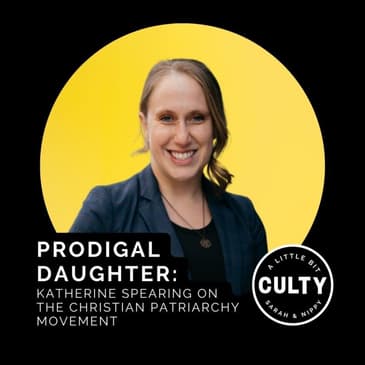
What does a thriving life look like after surviving a cult? Katherine Spearing has some ideas about that, and some real life experience to back those ideas up. She survived the cult of the The Christian Patriarchy Movement, also known as the Stay-At- Home-Daughter Movement. And yeah: That’s as terrible as it sounds. The most prominent characteristic of this particular cult is that it requires adult daughters to stay home until they marry, serving their father in preparation for serving their husband. Raised in this environment meant that Katherine wasn’t allowed to go to college, but she didn’t let that stop her: She did it in secret: starting her first class at 25 years old. And flash forward to today: She’s an author, a podcaster, an advocate and a Certified Trauma Recovery Coach.
SHOW NOTES:
Katherine Spearing MA, CTRC is the founder of Tears of Eden, a nonprofit supporting survivors of spiritual abuse, and the host of Tears' affiliate podcast Uncertain. She also hosts the podcast Trauma & Pop Culture and is a Certified Trauma Recovery Practitioner working primarily with clients who have survived cults, high-control environments, spiritual abuse, and sexual abuse. She also provides specialized trauma informed career coaching, as folks with trauma often need extra support for interviewing and networking.
Katherine is the author of a historical romantic comedy, Hartfords, a novel that challenges gender roles in a patriarchal society that will appeal to fans of Jane Austen. She has been a guest on a number of podcasts, including IndoctriNation and That’s So Fcked Up, is the author of several nonfiction articles, and writes regularly at katherinespearing.com and tearsofeden.org.
Also…Let it be known far and wide, loud and clear that…
The views and opinions expressed on A Little Bit Culty do not necessarily reflect the official policy or position of the podcast. Any content provided by our guests, bloggers, sponsors or authors are of their opinion and are not intended to malign any religion, group, club, organization, business individual, anyone or anything. Nobody’s mad at you, just don’t be a culty fuckwad.
Check out our lovely sponsors
Join ‘A Little Bit Culty’ on Patreon
Get poppin’ fresh ALBC Swag
Support the pod and smash this link
Cult awareness and recovery resources
Watch Sarah’s TEDTalk
CREDITS:
Executive Producers: Sarah Edmondson & Anthony Ames
Production Partner: Citizens of Sound
Producer: Will Retherford
Writer & Co-Creator: Jess Tardy
Theme Song: “Cultivated” by Jon Bryant co-written with Nygel Asselin
See Privacy Policy at https://art19.com/privacy and California Privacy Notice at https://art19.com/privacy#do-not-sell-my-info.
[00:00:00] This winter, take your ICONpass North. North to abundant access, to powder skiing legacy, to independent spirit. North where easy to get to meets worlds away. Go north to Snow Basin. Now on the ICONpass. This podcast is for informational purposes only and should not be considered legal, medical
[00:00:31] or mental health advice. The views and opinions expressed do not necessarily reflect the official policy or position of the podcast and are not intended to malign any religion, group, club, organization, business, individual, anyone or anything. I'm Sarah Edmondson. And I'm Anthony, air quotes Nippy Ames.
[00:00:56] And this is A Little Bit Culty, a podcast about what happens when things that seem like a great thing at first go bad. Every week we chat with survivors, experts and whistleblowers for real cult stories told directly by the people who live through them.
[00:01:10] Because we want you to learn a few things we've had to learn the hard way. Like if you think you're too smart to get sucked into something culty, you're already prime recruitment material. You might even already be in a cult. Oops. You better keep listening to find out.
[00:01:24] Welcome to season six of A Little Bit Culty. What does a thriving life look like after surviving a cult? That's what our guest today is here to talk about. And we think you'll find her story so impressive.
[00:01:54] Katherine Spearing survived the cult of the Christian Patriarchy Movement, also known as the Stay at Home Daughter Movement. Yeah, that's as terrible as it sounds. The most prominent characteristic of this particular cult is that it requires adult daughters to
[00:02:07] stay home until they marry, serving their father in preparation for serving their husband. Raised in this environment meant that Katherine wasn't allowed to go to college, but she didn't let that stop her.
[00:02:18] She did it in secret, starting her first class at 25 years old and flash forward to today. She's an author, a podcaster, an advocate and a certified trauma recovery coach. She's the founder of Tears of Eden, a nonprofit supporting survivors of spiritual abuse.
[00:02:32] The host of the podcast Uncertain and also just casually publish a novel that's romantic comedy called Hartford's, a story that challenges gender roles in a patriarchal society and will appeal to fans of Jane Austen. Yeah, no big deal there. Just writing novels and cranking out podcasts. Overachieving much?
[00:02:50] We are so proud of your overachieving. Here's our chat with Katherine Spearing. Hello, Katherine, and welcome to A Little Bit Culty. Hello. How's it going? Oh, you know, just living the cult podcast dream. How about you? Just talking about cults. Woo-woo! Woo-woo!
[00:03:21] I am unusually chipper today because, and we'll get into this more as we're talking about my story, but at the end of February, I got PTSD triggered. And then what usually follows that is a season of like high functioning depression.
[00:03:39] So that lasted a few weeks and I'm just coming out of it. Great. I've had three nights, full nights of sleep. And so this morning I was like, yay, I think it's over. So I'm very, very, I'm very happy today. That's great. Very happy.
[00:03:57] What is high functioning depression for our listeners? You're not like just in bed and can't get out of bed, but it's, and you're still able to do your normal life or I'm just speaking for myself. I'm still able to do normal life things. It's just colored very darkly.
[00:04:13] No hope, no dreams. This is never going to end. I am never going to get better. Sleeping all the time in between things. Still able to do life, but it just sucks. That's how I would describe it. I've for sure been there. Definitely been there.
[00:04:29] But I'm more anxiety and Nippy's more depression in terms of our go-to's. Yeah. Do you feel emotionally disconnected when you're? Yeah. Yeah. It's hard to yeah, connect to other people. Then also just with my own, everything is darker.
[00:04:46] Just there's just a negative veneer over everything and it really feels like it's not going to win. Social media doesn't help either. Yeah. I pretty much deleted my social media for that whole time and I would like get on and post some stuff for work and stuff.
[00:05:01] But other than that, it just, yeah, it definitely activates and exacerbates it more. So during that time. Do you find physical activity helps? Absolutely. Yeah. I would get like a little endorphin burst after that, but then I was also sleeping a lot too.
[00:05:16] And so I kind of gave myself permission to just do lighter stuff like yoga near the tail end of it because I think your body's worn out, but then it also helps emotionally.
[00:05:28] And so it's like finding the balance and every, every week was getting a little bit better, but it, it lasts, it always lasts way longer than you, than you want it to. We've already jumped right into the healing portion, but I'm sure our audience will want
[00:05:43] to know what got you here. Let's rewind a few decades and start like the preview. Yeah, it was a preview. Like this is where it's going. Yeah, absolutely. Depression recovery. Yes. Let's start with your culty origin story. How did your parents get involved in the Christian patriarchy movement?
[00:06:01] And we're going to talk about the stay at home daughter movement, which we have not yet discussed in those terms on this podcast. What did your parents sign up for? What were the, cause I know you were born into it. What was the promise? Right. Yeah. The promise.
[00:06:13] Great, great question. Uh, yeah, we definitely joined when I was a teenager, we were a basic dysfunctional family with some abuse in my opinion, some abuse for most of my growing up years, homeschooled, very conservative. And then we joined this Christian patriarchy movement, stay at home daughter movement.
[00:06:37] My dad got really excited about it when I was about 16 and I think that he was looking for something. He was looking for something that would give him total power, total control, make his family, his own little incubator of self gratification.
[00:07:00] And he found it in the Christian patriarchy movement. And that's kind of what it does. It's just empowers typically weak men to step into this power role without really doing anything to earn that responsibility or deserve that at all.
[00:07:19] And yeah, and there was a very, there was a bent on just like serving your father that was said all the time, serving your father's vision, helping your father's vision come true. And then you were preparing and you were training to get married.
[00:07:33] And then we were going to do that again for whoever our husband was. That's the crux of it. Was it called the Christian patriarchy movement? Oh no, they didn't call it that. That's not a catchy title. They called it Christianity. They called it Christianity.
[00:07:47] They called it, we are the true Christians. And what was the name of that group though? Like what was it called? We were most affiliated with a organization that doesn't exist anymore called Vision Forum that was run by Doug Phillips.
[00:08:02] We were also in associated with Bill Gothard and IBLP as well. Man, we weren't quite as involved in the IBLP because one of the things that I think that's is my parents weren't really into us wearing skirts. And so we didn't really fit in with that group.
[00:08:20] And so Vision Forum, they still wore skirts, but that wasn't like a marker necessarily of that. Actually no, nevermind. Yeah, it was. But yeah, Vision Forum was I guess easier to get into than IBLP. I don't know. My parents were very into the Bill Gothard basic life principles.
[00:08:41] I did that basic life principles probably three different times throughout my life. Yeah, so it definitely is like most fundamentalism. It is these are the answers. Do these things. You will live a godly life. God will bless you. Do these things.
[00:08:59] These are the steps and it's very clear and clean and crisp exactly what you were supposed to do. The rules. While at the same time being confusing. Do you think it attracted kind of men who are looking to find some sort of group to justify
[00:09:17] their thirst for abusing? Oh, for sure. Absolutely. Yeah, absolutely. Just think about it like you have zero accountability. Let's say I'm that person. How would I be marketed to? Like how would I know to go to that group? How would they find these men?
[00:09:33] How would they find them? Like your dad? There's a conglomeration that some family members of mine are still associated with and a lot of the marketing is be a real man. Be a real man like you get to be a real man.
[00:09:51] You get to, you know, shoot guns and you get to like, you know, build your homestead and you know, create your food from the earth and you know, your wife is beautiful and your children
[00:10:03] are well behaved and your children will stay with you forever and they'll build their homes on your property and it'll be like this dynasty that you get to be the patriarch of this dynasty. They definitely use the word patriarch and that was a big thing. Very Old Testament.
[00:10:22] So they use the word patriarch. But as a like, as is positive, like you are the patriarch of your family and we are following the patriarchs of old in this path, this Christian Orthodox path. See, I think that would be a repellent for a lot of people, but.
[00:10:38] Well, yeah, I guess not. You'd think so. It gives me the heebie-jeebies and most people the heebie-jeebies, but just think about a lot of people in our culture these days. Right. Yeah. This podcast has helped us shine a light for ourselves.
[00:10:56] I really had no idea this world even really existed until we started the podcast. And actually, just a little sidebar, somebody wrote to us recently that they felt that we are unfair to Christianity and we think all Christianity is like this.
[00:11:10] And I'm pretty clear that I don't think that. But what would be a way that you would delineate between a healthy Christian church and the Christian patriarchy offshoots? Yeah, and I'm not anti-Christianity or anti-religion either.
[00:11:26] That's something that's I think that that's an important religion is an important aspect of humanity. It's an important part of culture. I agree. Most people have something or someone that they believe in outside of themselves. And so I'm not anti that in any way, shape or form.
[00:11:42] I think the delineation is a handful of people get to say this is the right way to do Christianity. Right. And if you're not doing it this right way, then you're not a real Christian. You're not really following God.
[00:12:01] And then adding all of these extra rules and layers. And I think and I'm not going to call it true Christianity. I'll call it maybe a healthier version of Christianity has some openness and some curiosity
[00:12:19] and some acceptance that people are different and have different expressions and can be friends with people who don't believe the same things. And I would say the fundamentalist version, the Christian patriarchy version, it's very conditional love based on you believing the same things and and zealously supporting
[00:12:45] the same things. And Sarah, you mentioned something too about just like not knowing that this existed. And I think it's really important to realize how much power this movement has currently. Like this movement is putting Christian nationalism on the stage. Is the main people campaigning for that space?
[00:13:12] They're very militant and very active. If we didn't have the podcast that we had, I would have zero idea this is going on behind the scenes. And this is where I think, you know how like they talk about the right and left going too
[00:13:26] far and all that stuff. When things become a little bit culty, you don't hear in the news enough and our mainstream media is whatever your opinions of them might be. I don't think they're doing the job.
[00:13:37] But if we hadn't done our podcast, I would not know how much that they're trying to infiltrate our government, how they're trying to create factions or trying to get people in positions of power, which look, that's just, you know, the reason there's a separation of church and
[00:13:49] state for now. For now. For now. And it's an extreme movement and I don't think we're hearing enough about it. And there's some players that you hear on the right that are championing religion and
[00:14:00] religion's kind of, I think what happens when you get in the pendulum starts to swing back from a lot of the stuff that you see going on extreme left. And it gives religion a bad name for very good reason.
[00:14:10] Do you see that it has any potential for a middle ground? I mean, I've seen it in my personal life. I have two grandmothers. One was extreme, one found a community and it was great. So I did, but with what was it? 62,000 different versions. Of Christianity. We learned.
[00:14:23] I was on the podcast, the podcast where I came up with the term franchising Jesus. We're thinking of doing a T-shirt franchising Jesus. But what's the question? The question is, is like, are you hopeful? Like, I mean, and like how, how scared of this should we be?
[00:14:36] And are we in danger by talking about it? Are they going to come kill us? But it seems to me, but hold on. My whole thing is like, it seems to me on the left, like if you're, if you're in this
[00:14:47] whole thing, that would be a really good talking point for people to be concerned about the right. You don't hear enough about it and it's legitimate. Right. Absolutely. Yeah. And I think just, I mean, is there a concern? Oh yeah, absolutely.
[00:15:01] As there would be with like any like extreme group. And I mean, what I'm seeing is something that's very similar to like Nazi, Nazi stuff. And I mean, it has that feel. Propaganda. Christian. Yeah. Yeah.
[00:15:21] I mean, I'm a Christian and he said a lot of things that sound very similar to a lot of things coming out of this group. So should we be concerned? Yes. Is there hope for a middle ground and can people identify as Christian and, and have
[00:15:35] this personal relationship with God and with Jesus and, and just be good people, good decent human beings? Absolutely. I know so many people that fall into that category and some are very good friends of mine.
[00:15:51] And I would say that the main reason why we're able to stay friends when we're kind of all in different places is just that willingness to be curious and open and move towards people and hold space for people that think differently.
[00:16:08] And as you are aware, a marker of a cult is like, it has to be this way and everyone believes in the same thing and we all speak the same language and we all do these same things.
[00:16:22] And so the opposite of that fundamentalist mindset is that curiosity and that openness and that just mutual compassion with ourselves and then also with, with others as well. So yes, there's hope. Good. And I want to hear more about your journey before we go back to that.
[00:16:40] When we're trying to like educate people as to what these things look like, is there certain words or phrases or whatever? Like just as an example, one term that came up in NXIVM was the term family values.
[00:16:53] Because it was, that was a name of one of the programs and I didn't, somebody else told me like, oh, that was a real red flag for them watching me go through it because of their understanding of, I guess, the Christian handprint on American culture, politics or whatever.
[00:17:08] I didn't have that connection. It's a buzzword in like religion. Yeah. See, I didn't know that. I didn't have that connection. So it's a program about your family values, not family values and what that means. Right. It's like sustainability is a buzzword.
[00:17:20] What are the buzzwords that we should look out for if it's a red flag? At the right. Yeah. I mean, there's a lot of insider language and I think it's challenging because United States is like a Christian identifying language. And so it's so embedded into just wider culture.
[00:17:41] And I would say things that, this is just coming off the top of my head of things that will activate me and make me just kind of, huh, interesting. Family values, a version of that was we're a family. We're a family. We're a community.
[00:17:58] We're such a great community. We're such a great family. And we just love this community. We would just love this family. We just, everyone's supporting each other and everyone's together. This very rosy colored perspective of this space and what it can be and the sort of hero
[00:18:21] worship of this space and this division between the people who are devoted to the space, meaning going all the time and participating all the time. And those who are just kind of there and hanging out and just like kind of, and a divide
[00:18:37] happens between the truly devoted and the ones that are just there to be there. What was it like to come of age in that world? And I mean, I guess actually before that, was there ever a time when it was good?
[00:18:48] Like, did you ever like any of it or was it always like, oh God, what is my dad into? Yeah. Coming of age. And yes, and I think every family, the complexity of like this, I don't want to see the bad
[00:18:59] things because I don't want to believe it's true. And then you kind of cling to the things that are good. And so yeah, absolutely. And that's the complexity of I think any family, abusive, normal, dysfunctional, or even moderately healthy.
[00:19:16] But yeah, so coming of age in it, I remember the day that my father came home and we already did home church. So the ground was already laid for this. And we were outside. We had like, I don't know, 11 acres of property.
[00:19:32] And so we were outside in the front yard, all sitting on camp chairs. And it was between my sophomore and junior year of high school. And my father comes back and he is so excited, just delighted that he had just met with this
[00:19:49] family and their daughter wasn't allowed to go to college. And she was staying home and she was supporting her father until the day that she got married. And that was the day that my father dropped that bomb on us. And that is what we were going to do.
[00:20:08] And I remember just bursting into tears, like in this space. And I said, how will I ever meet a husband if I don't go to college? And I think that that was indicative of not so much that I was looking to college for
[00:20:24] marriage as much as I didn't even realize how much I was looking to college to escape. So there was already some abuse in the family anyway, and it was kind of like, cool, deal with it. And then at 18, I'm gone.
[00:20:40] Now that's gone and that's off the table and I can't leave and I'm stuck. And what are you going to do after you graduate? There's no plan. Like there's literally no plan. Yeah, absolutely.
[00:20:55] And so I just remember just feeling like the rug just got ripped out from underneath me. And when I started crying and saying this, like my father basically shamed me and said I wasn't trusting God.
[00:21:10] And if God wanted me to find a husband, he would bring the husband and I didn't have to worry about it and I needed to trust him and I needed to trust God.
[00:21:18] And every time it ever came up, I was always told I wasn't trusting God and I wasn't trusting God. And anything that I wanted to do that was different than what my father wanted me to do was me not trusting God.
[00:21:32] That's an element of a lot of spaces of it's not the leader saying it, it's God saying it. I'm just speaking for God. I didn't say this. God said this. How convenient. Outsourcing the abuse. Oh, absolutely. And it's very powerful. It works. It's terrifying.
[00:21:48] So graduating in that space and even in homeschool conservative Alabama, everybody actually I'm going to reset it. Even in homeschool conservative South, I want to remove state. Even in homeschool conservative South, the women went to college and even if it was just
[00:22:07] to meet a husband, that's what you do. You graduate from high school, you go to college. So even in this conservative space that we were in, people thought it was weird and they didn't understand.
[00:22:21] And I would say when people would say, you know, what school you're going to, which I got a bajillion times my senior year of high school, what school you're going to, where are you going to college?
[00:22:32] It was so, it was just mortifying because I didn't have an answer for it. And then if my father was there, he would jump in and he would say, she's not going to school. She's staying home to prepare to be a wife and mother.
[00:22:44] And he was so delighted, just so happy that this was what we were doing as a family and what I was doing. And it was just going to change the world because this was the new path to changing the world.
[00:22:59] We were going to change the world through raising godly children. And that was my job. And this is before hashtag tradwife became trending. Oh my gosh. Am I right? Oh my gosh. Every, every generation, there's a new cycle. There's a new cycle. Patriarchy never dies.
[00:23:20] Were you taught how to make a sourdough starter? That's what I want to know. I knew how to make bread from scratch. We ground our own wheat. The only reason why we didn't have chickens is because I wrote a 12 page research paper about why we shouldn't get chickens.
[00:23:36] And I was very proud. I'm proud of you too. I prevented us from getting chickens. I love this, Shirley. Should we run the Trad Dad joke? Yeah, we have a Trad Dad video series. What is a Trad Dad? Oh, Trad Dad's pretty well.
[00:23:49] We're not sure if the Trad Dad is like making fun of the dad. For me it's certainly making fun. Well, no, definitely making fun. But we're not sure if the character is hashtag Trad Dad being the dad version in this story
[00:24:01] and kind of like just showing how crazy it is. Or if it is like reversed, if the dad were the traditional wife baking bread. We're not sure yet what the joke is. Well, when we were joking around about it at the Super Bowl party.
[00:24:18] I don't think, the thing is I don't know if it's funny in this context. Well, that's the whole thing. It could be really offensive. It might be. Well, it might be offensive to some because it's kind of like when you highlight a joke
[00:24:28] or you present the person as though they think they are. So the Trad Dad is this person who's like, Sarah, excuse me. You just interrupted me. Something like absurd like that. But then it could be- Well, it's absurd to us. But I know it's many people's lived experience.
[00:24:43] So that's where I'm not like- It could be punching down a little bit and that's not really the objective. Well, yeah. And I think there's a fine line. And I don't want to say that this is a marker of healing, but I think that often in that
[00:24:57] healing journey you get to a place where you can joke about it and you can make fun of it and friends of mine, the woman grew up in the same kind of community and her husband kind of did too.
[00:25:10] And they'll make jokes about whatever she says something that's kind of contradictory. He'll just be like, go get in the kitchen. Go barefoot. And they're just like joking because that is so not who they are. And they can do that. Right? Like great. Great for them.
[00:25:28] I'll say this. I've watched a couple of podcasts that have been on cults and I consider myself someone who's got pretty thick skin. I can joke around most about anything. And then when people talk about like, God, who the fuck falls for that?
[00:25:40] And I'm kind of like, I feel like- No, yeah. So I don't want to be that to someone else. Do you know what I mean? Exactly. Yeah. Absolutely. So we've shelved it for the time being. We've shelved it.
[00:25:52] But I am fascinated and I follow a couple of accounts that fall into this category, like Ballerina Farm. She's one of those, right? She's a trad wife or am I wrong? I don't know. I don't follow these people. I follow because I'm kind of-
[00:26:05] Sarah, what are you doing? I'm not following them because I'm following them. I'm following because I'm like, I'm learning. Right? I'm watching this thing play out. I'm watching it play out. Sometimes people message me and they're like, why are you following so and so?
[00:26:12] I'm like, because I have a podcast about this subject. I'm researching. I'm researching. Yeah. Yeah. Not everybody we follow, I'm following. Nice catch, Catherine. Right? Catherine's on to you. She's on to you. She's on to you. She's on to you. I'm definitely researching. Okay, back to your story.
[00:26:26] So you, okay, I love this. We are diverging all over the place, which is- It's a podcast. And I will make fun of it on mine. I just did a poem on my Instagram about what it was like to be a woman in the church and
[00:26:32] it was like making fun of it and like, I can do it because I fricking lived it. And so if I want to make fun of it, I'm going to make fun of it all day long as my prerogative. Yeah. I think that's a great way to go.
[00:26:36] I think that's a great way to go. I think that's a great way to go. I think that's a great way to go. I think that's a great way to go. I think that's a great way to go. I'm not sure.
[00:27:12] I think my wife is mortally offended about something that we said because it's not healed for them, you know? I know. Well, we're in the age of being offended, right? Yes. Absolutely. Absolutely. This podcast certainly would not be happening without our amazing, supportive, generous patrons.
[00:27:20] Are you with us? Come find us over on Patreon at patreon.com slash a little bit culty for bonus episodes, ad-free and exclusive content, and the occasional Zoom with fan favorites from our past episodes, Q&As and all sorts of goodies. So join us. Join us. Join us.
[00:27:27] Join us. Join us. Join us. Join us. Join us. Join us. Join us. Join us. Join us. Join us. Join us. Thank you for watching. This is a production of the Center for Autism in the U.S. And thank you for being a part of the YouTube community.
[00:27:41] Enjoy this podcast. It's a lot of fun. It's from our past episodes, Q&As and all sorts of goodies. It's fun over there people. The Frankies were a picture perfect influencer family. But everything wasn't as it seemed.
[00:27:54] I just had a twelve-year-old boy show up here asking for help. He's emaciated. He's got tape around his legs. Ruby Frankie is his mom's name. Infamous is covering Ruby Frankie, the world of Mormonism, and a secret therapy group that ruined lives. Listen to Infamous wherever you get
[00:28:15] your podcasts. This episode is sponsored by Better Help. What are your self-care non-negotiables? Maybe you never skip leg day or never miss yoga. Maybe it's getting eight hours of sleep. I mean, that's my personal and everyone's dream, isn't it? Well, I definitely have some
[00:28:32] non-negotiables like I'm in Vancouver right now and I'm spending literally as much time as I can outside of nature. Hashtag cold pools. Hashtag crushing it. Nature is a non-negotiable. Not enough time in the fresh air and the trees around me. And I start to
[00:28:44] feel not great, not myself, not grounded. Therapy day is a bit like my nature walks. I try to not miss it and I know I'm just going to feel so much better all around if I make it a priority. I get so much out of it.
[00:28:55] It helps me put my worries and anxieties in their rightful place and helps me clear my mind so I can focus on what I really need and sometimes what I don't need. Like, I don't need to be overbooking myself just because I hate to say no
[00:29:05] to people. You know what I mean? Thanks, therapy. Thanks for helping me see that. And if you're thinking of starting therapy, give BetterHelp a try. It's entirely online designed to be convenient, flexible and suited to your schedule. Just fill out a brief questionnaire
[00:29:17] and get matched with a licensed therapist and switch therapists anytime for no additional charge. Look, even when we know what makes us happy, it's hard to make time for it. But when you feel like you have no time for yourself, non-negotiables like therapy are more important than ever.
[00:29:31] Never skip therapy day with BetterHelp. Visit betterhelp.com slash culti today to get 10 percent off your first month. That's betterhelp, H-E-L-P dot com slash culti. You've heard from our sponsors. Now let's get back to a little bit culti, shall we? Any other key moments that were like
[00:29:55] big distinctions or I guess like the huge red flags of like this is not this is no good before you left? Yeah, I think as I got older and it's interesting to like and I know a lot of survivor had this similar experience of just like this awareness
[00:30:13] of how bad it was, but then also awareness of these specific things that kind of made you who you are and and and allowed you to wake up and recognize what was going on. And I think the fact that I was in it as long as I
[00:30:30] was, I left my parents home when I was 26 and I left the South when I was 28 and I wasn't married. And most people get married at twenty twenty one, twenty two, and they escape into marriage. And it's either a good marriage or it's a bad marriage or it's
[00:30:47] a mediocre marriage. But that's usually how girls get out of this is by getting married. And the fact that I stayed in it as long as I did unmarried and I was like in my parents home and I was watching the impact
[00:31:02] that it was having on my siblings and I was watching the impact that it was having on me. And I was watching, you know, dream after dream after dream. The shutdown or I wasn't able to pursue it gave me a lot of clarity about the dynamics
[00:31:20] and the inner workings. And I read the Bible like I'm a pretty intellectual person. I read the Bible multiple times. And one of the this is another phrase of just like biblical accuracy and biblical orthodoxy. And, you know, we're following the Bible. We're believing the Bible.
[00:31:40] It has to be biblical. And I started to recognize that stuff in the Bible that was being taught was actually being twisted and wasn't actually full context. And also there were a lot of things in the Bible that were being missed and weren't being talked about.
[00:32:01] And I remember my father was the pastor and and led the church. And I remember reading the New Testament and being like, there's a lot of stuff about Jesus. And then there's a lot of stuff about like Jesus. And Jesus talks a lot about like
[00:32:16] love and caring for your neighbor. Could you do a sermon on that? Because that's in the Bible, too. And my father just looked at me and he was like, you can do it. And then he just walked away. Of course, he didn't intend for me to actually do
[00:32:34] the sermon. But it was just like, there wasn't any capacity for him to even talk about Jesus, which is like the main core of Christianity. And so I started to see these things like breaking down and like not adding up and not making sense and being confusing and
[00:32:53] double standards on everything. And I was told you can't go to college, you can't have a career. But then I wasn't allowed to be lazy. Like I had to do do things with my time. But I couldn't do the things that I wanted to do with my time.
[00:33:09] And so I had to. So it was just so many just like confused and just I think just being older in that space, I was able to see a lot of those things. And that was like catalyst for escaping and getting out and recognizing that, like, if I'm
[00:33:26] going to do this, I have to do it in secret. Like I can't let them know what I'm doing. I have I have to go against what I've been taught, which I have to lie. I just have to lie about what I'm doing.
[00:33:38] And it just felt so weird. But it came to a place that it was zero survival. Yeah. And I'm like, if God is a God of love and grace, then God will forgive me after right after after I do all this line. So you were using the gymnastics
[00:33:54] as well. Oh, yeah. You were taught well. We had to lie to get out to I get that. And just to back up for a second specifically around Jesus loving his neighbor, like Jesus loves his neighbor unless you don't think the same way we do,
[00:34:08] in which case we won't talk to you. Right. Like that is such a core. Yeah. And you're loving the neighbor in order to get them to convert. Right. That is so it's manipulation. Obedience slash love bombing. When did the you know, I know you
[00:34:23] didn't leave right away, but I know you had a couple of moments that allowed you to see outside the world. How did you wake up and how did you leave? Yeah. So I think the career college part played a big role in that. And for whatever reason,
[00:34:39] the tribe wife, like even though that was the world that I grew up in and everybody I knew did that, it just wasn't this fully appealing lifestyle to me for whatever reason. I just the way I was born and and so I was always trying
[00:34:56] to do different things to like learn and grow and take online classes and I just needed more intellectual stimulation. And I think one of the biggest we are allowed to have jobs and we're allowed to work and we were expected to have money but not careers.
[00:35:12] So it was just this weird mindfuck. And I was almost twenty five years old and I got a part time job working at a church and my dad was out of town when I did the interview process and got offered the job. And I
[00:35:28] knew that I could pick up the phone and call him and ask him if I could take the job like I knew that I could do that. But I made the conscious decision. I am nearly twenty five years old. I should not have to ask my dad
[00:35:41] for permission to take a job. And so I took the job without telling him he gets home, finds out that I took the job, told me to quit for the first time in my entire life. I said no and he kicked me out of the house and
[00:35:56] it was this very I remember being so aware that all of these things were going to happen. Like I knew he was going to be upset. I knew if I told him no, he was going to kick me out. I just I just knew that all of this
[00:36:09] was happening and I got kicked out of the house for eight weeks and it was terrifying. I didn't have a resume. I had a part time job. I didn't own a car. I didn't have a college degree. I had no money in a savings account
[00:36:24] on purpose. This is all like basic domestic violence. One on one. You're isolated. You have no resources so you can't leave. I lived with my grandmother for that eight weeks and for the first time in my life, I had power. And so I entered negotiations with my parents,
[00:36:41] basically forced them to meet with a mediator. And that was the first time that someone heard both my story and my parents side of the story and said that my parents were wrong. So that was super, super pivotal of just like if I talk to people,
[00:36:56] people would believe me. But then I was always like, but they don't know my dad's side of the story. And so it's bias and blah, blah, blah, blah, blah. But to have someone like hear both sides and be like, this is really and I remember just
[00:37:08] this person that met with us. One of the points of tension, apparently I wasn't aware of this at the time was that I was a writer. And so apparently that was a point of tension with my father. The fact that I wanted to write and
[00:37:21] that I was writing and that was a part of my life. And this person, this mediator found that out from my dad. And I remember him just like talking to me and telling me about it and getting really sad. And he was just like, I just
[00:37:36] feel like if my daughter told me that she wanted to be a writer, I just feel like I would do everything I could to help her be a writer. And he just like just seemed so sad. And it was just like this moment of
[00:37:51] like, like, I don't think my dad's even a good dad. Like, it's not even just some rough edges. I don't think he's a good dad. Like, this isn't what good dads do. I ended up going back to live with my parents again. No resources.
[00:38:08] I kept the job and I started doing college in secret and I just stayed away from the house. I I had got another job as a nanny for a woman who was a night nurse. And so I would take care of the kids,
[00:38:23] put the kids down, and then I would study at night at her house. And I just I was never home. I stayed I stayed as far away from home as possible for about two years. And then when it was time to leave under the cover of darkness, I
[00:38:37] loaded my car and I drove away and we never talked about it. It was never, never addressed it. Never like how dare you know, like it was just very no confrontation after that. Yeah. Just like it. And I think I don't know. I'm not inside my father's head.
[00:38:58] I think when I left and didn't go back, I think it scared him. And I think when I went back, I had this power suddenly and there was just this fear that I was going to leave again. And so it was just this very syrupy, sweet niceness
[00:39:14] that accompanied everything, all of our interactions of just like we're just playing this game and I'm appeasing him by making him think that he is appeasing me and making me happy. And as I'm like saying this, I'm like having this like reaction
[00:39:32] inside of like, oh no, I'm like I'm like telling the cult leaders my tactics I'm educating them on my tactics. We've done the same thing. We did the same thing. And I was like, oh, no, I'm like teaching them. And your siblings, were
[00:39:48] they all younger? Your siblings are younger. You're the oldest. I have an older brother and then I have five younger siblings. So there's seven kids total. I was the oldest and four younger sisters. Are you in touch with them since you left? Yeah, we're at various levels
[00:40:02] of closeness with different siblings. Some siblings still live in the south near my parents. Some siblings are still in the cult. Some siblings are very much out and doing their best to heal. Everyone's in different places. And your parents are still fully in. Oh, yeah.
[00:40:19] I mean, I don't talk to them. I don't have a relationship with them, so I don't know what their current belief system is. From personal experience, I will get stories from different people who've encountered them and advice that my mother gave to another mother or something like
[00:40:34] that. And that's still their ideology and their belief system. But I haven't I don't have firsthand. I don't have firsthand experience with their belief system. How long ago was that that you left? I left the south when I was twenty eight and I will be
[00:40:49] thirty nine on Sunday. Wow. So eleven years since I left the south and then 13. Is that I do the math right? Yeah. Thirteen years since I left my parents home. Wow. So it takes 11 years to get rid of a southern accent. I never had one.
[00:41:06] How did you manage that? The city that we lived in had like an army base and it was pretty transient. There were a lot of a lot of implants. My parents got not born in the south. So, OK, that makes more sense. I was homeschooled, so
[00:41:19] I learned how to talk for my parents. Yeah. I was listening for I couldn't hear it. I dodged a southern accent. Yeah. Unless you've been around people with a southern accent, I will talk in a southern accent. Sarah's starting to pick it up.
[00:41:30] I just say all y'all every now and then. Appreciate. Oh, yeah. Y'all is a great word. Y'all really is. You know, that's right. You know, that's right. Word for more background on what brought us here. Check out my page turning memoir. It's called Scarred.
[00:41:45] The true story of how I escaped next. I am the cult that bound my life. It's available on Amazon Audible and most bookstores. And if you want to see that story in streaming form, you can watch both seasons of The Vow on HBO. This winter, take
[00:42:01] your icon past north, north to abundant access, to powder skiing legacy, to independent spirit. North where easy to get to, meets worlds away. Go north to snow basin. Now on the icon pass. This episode is sponsored by BetterHelp. What are your self-care non-negotiables?
[00:42:32] Maybe you never skip leg day or never miss yoga. Maybe it's getting eight hours of sleep. That's my personal and everyone's dream, isn't it? Well, I definitely have some non-negotiables like I'm in Vancouver right now and I'm spending literally as much time as I can outside in nature.
[00:42:47] Hashtag cold pools. Hashtag crushing it. Nature is a non-negotiable. Not enough time in the fresh air and the trees around me. And I start to feel not great, not myself, not grounded. Therapy day is a bit like my nature walks. I try to not miss it.
[00:42:59] And I know I'm just going to feel so much better all around if I make it a priority. I get so much out of it. It helps me put my worries and anxieties in their rightful place and helps me clear my mind so I
[00:43:09] can focus on what I really need and sometimes what I don't need. Like, I don't need to be overbooking myself just because I hate to say no to people. You know what I mean? Thanks, therapy. Thanks for helping me see that. And if you're thinking of starting
[00:43:19] therapy, give BetterHelp a try. It's entirely online, designed to be convenient, flexible and suited to your schedule. Just fill out a brief questionnaire and get matched with a licensed therapist and switch therapists anytime for no additional charge. Look, even when we know what makes
[00:43:33] us happy, it's hard to make time for it. But when you feel like you have no time for yourself, non-negotiables like therapy are more important than ever. Never skip therapy day with Better Help. Visit BetterHelp.com slash culti today to get 10 percent off your first month.
[00:43:46] That's BetterHelp, H-E-L-P dot com slash culti. Break time's over, people. Let's get back to this episode of a little bit culti. It's a good one. Catherine. OK, so you've left. I know it's a lot to encapsulate the last 11 years, but you turned your adversity into
[00:44:06] activism. Let's switch gears. Turning a negative into positive. Yeah, we're making lemons out of lemonade. I mean, other way around. We got it from The Last Dance, Michael Jordan. Yeah. So let's switch gears and talk about some of the let's talk about
[00:44:20] what you're doing now and some of the key themes for survivors of high control evangelical religion. Yeah. And that definitely plays a role in this story, too, because I left this cult and fell into evangelicalism. Went on the mission field, went to seminary, worked at five different
[00:44:38] evangelical churches, thought it was so much better. I thought it was so much better. And it took me about six, seven years to realize that the same ideologies were in that system specifically around women and expectations for women and the rules for women.
[00:44:59] And that stuff was still very embedded into evangelicalism. I think that I needed evangelicalism as like a waiting pool. I don't think that I could have gone from cults to just, you know, throwing everything away. I still had an affection for the
[00:45:21] Bible. I still had affection for God and Jesus and wanted to make the church and church work part of my life. And I think some of the motivation was what I was raised with was really damaging. I want to teach like the real Bible. And so throughout
[00:45:38] my whole journey was always butting up against this ideology specifically about women. And for whatever reason, God decided to give me gifts that were supposed to only be for men. And and so I had these leanings and giftings and and aspirations that were only acceptable in men.
[00:46:00] And so I was always hitting up against that wall and just watching how my male counterparts were treated very differently. And and, you know, just basically mistrust it like experience that mistrust and everything. And and last church that I worked for was a chronically abusive situation with narcissism
[00:46:24] and sociopathy and resembled in a lot of ways the cult that I escaped with just a lot of fear and confusion and circling around and protecting one leader. And when I left the cult, I left in isolation by myself. I had no language for trauma, abuse, cults.
[00:46:44] I knew nothing about those things after being on therapy and doing my own research for nearly a decade. When I the stuff started happening in the church, I was able to see it and like name what was happening. And a lot of folks told me
[00:47:04] that when I left, they were like, you figured it out really fast and you saw what was happening really fast. And I think I just had the resources from the recovery journey, from my family dynamic. And so it was a very different experience. A lot of people were
[00:47:19] leaving this church as well. And so we were all sharing resources, the limited resources that there were at the time and meeting at midnight in each other's homes after the kids went down to bed and having whiskey and popcorn and talking about what was going on.
[00:47:35] And it was a very different experience leaving the church than it was leaving the cult. And that's where the seeds of the organization that I run called Tears of Eden were born, planted because I wanted to create this sense of like when someone is leaving an abusive church,
[00:47:54] they can go to one place and have a hub of resources to help them name the experience of what happened and then also connect to other people who have gone through something similar and kind of create this little watering hole for folks who are on
[00:48:10] their way out and starting that recovery healing journey. And then there's a podcast, which is one of our main resources associated with that that Sarah will be on in a few weeks. And that's called Uncertain Uncertain. That's great. And if you're uncertain about the name, just remember uncertain.
[00:48:29] And that is actually where I met you at. Was that the first Tears of Eden retreat in St. Louis? In-person event. That was the first in-person event because before that had all been online because of COVID. Is that right? Yeah. I mean, also because people
[00:48:42] are isolated and that's the easiest way to connect to people. Right. Is online. Yeah. So what would somebody expect at a Tears of Eden retreat if they're coming out of a high control religion? Yeah. Well, I think the retreat is as a level or as a layer.
[00:48:57] I don't know. I don't want to say level because that's that's cool to you, too. But just like a layer of the experience, because I think there's resources for naming that experience. And then we have support groups that are just really getting talking about trauma and the very
[00:49:12] unique trauma that results when someone experiences abuse in a religious organization. And then the retreat, the idea for that is to kind of be the theme of our retreat in October was called Laugh Again. And that's kind of like that as we were talking at the beginning of
[00:49:29] the episode of like getting to that place and your healing journey where you're able to kind of laugh about it and you're at that place where it's maybe not so fresh anymore. And that was kind of why we're hoping for that retreat to kind of
[00:49:42] be that like, you know, time to just be together and just laugh together. And that really happens at this retreat event of just so much laughter. Like that was a massive marker of what was happening at this event. And then we also we incorporated
[00:50:01] a lot of art into Tears of Eden itself. And I'm an artist and art was a huge part of my healing journey. And so the retreat itself, we had an improv workshop. We went to the Story Jam and a lot of people performed at the Story Jam.
[00:50:17] We had a dance workshop. We had yoga. We had a writing workshop. And so we incorporated arts and movement and embodiment into the space. And it was really cool, really beautiful. Just a lot of fun. It was just fun. It seemed like you guys were having
[00:50:33] fun. We accidentally crashed your party, if I recall. I know. It was great. It was Jarette that did the Boudillon who did the writing workshop, right? Writing to reckon. Yes. So much overlap here. It's great. And do you collaborate with people like Dr. Laura Henderson and Tia Lovings?
[00:50:52] Yeah. Not so much. But Dr. Laura Anderson has been on the pod a couple of times. And I actually am working as a practitioner for the company that she runs, Trauma Resolution and Recovery. This is my first week working working with them. And so she's amazing.
[00:51:10] We're very aligned and our perspective of, you know, trauma recovery and embodiment and not just stopping with that deconstruction space and that intellectual space, but actually addressing that trauma that's been stored in our bodies and recognizing this as genuine trauma. And so, yeah, so definitely
[00:51:31] collab with with her a lot. Awesome. We loved her book and Tia's book. I think that Tia should be a guest on your podcast. She's great. If I can help with that in any way. Yeah. Right. Big, big fans of all of those women, powerhouse women.
[00:51:44] And who is amazing? They did it all without their husbands or their fathers telling them what to do. Isn't that amazing? I know. It is amazing. It is amazing. Another person that I learn a lot from is Connie Baker, who was the retreat speaker this past year.
[00:52:02] She is probably 25 years ahead of all of us in terms of has been doing this research for a really long time and working with this demographic of clients for a really long time. So she has a lot of understanding and knowledge and as just a very compassionate
[00:52:20] person, but also a very articulate person about this experience and just knows so much. So Connie, Connie Baker is is awesome. So I'd say folks that I go to and are my my go to resources are Dr. Laura Anderson and Connie Baker are my my favorite peeps.
[00:52:41] Would you attribute them to your success in driving after a high control environment? Now, what's the major factor? Yeah, they have certainly played a role. But yeah, I think I probably discovered them after I was pretty deep into into the recovery recovery journey. And yeah, so they they're
[00:53:02] doing amazing, amazing work. But yeah, I think I I think I tend to migrate towards art in general and just like a lot of documentaries and even just like fiction books that are a part of that, just like naming that experience and that process for me.
[00:53:21] And so I know that's a little a little different than a lot of folks. So you may appreciate this. There is a Ethan Hawke interview that made the rounds and he talks about art as sustenance. And a lot of times when you're younger, it doesn't make
[00:53:35] sense to you as much. But when you have life experience, art is the thing that puts language, a poem, a painting or something like that can put language to your experience. And that becomes my opinion. I mean, for me as well, art becomes a great way for sustenance
[00:53:50] in your life. Absolutely. And gets at layers, layers beneath it that just having like vocabulary maybe doesn't quite capture. Right. Even though having the vocabulary is very important. For sure. Sarah and I wanted to ask the healing space and how do you, we were talking beforehand, like,
[00:54:10] why is it so many times in the leaving space and the recovery space or whatever? How do you prevent that atmosphere from becoming a little bit culty? I guess would be the question. Yeah. Like how do you run an organization or retreat that's not named names.
[00:54:30] We've had a handful of experiences, even experts are kind of like at odds. And Sarah and I refuse to get on the crossfire of it. How do you do it? How do you make sure your organization doesn't get, you know, problematic, toxic, culty? Sure. Absolutely.
[00:54:44] And I've had personal interactions with this as well within Tears of Eden. And it's so devastating. It's like this whole different layer of devastation when you're trying to help people and like we're doing the same thing. We're doing the same work. We're trying to help the same
[00:55:02] people. Why is this? So messy. Yeah. So that's very personal to me. We had a episode with Dr. Laura Anderson in season four that I titled Second Wave Fundamentalism. And we just talked about how we come out of these fundamentalist spaces, these high control spaces.
[00:55:22] But we learned how to do life within that fundamentalist space. And we don't know how to do it differently. And we create a new fundamentalism and deconstruction. The deconstruction world is an example of that. And folks who have left evangelicalism will be familiar with that term of just
[00:55:45] deconstructing your faith and and recognizing the lies and rebuilding it. And in that space, there are gatekeepers. There are people who are saying how you should do it and the right way to do it. And then, you know, canceling people who are saying something differently
[00:56:04] and and and it just recreates the same dynamic in that space. And so, as I mentioned at the beginning of the episode of just that difference of like having that openness and that curiosity and recognizing, I think recognizing the trauma is really important because a trauma, a common
[00:56:26] trauma response or a common leaning after we've been traumatized is wanting security. And so when we want security, we want we're drawn to binary thinking and black and white thinking. And we want someone to tell us what to do. And I remember being super
[00:56:46] discouraged about this very topic and being on the phone with a friend and saying, I know why people create these second fundamentalist communities, because right now what I want is for someone to tell me what to do and just take the brain out of it,
[00:57:04] take the emotion out of it and just tell me what to do. And so I think traumatized people are going to be drawn to that type of community because we just want security and we just want certainty. And so I think it's really important to recognize that
[00:57:21] and just when we are searching for that to soothe our nervous system, just be curious about that and sit with that. And not make those lifelong decisions out of that space. And so I don't have an answer other than in the Tears of Eden community
[00:57:42] of making sure that I my trauma is being addressed. And I mentioned just the PTSD trigger that I experienced at the end of February and experiencing depression after that and having to set up extra therapy appointments and work through this and just this awareness of
[00:58:02] I am a traumatized person as well. And my healing is a vital part of the work that I do. And I need to be addressing that. And that means that a bunch of podcast episodes didn't go up in March because I didn't have the
[00:58:18] capacity and meant I didn't post things on Instagram because I needed a break and I needed to heal. And then creating an environment I hope that we're doing this just within the board and the volunteers of like your healing comes first. And if you're not healthy
[00:58:38] you can't work with these people. You know like if you're being active not active not that activation is unhealthy but if you're not aware of your activation and if you're not aware of your limits and your boundaries and specifically in evangelicalism we are
[00:58:55] taught to ignore boundaries and push past our limits. Right. And so I've had to learn how to recognize my limits and one thing my therapist told me a couple of months ago was like at the point where you are saying no to things and taking a break
[00:59:12] you should have started three months before that. And so just like recognizing my own limits and limitations and and then if you're in that traumatized heightened space and this kaboom happens you don't have the resources to address it because you're just burned out which has happened to me.
[00:59:31] And so again I don't have an answer just those are just some things that we're trying. I think that answer while you say it's not really an answer is indicative of why you will probably have a space in my opinion that will thrive because well thank you.
[00:59:47] You're not being pithy and you're not being dogmatic about it you're just saying they're going to try this and it's enough to keep it nurtured I think. So it's a great answer. To me that's one of the best answers I've heard and I totally didn't
[00:59:59] anticipate it but it's such a great answer. It is and it makes me feel like there should be a whole other like resource episode for people in this space because. You should create a resource for the resources. Because I mean I personally felt
[01:00:12] not even partly that I wanted someone to do but also I felt so connected to the like outside of being in a cult like the cult space like the people who were shining light like when I first met all these experts and survivors and
[01:00:25] activists and stuff I was equally as motivated as when I was in NXIVM. I'm still mission oriented. Right. So there's just there is a mission to evangelical Christianity and there's a mission to healing from evangelical Christianity. Right. Oh yeah. Right. Great observation. Absolutely.
[01:00:41] I think looking at it like that is part of the problem. But also just being aware that we're still doing the same. We're still so in it in that way which is one awareness that I had and then the other thing and maybe this will be helpful we
[01:00:54] can talk about when I come on your podcast is and it was actually Dan Shaw that helped me with this early on when I first got out in the survivor space something happened somebody was late. It wasn't a big deal but it was a
[01:01:04] really big deal to me at the time and I had a total overreaction. It was a total PTSD response. And he was like well the betrayal didn't this thing that happened these people being late was just a little thing but it activated your
[01:01:15] portrayal wound which is still very raw and open. So it felt like a huge betrayal again. That's the thing that I see a lot in the cult survivor people feel betrayed by each other when there's a difference of opinion or like some conflict which could be maybe mediated
[01:01:31] in a normal not called survivor space. But everyone's so tender still. Absolutely. Yeah. And that same thing happened in the Tears of Eden space with someone who worked very closely with the Tears of Eden space. They got activated and suddenly you know
[01:01:48] certain people in the Tears of Eden space were the enemy and they were being called narcissists and all of these things and it was just like whoa whoa whoa. Yeah. Yeah. It's a total trauma response and that's going to happen like that. That's going to happen.
[01:02:07] I just kind of feel like like it's just it's just gonna happen. What do you have to have in place if you know that it's gonna happen. And we agree it's all happened to all of us. It's gonna happen. It's gonna happen.
[01:02:18] What do you need to have in place so that it doesn't make the whole thing combust. Right. Yeah and I think what I learned through that experience when that happened I was burnt out already. And so I didn't have great resources in place to
[01:02:33] address that when it happens because I was burnt out. And so that led to me overhauling a lot of what I did and just really managing my capacity even to the point of like I write down my hours for myself. So then if I see it's
[01:02:53] Tuesday and I've already done 17 hours. OK we've done enough and we're gonna we've done enough. Yeah there's a bajillion other things to do. But at that point we're we're done we're done. We're we're taking a break and and recognizing that I don't have
[01:03:13] a great barometer for when I'm doing too much because of my conditioning. And that's just like personally how I am approaching it. And again like is it going to work. I don't know. We're still here right now. And I'm proud of you for that.
[01:03:34] What you actually need and you didn't know that you needed was you need to have Nippy on speed dial and you can just call and say hey Nippy I should I got invited to do that because I do this all the time.
[01:03:43] I'm like Nippy I got invited to the parent contact. And he's like no. No you do not have time. Not in a Christian patriarchy. He's he's a big obedient to him way. He's just reminding me that I have too much on my plate.
[01:03:56] I have keen insights here and there. Yes. You just call him and be like Nippy do you think I should take on this other project? The keen insight is no. Yeah. No. We have two kids. The answer is no. Besides saying no more.
[01:04:10] Any other final pieces of advice for people listening who are trying to deconstruct from a Christian faith paradigm or. Well I want to hear what y'all's thoughts on that are. What have you learned. So far and what are what are the things because I think we're all
[01:04:23] kind of figuring this out together. Have you figured anything out. Other than what we just said. I mean I honestly think that every organization or group like this in this space needs to have like a trauma informed counselor coach therapist or something or perhaps knows about cults but
[01:04:38] wasn't in a cult or something like that. They can be a little bit more objective. I just find that the cult survivor there's just so much baggage like myself included. Also the volume of people that are in the culture. So I think that's a really
[01:04:52] important thing to be aware of and to be able to like. You know. You know. A lot of times it looks like there's a lot of chefs in the kitchen and I don't want to be in that kitchen. No and I think that that's something I've been thinking
[01:05:01] about tears of Eden of wanting to. And it's hard because it's like there aren't a lot of people who understand it and then are also passionate about it. Who didn't go through it. And so I would love to have like more people on the board of
[01:05:14] tears of Eden who get it but it's not a personal trauma for That's a really good point. If someone were to come to me for my expertise I'd offer it. But until then I don't feel like asserting myself into another space. Sometimes I just can't because
[01:05:28] there's just too much drama. Too much noise. I can't deal because I have already too much on my plate. You know. So kudos to the people like yourself who keep who keep going and want to make these things work. I think there's just things to
[01:05:40] have things in place in advance where people can agree that if there is confrontation or. There's some things to look at to. Yeah. Like some people like this is all they have and they need to make it work because I think that's that's tough. That's tough.
[01:05:56] Because if if this thing whatever it is ends up serving them as opposed to them serving it and they need it to work for their own personal. Oh I think that becomes problematic because you know it's like what. And it's not it's not proprietary to these spaces
[01:06:10] like people will pursue a government office because they want the power of the office provides them rather than servitude to the office. So yeah absolutely. There's so many dynamics you could evaluate. Right. Right. I just posted a article on the Truths of Being website called
[01:06:26] Creating an Escape Plan for Leaving an Abusive Church and one of the things on the list was diversifying communities so that your church is not your only thing. And I think that that's a huge part of my recovery. My sustainability is that this recovery advocacy stuff is not
[01:06:46] the only thing in my life and just like I have art I have writing. I have a full W2 job that has nothing to do with trauma. Which explains why your answer was as robust as it is. Yeah. And you have the awareness to
[01:07:01] say hey I had a PTSD reaction. Yep. And like take the time to heal before you keep going. And any one of us I'm sure you guys would say this if you had someone say that to you like on your stuff or you know whatever
[01:07:16] I just need to take a break. We would all be like yay take a break. Yeah. None of us are going to be like just just power through or when is that going to happen again or you know like we're all going to have like so much compassion
[01:07:31] because we've all been there too. So absolutely. I mean I hope so. Yeah. Hundred percent. Do it now. Yeah. Or next time it was just change your state and finish it. Oh my God. Figure it out yourself. Fix yourself. Well basically if you if you
[01:07:45] weren't didn't have the energy or that whatever to do something you use it to change your state. You to like trigger your power state intensity state motivated state and do it. So otherwise the Christian world is rely on the Holy Spirit. Just trust the Lord.
[01:08:00] The Lord will provide what you need. Just do it. Imagine if the Lord and Keith Ranieri got together it'd be like. No they'd be fighting. Oh my goodness. They'd be gaslighting each other. The deconstruction part for me was like recognizing that if
[01:08:17] there is a God and God created me then God also created this body that is giving me signals. Doesn't God want me to listen to the body that God gave me. I mean that's a thought. That's a good thought. And you probably wouldn't have
[01:08:31] had that if you'd been the stay at home daughter that your father hoped you would. So I'm so happy that you. Glory hallelujah. Praise be. I am free. Well I'm glad we got the chipper Catherine. Yeah it worked out. Four days ago we would not have
[01:08:48] gotten a chipper Catherine. And guess what we could have rescheduled because we don't have to power through and rely on. I hope that I would have done that. I don't know if I would have. Yeah me neither. I hope that I would have.
[01:09:00] I'm so glad we did this. We rescheduled. This was fun. Yeah so fun. Catherine Spearing thank you so much for coming to A Little Bit Culty and looking forward to keeping in touch and seeing what this collab brings for all of us. So fun.
[01:09:13] Great talking with you all. You like what you hear. Please do give us a rating a review and subscribe on iTunes or wherever you listen. Every little bit helps us get this cult awareness content out there. Smash that subscribe button. You know what to do.
[01:09:30] Thanks everyone for listening and go pick yourself up a romantic comedy to cheer yourself up after that. Proud of you Catherine. Please check out Catherine at all of our information that's in our show notes. Also we are hoping that you are enjoying your summer.
[01:09:42] If you want some extra special bonus content we have been interviewing ex-NXIVM members that you've never heard of over on Patreon. Please find us there. You get bonus episodes for five dollars a month or twenty dollars a month if you also want the special care package which
[01:09:57] now can include a silver and black limited edition fanny pack. Thank you all for your support. See you next time on A Little Bit Culty. Thanks for listening everyone. We're heading over to patreon.com slash a little bit culty now to discuss this episode.
[01:10:30] In the meantime dear listener please remember this podcast is solely for general informational educational and entertainment purposes. It's not intended as a substitute for real medical legal or therapeutic advice. For cult recovery resources and to learn more about seeking safely in this culty world.
[01:10:47] Check out a little bit culty dot com slash culty resources and don't miss Sarah's TED talk called How Cult Literate Are You? Great stuff. A Little Bit Culty is a Trace 120 production executive produced by Sarah Edmondson and Anthony Nippy Ames in collaboration with producer Will
[01:11:02] Rutherford at Citizens of Sound and our co-creator and show chaplain slash bodyguard Jess Temple Tardy. And our theme song Cultivated is by John Bryant.