
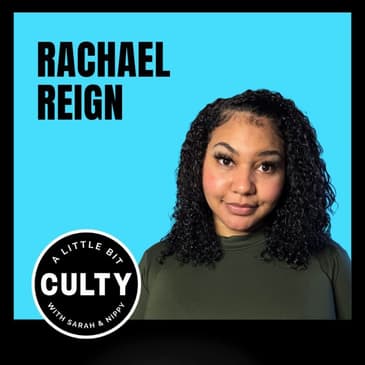
This episode is sponsored in part by Betterhelp. This week our guest is Rachael Reign, a survivor of the Universal Church of the Kingdom of God (UCKG).
At just 13, Rachael was swept into UCKG’s world of fire and brimstone – where teenage exorcisms were a weekly ritual, your mental health struggles meant demons were lurking inside you, and giving your last cent to the church wasn’t just encouraged – it was demanded.
She shares how she went from being a bright, curious teenager to a youth group leader tasked with recruiting others, cleaning the church floorboards with her tears, and enduring violent “strong prayers” that left her bruised, broken, and questioning her sanity. Behind the gospel music and shiny sermons was a cult built on fear, shame, and draining its members dry in the name of salvation.
Rachael doesn’t hold back as she unpacks the manipulative recruitment tactics, the psychological torment disguised as faith, and the way UCKG weaponized scripture to justify abuse and financial exploitation. She also takes us through her escape – losing everything she knew, only to rebuild from the ashes into an advocate fighting for cult survivors and legal reform in the UK.
Because when your church tells you to give God everything, what they really mean is: give it to us – your money, your body, your mind, your freedom.
For more from Rachael, follow her on Instagram @rachaelreign.
Also… let it be known that:
The views and opinions expressed on A Little Bit Culty do not necessarily reflect the official policy or position of the podcast. Any content provided by our guests, bloggers, sponsors or authors are of their opinion and are not intended to malign any religion, group, club, organization, business individual, anyone or anything. Nobody’s mad at you, just don’t be a culty fuckwad.
**PRE-ORDER Sarah and Nippy's newest book here Check out our lovely sponsors
Join ‘A Little Bit Culty’ on Patreon
Get poppin’ fresh ALBC Swag
Support the pod and smash this link
Cult awareness and recovery resources
Watch Sarah’s TEDTalk
CREDITS:
Executive Producers: Sarah Edmondson & Anthony Ames
Production Partner: Amphibian.Media
Co-Creator: Jess Tardy
Associate producers: Amanda Zaremba and Matt Stroud of Amphibian.Media
Audio production: Red Caiman Studios
Theme Song: “Cultivated” by Jon Bryant co-written with Nygel Asselin
See Privacy Policy at https://art19.com/privacy and California Privacy Notice at https://art19.com/privacy#do-not-sell-my-info.
[00:00:00] Ich bin Charissa und meine Empfehlung an alle Entrepreneure startet mit Shopify erfolgreich durch. Ich verwende Shopify schon seit dem ersten Tag und die Plattform macht mir nie Probleme. Ich habe viele Probleme, aber die Plattform ist nie eins davon. Ich habe das Gefühl, dass Shopify ihre Plattform kontinuierlich optimiert. Alles ist super einfach integriert und verlinkbar. Und die Zeit und das Geld, das ich dadurch spare, kann ich anderweitig investieren. Vor allem in Wachstum. Jetzt kostenlos testen auf shopify.de
[00:00:28] Das Podcast ist für informational purposes only und nicht beachtetet legal, medical, oder mental health advice. Die views und opinions expressed do nicht necessarily reflect die official policy or position of the Podcast und sind nicht intended to malign any religion, group, club, organization, business, individual, anyone, oder anything. Ich bin Sarah Edmondson. Und ich bin Anthony Nippy Ames.
[00:00:56] Und das ist A Little Bit Culty. Cults are commonplace now. Von fandoms to fads, wir examinieren sie alle. Wir schauen uns an was, wenn Dinge wie ein guter Ding an zu erst, erst, go bad. Every week we chat with survivors, experts, and whistleblowers for real culty stories told directly by the people who lived through them. Because we want you to learn a few things that we've had to learn the hard way. For example, if you think you're too smart to get sucked into something culty, you might be prime recruitment material. And who knows? You could already be in a cult.
[00:01:26] If you're not aware of your programming, you're probably being programmed. So keep listening to find out. We'll talk about all sorts of topics on the show, but be aware, this podcast might contain stories that could be alarming to some of our listeners. So please check our show notes for more detailed descriptions and take care of yourself. Subscribe to our Patreon for Thursday bonus episodes, Q&A, and all sorts of exclusive content. That's patreon.com slash a little bit culty. Welcome to season seven of A Little Bit Culty.
[00:02:05] Welcome back to A Little Bit Culty, everyone. In some ways, the universal church of the kingdom of God is your typical fire and brimstone mega church. They believe Jesus is returning any minute now, and the only path to salvation is through his teachings. Oh, and through giving them money. Lots and lots of money. I've never heard that before. I know it's totally unique. I wonder how this one turns out. And the UCKG doesn't just expect your standard 10% tithe.
[00:02:32] Twice a year, they hold fundraisers called Campaigns of Israel, where they basically demand followers donate everything they have. Seriously, everything. Members are expected to empty their bank accounts and sell their worldly possessions for the church. They also preach about demons and damnation. They believe mental health issues and homosexuality are caused by literal evil spirits, and that they can only be banished through something called strong prayer. Translation, exorcism. Head-spinning exorcism, Sarah? I never saw that movie.
[00:03:02] Too scary. It messed me up for years. The UCKG has a reputation for targeting youth in vulnerable communities. Like most cults, they use love bombing to recruit and coercive control to keep members in line. Our guest today is Rachel Rain, a survivor and advocate who joined the UCKG in Britain when she was just 13. She's here to share her first-hand experience as a teenager in the church and how it led to her founding her advocacy movement. We'll get into the culty methods the church uses to manipulate young people
[00:03:30] and what the healing process was like for Rachel after she escaped. And since she's a law student, she'll tell us about flaws in the British legal system when it comes to coercive control. It's heartbreaking what Rachel went through, but her story is inspiring. Let's welcome her to the show from the other side of the pond. Make it rain. Dad joke.
[00:04:05] Rachel Rain, welcome to a little bit culty. Thank you so much for having me. I'm really excited. We are too. I like the name Rachel Rain. Oh, thank you. I do too. You really need to be like a pop star or a cult advocate also is good, but you definitely have a famous sounding name. You can work with that a lot. Oh, thank you. I had to think of something different because in the cult, I gained a whole other name. In order to kind of reclaim my identity, I had to make something up. And yeah, I thought that's the most mature way.
[00:04:34] Not mature, awesome. That was the most awesome way for sure. So I thought Rachel Rain, why not? It has a nice ring to it. I love it. Thank you. And also rain has a kind of, it has a lot of biblical reference too, right? To rain over. I was going more regal. Okay. I'm looking more like a regal point of view. Yeah. Okay. I like that. I'm green. She rains over stuff. Yeah. Yes. Let's get into it. You've had quite a journey.
[00:04:59] Tell us about who you were when you were 13 years old and how did you hear about this organization? Bring us on the journey. Sure. So when I was 13 years old, of course, but buckle up because it's going to be a bumpy ride, but I'm sure you're used to it. This ain't your first rodeo. So when I was 13 years old, I was pretty much two different people. I was the person I was before I joined and I was the person I became after joining.
[00:05:26] So in terms of my background, I never had a particular religious upbringing. You know, if you was to ask me, I would say I'm a Christian, but I never attended church regularly. You know, I wasn't devout in any sense of the word, but one Sunday, I mean, I come from West Croydon. It's a difficult area in South London. And I used to pass this church every single day and I had no idea that it was even a church. But one particular Sunday, I was just going about my business as normal.
[00:05:56] And another young person reached out and they invited me to come to an event they was having that day. So for some reason, I took them up on the offer. It was literally around the corner from my house. So I thought, okay, you guys are youth group here? Like what? So I went and sure enough, there was a youth group event going on. There was singing, dancing. It was very lively. And I thought, okay, this seems all right. At that point, I didn't come from like a really promulterous upbringing. I didn't have any major issues.
[00:06:25] You know, I was fairly regular and fairly normal. But I suppose like a lot of people who's when they're 13, they're just on a journey, you know, trying to find themselves, trying to experience life just to see what's out there. And that was pretty much where I was. So when I went to that first event, they wasted no time on saying you should come back for another event we're having on next Thursday. Then I went on that Thursday and then it was, oh, you should come on Wednesday. Oh, you should come on Monday. You should come on Saturday.
[00:06:54] And literally within a few weeks, I was attending every single day after school, different services that they had going on, but also activities they would have going on after school. So it took me from the age of 13, it took me literally, I would say a good two months for me to like fully become a born again Christian, if you were. So that change was very, very drastic. And what was it that they were offering that was compelling to you?
[00:07:23] So you said it was lively and it was near your house. It's convenient. But like, what was it that you were like, yes, I'm going to do this. What is the this that you were signing up for? The this was the sense of community. I was bored. I didn't have anything else going on. You didn't have sports team or anything going on outside of school. So I suppose I was a victim of my own boredom, if you will. And they were offering a family, a community, this uncharted territory.
[00:07:52] And as a really curious, quite bored 13 year old, that looked really interesting, especially since it was a new world for me. You know, I wasn't against religion or against anything like that. I simply never was involved in that world. So they were offering me something new, something shiny. So when you dangle something new and shiny in front of a bored 13 year old, guess what? They're going to bite. And boy, did I bite. I bit good. Like I was so sold.
[00:08:20] Were your parents there or your guardian? Who was your home life like? Did they approve? So my mom at first, like most parents who have kids who are involved in church cults, there's no immediate red flags there, especially since where I was coming from in my background. It was like for my mom, well, at least she's not in a gang. At least she's not sleeping around. She's going to church now. Okay, go ahead.
[00:08:46] And there was absolutely no red flags at first because it's a church. It's a youth group. And not only that, it's not a little shack in the corner of some high street. It's literally a registered charity here in the UK. So that adds another element of legitimacy. So to a certain degree, my mom had faith in this place. She had trust. She trusted them to be a decent church that was helping and guiding me.
[00:09:16] That's the kind of deception that a lot of parents, unfortunately, fall for. Especially when we're talking about a church cult specifically, you think what could go wrong? It's church. It's great. That means they're going to stay out of trouble. That means they're going to be focused. Great. My mom had no idea of the things that started to unfold. And when she did kind of start to catch on, by that point, it was a bit too late because I weren't trying to hear any of it.
[00:09:43] So yeah, at first to answer your question, my mom was supportive of the fact that I was now going to church and was now a born-again Christian. And tell us about those beliefs that you were embracing fully as a born-again Christian. What did the UCKG believe and what was appealing about it? Well, the UCKG believes in a lot of things. They claim to be a Bible-following church. So everything they do, they claim that it comes directly from the word of God.
[00:10:13] But in reality, it's a lot more sinister and it's a lot more remixed. Like for example, the UCKG believes that in order, and actually this isn't unique to them, they believe that the more money you give to the church, the more blessed you'll be. Yeah. That's convenient. You know, because that's like the whole thing of prosperity preaching. I mean, isn't it convenient? So that is a big part of their spiel. They teach, even from young, because remember I jumped when I was 13 years old.
[00:10:41] And I remember I was 13 when I started to become what they call a faithful tiver. And that's something of the ideology that they get you involved with fairly soon. Because when you think about it, it's really, it's evenly genius. Because they know that if they get kids with this ideology, and they drum into kids and students that you have to give 10% of your income to the church, they know that kids get pocket money.
[00:11:07] They know that when you go to university, you get your student loan. They know that young people have money trickling in. So for them, it's passive income. Even though it's not as big as, you know, a paycheck maybe, they still have that money flowing. And then when you get an older person, they love that too, because, you know, the older people have pensions. So they really are targeting a dynamic range of demographics in order to get that money coming in. But of course, you don't see that at the time.
[00:11:34] Right. So when I was 13, you know, I was told that, you know, of course, open your Bible and the book of Malachi, as they all do. And the verse was that you have to give 10% of your income to the church. Bring the first 10% into the Thai house. No, bring the first 10% into the storehouse so that your house will be blessed. Something like that. I think the trauma made me kind of forget that verse, because there was a time when I knew it fluently. Okay. Like the back of my hand, they loved that verse. Good. Congratulations. I think that means you're healing.
[00:12:04] So don't worry. It's been about 10 years, but we're still healing. Do you think the church started that way? Or do you think it morphed into that? Do you know what? I think like most cult leaders, it starts with them trying to be revolutionary, trying to do something different because they feel they can do things bigger and better than everyone else. And then I think money got involved. In my cult kind of stance, it was literally a villain story.
[00:12:32] He is like the ultimate villain from a Marvel movie. Like literally, his origin was that he started off in the world with special needs. And because of those deformities he had on his hands, he basically wasn't allowed to preach in his church. So they kind of kept him on the sidelines. And he was like, but I want to preach. I want to be a pastor. And they're like, no, sit down, shut up. And this was in Brazil in the 70s. And this was well documented because like the amazing cult leader he is, he has two movies. That's on Netflix currently.
[00:13:02] He has two books. He's telling his amazing kind of journey to who he is today. So this was well documented. So when he was kind of like put to the side and was like the runt of the litter, as it were, he said, you know, I'm going to start my own church. And that's what he did. And his mind, he was going to make the biggest church, the most powerful church. He was going to have the most members. He was basically going to compensate for all the times where he felt rejected and marginalized.
[00:13:32] And that's what he did. He started preaching. He had a following and then the following grew. And then he started to get more confident. And then, you know, the money started coming in. And I think it was a thing where money definitely took over. And he may not even acknowledge it up until this day. What he's doing is wrong because I feel like money can take over and be like a disease sometimes. I mean, now the lines are so blurred. He probably doesn't know where it started and stopped because then he's man.
[00:13:59] He probably believes that he's definitely like this man of God who's changing things. But of course, he's not blameless. I don't feel that he's a victim in this because he knows what he's doing is wrong. Yeah, absolutely. So that's pretty much how that started. And that's why. Yeah. And today the UCKG is the largest Pentecostal church in the world. Edia Mercedo is the wealthiest bishop in the world.
[00:14:24] And this is what annoys me, because whenever you do like there's lots of posts going around, you know, all the wealthiest pastors in the world. And then you see the big guys like in America. There's a few. You guys have a few. You guys have a whole bunch of these wealthy pastors. And, you know, there's some in Africa, of course. But they are talking about millions. And it upsets me because Edia Mercedo was at one point, and this was literally about two years ago, Forbes deemed him to be worth 2.2 billion. Okay.
[00:14:53] So he's a billionaire. And that's crazy because personally, I don't believe that a so-called ordained man of God who is there to like serve should have millions when there's people going hungry, especially their own church members. But there you go. But for them to be billionaires, for me, that's just crazy. Especially since he doesn't do much with those millions in terms of like bettering his community in Brazil. And he really doesn't do that much with it. But he seems to be benefiting. Yeah.
[00:15:22] Did you ever meet him? I've never met. No, he wouldn't meet common folk like us. What? You're a little person. No, no, no, no. That would be like touching. Of course. I mean, even now when he visits, because he does visit in his jet and he has five, last I checked. He flies in. He holds the service. He may have a meeting with the pastors to grill them on why they're not hitting targets. And, you know, kind of like relight that fire. But he never stays back to talk to the common folk.
[00:15:51] Oh, no, that's not his bag. He has no time for that. So tell us about the Victory Youth Group. How do they recruit and manipulate young people? Oh, where do I begin? So the Victory Youth Group is the UCKG's youth ministry. And it's the biggest ministry they have. They have different groups that target different people. Like literally every demographic you could think of, they have a group to target them. But they really, really like push the youth group.
[00:16:19] Because from that youth group, they are bringing up future pastors, future pastors' wives, future assistants. These are the future leaders of the church. So they try and get you from young. Because the UCKG absolutely never brings in older people to be pastors. Never. It doesn't happen. They want you from young. They want you groomed. They want you fully under their spell by the time you even get to the pulpit.
[00:16:47] So the youth group, and I was a member for, you know, those whole seven years when I was in the church. And I rose the ranks really quickly. And I can say it is absolutely a grooming ring. Just as I came in when I was 13, by the time I was 15, I was made to groom new people to basically fill the spaces that I surpassed. So it's literally a grooming ring.
[00:17:12] You get in, you get groomed, you get abused, and then you're expected to go ahead and bring more people in and do the exact same thing. It's a vicious cycle I see up until today. And it's just really grotesque. So in terms of the meat and potatoes of the Victory Youth Group, they have two meetings a week. And one meeting is meant to be more lively, and that's on a Sunday. And then they have more of a serious meeting during the week.
[00:17:39] And with these meetings, there's like subgroups within the youth group. And in all of those subgroups, they have leaders, frontliners. So it's all about hierarchy, like so many cults, right? So they give you a position, and if you do wrong, they take it away. So that's big in the UCKG. So when I was, so I don't know when I was 13. By the time I was 14, I was ready, made a youth leader.
[00:18:06] And that meant that I now had to go and like have my own subgroup in the church. And it was my job to basically call all of my members of the group to make sure that they attended services, to make sure that they was doing these stupid challenges they had us do. I basically had to like groom the subgroup within the youth group. And it was just horrific. Is it fair to say that that is the workforce? The youth is the workforce for the church, and that's what you're groomed for? Oh, yeah.
[00:18:36] Free labor. Absolutely, absolutely. I mean, those are the cleaners of the church. It's free labor and child labor. Because I was so young, I was 13 when I started doing all of these things. You know, they make the youth members clean the church from top to bottom. They never hire cleaners. Absolutely not. Even though they make millions every year, they never can afford to hire cleaners. What, when the youth group's there? No. So, from a young age, I was cleaning the church.
[00:19:03] I was basically, they have like sweatshops in which you have to stamp and fold newspapers by hand, pack the newspapers, and there'll be like, what, 100 in a bag or 200 in a bag. And you would be expected to go and post them through people's letterboxes. You was expected to take those papers out and evangelize. That's another big part of the youth group. They call it evangelism. But really, it's recruitment. Because if we were evangelizing, then we would be telling people about the gospel, right?
[00:19:32] Telling people about Jesus and whatnot. That's not what we did. In fact, we were actually told not to mention God when we were evangelizing. I mean, how crazy is that? They would literally tell us not to mention God because they did not want to put people off. So, we had to deceive the public. So, how did you recruit them? Oh, good question. We had to say that we are a youth group. We're a community group. We help young people get out of gangs. That's what we had to say.
[00:20:00] We literally had to avoid the word God altogether. And looking back, that's just so gross. I mean, it's so deceptive because that's how they got me. Off the jump, they didn't tell me it was a church. I mean, I wouldn't have been put off personally. But they know that a lot of young people might not be in a rush to join a church. But they may be inclined to join a football group or a dance group, which they have now. Right. You know, so they have all of these things to try and attract vulnerable kids who are looking for something. Shame on them. Well, they also steal your youth.
[00:20:31] Oh, yeah. I mean, what youth? I really, I have no youth. My whole youth was spent in the UCKG. I wasn't able to go to my prom to the point where when I was 15, I became senior within the church. So I became an assistant. So the thought of going to prom was like completely out of that. I might as well have said, can I go to a rave? It was so outlandish for me to go to a prom. I was doing my finals.
[00:21:01] I think you guys call it finals. You know, when you finish off high school and you do your final exams. You call them O-levels. O-levels, right? Yeah, we call them GCSEs. O-levels. Yeah, the name changed over the years. But back in my days, it was the GCSEs. And thinking about that timeline makes my skin cruel because I was 15 years old. I was meant to be like really studying, making sure I get good grades so that I passed my GCSEs. But my education was on the back burner.
[00:21:30] Like I did not, I don't even know how I set the GCSEs. Like how did I even take the exam? Because my whole life was the church. Every day after school, church, church, church. Not once do I recall a pastor saying, oh, you know, you have to take time to study. You don't come to church this week. If you have exams next week, never. Never, never, never, never, never. It was just so gross. It really was. Now at the time though, you didn't think it was gross yet. You hadn't figured it out.
[00:21:59] This podcast wouldn't exist without our fantastic, supportive, generous patrons. Come find us over on Patreon. We're at patreon.com slash a little bit culty. Go there for bonus episodes, exclusive content, and the occasional Zoom with our fan favorites from our past episodes. Subscribe now and join us. That's patreon.com slash a little bit culty. And now a brief message from our little bit culty sponsors. Remember, when you support our sponsors, you support our podcast.
[00:22:27] This episode is brought to you by BetterHelp. Let's be real. Work stress is everywhere right now. According to the data, 61% of the global workforce is dealing with higher than normal stress levels. That's not surprising, but it is a problem. And most of us can't just peace out and go off the grid, even if we want to. What we can do is take small steps, things that actually help. For me, that means moving my body, getting outside, and yes, therapy.
[00:22:55] I've found therapy super helpful in my own life. It's helped me make better decisions, manage stress, and understand myself on a deeper level. And I've seen what a game changer it's been for people I care about as well. That's why I think services like BetterHelp matter. It's the world's largest online therapy platform with over 30,000 licensed therapists and more than 5 million people served. You can do sessions from your phone, your laptop, wherever. And if it's not a good fit, you can switch therapists anytime.
[00:23:25] As the largest online therapy provider in the world, BetterHelp can provide access to mental health professionals with a diverse variety of expertise. Our listeners get 10% off their first month at BetterHelp.com slash Kulti. That's BetterHelp.com slash Kulti. You know what is secretly exhausting? Trying to figure out what to eat and to feed my children every single day. This is a secret that many people I know struggle with.
[00:23:53] So I have been sharing what we have up our sleeve, which has been a total game changer. And that is Hungry Root. Every time one of my friends complains, what am I going to feed my kids? And I can't get to the grocery store and blah, blah, blah, blah. I'm like, have you heard of Hungry Root? Listen, people, this is a personal shopper and a chef. You take a quick quiz, and then their smart cart fills your grocery cart with personalized picks, recipes, snacks, even supplements based on your preferences and goals.
[00:24:21] So whether you're high protein, dairy-free, gluten-free, or just trying to eat better without thinking so hard, Hungry Root makes it simple. No more impulse shopping. No more dinner panic. We have had so many amazing meals ready in just 15 minutes. Wow. Snacks we actually love and groceries we'd normally forget to buy. Plus, it gets smarter with every order, so it's like it knows us now. And honestly, we are saving time and money. That's right, people. You can't afford not to use this service. So take advantage of this exclusive offer.
[00:24:51] For a limited time, get 40% off your first box. Plus, get a free item in every box for life. Go to HungryRoot.com slash culty and use code culty. That's HungryRoot.com slash culty. Use code culty to get 40% off your first box and a free item of your choice for life. HungryRoot.com slash culty. Code culty. Enjoy. You've heard from our sponsors. Now let's get back to a little bit culty, shall we?
[00:25:20] There was a time, obviously, that it was good for you until it wasn't. Yes. Those good days were, can you just paint me a picture of what that would have looked like so we can contrast it to when you started to see the red flags? Of course. So good days in the UCKG would be the days when I was just allowed to be a kid and talk with my friends at the time. I remember there would be times on a Sunday because we would spend our whole weekends in the church.
[00:25:49] We would see church more than we saw our own home or families. So I remember one time I had a best friend in the church and my background is Jamaican and she was Jamaican as well. So there'll be times we'll be talking and all, stirring up conversation, just having fun, joking. Those times were so precious because for a moment, I'm not just assistant Rachel. Because in the church, I had to assume a whole other identity. And although I was a 15-year-old child, I had to be assistant Rachel.
[00:26:19] Whenever anyone would address me, it would have to be assistant Rachel, miss Rachel. So for those brief times where I'm able to just be a kid and laugh and talk about things, that really helped. You know, it made me for a minute forget all about that and just be a kid, you know. And looking back, those were the times that I think kind of got me through. And also, funny enough, when I think about the best times I had in there, was actually with people who since left.
[00:26:48] Like, I remember the pastors who really made a difference, the youth pastors specifically. Because the youth pastors would have been groomed from a young age to be youth pastors in the UCKG. So I remember there would be occasions where there would be youth pastors. And you can kind of tell at the time, we didn't have the language, we didn't have the knowledge. But looking back, they were quiet quitting. They were on their way out. They didn't care about hitting their targets anymore. They weren't fussed if you missed service.
[00:27:17] You know, they were just chill. And they also would share in those times where they were just able to be a youth and joke with us and laugh with us. Because we were just under the youth pastor. And I was just under the youth pastor in terms of hierarchy. There'll be a lot of times where we were away from the regular members. And there'll be times where we'll just let loose and joke and laugh. And it's like, at the time, it's like we got it. You know, because there'll be a time where the joke's over and it's like, okay, back to cleaning.
[00:27:47] It was like being in jail. Like, okay, back to the block. That's literally how it was. Yeah. It sounded like you had some authentic friendships in there, which is great. And that you were able to have those moments. Well, I was just going to say too, like, just listening to you and listening to you and other podcasts before this, it certainly didn't steal your joy. Wouldn't you say? I mean, you've been able to. Or you got your joy back. You got your joy back. I don't know. Because it seems like you can. I definitely got my joy back. Which is impressive. Thank you.
[00:28:17] Thank you. You know, there wasn't a lot to be joyful about at the time. Because it's like, although I left when I was 21, I was basically 15 mentally. Because there was still a lot of things I never did. A lot of things I didn't know. So it definitely took me a while and a lot of soul searching and freedom and trusting myself to get to where I am. But thank goodness I got there because, yeah, if I was still in the church, oh, I can't even imagine what I'll be like. Oh, I would have been a hot mess. I bet.
[00:28:46] And before we get, we definitely want to hear how you got your joy back and how you've healed. But let's go back a little bit. What were some of the, if you can remember the first red flag or the first moment that you thought, uh-oh, something's not right, that maybe you overrode or you justified or you ignored? Like, obviously, you know the red flags now. But what were some of the things that you saw that you didn't understand then? Yeah. So when I was 15, I was made to be an assistant, which is really senior in the church.
[00:29:14] So by the time I was, well, between the ages, I must have been around 17 when I started to think about marriage. As you do in cults, right? Because I kind of went up the hierarchy so young. By the time I was like 17, it was like, you need to find a husband. So between that time, because there would be, I mean, the UCKG is a revolving door. People leave, people come all the time.
[00:29:43] But I remember one incident in which there was a peer that basically she went down the ranks. So when I first joined the church, he was a leader. But by the time I became an assistant, which is one of the higher ranks, she was a regular member because she got demoted. Because she was, quotation marks, rebellious, as they always are, apparently. So I remember there was a time where this leader, well, ex-leader, I think she did something that caused a lot of drama in the church.
[00:30:12] She stood up to a pastor. And I think she stood up to him, but good. And it was the word around the streets. Everyone was talking about it. I saw some of it because I believe it was in a meeting. And she laid into him. And she stood her ground. And she did not back down. And I just remember sitting there and I was like, inside, it was like, yes. Like, yeah. But then the dissonance. Because you're trained not to ever be rebellious against the pastor.
[00:30:42] Like, you might as well be rebellious against God if you're going to be disrespectful to the pastor. It has to be yes, pastor. No, pastor. You know, you're not even allowed to think badly about a pastor or about anyone senior in the church. So when that happened and that feeling, it sparked a little bit of inspiration. And I was like, wow, like, you can do that? You can, like, what? You can defend yourself to a, like, what? Like, my mind was kind of blown.
[00:31:12] So it was little things like that. And also in the UCKG, you mentioned in the beginning, you know, what were some of their ideologies? Again, on the theme of money, because that's pretty much their bread and bar. In the UCKG, they have this thing called the Campaign of Israel. In which twice a year, you have to give, like, large, large financial offerings. And the whole premise is that they take a Bible verse.
[00:31:39] And a verse they used to love is the story of Abraham and Isaac. And they would say, you see, Abraham, and they used to lie. Rule number one, never trust a church that lies, especially about things that's in the Bible. So they would literally be like, oh, Abraham sacrificed his son, Isaac. Well, he never did in the Bible. He never actually went through with it. But they ran with it. And they were like, Abraham sacrificed Isaac in order to get God's blessing. That's what you have to do. So, you know, what's Isaac in your life?
[00:32:07] Maybe your savings is Isaac. You know, maybe your salary is Isaac. Maybe that diamond ring you're wearing is your Isaac. If you want your blessing, you have to give up your Isaac. So basically, you have to give a large financial offering. Clear out your savings. Clear out your trust funds. Sell your wedding ring. Sell your tablet. Sell your grandmother. Just sell and give to the church. And you're going to be blessed. And that's what people do. And it happens twice a year, every year across the world. Okay? It's a global thing.
[00:32:36] And it's so insidious that it happens twice a year on specific. Does the money go to Israel? Or does the money go to Israel? I don't know. It was a joke. Oh, okay. That was a joke. I was once. Remember, this guy's a billionaire. Yeah. That's what I was wondering. Just pointing out the obvious. You don't become a billionaire, give your money away. So how did you feel about, like, when did your red flag start to, did you ever have a moment where you're like, I don't want to give my money?
[00:33:05] Like, or were you just, were you obedient to a point? Oh, oh. I mean, it was the campaign of Israel that really tipped the skulls for me because they were twice a year, every year around the same time. So they always do one around Christmas time and one around summer. So those two times of the year when people go away on holiday, when people splurge on Christmas is when they do the campaign of Israel, which is like super. I mean, when they would announce it and they would do these little promos.
[00:33:35] So you would know it's coming. You would have like a pit on your stomach because you would know that you would, it's like paying taxes. You guys have to like do your own taxes. I should imagine that it's not fun and that you dread it. That's literally like the same thing. The feeling I had was like a, it was like a gut punch. It was like, oh man. So basically for the next month, I have to throw myself into involuntary poverty. I have to pretend to be poor. I have to live on ramen noodles. Oh man. You know, I can't go anywhere nice.
[00:34:03] Like for the next month, I'm basically living on bread and water. Okay, great. Yeah. And at the same time. You're in prison. Prison basically. And the other thing is that was mentally draining because in the UCKG, you always have to have a problem. They're fixated on problems. Like you always have to have a problem to be fighting against. And if you don't have a problem and your life is great, that's a problem because they'll be like, you see the devil's calm. The devil's not intimidated.
[00:34:31] So it's like, you always have to make up some issue. You're having some problem. So it's like, oh damn. What is it? Okay. So let me think. I guess I don't talk to my aunt anymore. So I guess that's the issue that I need to sacrifice my eyes up for. Damn. You literally have to sit there scratching your head thinking of a vulnerability because you have to give. You can't not give. So whenever these things would happen, it would just, I just hated it. You know, I didn't see the need. It didn't make sense to me. And I remember one time.
[00:35:00] So I got married at 19. I don't know how much you want me to go into detail because that's a whole other thing. And I'm more than happy to share it. Because a lot of people are interested in how on earth I got married at 19. Well, we do want to know, but just to go back to what you just were talking about with having issues. We haven't talked about the exorcisms. Is that how they dealt with the issues? The elephant in the room, the big controversies around UCKG is what they call strong prayers. It's an interesting term, which is basically exorcism.
[00:35:30] Can you tell us about that? Yes. I can definitely tell you about that. So you're absolutely right. In the UCKG, they do something called strong prayers or prayers of deliverance. But they never, never, never mention exorcisms. But in essence, that's literally what they do. They cast out demons and they interview them, which is interesting. So in all essence and for all intents and purposes, it's an exorcism, but they never call it that.
[00:35:56] Now, even on their website, they deny that they do exorcisms, even though they do it four times a day on Fridays. So exorcisms now. So I was 13 when I first received one of these exorcisms and they do it in any random service. Anytime, you know, when you're preaching and you just have the urge to, you know, talk to some demons or cast out a demon from a kid, you know, those urges. So I suppose those urges used to happen a lot in my church because I was 13 years old.
[00:36:24] And I can't remember if it happened in a youth group or the designated exorcism services, which is on a Friday. But all I know is that I was minding my own business. I was told to close my eyes, put my hands on my heart and think about my problem. Standard procedure in the UCKG. Oh, let me go back.
[00:36:44] Before you get to assuming the position of exorcisms, you are basically not interrogated, but the pastor or the assistant will come and sit down next to you and then will basically grill you about what problem you're facing. OK, so they would sit down and say, so what problem are you facing? What do you want God to deliver you from? And then you would have to think, OK, what issues do I have? What issues do I have? OK, so, you know, I'll be liking boys sometimes.
[00:37:12] I'll be having, you know, feelings. Oh, so lustful thoughts. OK, God's going to deliver you tonight. So it's like, OK. So what they're doing is they're loading up their, they're basically loading up their psychological gun and they know what button to push. They know your vulnerability at that point. So when you're told to close your eyes and put your hands on your heart, that's what they basically go for.
[00:37:36] So they would say in the name of Jesus, the evil spirit that's causing this young girl to be lustful, manifest, show yourself, come out of it. And then you're like, what in the hell? Because this is new to me. I've never known anything like this. Like, I have a demon now. Well, OK, I guess I am a bit lustful. So I guess I have a demon. So you kind of go along with it. And then they would say things like the demon that's making her palms sway. You're making her heart beat faster.
[00:38:05] Yes, I know you're there. Come out. And then it's like, oh, shit, like my heart's beating fast. My hands are clammy. It's happening. So then they like push your head back and push it to the side. Then you start to sway. And at the same time, they make the room super. And remember, this is a mass exorcism. So it's not just a one on one deal. It's happening all around you. OK, and they make it super quiet. So they turn all the music off and make the place really eerie before this all happens.
[00:38:33] So whilst that was happening to me, I'm hearing people scream. I'm hearing chairs fly. I'm hearing like a battleground. And it's like, what is going on? And then afterwards, you know, they sit you down and it's like, you see, so you manifested with demons tonight. And it's like, oh, shoot. OK. And then they're like, you have to come back on Friday and we're going to fight against this evil spirit. And then you go again. And then before you know it, you get into this routine of going on Fridays, purging your problems or your vulnerabilities,
[00:39:02] having the pastor or assistant pray for it and cast it out. But in terms of what they consisted of, it's really traumatic because it gets physical. And when I say physical, I mean violent. Because when you start to respond to the prayers, they put you in a headlock. OK. They put you in a little headlock. Like a literal head cut? Like physically little head cut? A literal head cut. You know them words? How do I describe it? So they basically face you. They face you.
[00:39:32] So it's face to face. And then they basically, they clinch their hands together and then put it over your neck. So that your palms are basically on the back of the person's neck. If that makes sense. And they're holding you in. Like holding, like bringing your head towards their chest kind of headlock. And then squeezing down on your forearms. On your neck. So that kind of weird headlock. So they're physically abusive. Physically abusive.
[00:39:58] And I left battered after Friday services. Because that's the thing. It's a learned thing. And it's psychological. So you believe. Because as humans, you know, we do things. We may have a loss before here and there. All of these normal things, they catastrophize and make it like, oh, that's a demon. So every time you be human, you feel as though you have to be delivered from this demon. So you go along with it. And then you're kind of like trained to go along with the flow.
[00:40:26] And if you do something really bad, like let's, God forbid you slept with someone. Oh, then you know that you have to really put on a show. And then it gets to a point where, you know, you're in the headlock. They're saying, oh, good. Send fire. Burn this demon. Fire. Fire. What they like to do is this thing called interviewing the demon. So for an extra bit of pizzazz on the Friday services, what they will do is they will bring the person who's responding the most during the service up to the altar on the platform,
[00:40:55] if you will, or stage. And they put the microphone to the person's mouth and they're like, what are you causing in this person's life demon? And then with you, because you know that you just had sex or you just had a glass of wine, God forbid, you know that you kind of have to go along with the flow because that's what other people do. So I did this many times. It would be like, I'm the demon that makes her last fall. And you have to like, it's so hard to describe. I promise it made so much sense at the time.
[00:41:25] And those who've been through the process know exactly what I mean. We totally get it. It's hard to go back there. You get it. We totally get it. It's crazy. Obviously, this is something you didn't sign up for. No, I didn't even know what the hell it was. Okay. So there's abuse. You're working there all the time. You're being isolated. You didn't say this, but I've heard you say in other interviews that you were definitely love bombed with getting your special assistant position. That was really just more free labor. Yeah. Just to summarize.
[00:41:55] Yeah. Those are some of the things that are... And they shame you into having interviews with your demons. And yeah. And use groupthink to get... Coercion. Yeah. Group thinking coercion to get you to go along with abuse and just being human. Okay. So those are lots of things. We've heard this before. Yeah. We've heard it before. And I didn't even mention the sleep deprivation. Okay. Mentalist. How could I forget the sleep deprivation? There was a lot of psychological abuse.
[00:42:28] For more context on what brought us here, check out my memoir. It's called Scarred, the true story of how I escaped NXIVM, the cult that bound my life. I narrate the audio version and it's also available on Amazon, Audible, and at most bookstores. And now a brief message from our Little Bit Culty sponsors. And remember, when you support our sponsors, you're supporting this podcast. Life moves quickly. And sometimes you just need to relax, recharge, or refocus without overcomplicating things.
[00:42:57] Even though we're on summer break, there's a lot to wrangle, book deadlines, podcast deadlines, and the kids' summer camp schedule that changes week to week. That's where Viya comes in. We've both been trying their products for over a year now and we love them. Whether it's for better sleep, boosting mood, calming anxiety, enjoying the forest, or just a little bit more. Or just feeling more grounded. Viya delivers. They've got gummies, drops, a range of options from zero to high cannabinoids so you can totally tailor your experience.
[00:43:25] Everything's organic, lab tested, made in the U.S., and shipped discreetly right to your door. Not sure what to get? Their product finder quiz takes under a minute and gives personalized recs. If you're 21 or over, head to viahemp.com and use the code COULTI to receive 15% off free shipping on orders of over $100. And if you're new to Viya, get a free gift of your choice. That's viahemp.com and use code COULTI to check out.
[00:43:54] That's viahemp.com and use code COULTI at checkout. After your purchase, they'll ask where you heard of them. Please support our show and tell them we sent you. Enhance your everyday with Viya. This episode is brought to you by BetterHelp. Let's be real. Work stress is everywhere right now. According to the data, 61% of the global workforce is dealing with higher than normal stress levels. That's not surprising, but it is a problem.
[00:44:20] And most of us can't just peace out and go off the grid, even if we want to. What we can do is take small steps, things that actually help. For me, that means moving my body, getting outside, and yes, therapy. I've found therapy super helpful in my own life. It's helped me make better decisions, manage stress, and understand myself on a deeper level. And I've seen what a game changer it's been for people I care about as well. That's why I think services like BetterHelp matter.
[00:44:48] It's the world's largest online therapy platform with over 30,000 licensed therapists and more than 5 million people served. You can do sessions from your phone, your laptop, wherever. And if it's not a good fit, you can switch therapists anytime. As the largest online therapy provider in the world, BetterHelp can provide access to mental health professionals with a diverse variety of expertise. Our listeners get 10% off their first month at BetterHelp.com slash culty.
[00:45:17] That's BetterHelp.com slash culty. Break time's over, people. Let's get back to this episode of A Little Bit Culty. It's a good one. The unique thing that I forgot to mention is that they employed really huge scare tactics because a lot of people will be watching and saying, well, why didn't you just leave?
[00:45:39] Well, the reason I didn't just leave is because I was kind of scared that I would die by leaving because they would make an active effort to show you what would happen if you leave. So on a few occasions, I remember them having pictures of ex-members who used to be in the church who somehow died. I mean, one took his own life and he was hanging from a tree and then managed to get the image and showed it on the projector. There was another one who was a bishop in the church who actually was a bishop in the UK.
[00:46:08] So we knew him. He left the church and was involved in a motorbike accident and he was decapitated. They showed that image. So they would show these images and they would have whole services. So like over an hour, the pastor or bishop will be talking about how leaving the church is leaving the protection of God. When you're an assistant, when you go up the hierarchy, it's even harder to leave because then it's, oh, you're an assistant. You casted out demons.
[00:46:34] If you leave, do you know that all of those demons that you casted out is waiting outside for you? That's what's outside of the church if you ever leave. So this was put onto us so regularly that the thought of leaving was vivid and it was real. Like I felt as though if I left, I am not only sacrificing my salvation because they make leaving to be synonymous with basically neglecting your faith and like leaving Christianity.
[00:47:01] But I'm putting myself and my family at risk because they would do, oh my God, the amount of services, the amount of hours I had with like fear mongering put into me is crazy. They make it like leaving will cause terrible things happen to you. And they would do this, especially when someone leaves. Whenever someone leaves and people left all the time, they would have these emergency meetings in which all the assistants would have to participate in.
[00:47:28] And you'll be told over an hour how leaving will cause not only bad things to happen to you, but to your family too. Right. Of course. So there was a lot of that psychological abuse. And this started from when I was 15 years old, even before that, really, because they start to teach it to you from being in the youth group. So that was my thought process. You know, I thought that leaving the church would cause bad things to happen. We totally got it. And we're so glad that you eventually did. But what was the final straw?
[00:47:57] What was the thing that led up to or some of the things that led up to you finally seeing the truth? Yes. So the big thing, because, you know, when people leave a cult, it's really one in my experience. And I've spoken to probably well over 2000 survivors at this point from different cults, not just the UCKG. But from my understanding, it's never just one thing, as you guys probably know yourself. It's a build up. And then there's that one thing that kind of just like kicks you out the door.
[00:48:23] So my final straw was when I got married at the age of 19. So the UCKG is very, very conservative. They're very strict when it comes to marriage. You have to get the pastor's permission. You have to, of course, date inside of the UCKG. So in my mind, I did everything absolutely right. I dated my ex-husband for three months because in the UCKG you have three months to either marry or separate. So we decided to get married.
[00:48:50] And the UCKG is unique in the sense that they don't marry people legally. A lot of churches would apply for license so that they themselves can legally marry couples. But despite them having weddings every week, they don't have the license. I wonder why. Maybe it's because they have to be accountable. But yeah, so we had to get married in the registry office and then have the church wedding. It was about like two weeks later. So when we got married in the registry office now, that night we did what married people do. Because in our mind, hey, we're married now.
[00:49:19] And before that point, we didn't have sex or anything like that because we didn't want to burn in hell. So that night, you know, we consummated our vows. So the very next morning, I was basically interrogated by my pastor's wife at the time. And from that first encounter, I knew that something was wrong because her response was that I did something bad. But in my mind, it's like, we're married. What now? Like we literally did everything we was meant to do. So then her husband called me and he interrogated me again.
[00:49:48] And then, you know, he called back and said that I'd been summoned to Finsbury Park, which is basically where the headquarters of the UCKG is in the UK. And when you're summoned to the headquarters, it's basically like being called to the principal's office. You know something bad happened. You know you did something. You're going to get punished. So I was summoned. My husband was not. Shocker. So I was called to Finsbury Park. I went down there and I was brought into a room by the pastor who was in charge of the assistance. He's now a bishop.
[00:50:19] And he basically interrogated me. It was just me and him. I was 19 years old. You know, he was a man, not middle age. I would say he must have been in maybe early 40s back then. And he was interrogating me, asking me what happened, why we didn't wait until our actual wedding. And that even though we're legally married under the eyes of God, we're not. So I committed a sin and I'm basically going to be demoted. So I'm not going to be an assistant anymore. And I'm going to have to think about what I don't.
[00:50:46] Now, that was gut wrenching because when you're promoted to such a senior role within a cult, to lose that role is like a scarlet letter. So for me, that hit me like a ton of bricks. That was like the worst thing you could have done to me at that point. Because that was my identity. That was what I thought my calling was. I thought that I basically lost everything. But at the same time, it was annoying because it's like I did what they said. You know, I didn't have sex with someone that wasn't my husband. We were married. So what's the problem?
[00:51:14] So that never sit right with me. So we got married two weeks later. And that's pretty much when I started to, now that I didn't have the uniform, I was able to kind of sit back and be like, yeah, what else ain't right? You know, I suppose from that kind of resentment grew curiosity. Like what else is there? And it's like the campaign of Israel again. Like in my mind, I started to quiet quit for sure.
[00:51:41] And then, you know, after we got married, at the time there was a really notorious pastor. He was like notoriously abusive. Verbally, he was abusive. He was very narcissistic. So he made my decision to leave a lot easier because there was a lot of issues. Like, for example, my ex-husband gave security deposit to the church by the campaign of Israel and our rent for that mom. So, yeah, we got evicted. We got evicted from our place not long after marriage. And we were back.
[00:52:08] I was back at my mom's house living on a single bed with my husband. Marriage bliss. And I was just like, what is this? What is this life? Where's all the prosperity that I was meant to be receiving? I'm a faithful tiber. You know, I was doing the work of God. Like, this ain't what I signed up for. I sunk into a depression. And it got to a point where I started to do my own little independent research, which is forbidden. And then I started to see that actually, you know, this is false doctrine.
[00:52:37] Back then, I didn't have the language to call it a cult. I didn't have the language, the knowledge of it. But back then, I called it false doctrine. And in my mind, they were manipulating the Bible. That's what they were doing. They were making stuff up. And I no longer wanted to be a part of it. So I started to fall back. I stopped coming on Fridays. I stopped coming on Wednesdays. I only came on really Sundays towards the end. As you do, you quiet, quit. And then I got to a point where I was like, yeah, I don't want to go ever. Ever.
[00:53:07] And I knew that I was going to lose everything because they, like most cults, they shun you and they teach shunning. So because I was so senior, that was even more reason for people to not talk to me when I leave. Because, you know, I will really be used by the devil. So I knew all of this. I knew that I would lose my social life. I knew that I would lose my friends. And I knew that my husband might divorce me because that was their ideology. That's probably one of the only reasons that they would agree with a divorce is if your spouse leaves the church.
[00:53:35] But I got to a point where it's like, yeah, I don't mind. I just, I want to be outside. Not even outside like raving or party. And I just don't want to do this anymore. And I felt like I was suffocating. So I wrote up a text message. I sent it to the pastor. I sent it to my friends at the time. And I just said, look, I no longer agree with what the church does. I know you're going to cut me off, but I can't do it anymore. I'm never coming back. Wow. Text message. Good for you. Did they try to get you to come back or did they let you leave and start shunning you?
[00:54:05] So they basically went straight into shunning mode because they knew that because I was so senior, I've kind of like ripped the book. So they didn't even try to get me to come back or guilt trip me. They knew that if I was to go and I was so senior, then yeah, I'm good. So they pretty much just cut me off. That makes sense. That must have been hard, especially because that was your whole community and all your friends. Exactly. What did your husband do? So my husband was really, really moody at first because he thought that I was going to morph into some kind of like crazed demon as per their ideology.
[00:54:35] But because I was fairly chill and normal and I didn't like grow horns, he was cool. You know, it took him a few months to adjust to me not going to church with him. But he got over it. He had to make sure the horns didn't grow. Exactly. Exactly. But when he saw that I was cool, it was like, yeah, whatever. Tell us about your healing journey. I know you've been out for how many years now? I left 10 years ago now. I left when I was 21. So when I left, it was a major adjustment because suddenly I was on my own.
[00:55:04] I had to make my own decisions. I didn't know what I was going to do next Friday. Whereas in the cold, my whole life was mapped out. I knew what I was doing on Mondays. I knew Wednesdays. Everything was kind of predestined. So it took me a minute. I felt like a fish out of water. I was basically 15 years old again, rediscovering things basically by myself. But I got used to it. I started to get into work and I moved on. And it wasn't until lockdown where, well, by lockdown, I had a son who was two.
[00:55:34] So we had a son. And during lockdown is when the cracks really started to appear in my marriage and it became evident that, yeah, I don't want to be married to this guy because we had no business getting married. We were complete different people. So by lockdown, it's run its course and I separated. And suddenly I was like, well, now I can talk about it publicly. Because previously he was still afraid of the cult, even though he left a few years prior to, but he refused to ever talk about it, let alone name it a cult or anything like that.
[00:56:03] So when we separated, I spoke to a friend who also used to attend. And I'm like, why don't we go live on Insta one day? Why don't we talk about this on Instagram? Which we did. And then the floodgates opened and other people started to reach out and be like, I had no idea you was going through. I went through the same thing. That's why I left. I got messages from people still in there. And then I decided to basically give it its own platform. So I created Surviving Universal UK's Instagram page, TikTok. We went viral a bunch of times.
[00:56:31] And that's when I started to really look at getting some documentation, some investigations going. Because until that point, there was absolutely no like insider investigations of ex-members in the UK speaking out. So I was really keen to kind of fill that space and get something out there, which I did. Good for you. Thank you. That's very impressive. And great that your husband got out also. Nippy asked a question earlier. Let's go back to that. Yeah.
[00:56:57] I just want to know in your advocacy, what obstacles you faced and how the systems that are hypothetically designed to protect the victim actually protect the perpetrator. Have you run into that? Yes, that's a good question. So about, I would say two years ago now is when I first decided to talk to the police about my experiences. And there was ample kind of crimes that were committed. I was physically abused when I was young. I was coerced.
[00:57:25] You know, there were financially exploited, child labor. Like it's evident that there were a lot of crimes that were committed. But because they wasn't done in a domestic setting, the UK currently has zero legislation that can address this kind of abuse. It would if I was in a domestic setting. But because being abused in a church doesn't come under that narrow definition of coercive control in the UK, there's nothing the police could have done.
[00:57:51] So I was literally told that although I was the victim of crime, because the current legislation only recognizes coercive control in domestic settings, there's nothing they could do. So that's pretty much the silver bullet that can hold court abusers to account. Because I think all courts have that in common. The leaders coercively control their members. So that would be the silver bullet. But as of yet, the law hasn't caught up. But I am advocating. I'm part of the leading kind of campaign group to have that amendment in legislation.
[00:58:21] And I'm also a law student. Final year, by the way. So yay me. Good for you. Congratulations. Thank you. Thank you. That's great. So you didn't have to study for your finals after all, because look at you now. Well, it doesn't surprise me. It doesn't surprise me just hearing your energy and your spirit and all that stuff. I think that's probably a big vehicle for you and what you're doing. So thank you. Thank you. It's a success story for me. Yes, definitely a success story. And just curious, was it during lockdown?
[00:58:46] Or when did you make the cult connection versus just something that was bad and you didn't want to? What was the word you used? False doctrine. It wasn't just false doctrine. It was also a cult. When did you figure that out? So interestingly, I was watching a documentary. This was way before lockdown. So I was watching a documentary about Scientology. And it was about who did it? I think it was, what was her name? Leah. Leah Remini. Yes. So she had that amazing documentary. And whilst I was watching that, I was glued.
[00:59:15] And then for the first time, those dots connected. And it's like, what happened to me? But I did that. And then for the first time, it was like a cult. I was in a cult. Wow. Like for the first time, I had that language. And it was like, it made everything make sense. It was so validating that other people went through similar things. And there was a name for it. So for the first time, I had a name for it, which was great. Amazing. You know, Nippy and I just met Leah Remini two weeks ago in person. Oh. And got to tell her what a hero she was.
[00:59:45] And next time I talk to her, I'll tell her that you're reaching people in the UK too. Please do. And tell her that. And tell her that I'm really good friends with Apostate Alex. Who's championing. Yeah. So we're working very, we've been working very closely together. You know, he's amazing. So yeah, I'm supporting them. And they support us. You know, we're in this together here in the UK. We're trying to make a difference. Absolutely. Yes. And you should also connect if you're not already with Laura Richards from Crime Analyst because she's British. Oh.
[01:00:15] She's been a part of that legislature, I believe, in regards to course of control that does exist. But she's somebody else who you should definitely connect with. She's been on our podcast. Check those out. Awesome. If you can connect us, I would love that. If she's down to meet me, please do. Absolutely. Awesome. I think it's great what you're doing with your advocacy, Surviving Universal. Yeah. I feel proud of you. Yeah. Really proud of you. Thank you. It could have gone a lot of ways. Yeah. Yeah. And I think you've been able to turn a negative into a positive. So good for you. Thank you so much.
[01:00:44] What do you think the key was in your healing? She made it rain. Yeah. Yeah. Apart from that, you know, you have to find something to channel this energy into. Yes. Or you think or swim. Right. Right. And if you don't find something creative or just something to channel it into, you can fall into a deep depression. You can fall into addiction. You know, you're so much more susceptible to these issues that get you when you're vulnerable
[01:01:10] because you have all these questions and you feel this darkness and you feel marginalized. It can put you in a really dark place. And it does. So I basically had to swim. And my kind of healing came when I started to talk out because I got my power back and I was able to reclaim the narrative and talk my truth and stand up and fight for once, you know, and not only that, to do it for others, because I can't get those seven years back, but I can help someone else to keep their seven years, you know, to avoid what I went through.
[01:01:39] So doing all of this has been incredibly healing for me. And yeah, I need this movement as much as the movement needs the world. So yeah, I mean, it all just worked out so brilliantly and it was never planned. You know, when I first went live that day, I didn't plan that all of this would happen. You can see Panorama. I had no idea, but here we are. And I'm not mad at it. That's great. Thank you. You know, we're writing a book together, Nippy and I, about all the things we've learned since doing this podcast.
[01:02:05] And we're ending it on a chapter called Survivors to Thrivers. And we're talking about the survivors and all the things they've done instead of joining another cult and jumping into that, jumping into something that can be healing and helpful. And I think we'll include your story in the advocacy section. Oh, that's a real privilege. Thank you. I appreciate that. It's very inspiring. Thank you. Any other final advice you want to offer people who might want to escape a cultish environment? Yes.
[01:02:34] I would say listen to your instincts because they're not wrong. Cults teach that you should not trust yourself. You should not trust your instincts. You should not trust your loved ones. You should basically be skeptical about everything but them. Trust your instincts because it's there to protect you. And don't worry about, oh, I told you so. Or don't worry about any of that. That's all noise. If you want freedom, you have to get your freedom. It's not just going to happen. You're not going to wake up one day and not be in that situation.
[01:03:03] You have to go ahead and rip off that band-aid. Great advice. Okay, final question. This is a fun one. What's the one thing that you do now that you weren't allowed to do when you were in the church that's sort of a guilty pleasure that you get to enjoy now? Oh, I get to listen to music with swear words in it now. Fuck yeah. That wasn't allowed before. Even gospel songs, some of them without Lord. So, yeah, now I can listen to whatever I want. I can watch naughty movies. I'm a big fan of Key Valley, by the way.
[01:03:34] That would have been completely contraband. But, yeah, I can watch what I want and listen to what I want. It's great. Amazing. Oh, Rachel, such a pleasure to connect with you. And good luck with the rest of your degree and being a mom and all the things. Thank you so much. I really appreciate it. Thank you, guys, for building up this platform for people like me. Yeah. Thank you so much. Of course. Let's get the word out there. Thank you so much, guys. It's been a pleasure.
[01:04:02] If you like the show, please consider supporting us by giving us a rating, a review, and subscribe on iTunes. Cults are commonplace now, and we're looking at them all, and every little bit helps. Hit that subscribe button so you don't miss an episode. Well, that was just a delight. I find Rachel to be so positive and truly an inspiration for all of us survivors. Yeah, love her energy.
[01:04:27] Check out the BBC documentary that they did on the UCKG and follow her on socials to see what she's up to in her advocacy. We'll drop the link to the website in the show notes. Till next time, be safe, don't join a cult, and... No exorcisms. No exorcisms. They're not real. Pre-order our book. Fair? Yeah. Eh. Ish. You don't have to. It's there if you want it. Only if you just want mad knowledge. Bye.
[01:04:57] We hope you never need it. But if you do, you know where to find us. You know someone who does. See you next time. Bye. Sinking down to the depths of the ocean. A Little Bit Culti is a Trace 120 production.
[01:05:23] Executive produced by Sarah Edmondson and Anthony Nippy Ames in collaboration with Amphibian Media. Our co-creator is Jess Temple-Tardy. Audio engineering by Red Cayman Studios. And our writing and research is done by Emma Diehl and Kristen Reeder. Our theme song, Cultivated, is by the artists John Bryant and Nigel Aslan.