Today’s episode is sponsored by BetterHelp.
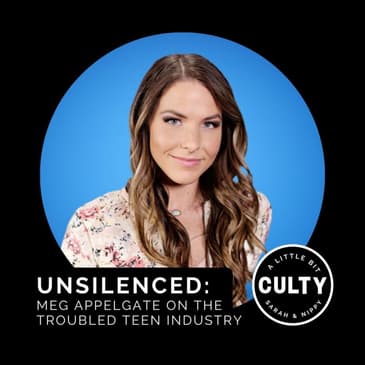
As a teen, Meg Appelgate was gooned – that is, legally kidnapped – from her home in the middle of the night and taken to a lockdown facility in Idaho, then shipped to Montana where isolation, chemical sedation, and brainwashing were the norm…for a day of underage drinking. She survived and went on to develop and recruit for similar organizations. Then she woke up and channeled her indignation toward making positive change.
Right now, anywhere from 120,000 to 200,000 or more young people are institutionalized as private equity firms rake in tens of billions of dollars from the “Troubled Teen Industry.” Meg Appelgate shares her story and how Unsilenced, the organization she founded, can help.
Note:
Meg Appelgate is a survivor determined to empower other survivors of institutional child abuse. She’s founder and CEO of Unsilenced, a non-profit org serving victims caught in the web of the Troubled Teen Industry. She’s also VP, Trustee, and Managing Director of the Gochnauer Family Foundation that provides financial help for families and children. She serves on the boards of a domestic violence shelter and a therapeutic riding center. When she’s not funding and implementing new ideas to help people thrive, Meg loves to explore new places with her husband and four children.
You can find her on the medes: Personal Instagram, Unsilenced Instagram, TikTok, Facebook, and Twitter.
And, for more on the Troubled Teen Industry, check out the Season 2 episode featuring Elizabeth Gilpin here.
Also…
Let it be known far and wide, loud and clear that…
The views and opinions expressed on A Little Bit Culty do not necessarily reflect the official policy or position of the podcast. Any content provided by our guests, bloggers, sponsors or authors are of their opinion and are not intended to malign any religion, group, club, organization, business individual, anyone or anything. Nobody’s mad at you, just don’t be a culty fuckwad.
Other Links:
Check out our lovely sponsors
Join ‘A Little Bit Culty’ on Patreon
Get poppin’ fresh ALBC Swag
Support the pod and smash this link
Cult awareness and recovery resources
CREDITS:
Executive Producers: Sarah Edmondson & Anthony Ames
Production Partner: Citizens of Sound
Producer: Will Retherford
Co-Creator: Jess Tardy
Writer: Holly Zadra
Theme Song: “Cultivated” by Jon Bryant co-written with Nygel Asselin
See Privacy Policy at https://art19.com/privacy and California Privacy Notice at https://art19.com/privacy#do-not-sell-my-info.
[00:00:00] This winter, take your icon pass north. North to abundant access, to powder-skiing legacy, to independent spirit. North where easy to get to, meets worlds away. Go north to snow basin. Now on the icon pass.
[00:00:26] This podcast is for informational purposes only and should not be considered legal, medical or mental health advice. The views and opinions expressed do not necessarily reflect the official policy or position of the podcast
[00:00:37] and are not intended to malign any religion group, club, organization, business, individual, anyone or anything. I'm Sarah Edmondson and I'm Anthony air quotes Nippy Ames and this is A Little Bit Culty. A podcast about what happens when things that seem like a great thing at first go bad.
[00:01:03] Every week we chat with survivors, experts and whistleblowers for real cult stories told directly by the people who live through them because we want you to learn a few things we've had to learn the hard way
[00:01:13] like if you think you're too smart to get sucked into something culty you're already prime recruitment material you might even already be in a cult oops you better keep listening to find out welcome to season six of A Little Bit Culty
[00:01:36] Hello everybody and welcome back to this week's episode of A Little Bit Culty we are back Sarah we are back and in the second season many many moons ago of A Little Bit Culty
[00:01:55] we featured Elizabeth Gilpin who was taken from her bed in the middle of the night left in the woods for three months of forced camping with 12 other girls then remanded to a prison like boarding school
[00:02:06] where she and so-called other troubled teens were subjected to nightmarish conditions and psychological abuse check that episode out if you want to be horrified and pissed off and we're not gonna lie because we were chapped from the very beginning of reading about our next guest story
[00:02:22] her story is sadly far from unique and to this day there's still no federal regulation or oversight of these institutions and their quote-unquote therapeutic treatments meanwhile private equity firms are raking in tens of billions of dollars from what is termed the quote troubled teen industry
[00:02:40] while vulnerable children and families continue to pay the price we will be referring to that as TTI in this episode as a teen Meg Applegate was also gooned that is legally kidnapped
[00:02:51] she was taken from her home in California in the middle of the night to a lockdown facility in Idaho then another one in Montana she survived three and a half years of abuse and brainwashing and went on to recruit for similar organizations but one day she woke up
[00:03:05] right now anywhere from 120,000 to 200,000 or more young people are institutionalized for everything from trauma to ADHD to autism it's more than a little bit culty Meg Applegate wants to see evidence-based treatment for the kids who needed
[00:03:18] but instead many of these programs deliver physical, verbal, sexual abuse, isolation, forced hard labor chemical sedation or sleep or food deprivation for a profit Meg Applegate is the founder and CEO of Unscience.org a grassroots movement of survivors and advocates
[00:03:34] speaking out about institutionalized child abuse in the troubled teen industry her memoir will be out next year and in October she'll be sharing her experience and expertise on a panel with Paris Hilton and Senator Sarah Gelser at the MassTorts Made Perfect Conference in Vegas
[00:03:49] we're honored to have her here with us today on a little bit culty where we get to hear her story and learn more about Unscience Meg Applegate, welcome to the show welcome to a little bit culty Meg Applegate thank you, I'm so excited to be here
[00:04:16] finally, long time coming I know I'm gonna preface this with saying my ass is already chapped at this story as most are when they hear it I got my fighting boots on right now it really fired me up just finding out everything that's going on with us
[00:04:32] if I throw some punches over here it's maddening I welcome the punches okay we're gonna send Nippy into a school and that should be a series we pitch, Nip is like Nippy going in and like flipping the egg tables at some troubled teen industry house
[00:04:48] or I go in and it's diplomatic and be like listen I have a troubled teen here and I'm just wondering and then just asking questions and being like so wait what do you do yeah we've done that actually really? oh yeah, oh yeah
[00:05:00] not only that but last time we were in DC we actually called programs and making sure they're doing what they're saying they're doing on their website and it's interesting because obviously they don't but you know we called a couple programs in Utah
[00:05:14] and given that conversion therapy is illegal in Utah we kind of set the stage for you know our hypothetical kid that has issues and their LGBTQ plus and they literally alluded to the fact that they can fix that so it's wild what's going on even when it's illegal
[00:05:32] that's so crazy so I could go in and be like listen I have a gay or trans kid can you fix them could I be that overt about it? probably but they'd push back a little bit
[00:05:42] it took a while to get to that point of them trusting us so we were kind of like oh you know I've got this daughter and she's wanting to use different pronouns it's so strange kids nowadays and you kind of have to like get into that
[00:05:54] to get them to trust you that you're not just overtly trying to like trap them so you're baiting them yeah you gotta bait them or else they're just like hmm I don't know I'm not interested in doing that I'd rather come out sorry
[00:06:06] before we get into how we're gonna solve the problem let's just rewind a little bit I know we were super fired up I still am but for those who don't know why we are fired up slash rss our chapped respectively introduce yourself please Megan
[00:06:22] and obviously we'll have done an intro prior if people are like who are you what do you do what's your story do you have like the cliff notes yeah I mean I'm mega-applegate I am a survivor of institutional abuse and I'm also the co-founder and CEO of Unsilenced
[00:06:37] amazing so we'll get to Unsilenced at the end where did this journey start for you you did not join a cult on purpose I didn't your parents decided to put you into one unknowingly I didn't even figure out it was that unknowingly of course
[00:06:51] and they had good intentions of course but what did they think they were putting you into and what was going on for you at the time that they were trying to fix yeah I mean so the story leading up to you know the big what the fuck moment
[00:07:07] was basically I was I never felt like I fit in and it was always hard to find friends and I didn't understand the you know the social aspects of things and friendships and you know they think I'm weird and stuff like that
[00:07:19] so what I did is when I got into high school the way I fit in was with the kids that smoked weed I mean come on if you smoke weed like you're usually pretty open and I fell right in and I felt good but what happened is
[00:07:32] I started to skip school and one time I skipped school with a friend we went off campus and then we had this guy on the side of the road by a sampeer and in exchange for buying him a bagel of course and so we bought him a bagel
[00:07:47] he bought us some beer and then he ended up following us around which we thought was weird and he subsequently drugged us and we were sexually assaulted in a park and because we left campus for that it eventually led to us getting expelled
[00:08:04] because we drank during school hours even though it was off campus so there I was I had just been freshly sexually assaulted and I got expelled from school and this is really messed up but the FBI that investigated everything actually told my parents I only recently learned this
[00:08:23] told my parents I wasn't assaulted so up until a month ago my parents didn't know it actually happened and so I think that's really fucked up why would they do that so what happened is we told the FBI that he forced us off school which didn't happen
[00:08:40] because we were scared of getting in trouble we were scared of being expelled which we were but we said that he saw us on by the pay phone and then told us to come out with him and forced us that part didn't happen
[00:08:51] but the rest of it was true we just didn't want to get in trouble when my friend came forward and said it was a lie that we actually walked off campus ourselves they didn't believe the rest of the story and it was like a whole FBI thing
[00:09:04] like they believed us and all this we had to go to a special therapist and show what happened with dolls and stuff it was wild and then all of a sudden they were like well it didn't happen before I went into the trouble teen industry
[00:09:16] I really already was labeled as a trouble teen and nothing I said was really believed so there I was 15 years old expelled from my first school it was coming to the end of the semester they allowed me to finish the semester thankfully
[00:09:30] so I was out of classes in like a trailer by the school and they let me finish my classes Did the school know that you were sexually assaulted? The FBI told them I wasn't either so they believed them But you didn't know until recently
[00:09:43] I didn't know that no adults knew like I only just knew just found out like last month Wow and so the semester ended in you know Christmas time and early late January I don't know what I did for school up until then but I woke up
[00:10:00] I was woken up in the middle of the night around 2 a.m. by two strangers that said you're coming with me and in that moment I was like oh my god I'm being kidnapped you know like you just oh my god what do I do
[00:10:11] what do I do and I got really scared but then I looked to the door think we're my parents but they were standing at the door watching and crying and I was like okay I guess I'm not being kidnapped
[00:10:25] and they said we can do this the easy way or the hard way you know I was like okay I got up I asked if I can get changed they said we need to watch you and I said can I go to the bathroom
[00:10:34] and they said we need to watch you and I said can I at least pack a bag and they said your parents already did and that was the point where I knew that they were in on it and I started screaming at them I fucking hate you
[00:10:46] I'm never talking to you again you ruined my life why would you do this you know and they threw me in the back of an SUV they drove me to LAX and we were off to Boise, Idaho for my first program which was a lockdown facility
[00:11:02] called Intermountain Hospital and you were there for six months six months at the first place what was that like it was so weird I grew up in Newport Beach, California so I didn't experience a ton of diversity because it's really not a very diverse city
[00:11:21] and I saw kids that were struggling with things that I never knew existed I didn't know what an eating disorder was I didn't know what schizophrenia was I didn't know what pica was I didn't know what bipolar disorder was I don't know what pica is
[00:11:34] so pica is basically when you are attracted to non-edible items and you eat them so you see people like eating fabric softener and stuff like that so it's a legitimate condition but these kids were really struggling with legit mental issues but the way that they treated us
[00:11:53] was horrific they had a quiet room or QR and it was a padded room with a lock on the outside and it had a bed in the middle with straps in case we needed to be strapped down and the second you talk back to staff
[00:12:07] they would just have multiple staff throw you on the ground face first they'd pull your arms behind your back and they'd put a knee in between your shoulder blades and they'd have like four staff holding you down pull your pants down and stick a needle in your butt
[00:12:21] and give you some halodon or whatever they decide to give you booty juice is what we call this and you'd go limp and then they would drag you to the QR and they'd strap you in and there was one little window it was a rectangle
[00:12:37] probably like five by ten inches and it had the lines to show it was shatter proof you gotta follow code and I always knew when they were ready to come out because all of a sudden you'd see the kids face pop up into the window
[00:12:50] and then the nurse would just open it up and the kid would come out calm it was just so messed up the first, man it must have been three months I spent on something called desk space which is where I was confined
[00:13:03] to a desk for all program hours so non-sleeping hours I would wake up I would sit at the desk and I'd have this bag of pieces of paper that had yeses and nos on it and when I first began the program I had one yes and nine nos
[00:13:19] and I would have to pick from this bag every time I wanted to go to the cafeteria or program with the other kids go to therapy, whatever and I would pick and if I got a no I couldn't go I'd have to sit there and do written assignments
[00:13:33] three months I was on that and with nine nos and one yes I rarely got to go so they did that and it's like documented in my journals the reason why they put me onto that is because they wanted to take away my control like that's written down
[00:13:48] they wanted to break me they wanted me to know that I don't have control over everything your faces you're so fucked up okay look at the little sidebar I'm reading this amazing parenting book called The Conscious Parent oh yeah I've heard of it yeah it's really good
[00:14:06] I'm just like sidebar to the cold stuff but it's just talking so much about like how teenagers are are growing it's just so fucked up to subvert a natural growth process with these methods I don't have an answer to it like what's better
[00:14:21] I just know that's really fucked up yeah and horrific for your psyche and just like for somebody who's just like you know made a mistake air quotes around mistake yeah right yeah like a mistake like that could be treated as like parents being like
[00:14:36] wow you made some really bad choices and this is the mistake but it's a learning opportunity to grow and look what can happen if you do this like these are the effects what are we gonna do next time versus shipping you off to desk duty
[00:14:51] where you have no control I mean it's fucked up yeah so the really fucked up thing is that when I got there they diagnosed everyone that comes in and I don't know if you remember like in the 90s every kid was ADHD and every kid was on Ritalin
[00:15:04] yeah do you remember that right yes how old are you do you mind me asking so no I am gonna be 38 in two days I'm like eight years older but yeah I do remember that still yeah I was part of that for sure
[00:15:16] and then there was another one that was like all kids are bipolar and I was a part of that one too so that was in the early 2000s and I went in in 2001 and I come in and within the second day they're like you're bipolar and my doctor
[00:15:30] he's a doctor he really is he has a license he just died but he had a license but he literally wrote my parents like a letter saying that my type of bipolar means that when I'm on medication I'm going to not like the medication
[00:15:44] and say it doesn't help me but really it's just part of the bipolar and that if they take me off I'm going to end up pregnant and higher rates of teen pregnancy and like not being married and all that and I'm like
[00:15:55] what doctor in the world would ever say that and it's super weird but every kid had bipolar disorder so with bipolar disorder of course they pumped me full of meds like so full of meds I gained 60 pounds in six months from the over medication the lack of exercise
[00:16:12] and lack of healthy food just a little thing because we're watching painkiller right now I'm also wondering if the doctors were being subsidized by Big Pharma to subscribe some of these things possible for sure that actually is the origin of the question
[00:16:23] I remember reading or hearing somewhere where the whole process of your parents going to an educational consultant seems to kick off the entire process of putting you into an ecosystem that I believe you said has no federal regulations and is that correct? yep little than none
[00:16:41] so I think it's important to get into how benign it might seem at first because I imagine parents out there would go oh that would never happen to my kid or whatever and I think that is an important aspect of the story to get into because
[00:16:57] I'll let you kind of run with that and then I think that's the part that really just I was seething when I heard that I was like I would go in there with a baseball bat to the educational consultant I know anyway your turn
[00:17:10] I get the same response from anyone who's a parent right and I think something I need to mention is the social aspect and grooming that happens when you become a parent as soon as you become a parent here you are have a kid right
[00:17:21] and you're like well I don't have a handbook for this you are groomed to listen to quote professionals be it the pediatrician or if they have to go in PT or OT you listen to these people doctors if they go to the ER right
[00:17:34] you're gonna listen to them you put their lives in that doctor's hands we're groomed for that to listen to people who seem to be more professional than we are and here we have kids who are needing help or me for example you know I was struggling
[00:17:48] and there's professionals out there that take a ton of money to be able to feed into the industry that they get kickbacks from right and that's not communicated and it's all hush-hush right but parents are trusting these people to do the right thing
[00:18:05] when in reality many of these educational consultants are sending kids away to places they've never visited never visited and furthermore the most important component of this is that knowing parents and how much they love their kids the main way they are able to do this
[00:18:22] is through deceptive marketing and fear-mongering and as a parent you know that if you take your kid to that ER and you say my kid has terrible stomach pain and the ER doctor feels around for a bit and says they need surgery this second what do you do?
[00:18:37] you obviously are going to trust that doctor to make the right decision and that's kind of what's happening is we are trusting these people when we feel like we don't know what to do and they offer a reprieve from the parent side of things because they're fed
[00:18:52] incorrect information about the kid while they're away they think they did the right thing and actually in that process they're brainwashed as well yeah you're walking into a system where you don't understand their incentives and your kids become a casualty
[00:19:05] that is actually a point that I hadn't considered before it's not just the problem of speaking to the educational supervisor their whole experience as a parent is putting their trust into experts and that is fucked up I hadn't considered that which are counterintuitive to our instincts
[00:19:25] but how do we know? if someone tells you your kid is going to die and they're an expert well that's a terrible mistake really and it's like the really really really unfortunate thing is is that due to this deceptive marketing and the fear mongering once kids go
[00:19:42] they're fed information immediately that is prepping them for future brainwashing so they're being told things like during your first phone call many kids usually say that they're being abused or that things don't seem right and that's very normal this is what you need to respond with
[00:20:00] to leaving their child and for for gaslighting honestly right, I have so many more questions about that but I do want to give our audience a little bit more of a background is because I know that you were there for six months
[00:20:12] and then you were taken to Chrysalis and for those people who also heard our episode with Liz Gilpin who wrote the book Stolen are you in touch with her? is she part of the survivor community? yeah she's in the community I don't think I've talked to her directly
[00:20:28] okay cool so I did see a lot of parallels with the stories in terms of being kidnapped in the middle of the night and like the parents lied to and a lot of the similar techniques in the school itself but you guys went to different schools correct, yeah
[00:20:59] it's a lot of fun over there people the Frankies were a picture perfect influencer family but everything wasn't as it seemed I just had a 12 year old boy she'll appear asking for help he's emaciated he's got tape around his legs Ruby Frankie is his mom's name
[00:21:34] this episode is sponsored by BetterHelp what are your self-care non-negotiables? maybe you never skip leg day or never miss yoga maybe it's getting eight hours of sleep that's my personal and everyone's dream isn't it? well I definitely have some non-negotiables like I'm in Vancouver right now
[00:21:52] and I'm spending literally as much time as I can outside in nature hashtag cold pools hashtag crushing it nature is a non-negotiable and I start to feel not great not myself, not grounded therapy day is a bit like my nature walks I try to not miss it
[00:22:10] and I know I'm just going to feel so much better all around if I make it a priority it helps me put my worries and anxieties in their rightful place and helps me clear my mind so I can focus on what I really need
[00:22:20] and sometimes what I don't need I don't need to be overbooking myself just because I hate to say no to people you know what I mean? thanks therapy thanks for helping me see that and if you're thinking of starting therapy it's entirely online designed to be convenient
[00:22:32] flexible and suited to your schedule just fill out a brief questionnaire and get matched with a licensed therapist and switch therapists anytime for no additional charge look even when we know what makes us happy it's hard to make time for it
[00:22:44] but when you feel like you have no time for yourself non-negotiables like therapy are more important than ever never skip therapy day with better help visit betterhelp.com slash culty today to get 10% off your first month that's better help H-E-L-P dot com slash culty
[00:23:04] you've heard from our sponsors now let's get back to a little bit culty shall we? so paint the picture of what chrysalis was like yeah so chrysalis was a whole new beast and for different reasons the second I got there
[00:23:18] I realized it was definitely not a lockdown facility they make that known right that chrysalis is a very high level and we don't take kids that we can't trust and if you're not trusted to stay in your bed you are shipped off
[00:23:30] right so you have that level of fear and appreciation built in to thank god I'm not locked down right so very immediately that's what I felt but the whole structure of it was extremely odd I lived with nine other girls and then a married couple who doubled
[00:23:46] as our therapists and we all live together in a log cabin in the middle of the woods in Montana up north near Canadian border and to put in perspective I shared a bathroom with my therapist for the first six months and they forced this kind of feeling
[00:24:04] of a family so we talked about each other as our chrysalis family the other girls are my chrysalis sisters I felt like there was an inappropriate relationship between the person that owned it Kenny and the girls you know he would wrestle us and have wrestling
[00:24:20] matches and you know cuddle up with us on the couch and sit on his lap and things like that setting up a very I don't even know how to describe it unrealistic relationship with the therapist and it was almost like chrysalis in and of itself is trying
[00:24:38] to set itself up as a pseudo home and I get that I get the intention behind that right but what it ended up doing is setting up unrealistic expectations for the rest of my life if that makes sense so they had consequences and that's kind of how they
[00:24:52] use their behavior modification models and any kind of mistake you made you get a consequence and it was usually manual labor and that's on top of the fact that the entire property there was like acres and acres and acres of land the entire
[00:25:06] property was maintained by the girls so we mowed the lawn we bailed the hay we were out there gardening all the time we fed the animals we did everything and so on top of that we would have consequences and they would be just crazy consequences like
[00:25:22] go get a wheelbarrow put tons of rocks in it for 30 minutes and just move the rocks from one side of the horse pasture to the other no reason why we would need that so that was one of the main things that they did but the one
[00:25:36] that really broke you down the one that really led to that learned helplessness as I like to call it was circle and circle was their group therapy I say that in quotes it is not therapy they're version of group therapy which lasted anywhere from 2 1 half hours to 6 hours
[00:25:58] and it would be like 3 or 4 times a week and we would sit in a circle we would have someone in the hot seat and they would kind of go around the circle hearing everything that's wrong with you everything that you're doing wrong the ways that you're failing
[00:26:12] girls would bring up stuff that you've done like in the relationship and they would confront you and when they would confront you you couldn't respond so you would have to sit there stoically because if you cried if you responded you're being quote defensive so owning it
[00:26:28] and accepting it was a huge part of chrysalis so and like honestly part of the level system like if you couldn't accept feedback in quotes you wouldn't get to the next level ever if you cried every time you got feedback and said like that's not true I
[00:26:42] disagree with you you're not going up the level system at all so it primed you to be treated how you don't feel like you deserve and so obviously that has long term effects as you can imagine but we would go on
[00:26:54] for hours and with the way that I acted as I said I had social difficulties I didn't understand how I came off to people I didn't understand social cues as much you know big surprise I'm autistic and that's a lot of the reason why I was
[00:27:08] sent away unknowingly I didn't know I was yet and why it was so hard for me in these places and so looking back I was actually abused because I was autistic because I didn't understand things and it wasn't my fault at all but it ended up with
[00:27:24] you know the circle would end with you feeling so broken down like this feeling of emptiness and what happens when you feel that empty you search you search around you to someone that can help build you back up and guess who was there? Mary and Kenny
[00:27:38] and they would build you back up in the image that they thought you needed to have the way that they thought you needed to act and believe and think and they just pushed this this way of thinking onto you and I don't know when it happened
[00:27:54] but I started to be that and I started to act like that and this is one of the most unique things about chrysalis which I've really never heard another program that does this but they have a level system like everyone else once you're on level two
[00:28:10] which is the trust phase so you don't get level two in this they trust that when you're in society you're not going to run away you're not going to go to someone and be like I'm being abused so you don't get there without a ton of trust
[00:28:22] but when you're on level two you get to go to the public high school in town so I would go to the public high school go to class and then come home on the bus and be at the TTI for the rest of the time that is probably
[00:28:34] what saved me into being completely broken down and ruined beyond belief but the interesting thing is people think well you went to the high school why didn't you just run away why didn't you take advantage of that and I'm like because I couldn't my brain didn't go there
[00:28:50] they already had me there wasn't an option to do that in my psyche it wasn't there and it's interesting because even though I was at the high school all day long during the school year Kenny still had control over me this is a program in Eureka
[00:29:04] Montana with at that time 1200 people, super small town and all the staff are townies, they're people from town so we are literally the economy of Eureka, we are providing jobs Chrysalis is providing so many jobs so everyone knew Kenny everyone knew we were quote Chrysalis girls
[00:29:26] and they would report to him and then on top of that Kenny had a list and it was the approved list and unapproved list and because there was other public high school girls from Chrysalis there they all held you accountable so if you even talked
[00:29:43] to someone on Kenny's unapproved list you'd be confronted in circle and then they could possibly take your ability to go to school away so I remember there is this kid Dallas and I thought he was really cool I thought he was really funny
[00:29:57] but he smoked weed and he drank oh god, right? so he was on Kenny's unapproved list and I remember one time I was talking to him and they told, they went back to circle they confronted me, they said I was flirting with him and I was being inappropriate
[00:30:09] and I almost got pulled out of school just for talking to someone on Kenny's unapproved list so he had this control in my opinion that there were tons of girls that ran away but for me it wasn't even an option because that's where the autism
[00:30:23] played into their hands I'm so loyal I'm very rigid so once I had adopted their mentality and their chrysalis way there was no swaying out of that I was rigidly a chrysalis girl and I was the rule follower you were obedient oh yeah, until I was 33
[00:30:43] like the things I did when I was brainwashed is crazy crazy like what? okay so this is the most it's not really embarrassing, it's more just like really sad but also ironic because of what I do today I was a freshman in college
[00:30:57] so I was already out of chrysalis and Mary and Kenny e-mail me and say we need your help we have a a bill coming to the Montana State Senate that is trying to regulate the industry and make it so chrysalis will no longer be like a family
[00:31:13] and a home and they're gonna institutionalize it and create all these regulations and we need your help to testify I did it, I went, I testified and this bill got knocked down and I helped them and the people in that room that I was testifying in front of
[00:31:31] for that bill some of the worst bad actors ever in this industry, people from like Spring Creek Lodge and Natsap and the people in that room I had no idea that this was an industry but I helped the industry back then
[00:31:45] and I'm ashamed of it but I also know that so much of that is normal and something that I had to go through and that's why when I helped pass HB 218 in Montana recently I made a big deal out of it because I again testified
[00:31:59] in the Montana State Senate only this time as an expert and this time I went in person with my husband and I talked about everything that's wrong with the industry and I argued with those senators and when it passed it was just like, alright
[00:32:13] so even though I made that mistake I feel like coming full circle and doing what I'm doing now is at least making me feel like I'm making it up Absolutely, for sure I think it's important to going back to the first thing that you were saying like
[00:32:29] why you, I'm imagining tell me if this resonates with you that's like the nature of the abuse and having your perpetrator be the person that sort of holds your happiness in this hierarchical structure is that you also have been trained to please them right, being obedient is also
[00:32:45] accommodating what they want and that's part of the structure It's wild, it was something I was really ashamed of is, I remember and I've been through a couple marriages that were not good and I base it off of the fact
[00:32:57] that I was modeled what a relationship looks like based on Kenny, that was my growing up years, I looked for narcissists to be honest but when I woke up I felt so ashamed at the fact that you know, at those marriages and sending out marriage invitations
[00:33:13] I remember thinking, I should send one to Kenny and when I did I'd be like I wonder if he comes on social media, because I was friends with them on social media until I was 33 anytime I post something I'm proud of
[00:33:25] I'm like, I wonder if Mary and Kenny are going to see it I wonder if they're going to be like, oh yay Right, you're still looking for the gold star of approval Yes, that's so weird that should have been a sign to me
[00:33:37] but it really took, there's two things one is becoming a mom that was a huge wake up for me because I would look at my kids and I would think about my daughter would it be weird if my daughter sat on her therapist's lap
[00:33:51] would I want that? Oh shit, no that's really fucking weird and then I was like, oh wow it happened to me oh shit, I was abused so those kinds of things had to happen only to the nth degree with all the things that happened
[00:34:07] but then also one of my chrysalis sisters the first one committed suicide and that's what really shifted the narrative because I knew how much she struggled with the pain and all that and also a lot of physical health pain which I deal with
[00:34:21] and a lot of survivors deal with when she passed away, I reached out to one of my best friends from the program, from chrysalis and I told her I remember asking her were we abused? And she responded she's like finally and I'm like what? She's like yeah
[00:34:37] I'm like why didn't you tell me she's like you weren't ready and she had been woken up for years and chrysalis she knew but she knew I wasn't ready, she knew I wasn't at a point in time to be able to hear that
[00:34:49] and she waited and she let me talk about chrysalis like she did the best thing that anyone could have done she allowed me to find my own way out and that was looking back like she did me such a solid to be able to not
[00:35:03] shock my system before I was ready for that. For sure, good friend the question about Mary and Kenny what's their origin how do they come to be and how do they get in this position of power and how is there an ecosystem
[00:35:15] for them to get in that position of power and what are the qualifications like how does that work? Well as far as qualifications especially back then there were none in fact any program back then up until 2019 when there was reform in Montana was operated
[00:35:29] under the department of labor which doesn't make much sense but in 2019 it shifted over to the Department of Health right and so that was good because it makes sense to be in that department but so back then though there's no qualifications at all in fact there was lots
[00:35:45] people that tried to start programs in Eureka even and they would fail but they weren't even therapists but Mary and Kenny the story is not confirmed and I have really no way of figuring it out but I do know they started at Montana Academy which is now
[00:35:59] shut down but also kind of shifted to like short terms this stuff and it's not really shut down but it kind of is but they started at Montana Academy which is reportedly just very abusive as well and I also heard reports that they helped start Montana Academy
[00:36:15] I don't know if that's confirmed though however once they started Chrysalis they really kind of saw the niche of having this private program right and making lots of money on that and I do know Mary was on the board of on the part board at one time
[00:36:31] which is the oversight of programs within Montana she was on the board with a bunch of bad actors in programs within Montana and like Spring Creek Lodge and all that stuff so some of the really horrible ones those are other TTIs?
[00:36:47] Yeah, Spring Creek Lodge was a horrible, horrible place So they must have figured out they need to have an apparatus to get teenagers there? Yeah, if I remember correctly I don't think I ever saw a website this was right around the time that websites were
[00:37:01] becoming big but man I'm old I do know they pushed Chrysalis being different I think they really found that niche of like we have horses and the girls are going to be doing you know, horse therapy, hippotherapy and they were really in the beginning stages of
[00:37:15] let's make this not look like a wasp program let's make this not look like your kids living in hell and let's pretend like they're doing all this great stuff and actually in reality we did do a lot of cool stuff we went rock climbing
[00:37:27] we went snowboarding and skiing Kenny had a boat and he would take us on the tube and water skiing and all of that stuff but it was forced and if you didn't do it you would get a consequence or you could lose levels
[00:37:41] he forced us to work out all of this stuff was forced in fact if you were injured he would still force you to ski I have a Chrysalis sister who now can never walk normally because she had broken her femur
[00:37:51] and when it had just healed he forced you to ski ruined her entire life of being able to walk normally, has yearly surgeries so the medical neglect was kind of tied into these activities you were forced to we were forced to do 60 hours of trail work
[00:38:05] in Glacier National Park every single summer we were put to work with our Pulaski's and our pickaxe and we would build those turnpikes and we would build those switchbacks so yeah we do cool stuff and that's what the parents see is pictures of us doing
[00:38:19] trail work and be like oh my gosh they're in community service it's like no that's manual labor and I have issues now because of it so that is really the behind the scenes look at what's really going on even in these programs that show you really cool pictures
[00:38:35] like you get to raise dogs or be on horses time out for a second, even if you did all those things and the therapy was legitimate which it wasn't but even if it was and you were in nature and doing cool things and all whatever
[00:38:51] just even how you were extracted from your home and the trauma that it would have caused and even if your parents are there but to have that kind of separation from your parents not choosing it not understanding, not having any conversation around it, that would be
[00:39:05] a cause for PTSD for the rest of your life if you don't heal that it's so true but I'll even take it a step further even if you weren't kidnapped to get there the very act of being forced to live your adolescence away from your family
[00:39:19] your support system in your community is in of itself abusive not being communicated to parents as well would you have a home address for these two by chance? I do actually I know of my heart because I wrote many letters it's uh, yeah are they still in practice?
[00:39:37] so that's the crazy part so the industry took a very big shift when the financial crisis hit in 2008 sorry, wait, I'm going to interrupt you before you tell me about what happened I know you didn't wake up when you left
[00:39:51] your sister passed and then you started to piece it together but when did you like make the correlations between this type of abuse and it being culty or like a, run like a cult? when I met Yanya Lalich that's when I was like oh shit
[00:40:03] I wasn't a cult it all comes back to Yanya Lalich yeah, you know and that's why we became so close is because you know, I think it's a very important thing to realize for these programs is that they all stemmed from sin and on for God's sake
[00:40:19] like most of them did at least the religious academies have a different etiology and wilderness but all of the behavior modifications RTCs, therapeutic boarding schools really root back to Sinanon and the tactics that they developed there so how are we saying that this is treatment
[00:40:35] how are we doing that when the whole industry was based on a cult and spinning off from there and for those who don't remember it was originally known as tender loving care founded in 1958 in Santa Monica, California and it originally established as a drug rehab program
[00:40:49] and then became an alternative community based on truth telling sessions known as the game which is the basis of the circle aka attack therapy which may sound familiar to many people in various cults I think that is one thing that
[00:41:03] if people don't know what Sinanon is listen to the episode with Amanda Montel we haven't done a standalone on Sinanon but I think it's important and I don't think that any parent would approve of sending their kids to something where the therapy is not actual therapy
[00:41:17] but based on the structure and exercises of a cult which is by the way very similar to what happened in Nexium it's an obedience club it ends up being an obedience club for sure that's what Chrysalis was and basically taking anything if you respond, cry, deflect defend
[00:41:35] anything other than thank you so much for that feedback we'll get you into trouble thank you for your feedback all these people stole from the same sources they remembered it, thank you so much for that feedback and then the way that you confronted people
[00:41:47] because confrontation was actually encouraged so they'd say like you should bring that up in circle and the way that you say feedback even and feedback was thrown around so much that word feedback but you had to say basically I've noticed this, my hope for you
[00:42:01] is that you can learn to blank blank and my hope for myself is that I can blank blank it's just like what? a little sidebar, I don't recall if we talked about this on the podcast one of the ways we learned to give feedback
[00:42:13] was to separate data and projection and to always own the projection so I'm just trying to make something up about you, Meg which is not true so it's not a thing just trying to make something up, I don't know
[00:42:25] give me some pattern that you do still that's like not ideal I get really defensive when I hear criticisms okay so Meg what I'm noticing is when I'm saying something constructive the words that you use are very firm and that your body language seems very closed
[00:42:41] and if I was doing those things I would be getting defensive and not wanting to hear what was being said and so I'd be closing down and not being open to growth and I'd be scared so I don't know if that's what's going on for you
[00:42:55] but I really want to grow with you so I'm sharing this with you so that we can grow together oh my god, Barth so it's like a roundabout way of telling them what they're feeling sharing what you're seeing owning the projection and being gentle about it
[00:43:13] but it's also like still saying it's based in the data that we see so it has to be also true so it's sort of like a softer but insidious way of giving feedback it's a nice way of spitting in your face
[00:43:25] that's very nice, in Chrysalis they would just be like I feel like you're very socially awkward and you have no standing to be able to tell me this stuff because no one likes you they did a lot of that as well and then it would stop
[00:43:39] and when it stops and the girls kind of stop, that's when I got the most scared because then Kenny comes in and Kenny would say stuff like he called me an idiot or an idiot was his main thing and basically told me I have a chance
[00:43:53] to change who I am and I have to or else no one will ever accept me for who I am I remember that conversation you're almost 16, your brain is you still have time to change it, you need to change who you are it's awful I know
[00:44:09] and now a brief message from our little bit culty sponsors hashtag cold pools hashtag crushing it and if you're thinking of starting therapy give BetterHelp a try it's entirely online designed to be convenient flexible and suited to your schedule
[00:45:14] just fill out a brief questionnaire and get matched with a licensed therapist and switch therapists anytime for no additional charge look, even when we know what makes us happy it's hard to make time for it but when you feel like you have no time for yourself
[00:45:26] non-negotiables like therapy are more important than ever never skip therapy day with BetterHelp visit betterhelp.com slash culty today and get started on your first month that's betterhelp h-e-l-p dot com slash culty Meals bring people together but for many families providing their next meal can be a challenge
[00:45:46] you can help by participating in Macy's annual feeding the hungry food drive all proceeds go toward local food banks and families now through January 31st you can purchase an icon in store or online or watch out for the blue feeding the hungry shelf tags
[00:46:02] and a link to the purchase of your purchase will be donated to local pantries together we can combat hunger in our local communities at Macy's break times over people let's get back to this episode of a little bit culty it's a good one so you figure out later
[00:46:18] with all these events that happened that this was called like let's recap like isolation control of I mean every look at the bite model like every aspect of your life there was no communication out without being there was an approved list for any kind of contacts
[00:46:36] for family, friends anything like that all letters so if letters came in from someone that wasn't approved they would be held back we were forced to journal however our journals were read and then we were given feedback in our journals with red ink
[00:46:50] it's a confession it's not a journal I know so those were all the ways that they kind of controlled us removal of food as punishment if you ate too much at a meal they'll be like now you're not allowed to get seconds
[00:47:02] all week you know something like that so those kinds of things were happening or let's say you drink a glass of milk you weren't allowed to drink milk because milk is too expensive they can't afford it for all the girls right an 8 ounce glass
[00:47:14] so if you were caught drinking milk you'd be on a milk ban so they would do a lot of that stuff a lot of shaming yeah a lot so a lot of pure humiliation and public humiliation I remember 9-11
[00:47:28] happened while I was sitting in the chrysalis living room and I remember watching it on tv and I remember it because Kenny didn't make us work out that morning and I was like yes and I didn't understand what was going on I was only you know 16
[00:47:40] and very close minded at that point when 9-11 happened we decided we were gonna hold like a vigil in the community right and Kenny's like oh all the girls can choose to do like a song they can sing or something for that vigil and I remember
[00:47:54] me and another girl were gonna be singing and we did like a try like a practice in front of all the girls and we sang and we were like we didn't know what harmonizing was at that point so like and Kenny called us out
[00:48:06] about our singing said we sound horrible in front of everyone I went back in my journal and I'm like writing about how Kenny's so mean to me and all this stuff and Mary's the one who read him and she like never addresses
[00:48:18] any of the times I talk about how Kenny treats me like and she never talks about only talks about my feelings regarding myself and bringing it back to me and I have to own how I am and how does that relate to me and he embarrassed me
[00:48:30] in front of all these people like that kind of stuff happened all the time or I remember I got scared on a horse and I was really scared it was like one of my first times and I screamed because he started moving
[00:48:42] around a lot and I went ah and then he threw me off and then Kenny screamed at me and got mad at me because I did something that caused me to get hurt and he was taking it out on me for not knowing what to do
[00:48:56] and not to do you know those kinds of things happened all the time lots of shame I know there was lots in other schools was there sexual abuse and it sounds like there was definitely like major boundaries crossed that were not appropriate was there sexual abuse as well
[00:49:10] I do know of girls that had sex with other girls at chrysalis their same age and I am aware of unfortunately a sexual assault that happened from a staff member to a girl but that happened like a year ago while I was there I heard whisperings
[00:49:24] of something some kind of allegation against Kenny from a previous girl that had left but I never saw any I never heard or saw anything after that and have no idea I've never even seen anything legally about it but and then I do know of another staff
[00:49:40] that was grooming students at chrysalis since I left and they were fired and things like that so it's really inherent in all programs any program you know any institution that is full of kids you're going to find predators you know that's why we need the
[00:49:56] regulations that's where we look at Boy Scouts so first of all let me just say thank you for sharing sharing these things I know it's never easy to talk about traumatic things that have happened and I appreciate your willingness to educate us and others and to shine light
[00:50:12] and I've always been really inspired by the work that you're doing now so lead us through how did you get from waking up to becoming an activist and being a part of all these foundations and what's going on in the industry yeah so that was a rough time
[00:50:26] I call it my trauma spiral of 2018 and honestly it started with me realizing that I had always had like panic attacks and things like that and you know being scared to go into public I don't want to have a panic attack
[00:50:40] being scared to go to a meeting because I don't want people to see and I slowly started to realize after I had like this big two week long panic attack and after that I started realizing that it must be tied to something else that's really deep in there
[00:50:54] and then Paris Hilton's documentary came out and I watched that and that was the first time I realized that there was an industry that there were other programs like chrysalis and it was called the Troubleteen industry and I was like oh my god I'm like
[00:51:08] I just thought that chrysalis was like a place and you know there's a bunch of them but they're fine you know and something inside me shifted and I remember my husband came in and I was like crying my eyes out he's like are you okay
[00:51:20] I'm like just go, just go I just needed to cry and that's when I really started to open up that trauma and when that trauma opened I started to realize triggers in a very interesting way so instead of my brain being triggered my body
[00:51:36] was triggered so if someone was talking all of a sudden my heart would start beating and I would feel physically ill and I'd get cold sweats and I would, I'd feel like I was in a different place and dissociate and those kinds of things and I realized
[00:51:50] it almost was like my body was unattached to my brain. I wasn't giving my body permission with thoughts to be able to supply what it needs to make this kind of reaction and I noticed a disconnect and that's when I got into EMDR and that quite
[00:52:06] possibly saved my life and it gave me my life back. There was definitely a time where I was so full of anxiety that I didn't think I'd ever go on a plane alone I didn't think I'd be able to like do what I do
[00:52:18] for sure. I had accepted that my life was going to be challenging and once I started EMDR it was crazy differences. Is that the main modality you've done for the healing? Yeah, I mean I do EMDR, I did that I did a heavy amount every week I think
[00:52:32] I did probably five hours of EMDR a week. Wow. For a good four months and during that four months it was pretty up and down but I knew that I wanted to get involved in the activism and I made a promise to myself
[00:52:48] that I wouldn't get involved until I was healed enough until I had overcome the triggers that I knew were going to be inherent in this industry and doing any kind of activism work so I promised myself I wouldn't do anything until then
[00:53:00] and I didn't, I didn't do anything until 2021 and that's when I started the work at a different advocacy organization as the director of development and then at that point I left that advocacy organization and that's when we started on Silenced and that was like December 31st of 2021 and
[00:53:20] it just, it exploded right but I was right, I was really right to do the healing I needed to do to start on Silenced because it's really difficult to with how integrated we are into hearing all the things that go on, all the deaths, you know, seeing police
[00:53:38] cameras and hearing 9-1-1 calls and the stuff that we have to listen to it will shake even a non-survivor and so I had to make sure I was strong enough to be able to go through that and I also saw within some other advocacy organizations
[00:53:54] that it was important that the culture be correct, you know and so that was the first thing we did when we started on Silenced is I said, okay we need to get a culture statement. We need to decide you know, we know our mission
[00:54:06] but how do we achieve our mission? Good for you and now how do we get there because as survivors you know, I mean dude some days just suck and we treat people like shit and that's just like it happens but we need
[00:54:18] to be able to be guided as we try to achieve this mission into what's going to be acceptable within the org and what you're gonna have to do on your own time and process on your own time and also it's a really common thing
[00:54:28] to trauma dump right and to just like I'm going through this right now and blah blah blah and you're unknowingly putting your stuff on other people so you know it's really important to have clear guidelines as you carry out a mission and
[00:54:40] the reason why I know that is kind of going into my nonprofit work that I've done. It's interesting because the panic attacks and all of the pain I was going through and the extreme anxiety never affected my professional work like my professional aspects of my life.
[00:54:56] Every board meeting I've been fine if I panicked I just pretended I didn't. I got really good at masking and that's what Chris listed is it taught me to not act autistic and to appear neurotypical and so I did and that's my professional side of Meg
[00:55:14] that you know my personal side really didn't get to see is that mask so through that since I graduated with a psych degree and I went on to I owned a couple different businesses I was a dog behavioral therapist and trainer and owned a franchise
[00:55:30] I started my own photography business and I was a professional photographer for six years and you know I always found that purpose right like my purpose was and my passion was photography but then it just started draining me my you know I just couldn't do it anymore and
[00:55:46] it stopped being my passion and as soon as I found you know on silence and this industry that I wanted to take down it was immediately my purpose for my entire life and I knew it was going to be so basically after college I
[00:56:00] started running the Goknar foundation which I'm the VP and managing director of right now and through that I really sat on numerous nonprofit boards throughout the country helping with development program expansion governance issues and things like that and that's been kind of my career so
[00:56:20] when I woke up when I found you know out about the trouble teen industry what I did is I noticed an enmeshment between my passion which was philanthropy and now my newfound purpose which was really trying to stop institutional child abuse that's when the true
[00:56:36] coming into myself really began and how long has that been now well I mean on silence let's say we've we're coming up on two years that we've been working on this stuff and so it's been like I don't know two and a half years and slowly
[00:56:50] and also doing other types of therapy I do act therapy ACT therapy and it's been really really helpful so doing that alongside what I do has really helped so it's been like two and a half years and yeah going strong and getting bigger and
[00:57:06] having more impact and we can see that we see that you know in the industry Can you share some of the progress you've made in that amount of time and I'm curious about your parents and where you are with them as well
[00:57:18] So as far as my parents go there was a big waking up period for them too when I woke up I basically kind of slowly started to feed them stuff about it and started off with like oh careful now it wasn't you know come on Meg
[00:57:32] come on and as I gave them more information they kind of went oh shit and they slowly started waking up which led to a lot of pain and suffering and they were part in a lot of trauma because which parent wants to hurt their child inadvertently right
[00:57:48] and I remember we were sitting in my kitchen and I told them some more things it was like another meeting where I told them stuff and my mom looked at me and she goes I'm really sorry that we did that and that was enough for me
[00:58:00] that was you know my parents are two of the greatest people I've ever met in my life and I know that they have good character and they had good intentions and I lost those intentions and I accepted their apology and I now
[00:58:16] see my dad and mom really involved that a lot of this activism my dad wrote a letter to the Montana State Senate to pass HB 218 he came to DC stood on the lawn with the megaphone telling his story of how he was manipulated
[00:58:30] and how they made him hurt me how he wishes he never sent me away so it's been powerful to see his reaction to this and it's really cool to see how inherent fighting this fight is to our healing I see it with an unsilenced
[00:58:46] and how healing it can be and my dad too and my mom Well it's cleaning up your mess in a lot of ways and that's cathartic one quick question about your dad and is there any kind of consequences for the educational consultants that sent you to these places
[00:59:04] are they still working and what are the other questions doing to address that and if so what's their address I see them as very problematic viruses that are kind of out there but my main target has always been coming from a business perspective
[00:59:22] I know that you can't take down this industry without stealing their bottom line you have to effect their bottom line and I know that if we targeted educational consultants more would just pop up one person out of business and it would take too long
[00:59:36] what really makes a difference is affecting this is what we do with Project Speak is going into communities and educating reeducating the decision makers so we're talking about school and social and justice pipelines we're talking about parents the people that care the people that are sending these kids
[00:59:56] and what I don't think people realize is that this isn't just a bunch of rich parents sending their kids and these are kids from our school systems being paid with school district dollars funded by your tax dollars and I don't think people fully understand that
[01:00:12] so the education component is the most important component because when people figure out that they're doing this inadvertently that they're funding these things it almost creates its own awareness and then they get mad and they talk about it and then they become the awareness as well
[01:00:28] yes you're getting allies as well healthy parents are the ones that would be problematic for this because they have the time and resources to potentially expose them so the foster care children's would be prime targets because who's going to believe them
[01:00:40] they've always been this way, they can just credit them they don't have resources to come after them it's really messed up I'm proud of you for doing that that's pretty amazing same hope is not a controversial question if it is we'll load it out
[01:00:54] but I don't want to make it okay I want to understand the ecosystem better are any of the schools out there doing proper therapy are any of these things within the troubled teen industry doing good work that's not abusive or is it all just a big shit show
[01:01:08] like is it all going to be ripped up? super good question, it's a question I get a lot not very controversial that's a good question and one I'm not offended by because there are people that come out of these programs and they say it saved their life
[01:01:22] you know what, that can exist at the same time as my experience and they both coexist I'm able to understand that so as far as good programs, what I have a hard time doing is even if you take away all the abuse
[01:01:36] everything that's going on in the programs the very foundation of it is that they are bad I can't function unless I am in a facility if you take that and you build it into someone's personality you're gonna have long term repercussions and also inherent in the industry
[01:01:54] the industry is growing up around other people who are having issues they are struggling with addiction they have mental health issues and if you revert back to the adverse childhood experiences or ACES which help us understand how children experience trauma and the long term effects of it
[01:02:12] being in these facilities even when there is zero abuse, just the act of being there can cause ACES and we know that if you have four or more ACES out of ten, you have long term effects, you have higher chances of obesity, substance abuse I think it's like 1,224
[01:02:30] times more likely to try to commit suicide so if you look at that aspect of it, just being forced to remove all autonomy all decision making skills and you are living away from your support system and community and family you were meant
[01:02:48] to have family ties during that time and even just the piece of research that shows close familial ties with your family and adolescents can lower depressive symptoms until your late 30s so just that research alone really goes against what this industry stands for now with that said
[01:03:10] do I think that there is ever a time for institutionalization or being an institution yes, I think that if you are consenting to it and you are needing short term crisis stay if you're schizophrenic and need to readjust meds, you're not being safe with yourself
[01:03:26] you have a needing disorder that has gotten out of hand and need to stay to be able to get yourself back to health and to be safe these are reasons that are legitimate but if you're sneaking out of the house
[01:03:38] because you want to have sex with your boyfriend and you're smoking pot and drinking these are not reasons for residential treatment and what people don't understand is that almost all of this stuff can be done within your community so that's kind of what
[01:03:52] the whole basis of them existing is faulty they can't be good programs the premise is just way off yes, exactly that makes total sense and thank goodness my parents did not talk to an educational advisor but also they were like
[01:04:12] they made a safe place for me to be like so when you're thinking about trying marijuana we recommend doing it with people you trust, you don't get paranoid my parents did such a great job in that way but I definitely made a lot of mistakes
[01:04:28] and I'm very grateful that I put myself in a different cult later that's another story but anyway so if there is a parent that wants to help their kid and there are programs that they're going to send them to hopefully we would hope that any parent listening
[01:04:46] would know that kidnapping them in the night is not a good way to do it having them maybe choose to like go attend something what are some of the red flags for treatments that would say that this could be abusive versus helpful I'd say first and foremost
[01:05:00] if you're struggling with your teen go get help for you first, go and get therapy for you, go find a parent coach someone that can help you understand your child because every kid is different so if you have a kid that you didn't struggle with
[01:05:16] and they're out of the home or what not and this kid is really hard go get a parent coach to help you understand this particular child and how you can change it is up to us as parents to alter our behavior as adults
[01:05:30] and our capabilities of being emotionally stable to alter ourselves for our children so we can best parent them and I think that's a really hard lesson to take from the issue everything is rooted into family and to dynamics and things like that
[01:05:44] so we always need to take that into account if a kid is acting out aggressively if they're making those kinds of decisions you have to at least in part look at the family dynamics what am I doing, what is my husband doing what are the siblings doing
[01:05:58] things like that and take that into account now for the very troubling behaviors delinquency getting in trouble with the law and things like that there's legitimate therapy within the communities that you can do you should always go for the least restrictive environment at all times
[01:06:20] so whether that's wraparound care whether that's a special school within the district that caters to your specific child's needs utilize all of that and really just opening your mind to peer mentorship we're partnered with big brothers, big sisters of Orange County
[01:06:38] and we have a pilot program coming out this fall where survivors are going to be mentoring kids who potentially are almost about to be sent away to see if we can you know, circumvent the institutionalization there's so many programs that exist within the communities that utilize peers
[01:06:54] that help parents really it's just finding them but as far as red flags programs let's say your kid is already in a program and you're listening to this and you're like oh shit is this kid is this kid in one of these facilities
[01:07:08] first and foremost go to our website and we have a program archive that has 3500 different programs and information on all of them we have over 100,000 documents, DHS reports lawsuits for you to go through type in the program name and voila
[01:07:26] you get to see all the information about that particular program secondly we have a list of red flags on our website and those are going to be things like a level system not giving them enough autonomy over what's going on in their day overly structured limiting
[01:07:41] contact with the outside world any kind of attack therapy any kind of therapy revolving around conversion therapy any aversive therapy there's a whole list of things going on or have red flags this websites amazing I'm looking at it right now this is very thorough
[01:07:59] thank you yeah it's really important to check out that red flag list and it's extensive because of the things that have been reported so the biggest one is if your kid is in a facility and you do not have an end date
[01:08:13] if you do not know when that kid is going to be released and it's in a plan that's a red flag most of these programs in order for your kid to go you are signing some of your custody away to these programs
[01:08:23] in order for them to go and you are signing some of your rights and if you do not have a discharge plan a date for that discharge then that is a huge red flag if you take out the scariness of what your kid is going through and how
[01:08:37] at the end of the rope you felt think about the individual need let's say the kid is has disordered eating and potentially goes in and out of having suicidal ideations let's pretend that that's it I don't know one therapist that equals a 12 month stay in a residential setting
[01:08:57] doesn't make sense and if you take the emotion out of it and try to draw lines you are like wait what for that stuff there's people in the community, there's hospitals there's that kind of outpatient care so really look at your community and what it offers
[01:09:15] because it's there you just got to find it and we also have on our website a huge list of TTI alternatives there's a lot of different kinds of therapy there's therapy like family systems therapy that is proven and research based to be the best
[01:09:31] you can have for kids who are leaning towards delinquency and having issues within society it's so researched why aren't we utilizing this stuff great resources here we'll be sure to include it in the show notes is there anything else that you want
[01:09:47] our audience to know and also where to find you on the Meads on Silence Instagram Tiktok all that stuff my handle for all socials Tiktok, Instagram and Facebook is at meg Applegate so MEG APPEL GATE and that's across all platforms and then for on Silence Instagram
[01:10:09] and Tiktok is going to be Unsilenced underscore now okay and you're going to be doing a panel with Paris soon is that right I am yeah I'm going to be on a panel with Paris and then Senator Gelster from Oregon and that's going to be at the
[01:10:23] Mass Torts made perfect conference coming up in October that's amazing you're doing such important work thank you so are you guys so proud to know you me too absolutely thank you so much amazing story Mag thank you like what you hear do you give us a rating review
[01:10:43] and subscribe on iTunes every little bit helps us get this cult awareness content out there smash that subscribe button you know you want to what struck you the most from that interview how quickly I guess in the two years or something like that she's enabled to get this
[01:11:02] thing going and actually make real change and how she understands the ecosystem and the spots and the root causes of where to apply her acumen and understanding how to evolve it but that was really impressed with us yes I was also acutely aware of just you know how
[01:11:18] many people I know especially since moving to the states and seeing a lot of just like parents struggling with normal kids stuff and being aware that like just if you didn't have the tools you know as we all know my mom's a therapist
[01:11:32] my dad's a former counselor psychotherapist his partner is a child psychologist like I have a lot of resources in my immediate family most people don't have that where do they go they find an educational advisor who says oh I hear you you know
[01:11:44] children are hard if you don't nip this in the bud they're gonna be you know pregnant teen or maybe try to commit suicide and they're trusting that's the other thing I was really left with the nugget of wow we trust authority
[01:11:58] we are groomed as parents to trust authority and that's you don't even have to call it culty that's a problem that's a huge problem even how a conversation with an educational consultant can lead to this and there's no ramifications for the educational consultant who's
[01:12:12] out there and maybe going hey send them here and if they're getting kickbacks like that to me just like you know it makes me want to just like dip my toe into that world and like some addresses right sir yeah no but like
[01:12:24] seriously like hi I'm just reaching out like my kids a blah blah blah and just seeing how far it goes and seeing seeing what where I can get on the phone with somebody you know what I mean might be a separate episode might be sered mason infiltrates
[01:12:38] the da da anyway so not a great picture really wasn't a great picture I didn't flush it out I have to flush it out a little bit I gotta like work on that okay according to unsilence.org quote which by the way is a beautiful
[01:12:52] website please do check it out every year thousands of children are sent against their will often ripped out of their beds in the middle of the night by strangers to private facilities to be treated for various mental illnesses addiction issues and perceived behavioral problems end quote
[01:13:06] with no federal regulation or oversight and inconsistencies among states the troubled teen industry has become a deeply troubling multi-billion dollar industry in the US it targets parents, therapists, agencies and providers many programs pathologize normal teenage behavior and create ripples of harm felt for a lifetime
[01:13:24] I'm upset check out mega ablogates work at unsilence.org and look for her forthcoming book which we'll have more information on I believe it will be called also very smartly titled unsilenced see that's a good pitch Meg thank you for being unsilenced
[01:13:38] for being a fantastic guest and an inspiration to us all thank you mega looking forward to having you on our patreon and our live feed in the coming weeks until then sign up for the newsletter subscribe send us a review all the things we appreciate
[01:13:52] you and seen thank you a little bit Coltty is a trace 120 production executive produced by Sarah Edmondson and Anthony Nipi Ames in collaboration with producer Will Rutherford at citizens of sound and our co-creator Jess Temple Tardy our writing and research is by Holly Zadra and Matias Rosenzweig
[01:14:26] and our theme song cultivated is by the artist John Bryant and Nigel Aslan